
Structure sustains trust. Listening preserves it.
What’s happening
Recent polling shows widening frustration among voters across party lines. A Pew Research Center study found that more than two-thirds of Americans believe both major parties are disconnected from their daily realities. Economic pressure, public safety, and housing stability now top voter priorities—while cultural debates and identity issues rank far lower.
Why it matters
Political alignment in the United States is now dividing by class, not just ideology. Working-class voters, once core to the Democratic base, are moving toward populist or independent movements. Meanwhile, higher-income and college-educated voters increasingly lean Democratic. Analysts at the Brookings Institution describe this as a lasting inversion—where economic anxiety, not party loyalty, drives participation.
The deeper issue
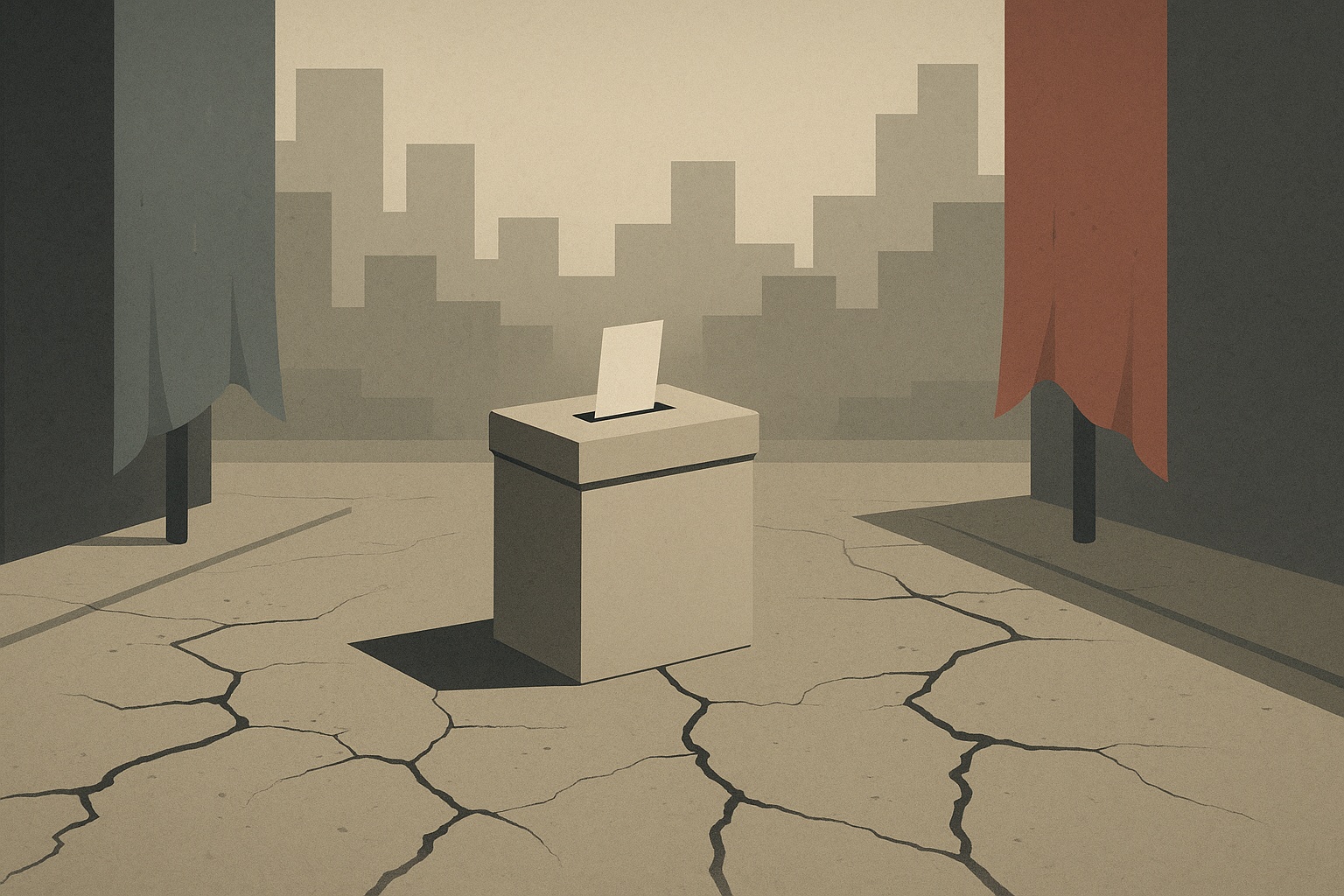
Voters say they want focus on cost of living, health care, and job stability. Yet national campaigns often center on symbolic disputes. That mismatch erodes trust and depresses turnout. Restoring faith in democracy means turning rhetoric into visible results—policy that can be felt in grocery bills and rent payments, not just speeches.
How to act locally
- Vote where decisions start. Local elections decide zoning, schools, and budgets—core cost-of-living issues.
- Track one policy that affects you directly. Follow how your representatives vote and contact their offices with data, not slogans.
- Join a civic circle. Gather monthly with neighbors to share verified updates and identify one shared issue to monitor.
- Volunteer inside the process. Poll worker, housing board, or community budgeting sessions—all turn opinion into structure.
Only about 60% of eligible Americans vote in presidential years and fewer than 30% in local ones, according to the U.S. Census Bureau. Every percentage point regained is structure restored. Civic participation is maintenance work—the quiet labor that keeps systems standing.
The Groundwork
Disconnection between rhetoric and reality weakens civic foundations. Real representation starts with listening at street level and translating need into structure. Every system update begins with asking, “Who feels left out—and why?”