
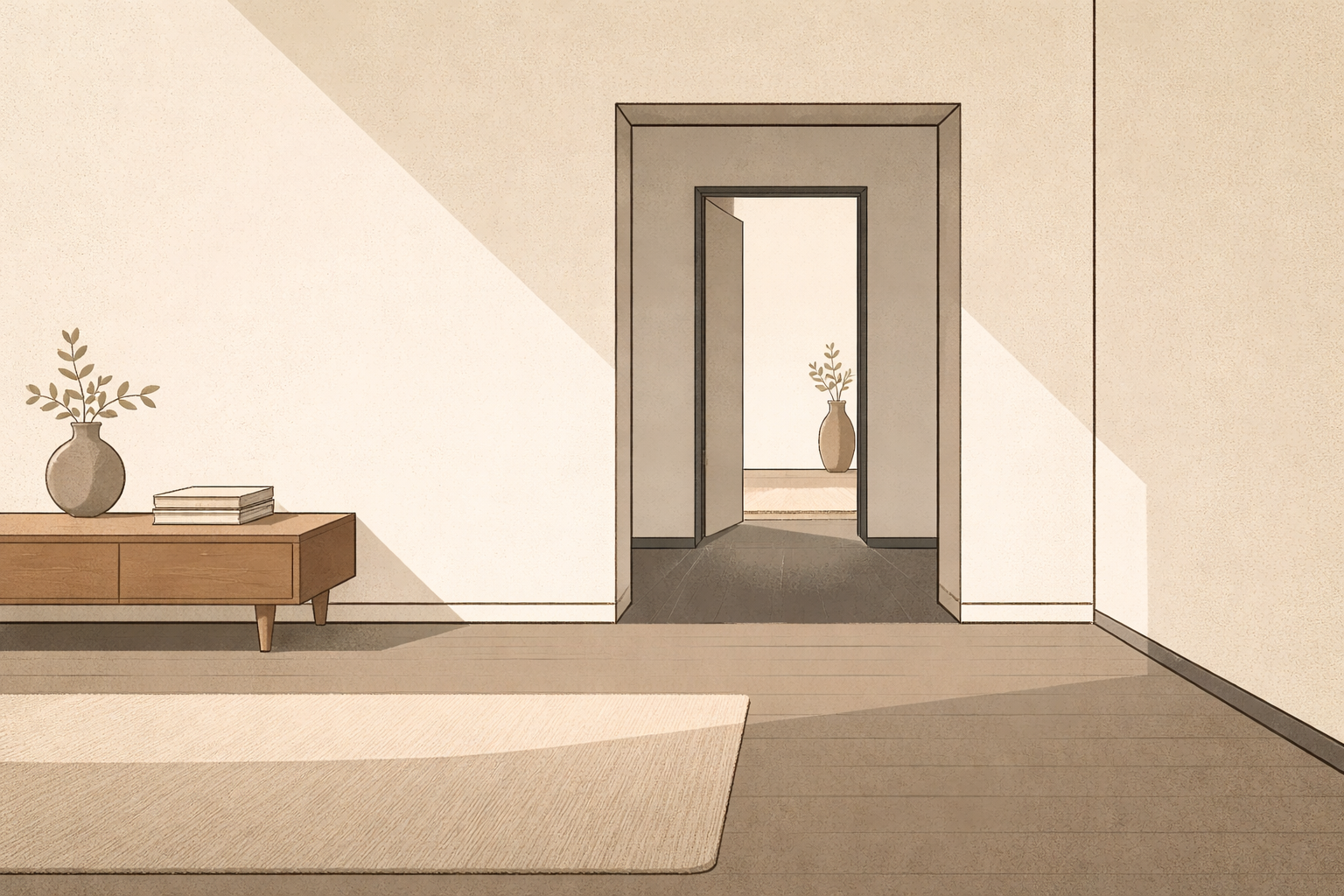
Slowing down to notice space was not something I learned on purpose. It arrived quietly, the way lessons often do when the body reaches its limit before the mind is ready to admit it.
I used to enter rooms as if they were obstacles to clear. My pace was fast, my attention forward-facing, my presence already leaving before my feet fully landed. Eventually, I realized that nothing in the room had asked for that urgency. The pressure was mine.
That was the day I stopped rushing rooms.
What Urgency Was Hiding
When I slowed down, the first thing I noticed was discomfort. Stillness felt inefficient. Pausing felt indulgent. Yet underneath that tension was something more honest: I had been using motion to avoid noticing how spaces affected me.
Rooms hold information. They signal mood, safety, tension, welcome, resistance. However, when the body moves too fast, those signals never register. Instead, the nervous system stays braced, responding to imagined pressure rather than real conditions.
“The wise person does not hurry the journey.”
— African proverb
This shift echoed ideas explored in Stillness Is Strategy, where restraint is framed not as withdrawal, but as active awareness.
The Body Reads Before the Mind Explains
Once I slowed my pace, my body began responding differently. Shoulders dropped. Breathing deepened. The room stopped feeling like something to get through and became something to be in.
That response came before any conscious thought. Long before language, the body had already decided whether the space was safe, rushed, heavy, or neutral. This aligns with what behavioral researchers describe as environmental cue processing, where physical surroundings shape regulation before cognition engages.
Psychological research summarized by the American Psychological Association supports this idea: our environments influence stress levels, focus, and emotional regulation often without conscious awareness.
Choosing Presence Over Performance
Rushing rooms had become a performance. It signaled productivity, importance, momentum. Slowing down felt like choosing presence over appearance.
Once that choice became intentional, everything changed. I started arriving instead of passing through. I noticed how chairs were placed, where light settled, how silence behaved. More importantly, I noticed myself.
This mirrors the broader theme explored across Groundwork Daily: that discipline often looks quiet. As reflected in Carrying Weight Without Announcement, the most stabilizing actions rarely announce themselves.
What Rooms Taught Me
Rooms taught me that urgency is rarely about time. More often, it is about avoidance. Slowing down exposed emotions I had been outrunning: anxiety, anticipation, and sometimes grief.
However, it also created space for clarity. Decisions became calmer. Interactions felt grounded. The room stopped being something I conquered and became something I understood.
Now, I pause before moving forward. I let the room speak first. Not because it demands anything, but because it always has something to reveal.
Slowing down to notice space did not make life smaller. It made it more accurate.
