

Legacy In Motion · Partnership Architecture
From attraction to evidence.
Legacy In Motion examines the structures families and partners build around responsibility, stability, communication, money, continuity, and the ordinary decisions that determine whether a relationship can carry real life.
What it means to be compatible is more demanding than liking the same things or rarely arguing. Relationship compatibility means two distinct people can align the important parts of their lives well enough to build something stable without requiring either person to live in chronic conflict with their values, needs, direction, or responsibilities.
Two people can enjoy the same music, laugh at the same jokes, share powerful chemistry, and genuinely care about each other while still being poorly matched for the life they are trying to build. That possibility matters because attraction is often asked to prove more than attraction can prove.
Chemistry creates momentum, and affection creates emotional investment. However, neither one tells you whether two people can coordinate money, family obligations, time, boundaries, household responsibility, conflict, career decisions, parenting, illness, disappointment, or the everyday pressure that arrives when two lives become increasingly connected.
The Groundwork Definition
Relationship compatibility is the degree to which two people can align the important parts of their lives, negotiate legitimate differences, absorb ordinary pressure, repair disruption, and adapt without requiring chronic self-erasure or instability.
Therefore, understanding what it means to be compatible requires more than asking whether two people feel good together. A stronger question is whether the relationship remains workable once preferences, obligations, limits, and consequences begin competing for space.
Meaning
What It Means to Be Compatible in a Relationship
When people ask what it means to be compatible, they often begin with personality, interests, or attraction. Those things can certainly make a relationship enjoyable, but they do not tell you whether the partnership itself can function.
Every adult brings an operating system into a relationship. It includes beliefs about money, family, sex, privacy, work, responsibility, communication, loyalty, ambition, rest, independence, commitment, and what another person should reasonably be able to expect.
A partner brings an operating system too. As the relationship deepens, those two systems begin sharing space, time, consequences, and eventually responsibilities. Consequently, compatibility becomes visible through coordination rather than through similarity alone.
Some differences are easy to absorb. Others require explicit agreements. Still others reveal that two good people may be trying to build futures that cannot coexist without one person paying too much of the cost.
That distinction is important because relationship compatibility should not be treated as a verdict on anyone’s worth. Instead, it is an assessment of whether two particular lives can function together in a healthy and sustainable way.
Time matters because ordinary life creates that evidence. You learn something when plans change, money tightens, someone becomes exhausted, family needs increase, or a disagreement does not end neatly. Peaceful days tell you something, but pressure often tells you more.
Architecture
Relationship Compatibility Is a System, Not a Single Trait
If you want to understand what it means to be compatible in practical terms, break the idea into the systems a partnership eventually has to operate. Compatibility becomes much clearer when it is examined as architecture rather than intuition.
The Groundwork Compatibility Architecture
No relationship needs perfect alignment in every area. However, the system needs enough coordination and flexibility that ordinary differences do not repeatedly become structural instability.
01 / Values
What matters enough to govern decisions?
Ethics, faith, honesty, family, loyalty, ambition, money, responsibility, and personal standards shape choices long after attraction becomes familiar.
02 / Direction
Can both futures share a map?
Marriage, children, geography, career, caregiving, lifestyle, homeownership, and long-term priorities eventually have to coexist in one actual life.
03 / Rhythm
Can ordinary life function?
Social needs, solitude, routines, sleep, communication, household expectations, intimacy, planning, and use of time all affect daily stability.
04 / Conflict
Can disagreement happen without destruction?
Timing, emotional regulation, listening, correction, apology, respect, and repair show what happens once preference gives way to pressure.
05 / Responsibility
Who carries what?
Money, labor, planning, caregiving, emotional support, household work, logistics, and follow-through reveal whether responsibility can move both ways.
06 / Capacity
Can each person reliably carry partnership?
Someone can be loving and well-intentioned while still lacking the time, stability, financial room, energy, or emotional availability a relationship requires.
07 / Adaptation
Can the structure change intelligently?
Careers change, bodies change, money changes, and families change. Healthy compatibility includes enough flexibility to renegotiate life without losing the relationship’s core standards.
Operating Question
Can these two systems share a life?
Attraction asks whether two people want each other. Compatibility asks whether the lives surrounding those people can actually work together.
Difference
Being Compatible Does Not Mean Being the Same
One of the most useful things to understand about what it means to be compatible is that compatibility does not require sameness. In fact, many healthy partnerships include significant differences in temperament, interests, routines, and emotional style.
For example, one partner may enjoy a busy social calendar while the other needs more quiet. One may plan months ahead while the other is more spontaneous. Likewise, one person may prefer to address conflict quickly while the other thinks more clearly after some time alone.
Those differences can work because the issue is not simply whether two people operate differently. The real question is whether both people’s legitimate needs can be represented in the structure they create together.
Compatible Difference
Different, but workable
Both people remain recognizable to themselves while the relationship creates enough accommodation, boundaries, communication, and adjustment for the difference to remain manageable.
Structural Incompatibility
The lives cannot both happen as intended
The relationship repeatedly requires one person to abandon an important value, future, responsibility standard, boundary, or basic condition of well-being.
Consider children. If one person firmly wants them and the other firmly does not, better communication will not manufacture a middle position. Similarly, if one person requires monogamy while the other fundamentally does not want an exclusive relationship, compromise cannot erase the underlying conflict.
Therefore, some differences should be negotiated while others should be taken seriously as evidence. Knowing the difference is part of mature relationship compatibility.
Chemistry
Chemistry vs Compatibility: Three Different Questions
Chemistry, compatibility, and commitment often appear close together. Nevertheless, they describe different parts of a relationship, and confusing them can make it harder to understand what it means to be compatible.
Chemistry
Do we feel drawn to each other?
Chemistry describes attraction, desire, emotional responsiveness, curiosity, energy, and the felt quality of connection.
Compatibility
Can our lives work together?
Relationship compatibility examines values, behavior, rhythm, money, boundaries, responsibility, conflict, resources, and long-term direction.
Commitment
What are we choosing to build?
Commitment is the acceptance of defined responsibility toward a relationship after enough evidence exists to justify deeper investment.
Strong chemistry cannot erase structural incompatibility. Conversely, strong compatibility cannot protect a relationship from dishonesty, neglect, betrayal, or refusal to maintain what has been built.
Each part has a different job. As a result, chemistry should be enjoyed without being promoted into evidence it has not yet earned.
Direction
How to Know If You Are Compatible: Give Time a Job
Dating is useful because it creates exposure. Over time, you see how someone treats schedules, money, family, inconvenience, boundaries, commitments, and the ordinary promises that rarely make it into a first conversation.
You also learn whether the person’s words and behavior remain acquainted. Because of that, compatibility belongs naturally beside The Difference Between Dating and Courting .
Relationship Progression
Time should produce useful information. Seriousness should then determine how much weight that information deserves.
A relationship that has lasted a long time is not automatically a compatible relationship. Duration creates history, yet history alone does not establish fit.
In fact, people can spend years receiving the same information and still refuse to give it enough authority. That is why understanding what it means to be compatible also requires discernment .
Good judgment is not simply noticing evidence. More importantly, it means giving the strongest evidence the weight it deserves.
Conflict
Conflict Compatibility Reveals What Peaceful Days Cannot
Every couple eventually learns that loving each other and disagreeing well are separate skills. Consequently, conflict is one of the clearest places to evaluate relationship compatibility.
One person may pursue conversation while the other withdraws. Another couple may have one partner who needs time before responding while the other experiences delay as rejection. Those patterns are not automatically signs of incompatibility, although the outcomes they produce matter.
The central question is whether both people can recognize the pattern, regulate themselves, protect basic respect, and return to repair.
Can disagreement remain focused on the issue?
Can both people pause without using distance as punishment?
Can correction happen without humiliation?
Can either person admit being wrong?
Can both people return to repair?
Does repeated conflict eventually produce learning?
Compatibility does not eliminate conflict. Instead, it creates a credible path through it.
That path matters because unrepaired conflict gradually changes the relationship. Trust becomes thinner, honesty becomes riskier, and small disagreements begin carrying the accumulated weight of older ones. Eventually, the argument in front of the couple is no longer the whole argument.
For that reason, compatibility in relationships should include the ability to restore function after damage rather than simply survive another disagreement.
Money
Financial Compatibility Is About Behavior, Not Equal Income
When evaluating what it means to be compatible, money deserves more attention than matching salaries. Two people do not have to earn the same amount, but they do need a workable relationship with financial responsibility.
Money exposes operating habits quickly. Spending can reveal impulse control, debt can reveal risk tolerance, saving can reveal priorities, and secrecy can reveal whether accountability disappears when financial consequences become uncomfortable.
Financial Fit
Can different habits become one workable system?
Differences around saving or spending can often be governed through transparency, allocation rules, boundaries, shared goals, and an agreed approach to responsibility.
Financial Friction
Does money expose a deeper responsibility problem?
Chronic secrecy, uncontrolled debt, incompatible lifestyle expectations, refusal to plan, or repeated financial rescue can become structural problems.
This is why Discipline Before Dollars belongs inside relationship evaluation. More income cannot automatically repair an operating system that lacks financial discipline.
Once two lives begin sharing consequences, money stops being purely individual even when every account remains separate.
Capacity
Compatible People Can Still Build an Unsustainable Relationship
Understanding what it means to be compatible also requires a distinction between fit and available capacity. Two people may align beautifully on values, affection, communication, and direction while entering a season in which the relationship is simply carrying too much.
Capacity
What can each person reliably carry?
Work, parenting, health, caregiving, finances, emotional regulation, and existing obligations all consume capacity. Therefore, a healthy partnership must account for real limits.
Margin
What remains after ordinary demand?
Margin is the reserve available for fatigue, illness, surprise expenses, emergencies, intimacy, reflection, repair, and the ordinary unpredictability of family life.
Low capacity does not automatically mean two people are incompatible. Sometimes the better answer is redesign: reduce unnecessary load, create clearer boundaries, redistribute responsibility, build support, or allow genuine recovery.
Love does not create unlimited carrying power. Therefore, a relationship should not confuse exhaustion with evidence that the underlying partnership is fundamentally wrong.
Signs
Signs of Compatibility in a Relationship
If you are trying to determine how to know if you are compatible, look for repeated patterns rather than isolated high points. Relationship compatibility becomes more credible when the same healthy structure remains visible across changing conditions.
Values
Your major standards can coexist
Neither person must continuously violate foundational beliefs or values simply to preserve the relationship.
Direction
Your futures can share a map
Long-term goals do not have to match in every detail, although they should not repeatedly pull the partnership in opposite directions.
Communication
Difficult truths can be discussed
Important issues do not require permanent avoidance, deception, intimidation, or emotional warfare.
Repair
Conflict produces correction
Disagreement does not automatically threaten the entire relationship, and repair creates evidence that learning is possible.
Responsibility
Both people carry
One partner is not permanently responsible for planning, emotional stability, accountability, or the consequences of both people’s decisions.
Boundaries
Difference does not require disappearance
Both people can make room for each other without one person becoming smaller simply to keep the peace.
Adaptation
The relationship changes intelligently
New seasons produce thoughtful adjustments rather than turning every change into evidence that the relationship itself is failing.
Evidence
Patterns support the promises
What each person repeatedly does provides reasonable support for what each person says the relationship means.
Signs Compatibility May Be Weak
Poor compatibility often appears as recurring friction around issues that are too important to remain permanently unresolved. For example, core goals may repeatedly require one partner to surrender, financial expectations may remain impossible to reconcile, or conflict may continue without meaningful repair.
Another warning sign is chronic translation. If basic needs, boundaries, or expectations must be explained endlessly but still receive no representation in behavior, the problem may be deeper than communication.
Most importantly, pay attention when stability requires one person to do nearly all of the adjusting. A relationship can ask both people to grow, but healthy compatibility should not depend on chronic self-erasure.
Load Test
A Relationship Compatibility Test Built Around Real Life
No short questionnaire can settle what it means to be compatible for every couple. However, a useful relationship compatibility test can force better questions into the evaluation.
The Groundwork Compatibility Load Test is designed for that purpose. Instead of assigning a score, it asks whether the relationship has enough evidence behind it to carry more responsibility.
Values: Which standards matter enough that repeated misalignment would materially change the future of this relationship?
Direction: Can both people’s long-term plans reasonably exist inside the same life?
Rhythm: Can our normal habits coexist without one person repeatedly absorbing the cost?
Conflict: What happens when we disagree and neither person immediately gets what they want?
Repair: Does conflict produce correction, or does the same damage continue returning?
Money: Can our financial habits, expectations, risks, and responsibilities become one workable system?
Responsibility: Does each person reliably carry a fair share of what the partnership requires?
Capacity: Can both people reliably carry the obligations deeper partnership would create?
Pressure: Does stress make the relationship more honest and coordinated, or more destructive and confusing?
Adaptation: Can both people change methods when necessary without surrendering their core values or identity?
The Groundwork Question
Can these two people carry ordinary life, absorb pressure, repair damage, and continue moving in a compatible direction without one person repeatedly paying the structural cost?
The point is not to turn a relationship into a spreadsheet. Instead, the test makes sure affection is not the only evidence allowed into the room.
Accountability
Healthy Compatibility Requires Accountability, Not Just Acceptance
A useful definition of what it means to be compatible must leave room for acceptance without turning acceptance into permission for every behavior. Your partner should not have to become you, but neither person should be able to use difference as an excuse for repeated harm.
In healthy relationships, accountability protects the standards both people claim to share. It allows someone to say that a behavior is damaging the structure without turning correction into humiliation.
Accountability Is a Form of Strength
A durable relationship needs enough accountability for both people to recognize when behavior has moved outside the standard they say they want.
Correction does not require humiliation, and growth does not require perfection. Nevertheless, compatibility requires the ability to hear, own, repair, and adjust.
Compatibility can absorb difference. It cannot indefinitely compensate for refusal to take responsibility.
A partner can be different from you. Likewise, you can be different from your partner. However, neither person gets to pretend that difference eliminates consequences.
Family
Compatibility for Marriage and Long-Term Partnership Carries More Than Romance
Compatibility for marriage matters because long-term relationships do not remain isolated emotional experiences. As commitment deepens, the relationship begins carrying housing, money, work, schedules, extended family, caregiving, health, household maintenance, and potentially children.
Eventually, even ordinary matters such as insurance, transportation, holidays, school decisions, retirement planning, chores, emergencies, and family obligations enter the system. Therefore, understanding what it means to be compatible is ultimately about more than whether two people date well.
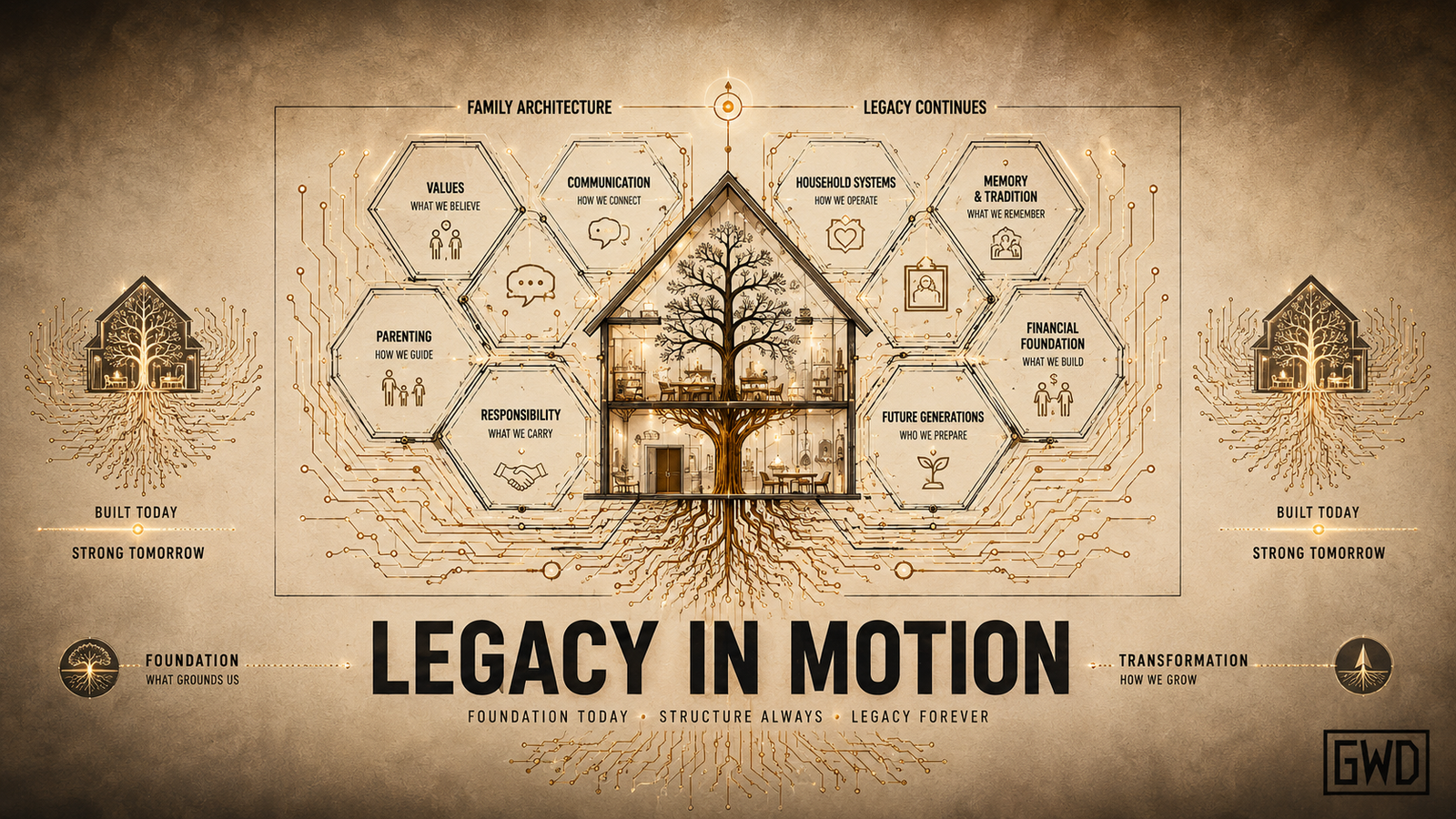
This is also why compatibility belongs inside Legacy In Motion. Partnership becomes family architecture because two people begin establishing expectations, distributing responsibility, setting standards, absorbing pressure, and teaching each other what stability will feel like inside the household they create.
For the broader household architecture, continue with the Family Stability Framework .
FAQ
Frequently Asked Questions About Relationship Compatibility
What does it mean to be compatible in a relationship?
Relationship compatibility means two people can align important parts of their lives, including values, direction, responsibilities, communication, money, boundaries, conflict, and daily rhythms, well enough to build a workable relationship without chronic instability or self-erasure.
Is compatibility the same as chemistry?
No. Chemistry describes attraction and felt connection, whereas compatibility describes whether two people’s lives, expectations, habits, responsibilities, and long-term direction can work together over time.
Does compatibility mean being similar?
No. Compatible partners can have different personalities, interests, routines, communication styles, and preferences. The important issue is whether those differences can be managed without chronic resentment, instability, coercion, or self-erasure.
How do you know if you are compatible with someone?
Look at repeated patterns across values, direction, daily life, conflict, repair, money, responsibility, boundaries, and adaptation. Compatibility becomes more credible when the relationship remains workable under ordinary pressure rather than only during ideal periods.
Can incompatible couples become more compatible?
Some compatibility problems can improve through communication, boundaries, changed routines, accountability, skill, and a better distribution of responsibility. Other conflicts involve foundational goals or values that cannot be reconciled without one person giving up something essential.
What matters most for compatibility in marriage?
Important areas include values, long-term direction, money, family expectations, conflict and repair, communication, responsibility, lifestyle, boundaries, emotional regulation, available capacity, and the ability to adapt as life changes.
Can compatible couples still have serious relationship problems?
Yes. Compatibility describes fit, not guaranteed success. A compatible relationship can still be damaged by dishonesty, betrayal, poor communication, weak boundaries, neglect, inadequate capacity, or failure to maintain the relationship.
What are signs of poor compatibility?
Common signs include chronically opposing life goals, repeated unresolved conflict, incompatible financial expectations, refusal of accountability, persistent instability, or a relationship that works only when one partner repeatedly suppresses important needs, values, or boundaries.
Sources & Further Reading
Receipts
Compatibility is not one universally agreed clinical construct. Accordingly, the Groundwork Compatibility Architecture and Groundwork Compatibility Load Test are editorial frameworks for organizing the practical systems that become relevant as two lives move toward greater interdependence.
For broader context on dating behavior and relationship formation:
Pew Research Center: Key Findings About Online Dating in the U.S. →
These Groundwork frameworks are educational tools. They are not substitutes for individualized counseling, mental-health treatment, legal advice, or other qualified professional support when those services are warranted.
The Groundwork
Compatibility Starts With Seeing the Relationship That Actually Exists
If you want to understand what it means to be compatible, examine the relationship as it exists now rather than the version either person hopes will eventually appear.
Look at where your values align and where they do not. Then consider the future each person is trying to build, the way money is handled, the distribution of responsibility, and what happens when one person is disappointed or under pressure.
Pay particular attention to repair. Ask whether both people can hear correction, whether important boundaries receive respect, and whether difference can exist without one partner continually becoming smaller.
Those questions are less romantic than asking whether someone feels like your person. However, they are much closer to the life the relationship will actually have to carry.
Attraction can open the door, but evidence tells you what is on the other side. Discernment decides what deserves weight, accountability protects the standard, and capacity determines what the relationship can actually carry.
Commitment should come after enough of that architecture is visible.
That order matters.
Continue Building
Follow the Relationship Architecture
Compatibility is one part of a larger relationship system. Continue into the framework that best matches the question you are trying to answer next.
Understand the difference between exploring connection and intentionally evaluating it.
Learn why noticing information is not enough when the strongest evidence never receives enough authority.
See why correction protects the relationship standard instead of automatically threatening it.
Explore why additional financial resources cannot repair a system that refuses discipline.
Understand what a person or system can reliably carry without unacceptable degradation.
Examine the reserve that protects a relationship when ordinary life becomes less predictable.
Move from partnership compatibility into the larger systems required to build a stable household.
Explore family architecture, partnership, responsibility, continuity, and the structures designed to survive beyond one season.
Groundwork Daily Architecture
Where This Article Lives
This article strengthens the relationship and family architecture inside Groundwork Daily rather than operating as a standalone advice piece.

Groundwork Daily Builder
Marcus Vaughn
Economy, Ownership & Generational Structure
Marcus Vaughn writes about ownership, financial discipline, family structure, and generational continuity. Through Money Monday and Legacy In Motion, he examines the systems that turn income into stability, responsibility into structure, and today’s decisions into tomorrow’s inheritance.