Dating with purpose is not about forcing every promising connection toward a predetermined destination. It is about knowing what kind of relationship you are available for and paying close enough attention to determine whether the person in front of you can realistically build it with you.
Part 1 established the need for relationship structure. Expectations need language. Boundaries need legitimacy. Trust needs repetition.
Once that foundation is understood, the next question changes.
The question is no longer simply, Do I like this person? The question becomes: What is this relationship actually showing me?
Dating is not the relationship before the relationship. It is the period when two people gather enough evidence to decide whether building one makes sense.
What Dating With Purpose Actually Means
The phrase dating with purpose can become vague very quickly. Sometimes it is used to mean dating only for marriage. Sometimes it means moving quickly toward exclusivity. Sometimes it means approaching every date with a checklist.
None of those definitions is sufficient.
Purpose is better understood as orientation. You know what kind of relationship you are available for, what values matter to you, what you are prepared to contribute, and what kinds of patterns would make a relationship difficult to sustain.
Purpose Gives Attention a Direction
That clarity does not tell you who another person is. It simply helps you know what deserves attention while you learn.
If you want a durable partnership, for example, chemistry matters. So do reliability, emotional capacity, communication, judgment, responsibility, and the ability to deal with difference.
Purpose does not eliminate uncertainty. It keeps uncertainty from becoming an excuse to stop paying attention.
Chemistry Creates Interest. Dating Produces Evidence.
Chemistry matters. Attraction matters. Enjoying somebody’s company matters.
But chemistry tells you something different from compatibility.
Attraction tells you that connection is present. It does not tell you whether two people communicate well under pressure, share compatible expectations, handle responsibility similarly, or want futures that can coexist.
Creates the Pull
Attraction, ease, curiosity, desire, humor, and emotional energy can make two people want to know each other better.
Tests What Can Hold
Time, behavior, consistency, pressure, communication, and real-life decisions reveal whether the connection has enough structure to grow.
Chemistry can open the door. Evidence helps determine whether walking through it makes sense.
Dating With Purpose Requires Observation Without Projection
Early dating contains a lot of missing information. That is normal.
The danger comes when imagination fills those gaps faster than experience can.
A thoughtful conversation becomes proof of emotional maturity. A shared interest becomes evidence of deep compatibility. One generous gesture becomes a prediction about how somebody will behave five years from now.
The mind is good at building complete stories from incomplete evidence.
Separate What You Know From What You Want to Be True
When you feel yourself building a story, ask three questions:
- What do I know? What has actually been said, done, or repeated?
- What am I assuming? What conclusion have I added without enough evidence?
- What am I hoping? What do I want to become true because I like the possibility?
Hope is not a problem. Neither is optimism.
The discipline is refusing to confuse possibility with proof.
Good Discernment Still Leaves Room for Humanity
Paying attention does not require treating the person across from you like a candidate under review.
People bring nerves, uncertainty, hope, history, and imperfect communication into new relationships. Not every awkward moment carries deep meaning. Not every delayed response signals rejection. Not every difference predicts failure.
Grace matters because real people are less polished than the stories we tell about ideal partners.
Grace and Standards Can Coexist
Still, grace should not become a permanent explanation for behavior that repeatedly creates confusion, instability, disrespect, or mistrust.
The goal is to remain open without becoming naive, observant without becoming suspicious, and patient without becoming passive.
Why Dating With Purpose Needs Time
Patience is not valuable because slow is automatically better.
Patience is valuable because certain information only becomes visible through repetition.
Anybody can be attentive for a weekend. Anybody can say the right thing during one important conversation. A compelling first month cannot show you how somebody responds to six ordinary months of work pressure, schedule changes, disagreement, family demands, disappointment, or boredom.
Time Exposes Consistency
Repetition gives isolated behavior context.
One late arrival may mean very little. A repeated disregard for your time means more. One disagreement may be normal. A recurring pattern of contempt during disagreement deserves attention.
Time does not guarantee truth, but it gives patterns more opportunities to become visible.
Let Communication Become Evidence Too
Communication preferences differ. Some people connect naturally through text. Others prefer calls, in-person time, or longer conversations less frequently.
Difference is not automatically a problem.
What matters is whether two people can discuss those differences and arrive at a rhythm that gives both enough connection without requiring either person to perform someone else’s version of intimacy.
Watch What Happens When Needs Differ
A communication mismatch can become useful information.
Does one person dismiss the other’s needs? Can both adjust? Does compromise feel mutual? Can somebody ask for more contact without accusation or ask for more space without disappearing?
The communication problem is often less revealing than how two people respond to the problem together.
Ask Questions That Reveal How a Life Is Being Built
Good questions do more than collect preferences. They reveal how somebody thinks, chooses, recovers, plans, and understands responsibility.
These conversations do not need to happen all at once. In fact, they are often more useful when they emerge naturally as the relationship develops.
- What tends to guide your decisions when life becomes uncertain?
- What does peace look like at this stage of your life?
- What role do family, faith, community, or close relationships play in your decisions?
- How do you rest and reset when life becomes demanding?
- What have past relationships taught you about yourself?
- How do you usually respond when somebody disappoints you?
- What would partnership mean to you beyond attraction and companionship?
Purposeful dating should still feel like discovery. The goal is not to interrogate somebody into compatibility.
The Dating With Purpose Evidence Test
A developing relationship does not need to answer every future question. But over time, five kinds of evidence should become easier to examine.
Words
What does the person say about relationships, responsibility, family, work, money, commitment, boundaries, and the future?
Patterns
What keeps repeating? Reliability, communication, consideration, avoidance, generosity, inconsistency, and follow-through become more informative when they form patterns.
Pressure
What happens when plans change, somebody hears no, stress rises, disappointment arrives, or life becomes inconvenient?
Capacity
Does this person actually have the time, attention, emotional room, responsibility, and practical space for the relationship being discussed?
Alignment
Do the person’s stated intentions, actual life, choices, responsibilities, and available capacity point in roughly the same direction?
When Words and Patterns Disagree, Study the Pattern
Words matter because people should be allowed to tell you who they are and what they want.
But statements eventually need behavioral support.
Somebody may sincerely say that communication matters while repeatedly disappearing when conversations become difficult. Another person may say family is a priority while consistently refusing to make room for anybody else’s obligations.
That does not mean every inconsistency is deception. Human beings are often less consistent than their values.
Look for Direction, Not Perfection
The useful question is whether behavior generally moves toward the values being claimed.
A person’s words explain intention. Repeated behavior shows what that intention can currently carry.
Pay Attention When the Relationship Becomes Inconvenient
Compatibility is easy to imagine when both people are rested, interested, available, and getting what they want.
Pressure changes the conditions.
Plans get canceled. Somebody has a difficult week. One person needs support while the other is tired. A boundary gets expressed. Money becomes tight. Family responsibilities interrupt the ideal schedule.
Inconvenience Reveals Operating Habits
Watch what happens next.
Does frustration become punishment? Does disappointment become withdrawal? Can somebody hear no without turning it into rejection? Does stress reduce kindness, or simply require a conversation about capacity?
Pressure does not reveal a person’s entire character in one moment. Still, repeated responses under pressure can reveal habits that comfort keeps hidden.
Wanting a Relationship Is Not the Same as Having Room for One
A person can genuinely want partnership and still lack the capacity to participate in one well.
Work may consume nearly every waking hour. Family responsibilities may already stretch the schedule. Previous relationships may still require unresolved attention. Financial instability, caregiving, health, or major life transitions can reduce practical availability.
None of those realities makes somebody a bad person.
But reality still matters.
Evaluate the Life, Not Only the Intention
Ask whether the person’s present life has enough room for the relationship being discussed.
Good intentions cannot consistently supply time, attention, emotional availability, or responsibility that does not exist.
Outside Advice Should Improve Discernment, Not Replace It
Trusted people can sometimes see patterns that attraction makes difficult to notice.
That perspective can be useful.
Still, every outside voice brings its own history. A friend’s fear of commitment, a parent’s expectations, somebody else’s painful divorce, or social media’s latest theory about dating can all become noise if imported without examination.
Bring Important Questions Back to the Relationship
If somebody raises a concern worth considering, investigate it.
Do not let commentary become a substitute for conversation with the person whose behavior actually needs to be understood.
Dating With Purpose Means Gathering Better Evidence
Purposeful dating does not guarantee that a relationship will work.
It creates better conditions for seeing whether one should.
The work is not to eliminate uncertainty. It is to pay attention closely enough that chemistry does not become proof, hope does not become evidence, patience does not become avoidance, and stated intentions are eventually tested against actual behavior.
Five Questions to Carry Forward
- What do I know, and what am I filling in myself?
- What patterns are becoming visible with time?
- What happens when circumstances become inconvenient?
- Does this person have the capacity for the relationship being discussed?
- Do words, behavior, and direction increasingly align?
Evidence Is Not the Same as Compatibility
Part 1 established structure. Part 2 gathers evidence.
But knowing more about a person does not automatically answer whether two people fit.
That requires a different examination: values, lifestyles, expectations, goals, responsibilities, conflict styles, family realities, and the shape of the futures each person is already building. That is the work of Part 3.
For research and practical perspectives on communication, emotional awareness, relationships, connection, and well-being, explore the Greater Good Science Center at UC Berkeley .
Continue the Building the Foundation Series
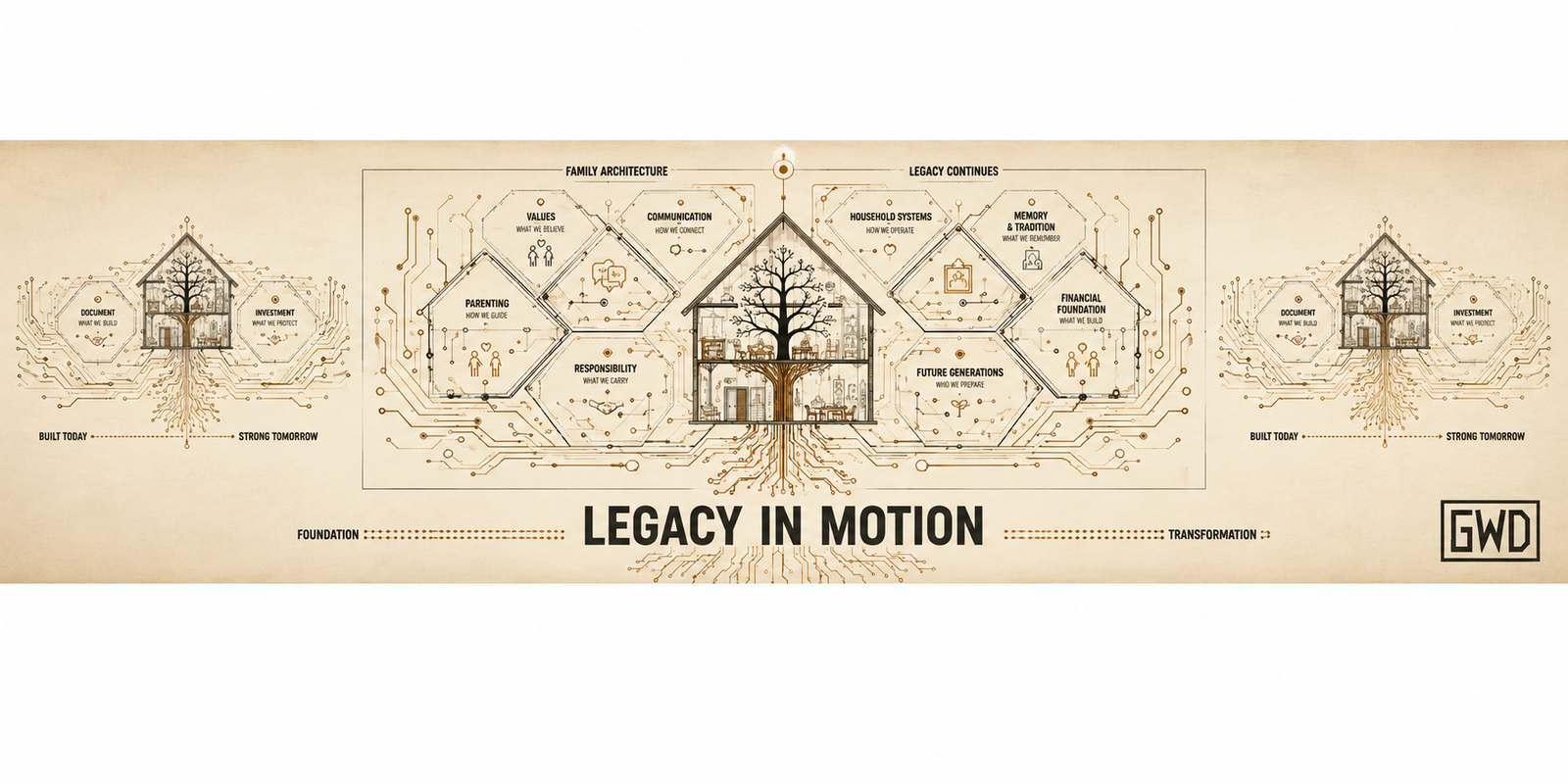
Go back to relationship structure, continue into compatibility, or step into the complete Legacy In Motion collection.
Begin with clarity, expectations, boundaries, consistency, trust, and repair.
Next | Part 3 What Makes Us CompatibleMove from evidence into the deeper question of whether two lives can actually fit.
Series Hub Legacy In MotionExplore relationships, family structure, responsibility, communication, parenting, household systems, and generational continuity.
Later in the series, continue with From a Woman’s Perspective and From a Man’s Perspective.