Relationship structure begins with a simple distinction: feeling can begin a relationship, but structure helps reveal whether two people know how to build one.
Attraction can create momentum quickly. Affection can make possibility feel obvious. However, neither tells two people how they will communicate, handle boundaries, divide responsibility, respond to disappointment, repair conflict, or make decisions when their preferences differ.
Those questions require something less romantic but more durable: clarity.
In practice, relationship structure is the set of understandings, expectations, agreements, rhythms, boundaries, and repair practices that make it easier for two people to know what they are building and how they intend to treat each other while they build it.
Feeling can begin a relationship. Structure helps reveal whether two people know how to build one.
Why Relationship Structure Comes First
Strong relationships are not simply found. They are gradually built through repeated choices between two people.
Early on, many of those choices can remain invisible because attraction is doing much of the work. People make time. Conversations stretch late. Differences seem manageable. Generosity often comes easily.
Ordinary Life Eventually Tests the Foundation
Eventually, ordinary life arrives. Schedules tighten, stress increases, and family obligations compete for attention. At some point, somebody disappoints somebody else.
That is when the presence or absence of relationship structure becomes easier to see.
Unspoken Rules Create Avoidable Conflict
One person may assume daily communication signals commitment, while another sees it as preference. One expects exclusivity to be discussed. Another assumes it has already happened.
Likewise, one person may believe conflict should be addressed immediately, while the other needs time before talking.
None of those differences automatically makes a relationship unhealthy. The problem is expecting another person to follow rules that were never made visible.
Relationship Structure Is Not Control
The word structure can sound restrictive when applied to relationships. That concern is legitimate because structure can be misused.
A controlling relationship can have many rules. Therefore, rules alone are not evidence of a healthy foundation.
Healthy relationship structure works differently. It makes expectations more visible while preserving the agency of both people.
Agreements can be discussed. Boundaries can be expressed. Needs can be named. Most importantly, either person can raise a concern without the entire relationship becoming a referendum on loyalty.
Creates Mutual Clarity
Both people can understand expectations, express needs, negotiate agreements, maintain appropriate boundaries, and revisit what no longer works.
Concentrates Authority
One person’s preferences become the rules, disagreement carries punishment, information is restricted, or reasonable boundaries are treated as disloyalty.
Structure should make a relationship easier to understand, not make one person easier to control.
How Relationship Structure Builds Trust
Trust is often discussed as though it appears automatically when two people care about each other. In practice, trust usually grows through evidence.
People become more legible to each other when expectations are clear enough to observe and behavior is consistent enough to evaluate.
Clarity → Expectations → Agreements → Repetition → Trust
Clarity Gives Behavior Something to Prove
First, clarity makes expectations visible. Those expectations give two people something concrete to discuss. Agreements can then turn the conversation into shared understanding.
Trust Needs Repetition
After the agreement comes the harder part: repetition.
When words and behavior repeatedly align, each person gains evidence about the other. Over time, that evidence can become trust.
Five Elements of Healthy Relationship Structure
No two relationships need identical rules. Instead, the goal is to make enough of the relationship visible that both people can participate in building it.
Purpose
Why are we dating? What kind of relationship are we available for? Are our intentions moving in compatible directions?
Principles
What standards should shape how we treat each other? This includes honesty, respect, intimacy, boundaries, privacy, and responsibility.
Cadence
How will we stay connected? Communication and time together need a rhythm that is sustainable for the two people actually living it.
Checkpoints
When circumstances change, can we revisit what we need? Healthy agreements should guide the relationship while remaining open to revision.
Privacy Without Secrecy
A relationship can be protected from unnecessary outside commentary without requiring either person to hide important truths from the other.
Know What You Are Bringing Into the Relationship
Relationship clarity does not begin with evaluating another person. Instead, it begins with enough self-awareness to understand what you are asking someone else to join.
Wanting a relationship and having room to build one are not necessarily the same thing.
- Do I actually have room for a relationship in my time, attention, and energy?
- Am I sufficiently present, or am I asking someone new to absorb unfinished conflict from the past?
- Which values are essential to how I want to live?
- Where can I compromise without abandoning something fundamental?
- What does respect look like to me in ordinary behavior?
- What am I prepared to contribute, not merely receive?
Relationship Structure Makes Important Things Discussable
Structure does not require a formal relationship summit after three dates. Rather, it requires a willingness to discuss important things as they become relevant instead of relying on assumption.
The goal is not interrogation. The goal is visibility.
Build a Communication Rhythm You Can Sustain
Early relationships can create an artificial abundance of time and attention. People stay up later, rearrange schedules, and communicate at a pace that may not survive ordinary life.
That intensity can feel wonderful. However, intensity and sustainability are different things.
Sustainable Connection Leaves Room for a Life
A useful communication rhythm is not the maximum amount of contact two people can produce. Instead, it is a pattern that allows both people to feel connected while continuing to manage work, family, friendships, rest, and individual responsibilities.
Let the Rhythm Become Real
Give the pattern enough time to settle into ordinary life. Afterward, talk about what is working and what needs adjustment.
Most importantly, do not use somebody else’s relationship as the measuring stick. Build the tempo that the two of you can actually maintain.
Relationship Structure Must Include Repair
Clear expectations will not prevent misunderstanding, disappointment, irritation, or disagreement.
However, good relationship structure gives two people something to return to when those moments happen.
Conflict Reveals More Than Agreement
Can a concern be raised without contempt? Is either person able to admit being wrong? Does an apology lead to changed behavior?
Repair Is Part of Durability
Agreements also need room to change when reality proves they are not working. In other words, durability is not demonstrated by never having problems.
A durable relationship develops a way to repair what ordinary human imperfection eventually disrupts.
The Relationship Structure Foundation Test
A foundation does not need to be perfect. Still, as a relationship develops, several capacities should become easier to see.
Know When Outside Advice Helps
Relationships do not exist in isolation. Friends, relatives, mentors, and communities can notice patterns that people inside a relationship sometimes miss.
Therefore, outside perspective can be valuable. It does not follow, however, that every outside opinion is useful.
Good Counsel Sharpens Judgment
Useful perspective can challenge rationalization, expose a blind spot, or identify behavior that deserves attention.
Noise Can Replace Judgment
Poor counsel, by contrast, can project somebody else’s fears, history, expectations, or resentment onto a relationship that is not theirs.
The goal is not to shut everyone out. It is to know the difference between perspective that improves your judgment and noise that replaces it.
Relationship Structure Creates Clarity Before Momentum
A relationship does not need every answer at the beginning. Likewise, two people do not need to engineer every future decision before they have had enough time to know each other.
Momentum, however, should not be asked to do the work that communication has avoided.
What a Useful Foundation Makes Possible
A useful foundation makes important things discussable. It gives expectations language, gives boundaries legitimacy, and gives consistency something to prove.
Then, when something goes wrong, the same foundation gives repair somewhere to begin.
Three Questions to Carry Forward
- What do I want this relationship to become if it goes well?
- What do I need to be able to discuss openly for this relationship to remain healthy?
- What am I prepared to practice consistently in order to become trustworthy myself?
Relationship Structure Is the Beginning, Not the Verdict
Clarity can establish the conditions for a relationship. It cannot tell you whether the person in front of you is actually the right person to build with.
Once two people have enough clarity to understand what they are exploring, the next task is to pay attention.
Dating becomes the period in which words, choices, patterns, consistency, and time begin producing evidence. That is where Part 2 begins.
For research and practical perspectives on communication, relationships, connection, and well-being, explore the Greater Good Science Center at UC Berkeley .
Continue the Building the Foundation Series
Part 1 establishes the structure. Part 2 asks what you can learn once you begin moving through the relationship intentionally.
Move from relationship structure into observation, discernment, and the evidence that develops through intentional dating.
Series Wrap The Foundation We Build TogetherSee how the relationship foundation develops across the completed arc.
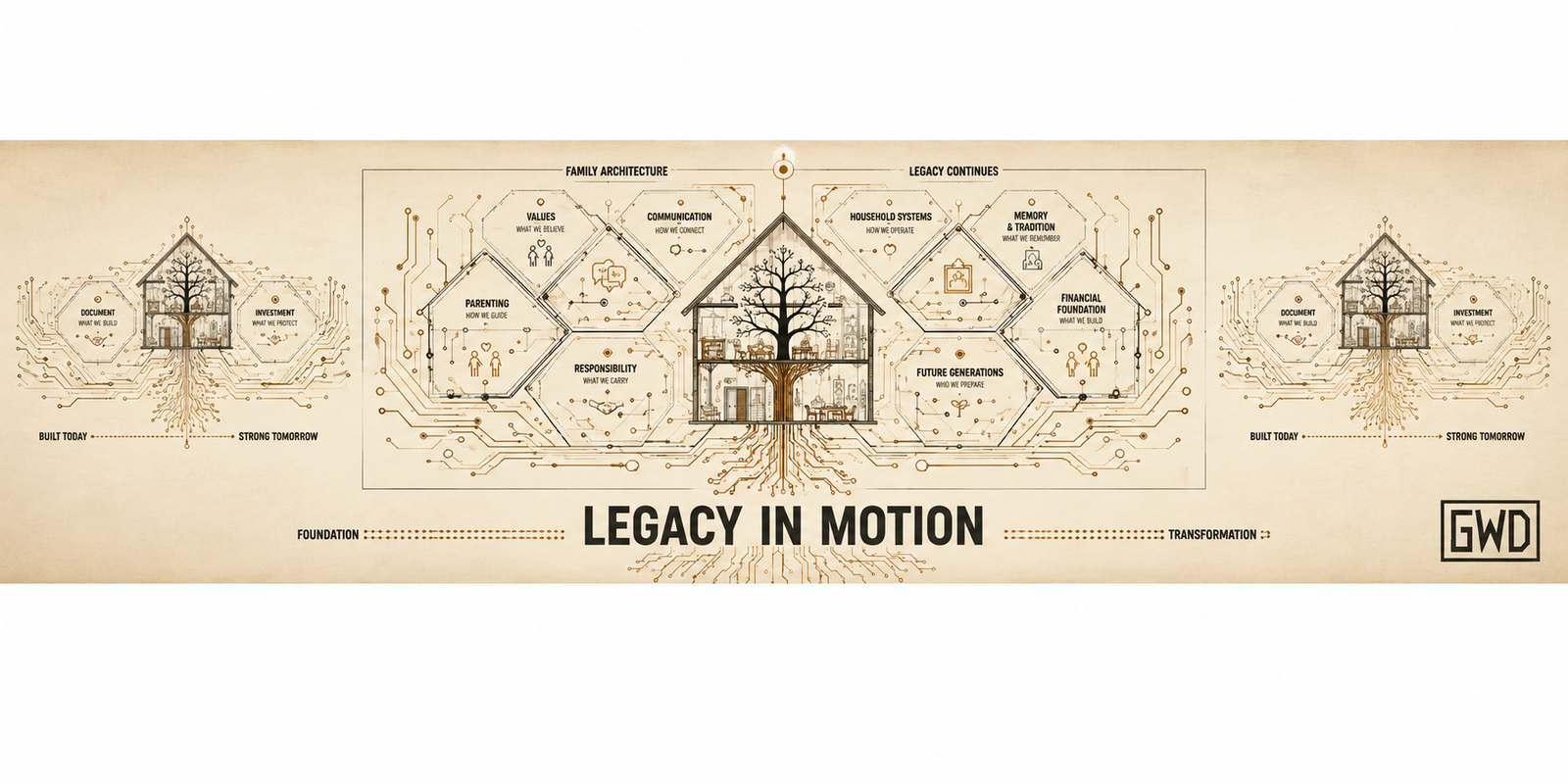
Series Hub Legacy In MotionExplore relationships, family structure, responsibility, communication, parenting, household systems, and generational continuity.
Later in the series, continue with From a Woman’s Perspective and From a Man’s Perspective.