
Healthy relationship space is not disappearing when things get difficult. It is a deliberate pause with enough structure to lower the temperature, protect the connection, and make a better return possible.

Not every difficult conversation gets better because two people keep talking.
Sometimes the conversation has already stopped doing useful work. Voices sharpen. Listening gets thin. The same point comes back for the fourth time. Then an argument that began over one thing starts collecting every unresolved thing within reach.
Staying in that conversation can look like commitment. It can also be two overwhelmed people refusing to admit that neither one is listening anymore.
Part 4 examined the power struggle inside relationship conflict , including boundaries, escalation, shared power, and repair. Part 5 starts at the moment when continuing to push is no longer the disciplined choice.
There are times when the strongest move is to create enough distance for both people to regain control of themselves before trying to regain control of the conversation.
The point is not to escape the relationship. The point is to stop damaging it long enough to come back better.
What Healthy Space Actually Means
Some people hear “I need space” and immediately hear rejection. Others use the phrase as a polite way to disappear. Neither interpretation gives the idea much room to be useful.
Two people can love each other and still need room to think separately. They can share a home and still need solitude. They can be committed and still have friendships, work, interests, family ties, private thought, and parts of life that are not jointly occupied.
During conflict, that room becomes even more important. Emotional intensity narrows attention. Once the goal quietly shifts from understanding to defending, proving, or retaliating, the conversation is no longer operating under the same conditions.
The Pause Needs Three Parts
A useful pause does not need a contract. It does need enough definition that both people understand what is happening.
Purpose
Say why the space is needed. Maybe you need to calm down, think, sleep, process new information, or stop an argument before it becomes cruel.
Boundary
Give the pause enough shape that neither person is left guessing. Twenty minutes, the rest of the evening, or another agreed period can create that structure.
Return
Say when or how the conversation will resume. A clear return removes much of the fear that makes a pause feel like abandonment.
The pause serves the relationship. The relationship should not become hostage to the pause.
Know When the Conversation Has Stopped Working
The body usually notices escalation before pride does.
Breathing changes. Muscles tighten. Patience shortens. You start listening for an opening rather than listening for meaning. Maybe your jaw is tight. Maybe you are repeating yourself louder, as though volume will finally make the point land.
Those signals matter because a conversation cannot solve much once both people are operating almost entirely from defense.
Consider a Pause When
- The same points keep returning without movement.
- Tone has become more important than the original issue.
- You are preparing your comeback instead of hearing the other person.
- Old grievances are being recruited into a new disagreement.
- One person is visibly overwhelmed, shut down, or unable to stay present.
- You care more about winning the moment than understanding what happened.
Recognizing that moment is not weakness. It is often the last clean opportunity to use a boundary before the conflict creates damage that will need repair .
Ask for Space Without Threatening the Bond
The request matters because uncertainty fills whatever explanation leaves empty.
“Leave me alone” and “I need twenty minutes so I do not make this worse” may produce the same physical distance. They do not create the same emotional experience.
The stronger request tells the other person what is happening without making them decode whether the entire relationship is suddenly under review.
“I want to handle this well. I need twenty minutes to settle down, and then I want to come back.”
“I am too worked up to be fair right now. Can we pause and pick this back up at seven?”
“I care about us. I do not want this conversation to become hurtful. Give me a little time so I can come back and listen better.”
The words help. Follow-through proves them. If you say you are coming back, come back.
Space and the Silent Treatment Are Not the Same Thing
Distance can regulate a conflict. Distance can also control one.
The distinction is not simply the number of minutes or hours two people stop talking. Look at the purpose, the communication, the predictability, and what the silence is being used to produce.
Protects Function
The reason is communicated. The limit is understandable. Reconnection is expected. The space is being used to regain enough capacity to deal with the issue.
Creates Instability
Communication disappears without explanation. Reconnection becomes conditional. Silence is used to provoke fear, guilt, compliance, or pursuit.
Space Becomes Avoidance When Nobody Comes Back
A pause can make both people feel better without fixing anything.
That is an important distinction. Lower emotional intensity is useful, but it is not the same as resolution.
If the disagreement involved money, trust, household responsibilities, sex, family boundaries, parenting, future plans, or a pattern that keeps repeating, a quiet evening does not close the issue.
After the Pause
Both people should eventually know what was decided, what changed, whether an apology is owed, whether a boundary moved, and whether another conversation is still required.
Space creates capacity for resolution. It cannot do the resolving for you.
The Return Tells You Whether the Pause Worked
Reconnection is the test.
If both people come back only to restart the same argument at the same intensity, the time apart created distance but not much regulation.
The return should feel different enough that something new can happen.
Do not turn the first sentence after a pause into the opening argument of round two.
Separate the original problem from everything that attached itself to the argument.
The time apart should produce more than a refreshed version of your old argument.
A repaired conversation should produce some form of understanding, action, boundary, agreement, or next step.
Space Is Not Only for Arguments
Personal space should not exist only as an emergency response.
Two people can build a shared life without occupying every emotional, social, intellectual, and physical corner of each other’s world.
Friendships still matter. Solitude still matters. So do work, family relationships, hobbies, creative pursuits, private reflection, and the ordinary freedom to remain an individual inside a partnership.
That gets harder as life fills up. Marriage, parenting, caregiving, household work, schedules, money, and professional obligations can consume nearly every open space if two people never protect any.
Be Careful What You Do With the Space
A pause creates room for reflection. It can also create room to turn a private disagreement into a public campaign.
Sometimes outside perspective is exactly what you need. A trusted friend, relative, mentor, counselor, or other qualified professional may see a pattern that is difficult to see from inside the relationship.
But there is a difference between seeking perspective and recruiting a jury.
When friends and relatives repeatedly hear only the worst moments, they may continue carrying those moments long after the couple has repaired them.
Use outside counsel to improve your judgment, not to build your case.
Sometimes Distance Is About Safety
Everything above assumes a relationship in which both people retain meaningful agency and can safely negotiate a pause.
Threats, stalking, intimidation, physical aggression, forced sexual activity, coercive control, severe financial restriction, or fear of retaliation change the situation.
In those circumstances, the central question is no longer how to take a better timeout during an argument. Safety and appropriate professional support take priority.
Healthy space requires enough freedom for a person to create distance without being punished or endangered for doing it.
The Healthy Space Test
Before asking for distance, or while looking at a pattern of distance already in the relationship, ask what the space is actually producing.
-
What is this space for?
Can the purpose be explained without threatening the relationship? -
Does the other person know what is happening?
Useful distance should not depend on confusion. -
Is there a boundary around the pause?
Timing can vary, but indefinite uncertainty should not become the operating model. -
Are we returning to the actual issue?
Regulation only helps if necessary conversations eventually resume. -
Is silence being used to create fear or compliance?
If distance functions as punishment, something else is happening. -
Does the next conversation get better?
Healthy space should increase the possibility of clarity, respect, and useful repair.
Space Should Make Return Possible
Strong relationships are not measured by how long two people can stay in the room arguing.
Sometimes maturity is recognizing that the room is no longer helping.
A pause can protect tone. Solitude can restore perspective. Individual space can preserve identity. But distance still needs discipline.
Otherwise, something meant to protect the relationship can quietly become a way to avoid the relationship.
Carry These Forward
- Can I recognize when I am no longer listening well?
- Can I ask for space without turning it into a threat?
- If I promise to return, do I return?
- Does distance help me reflect, or only help me avoid discomfort?
- Do we know how to reconnect instead of pretending the conflict never happened?
Space Protects Individuality. Partnership Still Requires Interdependence.
Healthy space protects the self inside the relationship. A durable partnership, however, cannot be built on independence alone.
Over time, two people begin relying on one another emotionally, practically, financially, domestically, and relationally.
The next question is how to depend on another person without surrendering yourself. Continue with Appreciating Interdependence .
For additional research and practical perspectives on emotional regulation, conflict, communication, and relationship well-being, explore the Greater Good Science Center at UC Berkeley .
Building the Foundation
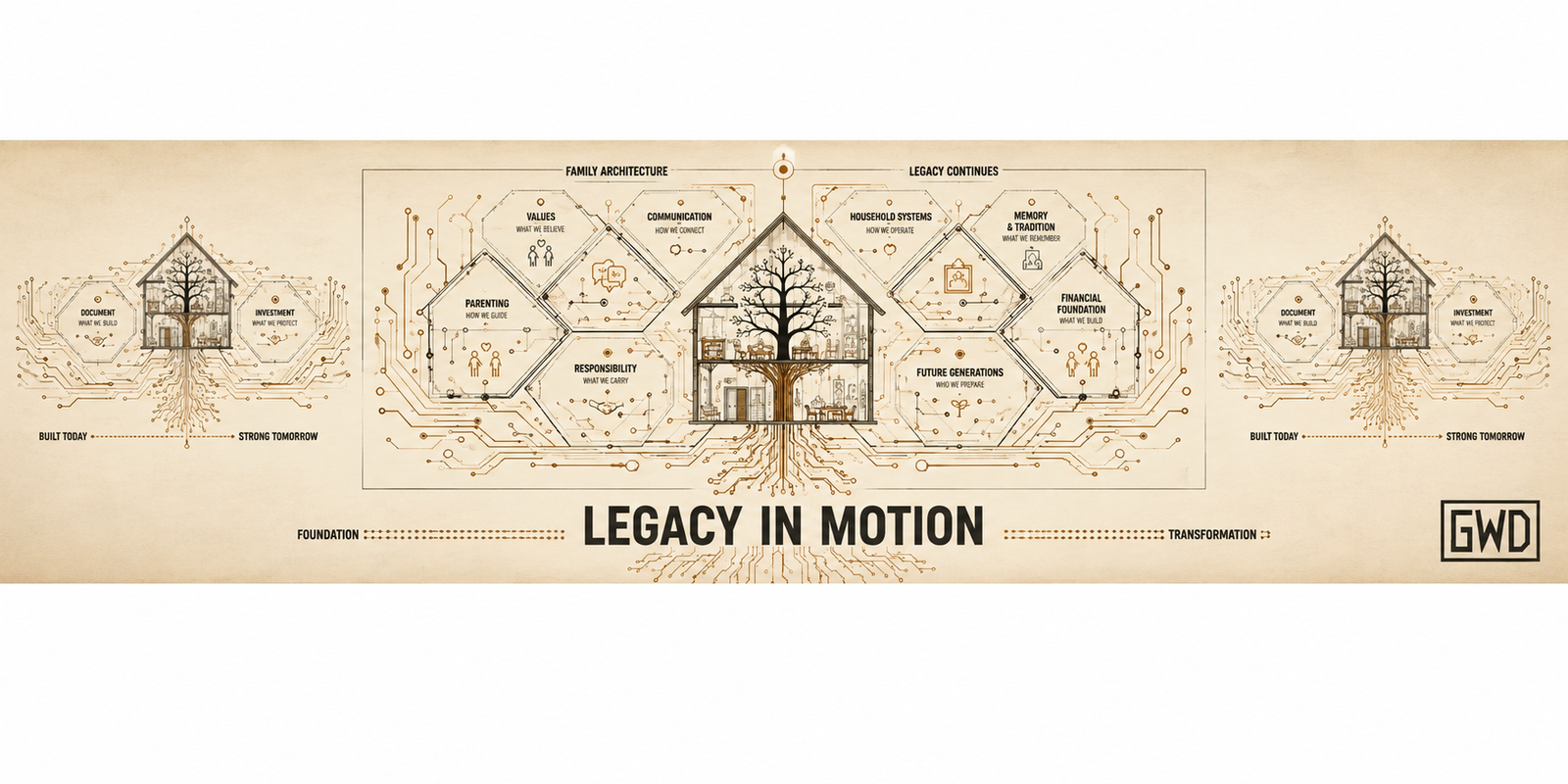
Move backward to conflict and shared power, forward into interdependence, or return to the broader Legacy In Motion architecture.
Better Relationships Are Built Before They Are Tested
Groundwork Daily examines the structures underneath family, partnership, money, responsibility, boundaries, repair, and the decisions that shape what people carry forward.
Strong relationships need more than feeling. They need structures that can carry pressure.
Explore the broader Family, Gender & Relationships territory for work on partnership, family stability, communication, responsibility, boundaries, reciprocity, parenting, and repair.
Marcus Vaughn
Economy, Ownership & Generational Structure
Marcus Vaughn writes about ownership, financial discipline, family structure, and generational continuity through Money Monday and Legacy In Motion.