Designed friction in systems sounds like a contradiction in a world that worships speed. Most products compete to remove steps, shorten time, and make every decision feel effortless.
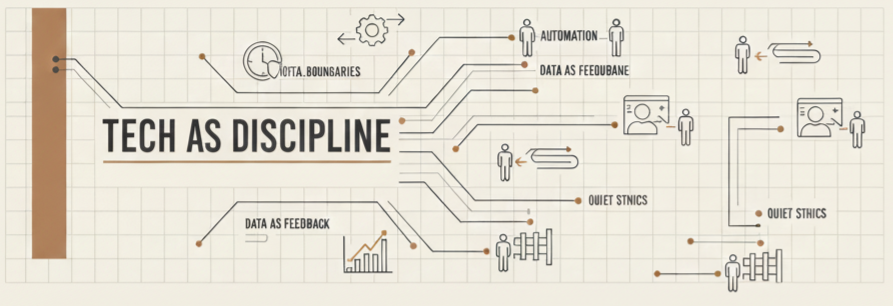
This essay completes the first arc of the Tech as Discipline lane and makes a simple claim: friction is not always failure.
When friction is designed intentionally, it protects judgment, pacing, and responsibility. It creates a small pause where a person can notice what is happening before the system carries them forward.
Designed Friction in Systems Is a Guardrail
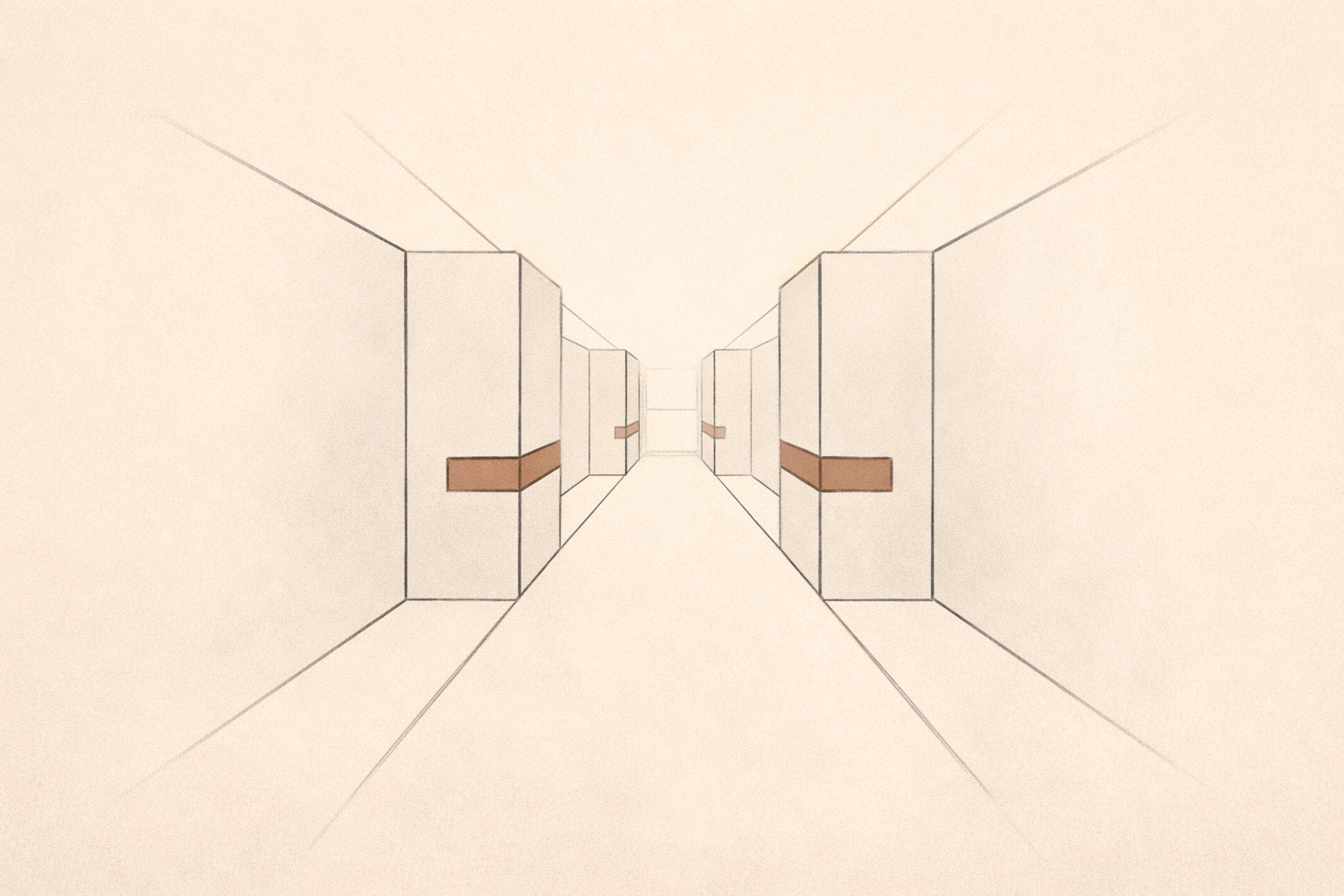
In physical spaces, guardrails do not exist to slow progress. They exist to prevent a fall. The best systems work the same way. They do not block forward motion. They narrow the corridor at the points where mistakes become expensive, irreversible, or quietly corrosive.
Good friction is not random. It is placed with intent.
- High-stakes steps: money movement, permissions, identity, access, safety settings.
- Irreversible choices: deletions, submissions, approvals, contract acceptance.
- Default drift zones: where “continue” becomes a habit and consent becomes automatic.
When systems remove all resistance, users learn a dangerous lesson: nothing requires attention. That is how judgment fades. Not through laziness, but through conditioning. It is also why systems making decisions can feel normal even when the outcome no longer matches a person’s goals.
Friction That Serves People, Not Platforms
Friction can be used for harm or for care. Some systems use friction to trap people. They make cancellation hard, privacy settings confusing, and exit paths hidden. That is manipulation dressed as usability.
Discipline calls for the opposite. Friction should exist to keep humans in the loop, not to keep them in a cage.
A simple test helps:
- Protective friction makes a risky choice clearer and a safe choice easier.
- Exploitative friction makes a safe choice harder and a risky choice easier.
Designed friction in systems should be legible. It should feel like a seatbelt, not a maze.
How to Design Friction on Purpose
This is not about adding steps everywhere. It is about placing resistance where it earns its keep.
- Add a confirmation step when outcomes cannot be undone, especially for destructive actions.
- Use meaningful prompts that name the consequence in plain language before acceptance.
- Require review for defaults tied to privacy, money, security, and long-term commitments.
- Create a manual checkpoint where a human must explicitly choose, not merely continue.
Speed is useful. But unbroken speed is how small errors become normal, and how normal becomes permanent.
Friction is not an obstacle to progress. It is often the price of safe progress.
This post closes the first arc in Tech as Discipline.
→ The Cost of Convenience: What Automation Removes That You Still Need
→ When Systems Make Decisions for You
→ NIST — AI Risk Management Framework (governance, accountability, trust)
→ FTC — Dark patterns and manipulative design (when friction is used against users)
Designed friction in systems is not about control. It is about care. A system that cannot slow down at the right moments is not efficient. It is reckless.