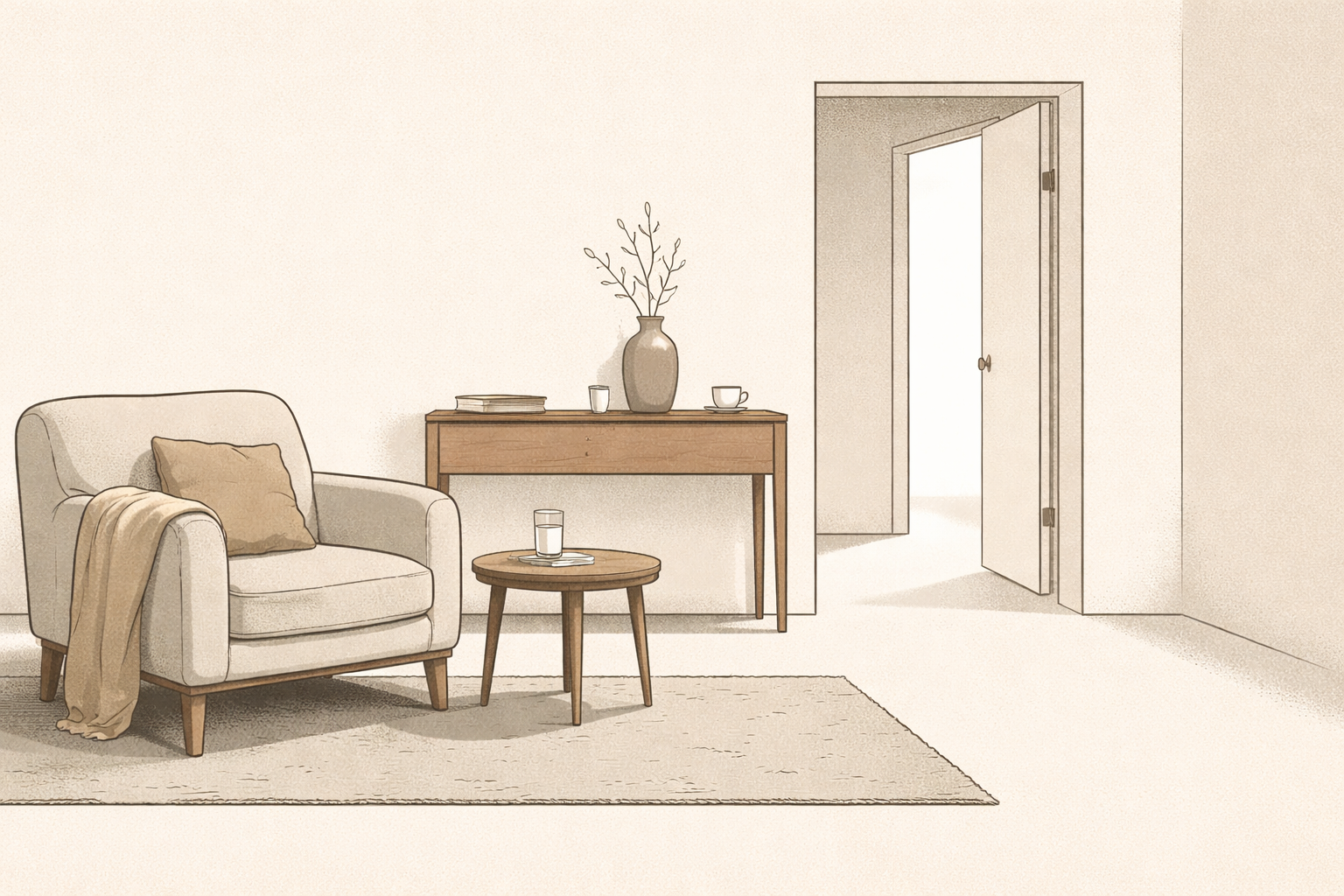
The soft life only works with soft life boundaries.
That is the part people keep leaving out.
The soft life gets marketed as calm mornings, gentle routines, slower decisions, pretty rooms, better lighting, and fewer demands. It looks peaceful from a distance. It sounds like a life where nothing interrupts your nervous system before noon.
Nice idea.
But without boundaries, softness does not become ease. It becomes access.
People imagine softness as an atmosphere. However, softness is not only an aesthetic. It is a structure. If nothing protects it, everything gets to use it.
That is where the fantasy starts leaking.
The Soft Life Is Not Just a Mood
The soft life is often sold as a visual language. Neutral colors. Slower mornings. Better skincare. Candles behaving like a personality. A chair no one is allowed to sit in because it is there for the concept.
There is nothing wrong with wanting calm. There is nothing wrong with wanting less noise, less panic, and less of the constant performance of being available to everyone in every direction. That desire makes sense.
The issue is that aesthetics can make a life look peaceful before the system underneath changes.
People can buy softer things and still keep the same hard arrangements. They can change the room and keep the same expectations. They can make the morning beautiful and still spend the rest of the day answering to every request like availability is their main identity.
That is not softness.
That is a rebrand.
Without Boundaries, Softness Becomes Access
What looks soft from the outside can become exhausting up close. When time is unprotected, rest turns into interruption. When availability is assumed, flexibility turns into obligation. When every request feels reasonable, your life slowly becomes a shared resource nobody agreed to maintain.
This is why so many people chasing the soft life still feel tired.
They changed the aesthetic, not the system.
A calm room does not fix an unguarded calendar. A softer routine does not fix automatic yeses. A peaceful morning does not protect a day where everyone still gets immediate access.
Eventually, ease becomes something you have to defend instead of something you get to inhabit.
And once ease needs constant defense, the soft life is already in trouble.
That is usually where saying yes too quickly stops looking polite and starts looking expensive.
Soft Life Boundaries Make Ease Legible
Soft life boundaries do not make life harsh. They make it legible.
Boundaries decide what gets access and what does not. They reduce constant negotiation. They stop every request from becoming an emotional hearing where you have to prove why rest deserves protection.
Without boundaries, even good things become draining.
Invitations feel heavy. Opportunities feel compulsory. Small asks start adding up like they are secretly working together. Rest becomes fragile because it can be taken away at any moment.
That is the part nobody puts on the mood board.
The real soft life is not just what you add. It is what you stop allowing. It is what no longer gets automatic access. It is the meeting you decline, the call you do not stretch, the expectation you stop renewing, and the guilt you finally stop treating as a project manager.
That last one is important because guilt is very organized.
It will have your whole week scheduled if you let it.
Ease Requires Edges
The soft life is not about doing less in a vague inspirational way. It is about deciding better.
Real ease usually looks boring from the outside. Predictable. Protected. Repetitive. It has edges. It has limits. It has hours where people are not supposed to reach you and decisions that do not reopen just because someone uses a softer tone.
That can feel strange at first because many people were taught that ease has to be earned through exhaustion.
Rest becomes acceptable only after collapse. Boundaries become acceptable only after resentment. No becomes acceptable only after the body starts submitting evidence.
Terrible system.
Very popular.
This is why exhaustion is not always just exhaustion. Sometimes it is what happens when a life has no protected structure for recovery, clarity, or honest desire.
It also explains why waiting for the perfect choice can quietly keep people in arrangements they already know are too expensive.
Without boundaries, the soft life is not soft at all.
It is just unguarded.
Softness Without Structure Becomes Performance
There is another reason the soft life disappoints people.
Sometimes the goal quietly changes.
Instead of building a life that feels sustainable, people start building one that looks calm from the outside.
The routines become visible. The language becomes softer. The environment improves. However, the underlying agreements remain exactly the same.
The same availability.
The same interruptions.
The same automatic yes.
The same habit of treating personal time like unused inventory.
That creates a strange experience where life appears easier but does not actually feel lighter.
Because performance and protection are not the same thing.
A life can photograph well and still feel expensive to maintain.
This is where people start saying things like:
“I’m trying to protect my peace.”
Which sounds healthy until peace becomes something that constantly needs emergency maintenance.
Real peace usually looks less dramatic.
It looks like decisions already made.
Hours already protected.
Expectations already adjusted.
Conversations that already happened.
The soft life does not remove responsibility.
It removes unnecessary negotiation.
That means boundaries are not evidence that softness failed.
They are evidence that softness is being maintained.
Which is less glamorous than the mood board.
But significantly more durable.
The Groundwork
The work is not to make life look softer.
The work is to make life harder to invade.
That does not mean becoming cold. It means becoming clear. It means deciding what protects your energy before the request arrives, not while someone is already standing in the doorway asking if this will “only take a minute.”
A softer life needs a stronger structure than people admit. It needs rules, rhythms, and enough honesty to stop confusing constant availability with kindness.
Because softness without protection turns into overuse.
And overuse eventually starts calling itself burnout.
Groundwork Actions
- Identify one part of your life that looks calm but functions without protection.
- Stop treating every small request as harmless.
- Build one boundary before resentment becomes the signal.
- Ask what needs less access, not only what needs more comfort.
The soft life is not soft because it looks peaceful.
It is soft because it is protected.
And yes,
that’s still us.
Further Groundwork
Stay With The Work
Groundwork Daily arrives quietly.
Thoughtful observations, systems worth noticing, and articles that usually begin with someone saying, “I never thought about it like that.”