
Article Map
Clarity before speed. Structure before spectacle.
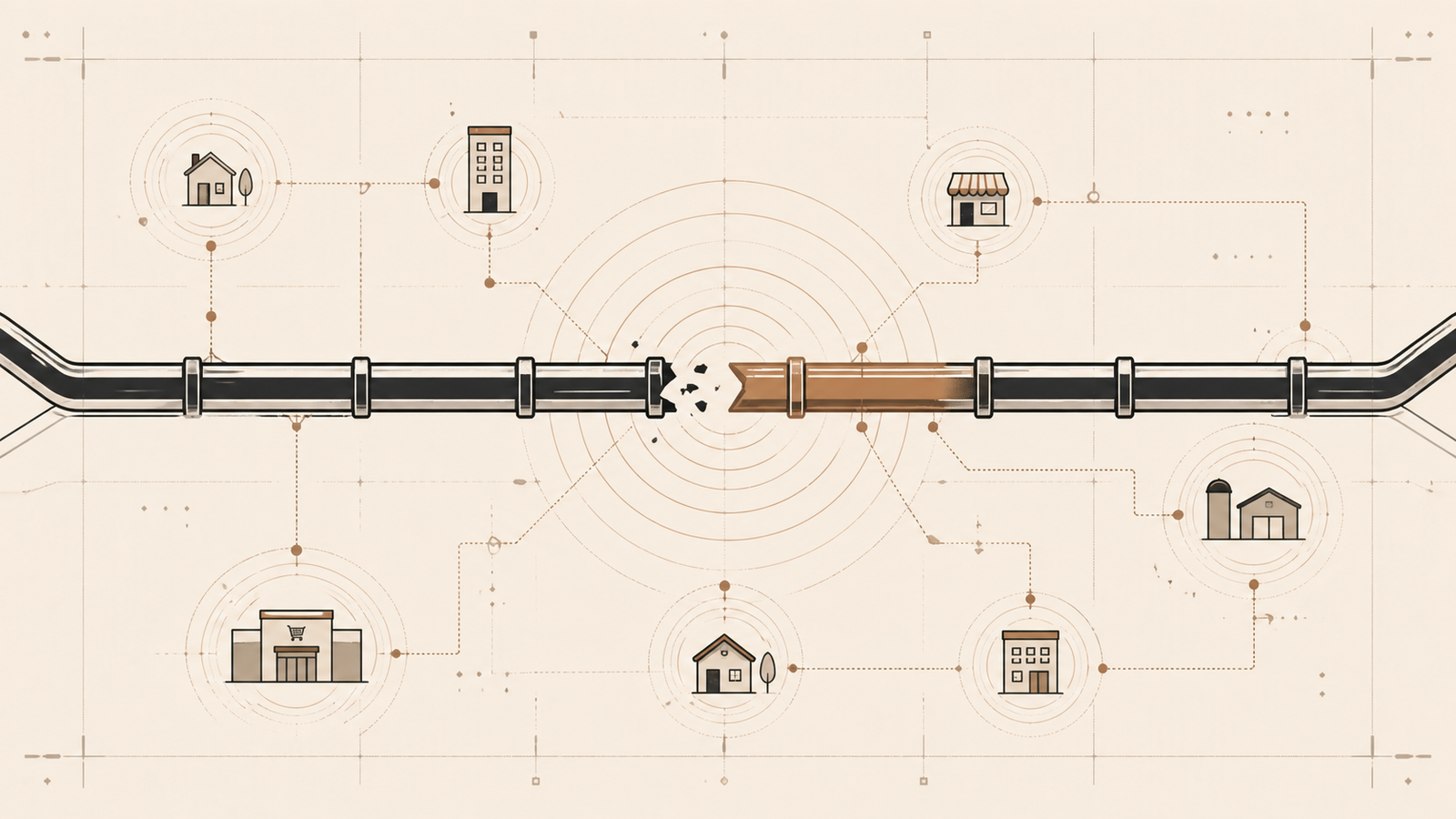
The SNAP System Restarted. The Failure Did Not.
The SNAP system failure did not end when November benefits resumed.
It simply became less visible.
The shutdown eventually ended. Emergency funding eventually arrived. Benefit cards eventually began working again.
However, those events describe operational recovery, not structural repair.
Months later, the more important question is no longer whether benefits resumed.
The question is whether the system learned anything.
Based on the available evidence, the answer is uncomfortable.
Not enough changed.
Federal authorization still determines whether benefit dollars begin moving.
State agencies still absorb most of the administrative burden.
Households still experience the disruption first.
Retailers still absorb the economic shock second.
Food banks still become the overflow system whenever government hesitates.
Those relationships remain unchanged.
That is why the November 2025 SNAP crisis still matters today.
Not because it was dramatic.
Because it exposed the operating assumptions beneath one of America’s largest public assistance programs.
A system has not been repaired simply because it has resumed operating. True repair occurs only when the conditions that produced failure have also been corrected.
The SNAP System Failure Was an Infrastructure Failure
Public discussion often describes SNAP as food assistance.
That description is incomplete.
SNAP is better understood as food infrastructure.
Infrastructure is any system that society quietly depends upon to function every day.
Electric grids distribute power.
Water systems distribute clean water.
Roads distribute movement.
Digital networks distribute information.
Likewise, SNAP distributes purchasing power through millions of households every month.
Once viewed through that lens, the November disruption looks different.
The problem was never simply delayed benefits.
The problem was interrupted circulation.
According to USDA Food and Nutrition Service data, SNAP serves tens of millions of Americans every month through coordinated federal funding and state administration.
That makes SNAP one of the largest recurring distribution systems in the country.
Programs operating at that scale require resilient operating procedures.
Instead, the November crisis demonstrated how dependent the system remained on political negotiation, court intervention, and emergency recalculation.
Roll Call reported that USDA ultimately released approximately $4.65 billion in contingency funding after legal pressure increased.
Even then, the amount represented only a partial month’s benefits.
States then faced weeks—or potentially months—of recalculating benefit levels.
The money eventually moved.
The operating model never changed.
Federal Funding
↓
SNAP Benefits
↓
Households
↓
Neighborhood Grocery Stores
↓
Food Distributors
↓
Local Economies
Interruptions near the top propagate throughout the entire system below.
The Operating System Behind the Crisis
Most public debate focused on politics.
Politics certainly mattered.
However, systems thinking asks a different question.
Why was a disruption of this size possible in the first place?
Healthy infrastructure anticipates failure.
Bridges account for wind.
Hospitals prepare for power outages.
Airports build redundant navigation systems.
Cloud providers distribute data across multiple locations.
Critical infrastructure assumes interruption will eventually occur.
Its design therefore emphasizes continuity.
The November SNAP disruption revealed something different.
It revealed a system designed primarily for normal operations rather than abnormal conditions.
That distinction matters.
Systems often fail during transitions rather than during ordinary operation.
The transition from full funding to emergency funding required court intervention, revised calculations, state coordination, and administrative adaptation.
Each additional step increased delay.
Each delay increased household uncertainty.
Each layer of uncertainty reduced overall resilience.
Viewed structurally, this was less a funding crisis than a continuity planning failure.
State-Level Risk Is Not Distributed Equally
National participation figures help explain scale.
State participation explains vulnerability.
According to USDA Economic Research Service data, SNAP served approximately 41.7 million Americans each month during fiscal year 2024.
Nationally, that represented roughly 12.3 percent of the U.S. population.
Yet those numbers hide significant variation.
New Mexico recorded the nation’s highest participation rate at approximately 21.2 percent.
Utah recorded the lowest at roughly 4.8 percent.
Most states fell somewhere between those extremes.
This matters because identical federal disruptions produce different local outcomes.
A state where one resident in five depends on SNAP experiences a fundamentally different economic shock than a state where participation remains below five percent.
Retail exposure changes.
Household vulnerability changes.
Food bank demand changes.
Administrative pressure changes.
Consequently, one national funding interruption becomes fifty different operational challenges.
That observation rarely appears in public debate.
Nevertheless, it explains why resilience cannot be measured solely at the federal level.
The strength of any national system ultimately depends on how well its local components withstand disruption.
\Participation Decline Is the New Warning Signal
By April 2026, the more important story was no longer the November interruption.
The more revealing story was what happened afterward.
Systems often reveal their true condition after a crisis rather than during one.
The emergency draws attention.
The recovery reveals whether the underlying structure improved.
In this case, the recovery exposed a different concern.
Participation continued falling.
According to the Center on Budget and Policy Priorities, SNAP participation declined by more than 3 million people, or roughly 8 percent, between July 2025 and January 2026 using USDA data.
Every state recorded a decline.
Furthermore, thirty-six states experienced reductions of at least five percent.
At first glance, those numbers might suggest improving economic conditions.
However, the broader data tells a different story.
National unemployment remained relatively stable near four percent during the same period.
If employment remained steady while participation dropped sharply, then reduced need alone cannot fully explain the change.
Something else entered the system.
That “something” deserves far more attention than it has received.
A declining participation rate does not automatically indicate declining need. Sometimes it reflects increasing friction inside the system itself.
Administrative Burden Quietly Becomes Policy
Most public conversations focus on eligibility.
Eligibility matters.
Yet it is only one part of the operating system.
The quieter mechanism is administrative burden.
Administrative burden rarely makes headlines.
Nevertheless, it shapes outcomes every day.
Each additional verification requirement adds friction.
Each additional document adds time.
Each additional processing delay creates uncertainty.
Each missed notice increases the likelihood that an otherwise eligible household disappears from the program.
None of these individual steps appear dramatic.
Together, they reshape participation.
Consider an ordinary household.
A parent changes jobs.
The family’s mailing address changes.
A renewal notice arrives late.
The call center has a two-hour wait.
A required document expires.
The case closes automatically.
Nothing about that sequence resembles a legislative vote.
Yet the household still loses access to food assistance.
From the family’s perspective, the outcome is identical to a benefit reduction.
The groceries simply do not arrive.
This illustrates an important systems lesson.
Policy does not operate only through legislation.
Policy also operates through procedure.
Rules shape access.
Processes shape participation.
Complexity shapes outcomes.
Consequently, administrative design deserves the same level of public scrutiny as statutory law.
Additional Requirements
↓
Longer Processing Times
↓
Missed Deadlines
↓
Closed Cases
↓
Lower Participation
Every additional layer of complexity removes some eligible households from the system.
The Retail Economy Depends on Predictable Flow
SNAP is often discussed through the experience of individual households.
That perspective is important.
However, it remains incomplete.
SNAP also functions as an economic circulation system.
Benefit dollars move rapidly.
Families purchase groceries.
Retailers replenish inventory.
Distributors schedule deliveries.
Suppliers increase production.
Employees receive wages.
Local tax revenue continues flowing.
The system works because the movement is predictable.
Predictability is infrastructure.
Interruptions create instability long before official economic reports detect the change.
Large national retailers possess greater financial flexibility.
Small neighborhood grocers often do not.
For stores operating inside high-SNAP communities, benefit timing influences staffing, ordering schedules, inventory management, and cash flow.
A delayed payment therefore becomes more than a household problem.
It becomes a neighborhood business problem.
The disruption continues moving outward.
This is why describing SNAP solely as assistance misses the larger picture.
It is purchasing power moving through a local economic network.
Remove the flow, and pressure travels throughout the system.
Households
↓
Neighborhood Grocery Stores
↓
Food Suppliers
↓
Transportation Networks
↓
Workers
↓
Local Communities
Reliable circulation strengthens every layer beneath it.
Food Banks Became the Backup Operating System
When SNAP slows, food banks accelerate.
That sounds reassuring.
Structurally, it should be alarming.
Food banks were never designed to replace a national entitlement program.
They exist to supplement community need.
They respond to disasters.
They support temporary hardship.
They depend heavily on donations, volunteers, logistics partners, and local generosity.
Those strengths make them extraordinarily valuable.
They do not make them substitutes for federal infrastructure.
During the November disruption, charitable organizations absorbed demand that the public system temporarily could not meet.
That response demonstrated remarkable community resilience.
It also exposed structural dependence.
Whenever charitable capacity becomes the contingency plan for government infrastructure, the system has quietly shifted responsibility without formally acknowledging it.
The immediate emergency may end.
The additional workload often remains.
Food banks recruit more volunteers.
Warehouses expand operating hours.
Distribution schedules increase.
Fundraising expectations rise.
Community demand stays elevated.
In other words, the crisis migrates.
It no longer appears inside federal budget negotiations.
Instead, it appears inside warehouse shelves, church pantries, neighborhood nonprofits, and local distribution centers.
That migration matters because hidden strain rarely disappears.
It simply changes location.
When emergency organizations become permanent operating infrastructure, the original system has transferred responsibility rather than solved the underlying problem.
What Actually Needs to Change
The November 2025 SNAP crisis exposed more than a funding interruption.
It exposed an operating model that depends too heavily on political stability.
Essential infrastructure should not become fragile every time Congress reaches an impasse.
Electric grids are designed with redundancy.
Air traffic systems maintain backup procedures.
Hospitals prepare for power failures.
Likewise, food assistance infrastructure should continue operating when political negotiations stall.
That requires structural reform rather than emergency improvisation.
Four changes would substantially strengthen the system.
1. Automatic Continuity Protection
Essential food benefits should continue automatically during temporary federal funding interruptions.
Households should not depend upon emergency court rulings before groceries become affordable again.
An automatic continuity trigger would allow SNAP to operate through short-term shutdowns while elected officials negotiate longer-term funding.
This principle already exists elsewhere.
Hospitals continue treating patients during political disputes.
Emergency services continue responding to calls.
Water utilities continue delivering water.
Critical systems remain operational because interruption creates unacceptable public risk.
Food assistance deserves the same level of operational discipline.
2. Fully Funded Emergency Reserves
The November contingency funding covered only part of a normal benefit cycle.
Partial funding still creates full uncertainty.
Families cannot purchase half of a month’s groceries simply because government released half of a month’s funding.
Emergency reserves should therefore support an entire benefit cycle rather than partial distributions.
Predictability matters almost as much as funding itself.
Households build monthly budgets around expected benefit dates.
When those expectations collapse, every other financial obligation shifts as well.
Rent payments become harder.
Transportation becomes uncertain.
Medication may be delayed.
Debt grows quietly.
Emergency reserves should reduce that uncertainty instead of extending it.
3. Modernize State Delivery Systems
The November disruption also revealed uneven administrative capacity across states.
Some agencies adapted quickly.
Others required substantially longer to implement revised calculations.
That inconsistency should concern policymakers.
Federal programs depend upon state operating systems.
If those systems vary widely in capability, resilience varies as well.
Modernization is therefore not simply a technology project.
It is a continuity project.
Updated eligibility systems.
Improved case management software.
More reliable communications.
Better digital verification tools.
These investments reduce administrative delay before the next emergency arrives.
4. Protect Access During Administrative Change
Administrative reform should improve access rather than quietly reduce participation.
That distinction matters.
Governments understandably pursue program integrity.
Accurate eligibility protects public resources.
However, administrative complexity can become its own barrier.
Every additional form.
Every additional verification step.
Every additional deadline.
Every additional processing delay.
Each one increases the probability that eligible households disappear from the system.
Consequently, reform should measure not only fraud reduction but also successful access for eligible participants.
A system that accurately excludes ineligible applicants while unintentionally excluding eligible households has solved only half the problem.
Program Integrity
↓
Operational Simplicity
↓
Reliable Access
↓
Public Trust
Strong systems protect public resources while remaining accessible to the people they are designed to serve.
The Broader Lesson Extends Beyond SNAP
Although this article focuses on food assistance, the underlying lesson applies much more broadly.
Every modern institution depends upon reliable operating systems.
Public transportation.
Healthcare.
Education.
Banking.
Communications.
Energy.
Water.
Housing.
Whenever society depends on a system every day, resilience becomes more important than political convenience.
The strongest systems are rarely noticed because they continue functioning during disruption.
Weak systems attract attention only after failure becomes unavoidable.
The November SNAP crisis belongs in that second category.
It revealed weaknesses that already existed.
The shutdown merely made them impossible to ignore.
The System: Updated
The immediate emergency passed.
Benefits resumed.
Stores reopened normal purchasing patterns.
Most headlines moved on.
The operating system did not evolve enough.
Federal funding still represents the single point of failure.
State agencies still shoulder uneven administrative burdens.
Eligible households still encounter significant procedural friction.
Food banks remain the unofficial contingency plan whenever public systems hesitate.
Those conditions continue to exist.
The restart should not be mistaken for repair.
Repair requires redesign.
It requires continuity planning.
It requires stronger administrative capacity.
It requires funding mechanisms that recognize food assistance as essential infrastructure rather than discretionary spending.
Most importantly, it requires a shift in public understanding.
SNAP is not merely a benefits program.
It is part of the nation’s economic operating system.
Infrastructure succeeds because people rarely think about it.
Electricity becomes visible when the lights go out.
Water becomes visible when the pipes fail.
Food assistance becomes visible when grocery carts stop moving.
The November 2025 crisis briefly made that invisible infrastructure visible.
The question now is whether policymakers—and the public—choose to remember what the failure revealed.
Systems that resume operation without structural improvement rarely fail for the last time.
They simply wait for the next stress test.
Recognition Skill
After reading this System Update, you should now be able to recognize the difference between restarting a public system and repairing a public system.
A system can resume operation while remaining structurally vulnerable.
True repair occurs only when the conditions that produced the original failure have also been corrected.
When evaluating future disruptions, ask four questions:
- Did the system merely restart, or was its design improved?
- Has administrative complexity increased or decreased?
- Who absorbs the cost when the system fails?
- What structural weakness remains after public attention fades?
Those questions apply not only to SNAP, but to healthcare, transportation, housing, education, disaster response, banking, energy, and every institution that quietly supports everyday life.
Further Groundwork
Continue building institutional literacy through these related articles:
→ Part 1: The November 2025 SNAP Crisis: Acute Shock and Immediate Fallout
Receipts
The analysis in this article draws from publicly available reporting, government publications, and nonpartisan policy research.
- U.S. Department of Agriculture Food and Nutrition Service — SNAP National and State Data
- USDA Economic Research Service — SNAP Participation by State
- Center on Budget and Policy Priorities — SNAP Participation Tracker
- Roll Call — USDA Contingency Funding During the November 2025 SNAP Disruption
- POLITICO — Federal SNAP Contingency Funding Coverage
Stay Grounded
Groundwork Daily exists to build institutional literacy.We examine the systems behind headlines so today’s news becomes tomorrow’s understanding.
Receive weekly analysis that helps you recognize patterns, understand incentives, and think structurally rather than react emotionally.
Editorial Note
This article is educational.Its purpose is to improve institutional literacy by explaining how public systems operate.It is not legal advice, financial advice, or public benefits guidance.Program rules, eligibility requirements, and administrative procedures may change over time.Readers should consult official government resources for current eligibility and program information.
Meet the Builder

Langston Reed
Builder, Civic Power & Policy
Langston Reed helps readers understand how institutions, governance, and public policy shape everyday life.His work develops institutional literacy by translating complex civic systems into practical frameworks that remain valuable long after the news cycle has moved on.Rather than focusing only on events, Langston explains the structures, incentives, and operating systems that quietly produce them.
“Institutions reveal themselves not through what they promise, but through the incentives they create and the outcomes they consistently produce.”
Continue Learning
About the Series
System Updates examines how institutions respond under pressure.Rather than following headlines alone, each article studies the incentives, governance, operational design, and structural decisions that produce real-world outcomes.The goal is not simply to explain what happened.The goal is to explain why the system behaved the way it did, how similar failures emerge across institutions, and what changes would make those systems more resilient.Every article builds institutional literacy by teaching readers to recognize recurring patterns rather than isolated events.
Groundwork Daily Standard
Every System Updates article is built around one objective:
Recognize the system.
Understand the incentives.
Strengthen institutional literacy.
Today’s headlines eventually become yesterday’s news.The systems behind them remain.Understanding those systems is how durable civic knowledge is built.