
Money Monday
Two incomes can do more than make life comfortable. When a household protects margin and directs surplus deliberately, dual income can become a financial accelerator.
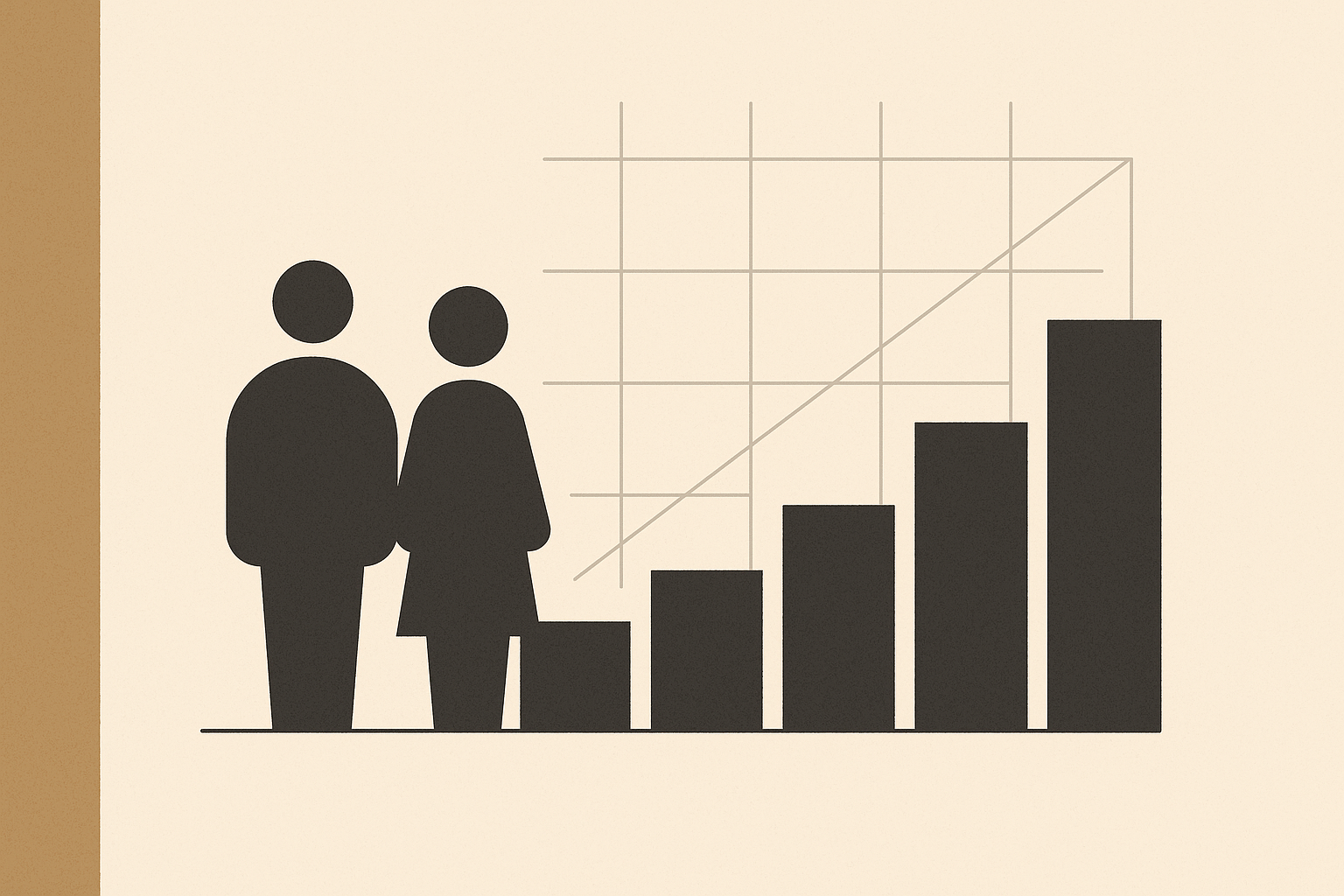
DINK wealth velocity is what happens when two disciplined incomes stop funding two separate lifestyles and start moving toward one financial objective. Dual income then becomes more than comfort. It becomes acceleration.
The advantage does not come simply from earning two salaries. Plenty of two-income households earn well and still struggle to build durable financial position.
The difference is what happens after the bills are paid.
When shared costs create surplus, a household gets something valuable: room. That room can become savings, investments, equity, ownership, and flexibility. However, it can disappear just as easily into upgraded housing, vehicles, travel, convenience, and recurring obligations.
Therefore, DINK wealth velocity is not automatic. It is built through structure, alignment, and repeated direction of surplus.
Definition
What DINK Wealth Velocity Actually Means
Most households do not lose financial progress because they never receive more income. Often, additional income arrives and is quickly absorbed by higher expenses.
In a dual-income household without children, the equation can be different. Two incomes may support one shared base of expenses rather than two completely separate cost structures.
The Gap Between Income and Obligation Creates Speed
Housing, utilities, internet, furniture, and many other household expenses are shared. In addition, the absence of childcare costs can leave more room for saving and investing.
As a result, earnings can rise faster than required spending.
That gap is the source of momentum.
On its own, however, margin is only potential. It becomes DINK wealth velocity when surplus is directed toward durable financial position rather than automatically converted into a more expensive lifestyle.
Structural Advantage
The Three Conditions Behind DINK Wealth Velocity
Financial acceleration becomes possible because several advantages can operate at the same time.
01
Shared Fixed Costs
Two earners supporting one household base can create consistent monthly surplus when costs remain controlled.
02
Parallel Income Growth
When both careers advance, raises and promotions can expand household margin faster than a single income alone.
03
Lower Dependency Load
Without childcare and dependent-driven costs, more income may remain available for reserves, ownership, and long-term positioning.
Together, these conditions create capacity. Without discipline, capacity becomes lifestyle inflation. With structure, it can become financial acceleration.
Operating System
Four Moves That Build Long-Term DINK Wealth Velocity
Income creates the opening. These four moves determine whether the opening becomes a durable advantage.
Lock the Lifestyle Ceiling
First, refuse to let every raise rewrite the household’s cost structure. Set deliberate limits around housing, vehicles, subscriptions, convenience, and other recurring expenses. As income grows, margin should grow with it.
Automate Ownership Before Spending
Next, make useful behavior occur before discretionary behavior. Automated transfers into reserves, retirement accounts, and investments convert intention into repetition. Because the money moves first, less depends on mood or memory.
Build One Shared Financial Direction
Then, create alignment. Two incomes without a common direction can produce two competing financial systems. A household that agrees on what it is building can direct surplus with far more precision.
Convert Surplus Into Assets
Finally, turn financial margin into ownership. Retirement accounts, diversified investments, business equity, or carefully chosen property can strengthen long-term positioning. Otherwise, surplus can vanish into upgrades that increase consumption without increasing control.
Risk
DINK Wealth Velocity Disappears When the Window Is Wasted
The absence of structure can produce the appearance of success for a long time.
Travel expands. Convenience increases. Housing improves. Restaurants become routine. Yet the underlying financial position may remain nearly unchanged.
Comfort Can Hide a Weak Balance Sheet
Eventually, circumstances change. Career growth slows, health needs appear, caregiving enters the picture, or the household simply reaches a different season of life.
At that point, underbuilt reserves and delayed ownership become more visible. Instead of benefiting from years of compounding, the household must work harder to recover ground that could have been secured earlier.
In other words, the opportunity was real. It simply was not protected.
Design
Designing DINK Wealth Velocity on Purpose
DINK wealth velocity is engineered. A strong household defines the destination, calculates available margin, and then directs that margin consistently.
The operating question is not simply, “How much do we make?” A better question is, “How much of what we make is still available to build our future after normal life is paid for?”
A DINK household should be able to answer:
- What is the household’s target savings and investing rate?
- How much cash reserve is enough for the household’s actual obligations?
- What percentage of each raise will remain unspent?
- Which assets are being built with recurring surplus?
- Which lifestyle costs have a firm ceiling?
- What financial position should exist five years from now if both incomes continue?
Once those answers are clear, dual income becomes more than a temporary lifestyle phase. It becomes a system for stability, flexibility, ownership, and control.
The Velocity Sequence
Financial Speed Comes From Direction
Two incomes → Shared costs → Margin → Alignment → Allocation → Ownership → Optionality
Structural Takeaway
DINK Wealth Velocity Is Built in the Gap
Income creates the opportunity. However, income alone does not create the outcome.
The real advantage is the margin left after normal life is funded. Protect that margin, align around a shared destination, and direct it toward assets before lifestyle absorbs it.
If both incomes rise for the next five years, what exactly will the household own, control, or no longer owe because of it?
More income creates capacity. Discipline gives it direction. Ownership gives the speed somewhere worth going.

Groundwork Daily Core Principle
Discipline Before Dollars
Resources amplify the behavioral structure already present. More income becomes more powerful when discipline governs it before lifestyle does.
Explore the Principle →Continue Building
Follow the DINK Financial Architecture
Leverage
The DINK Advantage
Why dual income can create unusual financial leverage when fixed costs and priorities remain controlled.
Risk
Hidden Risks of DINK Life
The structural weaknesses that can hide beneath high income and apparent financial comfort.
Compounding
DINK Wealth Divergence
How similar two-income households can compound toward completely different financial outcomes.
Receipts
Sources Behind the Structure
Groundwork Architecture
Where This Article Lives
Groundwork Daily
Build the Structure Before You Need It
Groundwork Daily examines money, ownership, family, discipline, systems, and the decisions that determine what holds when pressure arrives.
Join the Groundwork List