
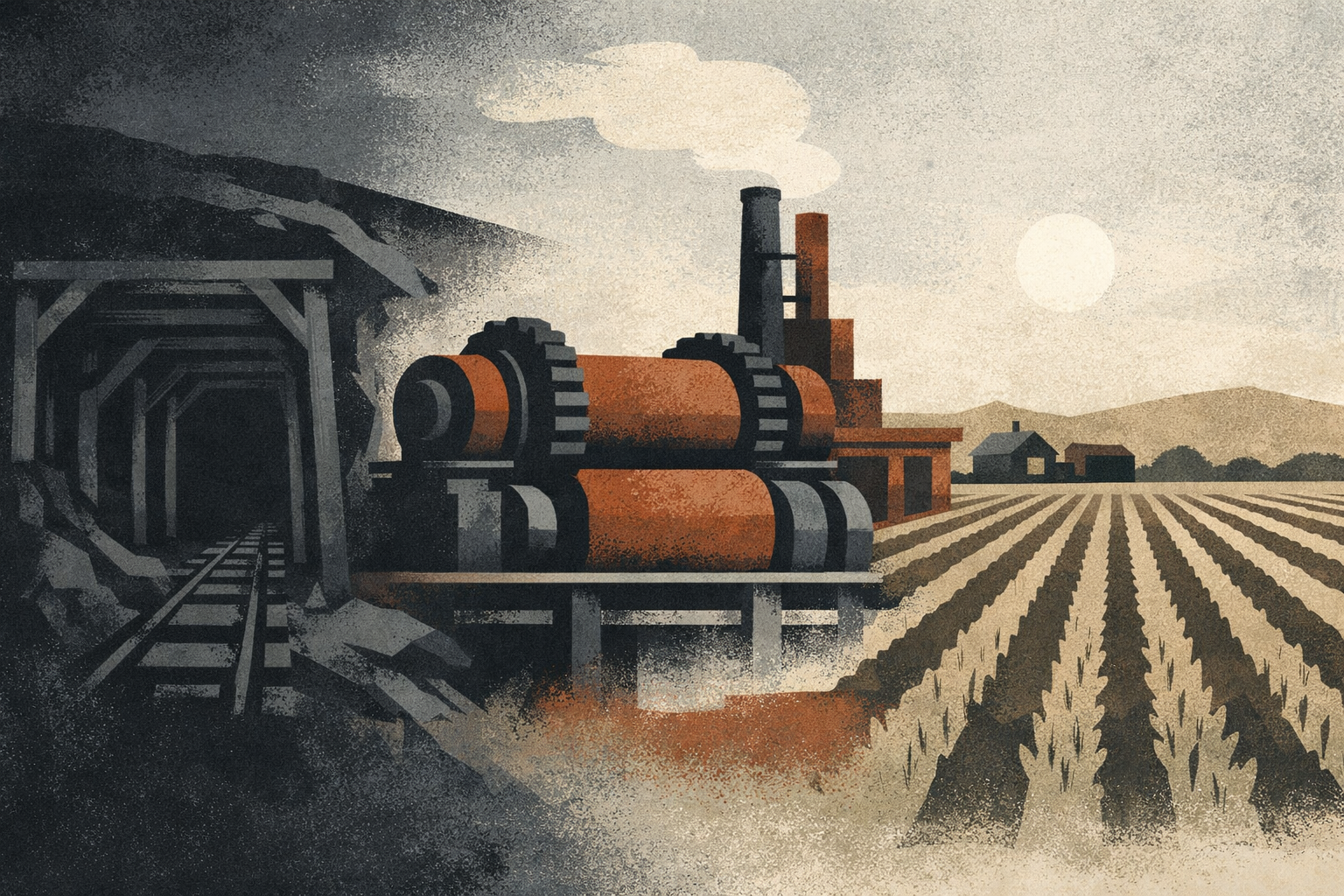
Slavery history is often treated as a closed chapter.
That assumption creates a dangerous blind spot.
Legal abolition changed the surface of slavery. However, it did not remove every structure of coercion. The chains came off, yet systems of extraction repositioned themselves inside contracts, prisons, debt structures, migration pipelines, and global supply chains.
Across slavery history, forced labor has taken many forms, including chattel ownership, debt bondage, penal labor, and coerced migration. Although the language evolved, the objective remained consistent: control labor, limit exit, and extract value.
The System Behind the History
Slavery is often framed as a moral failure tied to a specific era. While that framing is not incorrect, it is incomplete. It reduces a repeatable system into a past event.
Instead, a stronger interpretation treats slavery as a structure of labor extraction. In this structure, power concentrates, mobility shrinks, and labor is controlled under pressure. Because the structure is repeatable, it reappears under different legal and economic conditions.
To understand it clearly, the focus must shift from events to mechanics.
The Coercion System Model
A labor force with limited power
Restricted exit through force, debt, or dependency
Value transferred from labor to control
Hidden, normalized, or legalized systems
Across time, these four elements remain consistent even as the language changes.
For example, chattel slavery relied on physical force as the primary constraint. By contrast, debt bondage relies on financial pressure. Meanwhile, modern systems often depend on legal complexity and geographic isolation.
Different mechanisms operate. However, the structure remains consistent.
What Changed After Abolition
Once ownership became illegal, systems adapted. Instead of direct control, they shifted toward indirect pressure.
For instance, contracts began to replace chains. Similarly, supply chains replaced centralized ownership. In addition, institutions enforced compliance through policy rather than visible force.
As a result, coercion became harder to identify, even though it did not disappear.
Why This Still Matters
Modern coercion rarely presents itself clearly. Instead, it blends into standard economic activity.
Because of that, many people misinterpret exploitation as opportunity. Others defend systems that limit their own mobility. In some cases, legality is mistaken for fairness.
The International Labour Organization defines forced labor as work performed involuntarily under threat of penalty. Therefore, the definition expands the conversation beyond ownership and toward systems of constraint.
Once applied, slavery history becomes a tool for analyzing present-day labor conditions, not just a record of past injustice.
The Full Series
This series breaks the system down step by step, moving from history to modern application.
Slavery is not only a story about the past.
It is a blueprint for how systems survive reform.
Once the structure becomes visible, the question shifts.
Can you recognize coercion when it no longer uses the language of slavery?
