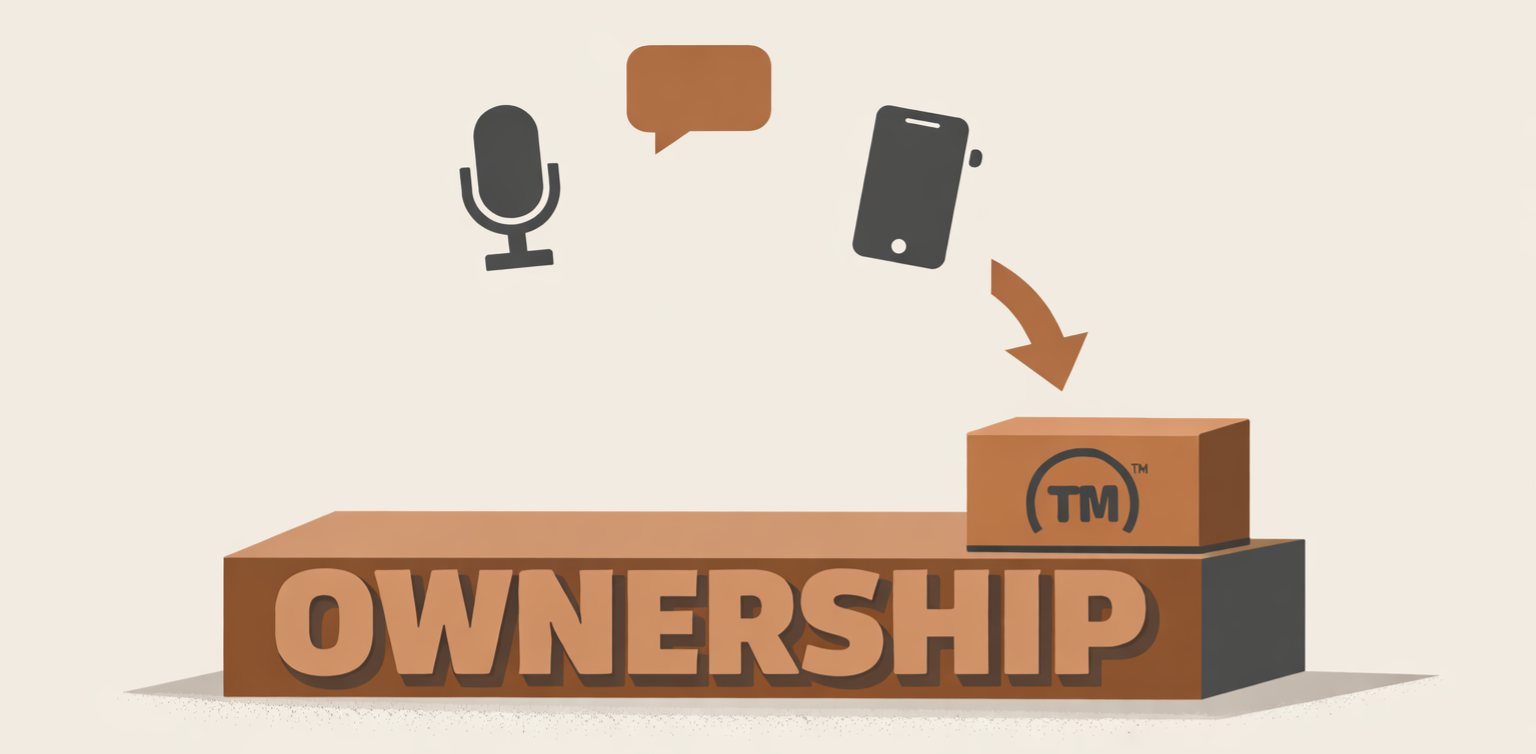
Attention creates value. Ownership determines who keeps it.
The Tenderism controversy is not really about food or internet drama. It is a real-time case study in the economics of digital culture. A phrase spread rapidly through social media, a personality became a recognizable brand, and then the central economic question appeared: who owns the asset behind the attention?
In today’s media environment, creators can generate enormous visibility in a matter of hours. What many creators do not yet control is the infrastructure that converts that visibility into durable economic value.
What Is the Creator Ownership Economy?
The creator ownership economy describes a model where creators control the intellectual property associated with their work rather than simply producing content for platforms. Instead of earning only advertising payouts, brand deals, or temporary sponsorship revenue, creators secure ownership of trademarks, formats, products, and licensing rights tied to their identity or ideas.
Ownership transforms cultural influence into an asset. Without ownership, influence remains temporary exposure.
The Platform Economy Reality
Modern creators operate inside platform economies built on a simple structure. Platforms monetize attention through advertising, subscription fees, and user data. Creators generate the attention that fuels that system but rarely own the infrastructure that converts that attention into profit.
The result is a familiar imbalance. A creator may produce the cultural moment while a platform captures the majority of the economic value. Unless creators secure ownership over the intellectual property surrounding their work, the economic upside flows elsewhere.
Income vs Ownership
The creator economy now operates on two distinct financial models.
Income Model
- Brand deals and sponsorships
- Platform advertising payouts
- Short-term influencer campaigns
- Appearance fees and promotional content
Ownership Model
- Trademarks and intellectual property
- Licensing rights
- Product brands and merchandise
- Media formats and content franchises
Income compensates activity. Ownership builds assets.
The difference determines whether a creator experiences a series of temporary paydays or develops something that can generate value long after the original moment passes.
Three Structural Lessons From the Tenderism Moment
Visibility Without Ownership Is Vulnerability
A viral moment can elevate a creator quickly, but speed works both ways. If legal ownership of a phrase, concept, or brand identity is not secured early, someone else may move to formalize the asset first.
In economic terms, the creator becomes the marketing engine for a property they do not fully control.
Intellectual Property Converts Culture Into Capital
Trademarks, copyrights, and licensing rights are often treated as legal formalities. In reality, they are the economic bridge between culture and capital.
Once intellectual property is secured, a phrase, symbol, or format becomes a defendable economic asset that can be licensed, expanded, and monetized across multiple markets.
Community Support Is Powerful but Temporary
Public pressure can influence outcomes in moments like the Tenderism controversy. Communities often rally to defend creators whose work appears to be appropriated.
But community momentum is not a long-term strategy. Creators ultimately need legal ownership structures that protect their work regardless of online sentiment.
Why Ownership Scales
Labor produces income. Ownership produces leverage.
A creator can only produce a finite number of videos, appearances, or collaborations. But an owned intellectual property asset can be licensed across products, media channels, and partnerships simultaneously.
That is why the most durable creator businesses move beyond content production into intellectual property development.
A Practical Ownership Checklist for Creators
When a phrase, format, or idea begins to gain traction, creators should think like operators rather than entertainers.
- Conduct trademark research to determine whether a phrase or brand can be protected.
- Register intellectual property early when possible.
- Separate personal identity from employer ownership structures.
- Document agreements with collaborators and managers clearly.
- Develop a licensing strategy that allows expansion without surrendering control.
The Economic Bottom Line
The creator economy is entering a more mature phase. Visibility alone no longer determines success. The decisive factor is whether creators convert cultural attention into owned infrastructure.
Platforms distribute attention. Communities amplify it. But ownership determines who captures the value created along the way.
Creators who understand this dynamic early position themselves to build assets rather than simply participate in trends.
- Discipline Before Dollars — Why strong systems matter before financial opportunity arrives.
- Structure Builds Freedom — The role of infrastructure in turning effort into durable outcomes.
Build better. Every day.