Deterrence and miscalculation in geopolitics sit at the center of one of the most dangerous patterns in international affairs. Great powers build military strength to prevent war. They signal resolve, expand capabilities, and try to convince rivals that aggression would be too costly. However, that strategy depends on one fragile assumption: leaders must correctly predict how other states will interpret those signals.
History shows they often fail.
Again and again, powerful nations enter crises believing their strength will stabilize the situation. Instead, rivals read the same moves differently. Signals are misunderstood. Timelines are misjudged. Risk tolerance is misread. What was designed as deterrence begins to drift toward escalation.
What Deterrence and Miscalculation in Geopolitics Actually Mean
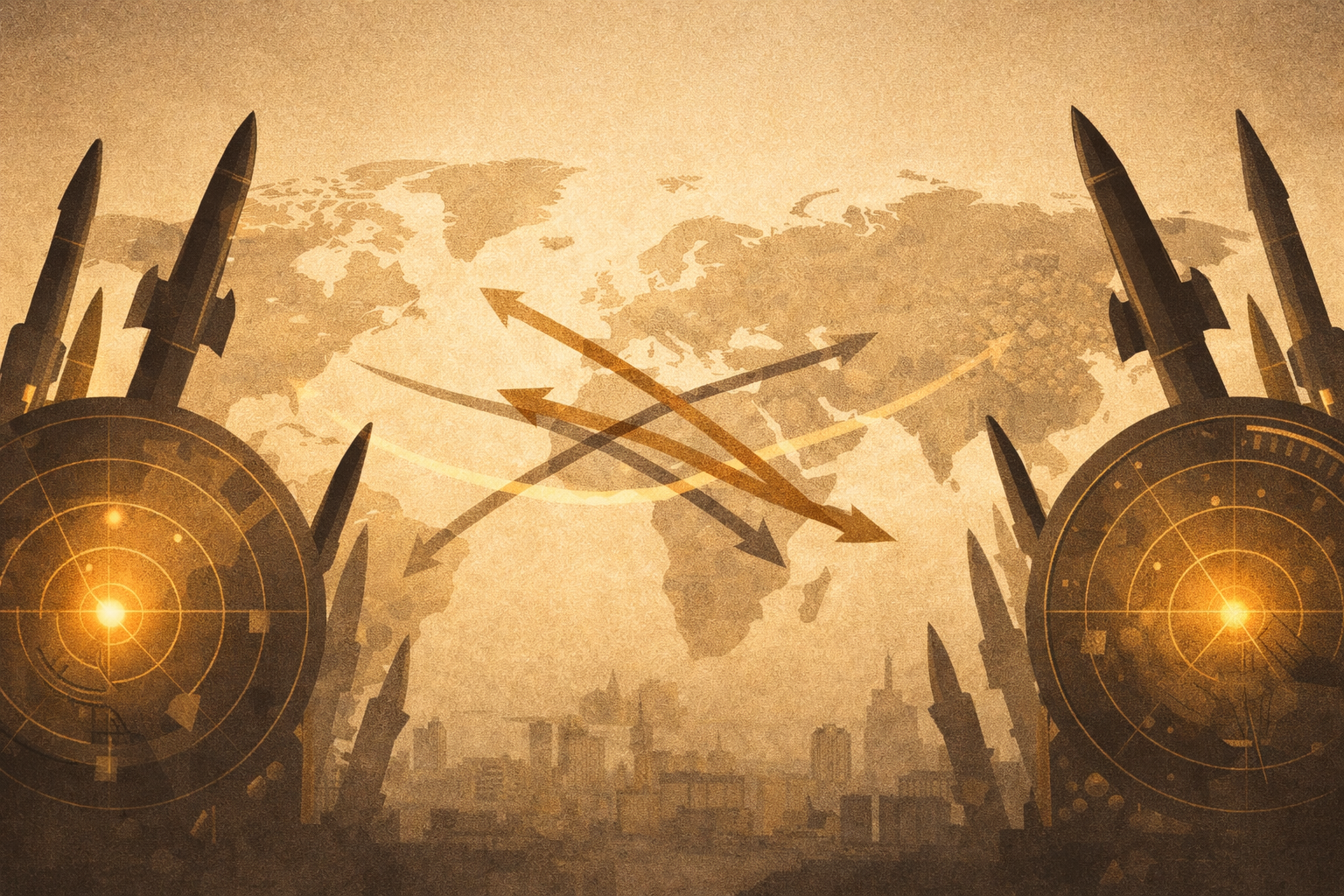
Deterrence is the attempt to prevent conflict by making the cost of aggression look too high. A state builds military strength, forms alliances, hardens defenses, or signals willingness to retaliate so that rivals decide not to attack.
On paper, that logic looks clean. If the cost is obvious, conflict should be avoided.
The problem is that deterrence works only when rivals interpret the signal as intended. That is where miscalculation enters. Leaders may believe they are projecting strength and stability, while their opponents interpret the same actions as bluff, panic, weakness, or preparation for attack.
Deterrence and miscalculation in geopolitics are therefore linked. The more strategy depends on interpretation, the more room exists for error.
Why Great Powers Keep Getting the Future Wrong
Great powers often misjudge crises because prediction is harder than planning. Governments can estimate troop levels, industrial capacity, and weapons systems. They cannot fully predict fear, pride, domestic politics, leadership psychology, alliance reactions, or the speed at which events will change once conflict begins.
That gap matters.
A country may assume its rival will back down under pressure. Instead, the rival may double down to avoid looking weak. A state may believe limited force will restore order quickly. Instead, the action may widen the war, trigger economic blowback, or strengthen the opponent’s resolve.
In short, leaders do not just deter with weapons. They deter through expectations. And expectations are where many strategies break apart.
How Overconfidence Distorts Deterrence
Miscalculation is rarely random. It often grows from overconfidence.
Powerful states tend to believe their intelligence is better, their technology is superior, and their strategic reasoning is more disciplined than that of their rivals. That belief can produce a dangerous illusion of control. Leaders begin to treat uncertainty as manageable when, in reality, the system remains unstable.
This is one reason deterrence and miscalculation in geopolitics deserve to be studied together. Strength alone does not prevent error. In some cases, strength encourages it. The more convinced leaders become that they understand the board, the easier it is to overlook how another player sees the game.
Historical Patterns of Deterrence Failure
History offers repeated examples of great powers getting these calculations wrong.
Before World War I, major states built alliances, armies, and mobilization plans in part to deter rivals. Instead, those preparations created a rigid and highly combustible environment. Once crisis hit, deterrence did not hold. Miscalculation, speed, and fear did the rest.
During the Cold War, nuclear deterrence arguably prevented direct large-scale war between the United States and the Soviet Union. Yet the same period also produced repeated moments of near catastrophe because each side struggled to interpret the other’s intentions with confidence.
More recent conflicts show the same pattern in new forms. Governments misjudge sanctions, underestimate resistance, overestimate alliance discipline, and assume that technological superiority will produce clean outcomes. The future, stubbornly, refuses to obey the briefing memo.
Deterrence and Miscalculation in Geopolitics Now
Modern technology makes the problem even more complicated.
Cyber operations, artificial intelligence, missile defense, hypersonic weapons, satellite infrastructure, and autonomous systems all increase the speed and ambiguity of strategic competition. States must make decisions in environments where capability is harder to measure and intentions are easier to disguise.
That means deterrence and miscalculation in geopolitics now extend well beyond tanks and troop movements. They also involve software, chips, networks, timing, and infrastructure resilience.
This is why the modern geopolitical contest is not just about military force. It is also about information quality, production systems, and the capacity to absorb surprise.
Why This Matters for Strategic Thinking
The real lesson is not that deterrence is useless. It is that deterrence is fragile.
It works best when signals are clear, expectations are disciplined, and leaders resist the temptation to confuse capability with certainty. It fails when governments assume rivals will think exactly the way they do.
That point matters for serious civic and geopolitical analysis. Too much commentary treats conflict like a contest of good intentions and bad intentions. Real systems are messier. States often do not stumble into danger because they wanted chaos. They stumble into danger because they believed they understood how the other side would respond.
They guessed wrong.
The Real Lesson
Deterrence and miscalculation in geopolitics reveal a brutal truth about power. Strength may discourage aggression. However, strength does not remove uncertainty. Great powers still misread rivals. They still overestimate control. They still build strategies on assumptions that collapse under pressure.
That is why disciplined analysis matters. The question is not only whether a state is strong. The question is whether its leaders understand how limited their foresight actually is.
History suggests many do not.
Further Groundwork
Are Wars Really About Resources? The Long Debate From W.E.B. Du Bois to Modern Geopolitics
A historical look at resource competition, imperial rivalry, and the material incentives behind conflict.
The Security Dilemma: Why Nations Compete Even When They Don’t Want War
A systems explanation of how fear, uncertainty, and mistrust can drive states toward rivalry.
Supply Chains, Rare Earths, and Power: Why Technology Is the New Geopolitical Battleground
A modern infrastructure lens on chips, minerals, and the strategic systems beneath contemporary power.
Receipts
Encyclopaedia Britannica · Deterrence
A concise primer on deterrence as a military and strategic concept.
Stanford Encyclopedia of Philosophy · War
Background on conflict, war theory, and the broader logic of state competition.
Brookings Institution · International Affairs
Ongoing analysis of strategic rivalry, deterrence, escalation risk, and modern geopolitical conflict.