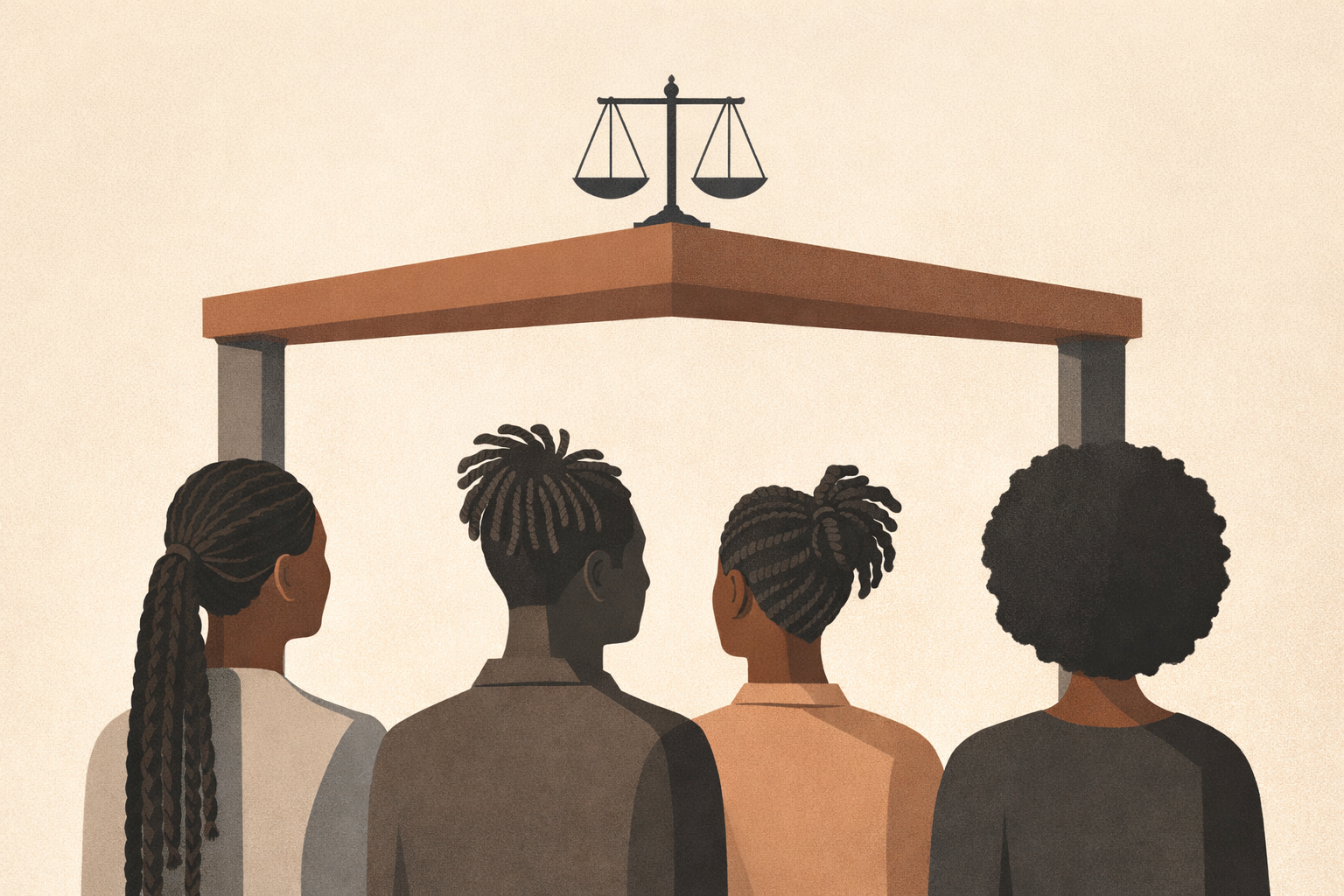
CROWN Act explained: The CROWN Act, short for Create a Respectful and Open World for Natural Hair, is legislation designed to prevent workplace discrimination tied to hair texture and protective hairstyles such as braids, locs, twists, and afros.
Workplace appearance policies often present themselves as neutral standards of professionalism. In practice, many grooming rules developed around narrow cultural norms. Critics argue those standards can produce unequal outcomes when they restrict natural hair textures or culturally significant styles.
Debates about grooming policies do not exist in isolation. They sit within the broader politics of Black hair, where history, culture, workplace policy, and identity intersect. Understanding that larger context helps explain why hair discrimination has become a legal and social issue rather than simply a matter of personal style.
What the CROWN Act Changes
The law clarifies that discrimination based on hair texture and protective styles can fall within race-based civil rights protections. Legislators introduced the act after widely reported cases where employees faced discipline, job loss, or stalled advancement because their natural hairstyles did not match workplace expectations.
Supporters argue this reform closes a long-standing loophole. Policies that appear neutral can still operate as barriers when they disproportionately affect one group. In that sense, the legislation protects access to employment by preventing appearance rules from becoming indirect tools of exclusion.
Since 2019, lawmakers across the United States have adopted versions of the act at the state and municipal level. Federal legislation has also been introduced, although nationwide adoption remains incomplete.
Why Workplace Policy Became the Battleground
Hair carries cultural meaning, identity, and practical realities tied to natural texture and maintenance. When institutions enforce a narrow definition of professionalism, employees can be forced to choose between conformity and cultural expression.
This tension highlights a broader policy question. When rules claim neutrality but consistently burden certain groups more than others, institutions must reconsider whether those standards still serve fairness or simply preserve tradition.
In that sense, a CROWN Act explained framework becomes less about aesthetics and more about governance. The debate asks what employers may reasonably require, what employees must reasonably maintain, and where law draws the line between preference and discrimination.