
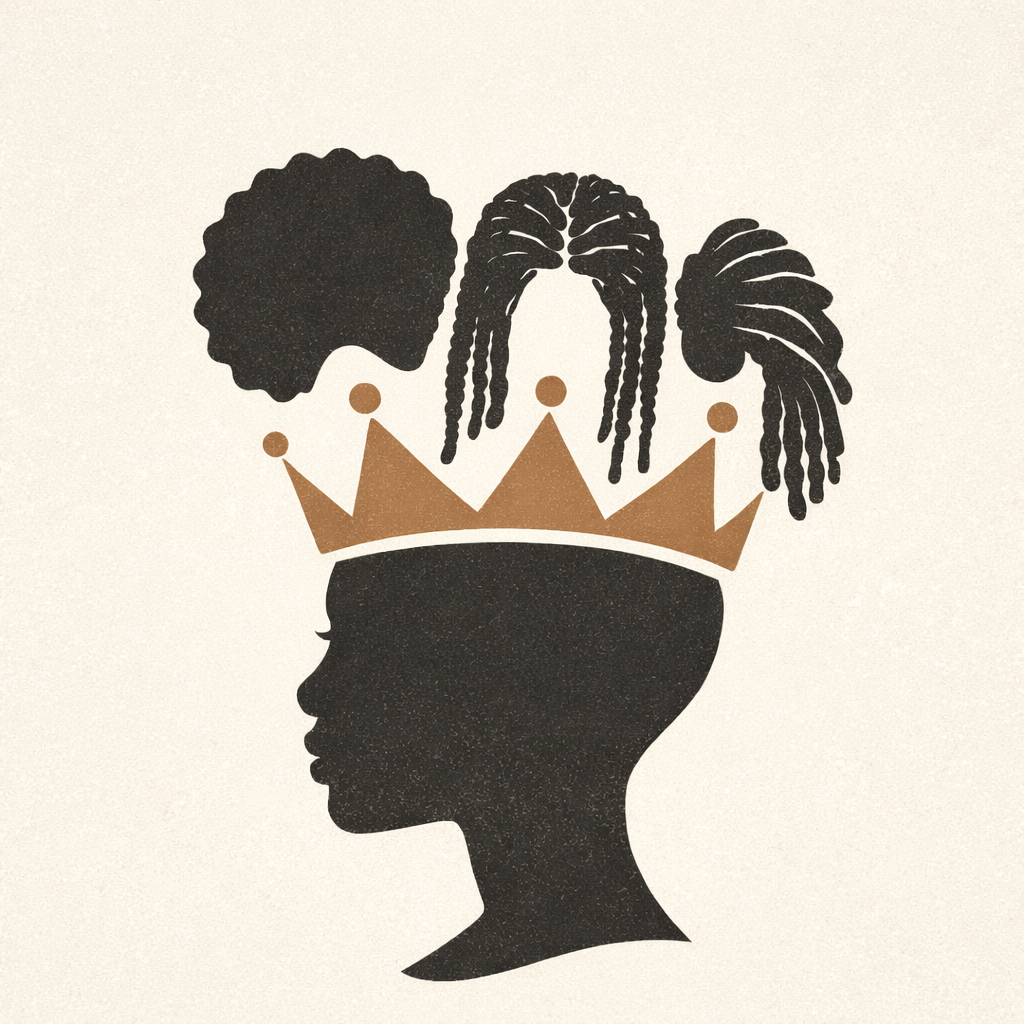
The Politics of Black Hair
The politics of Black hair is not just a conversation about style. It is a conversation about identity, power, labor, beauty standards, public policy, and cultural memory.
Hair sits close to the body. That makes it personal. Yet Black hair has also been judged by institutions, workplaces, schools, media systems, and beauty markets. That makes it structural.
Across history, Black hair has carried meaning beyond appearance. It has marked belonging. It has reflected status. It has absorbed pressure from systems that tried to define what was acceptable, professional, attractive, or respectable.
That is why this topic deserves more than a surface debate.
The question is not whether hair matters. The question is why so many systems have tried to control it.
Black hair has served as cultural language, social signal, political statement, and economic force.
Hair discrimination often appears through “neutral” grooming rules that carry cultural bias.
The CROWN Act reflects a broader legal effort to protect natural hair textures and protective hairstyles from discrimination.
The deeper issue is not hair alone. It is autonomy, dignity, and access.
Hair as Cultural Language
The politics of Black hair begins before the modern workplace, before social media, and before the beauty aisle.
Across many African societies, hair functioned as cultural language. Hairstyles could communicate age, family lineage, marital status, religion, social role, regional identity, or community belonging.
Hair was not separate from culture. It helped carry culture.
Braiding, grooming, wrapping, and styling were often communal acts. They created space for instruction, bonding, memory, and care. Hair was not only something people wore. It was something people inherited, maintained, and interpreted.
This matters because the later attack on Black hair was not random. When a system attacks hair, it attacks a visible archive of identity.
That archive traveled with people across oceans, even when language, land, family, and freedom were violently interrupted.
Disruption During Slavery
During slavery in the Americas, Black hair traditions were disrupted by force.
Many enslaved Africans had their heads shaved during capture, transport, or sale. This practice carried practical and psychological purposes. It reduced visible cultural difference. It also stripped people of identity markers that connected them to home, family, and rank.
That was not cosmetic. It was control.
Later, enslaved people often had limited access to proper grooming tools, oils, combs, and time. Hair care had to adapt under brutal conditions. Headwraps, protective styles, and practical grooming methods became part of survival.
Even then, Black people preserved beauty, creativity, and dignity where possible.
That is the part weak history misses. Oppression did not erase cultural intelligence. It forced it to operate under pressure.
European Beauty Standards Became Social Infrastructure
After emancipation, freedom did not remove the hierarchy attached to appearance.
European beauty standards remained embedded in schools, hiring systems, entertainment industries, and public life. Straight hair was often treated as polished, disciplined, and respectable. Tightly coiled hair was often treated as unruly, unprofessional, or unacceptable.
This was not merely personal preference.
It became social infrastructure.
People learned which looks received approval. They learned which styles invited scrutiny. They learned which forms of self-presentation seemed safer in interviews, classrooms, churches, photographs, and public spaces.
Over time, many Black people made practical decisions inside an unfair system. Chemical relaxers, hot combs, wigs, weaves, and straightened styles were not always signs of rejection. Sometimes they were strategies for survival, mobility, and reduced friction.
That point matters.
A serious analysis of the politics of Black hair cannot shame people for adapting to pressure. The better question is why the pressure existed in the first place.
Black Hair and Social Mobility
Hair has often influenced access to work, education, and social mobility.
In many professional settings, grooming policies were written as neutral rules. However, those rules often reflected narrow assumptions about what “neat,” “clean,” “professional,” or “appropriate” should look like.
The problem is not grooming standards themselves. Every workplace needs baseline expectations.
The problem begins when one culture’s appearance norms are treated as universal while another culture’s norms are treated as deviation.
That is how bias hides inside policy.
A rule may not mention race directly. Yet it can still penalize hair textures and styles commonly associated with Black people. This includes locs, braids, twists, Afros, Bantu knots, and other protective styles.
That turns hair into an access issue.
When a person must alter natural hair to be considered employable, the system is not just managing appearance. It is demanding cultural adjustment as the price of entry.
The legal debate surrounding this issue deserves its own deeper treatment in Hair Discrimination in the Workplace: The CROWN Act Explained.
The Natural Hair Movement Reframed the Conversation
The natural hair movement did not begin with social media.
During the 1960s and 1970s, the Afro became one of the most visible symbols of Black pride, political consciousness, and cultural self-definition. It rejected the idea that Black beauty had to be measured through Eurocentric standards.
The Afro was more than a style. It was a statement.
Later generations expanded the movement through locs, braids, twists, wash-and-go styles, textured cuts, and protective styling. The message changed form, but the core remained: Black hair did not need permission to exist in its natural state.
In the 2000s and 2010s, online platforms accelerated this shift. YouTube, blogs, Instagram, and TikTok created public classrooms for natural hair care. People shared tutorials, product reviews, hair journeys, maintenance routines, and texture-specific advice.
This created a new kind of infrastructure.
Instead of waiting for mainstream beauty institutions to explain Black hair properly, Black creators built their own knowledge networks.
Hair Care Became an Economy
The politics of Black hair also includes money.
Black consumers have long shaped the hair care market. Products, salons, barbershops, wigs, extensions, styling tools, and education platforms all sit inside a larger beauty economy.
That economy is powerful, but it is complicated.
For decades, many major companies profited from Black hair care while ownership, product control, and distribution power often sat outside the communities most connected to the demand.
That created a familiar pattern.
The culture supplied the need. The market captured the value.
Today, more Black-owned beauty brands, stylists, educators, and creators are building direct relationships with consumers. That shift matters because ownership changes the conversation. It moves Black hair from consumer identity into business infrastructure.
Still, the market contains tension. Natural hair care can empower people. It can also become another expensive performance loop if consumers are pressured to buy endless products in pursuit of perfect texture, definition, or presentation.
That is the next layer of discipline.
Freedom from one beauty standard should not become captivity to another.
The business side of this issue is explored further in The Economics of the Black Hair Industry.
The CROWN Act and Hair Discrimination
Hair discrimination has become a major legal and workplace issue.
The CROWN Act stands for Create a Respectful and Open World for Natural Hair. It was created to address race-based hair discrimination by extending protection to natural hair textures and protective hairstyles such as braids, locs, twists, knots, and Afros.
Several states and local jurisdictions have adopted CROWN Act protections or similar laws. However, protections are not identical everywhere. That distinction matters.
There is no room for lazy wording here.
The CROWN Act is not simply a symbolic statement. It is part of a broader attempt to make civil rights law catch up with how discrimination often works in real life.
Modern discrimination is not always announced loudly. It often appears through dress codes, interview feedback, school discipline, customer-facing appearance rules, and “professionalism” language.
That is why hair policy matters.
When institutions define acceptable appearance too narrowly, they can convert cultural difference into professional liability.
Why “Professional Hair” Is a Loaded Phrase
The phrase “professional hair” sounds simple. It is not.
Professionalism should describe conduct, reliability, competence, preparation, communication, and respect for the role. It should not become a coded preference for one texture, one style tradition, or one cultural standard.
This does not mean every hairstyle fits every environment. Context still matters. Safety rules matter. Hygiene matters. Role requirements matter.
But those standards must be applied with precision.
A workplace can require hair to be secured around machinery. That is operational logic. A workplace banning locs because they are viewed as “unprofessional” is something else entirely.
That distinction is the whole game.
Standards protect the function. Bias protects the hierarchy.
Black Hair in Schools
The politics of Black hair does not begin at work. It often begins in school.
Children have been disciplined, excluded, or shamed because of hairstyles tied to their culture and family practices. These conflicts often unfold around braids, beads, locs, Afros, or protective styles.
The harm is not only administrative.
When a child learns that natural appearance is a problem, the lesson can reach deeper than the dress code. It can shape self-perception, confidence, and belonging.
Schools are not neutral spaces in this conversation. They are early institutions of social interpretation. They teach children what society rewards, tolerates, questions, and punishes.
That is why school grooming policies deserve careful review.
If a rule creates discipline problems out of cultural expression, the rule is not neutral. It is producing unnecessary harm.
Media, Beauty, and the Politics of Visibility
Media has always shaped the public meaning of Black hair.
Television, film, magazines, newsrooms, and advertising have helped define which styles are seen as elegant, rebellious, professional, comedic, threatening, fashionable, or political.
Representation has improved. But the old patterns still echo.
Natural hair is often celebrated when it is curated, styled, polished, and marketable. It receives less grace when it is ordinary, practical, unfinished, or simply present.
That is a subtle form of control.
It says Black hair is acceptable when it performs beauty well enough for public approval.
The deeper standard should be simpler.
Black hair does not have to be exceptional to be respected.
The Science of Natural Hair Matters Too
Black hair is often discussed culturally, but the science matters as well.
Hair texture, curl pattern, density, porosity, scalp health, shrinkage, and breakage all affect care routines. Tightly coiled hair often requires different moisture strategies, handling techniques, and protective practices than straighter textures.
This is not preference. It is biology and maintenance.
When institutions ignore these differences, they create practical disadvantages. When beauty schools fail to train stylists on textured hair, the result is not just inconvenience. It limits service access and professional competence.
That is why education matters inside the beauty industry.
Respect for Black hair must include technical knowledge, not just cultural appreciation. Readers looking for the maintenance side can continue with Understanding Natural Hair: Texture, Science, and Maintenance and Hair Types Explained: The 1A–4C Curl Pattern Guide.
Internalized Hair Politics
The hardest part of the politics of Black hair is not always external judgment.
Sometimes the pressure becomes internal.
People can absorb the belief that their natural texture is difficult, less attractive, less polished, or less acceptable. Families can pass down protective advice that sounds like criticism. Communities can reproduce old hierarchies around “good hair,” length, looseness of curl, or proximity to whiteness.
That is where the mirror gets complicated.
Some people straighten their hair because they love the style. Others do it because they feel forced. Some wear natural styles with confidence. Others feel pressured to perform a natural hair identity they have not chosen for themselves.
The point is not to replace one mandate with another.
The point is autonomy.
Black hair politics becomes healthier when people can choose without fear, shame, penalty, or performance. That same identity pressure is connected to the larger question explored in Language Builds the Mirror We Live In.
The System Around Black Hair
The politics of Black hair connects several systems at once.
History explains how cultural meaning formed and how oppression disrupted it. Workplaces reveal how appearance rules can shape economic access. Schools show how early identity lessons are enforced. The beauty industry exposes who profits from cultural need. Public policy shows how law responds when informal bias becomes measurable harm.
None of these systems stands alone.
Together, they explain why hair remains such a charged subject.
Black hair is personal because people live in it every day. It is political because systems have repeatedly tried to regulate, rank, monetize, and interpret it.
That is the framework.
The Groundwork Perspective
The politics of Black hair is not about asking everyone to agree on one style, one standard, or one cultural expression.
That would miss the point.
The real issue is whether people can move through public life without being penalized for traits and styles tied to their identity.
Hair carries memory. It carries family instruction. It carries practical adaptation. It carries beauty, labor, resistance, and care.
It also reveals how systems behave.
When a society respects Black hair only after law forces the issue, that society is not dealing with hair alone. It is dealing with a deeper failure of imagination, fairness, and institutional design.
The move is clear.
Do not reduce Black hair to style. Read it as structure.
Because once the structure is visible, the conversation changes.
System Updates: When Language Becomes Self-Weaponization
Real Talk Blueprint: When We Start Talking About Ourselves Like the Enemy
Language Builds the Mirror We Live In
Hair Discrimination in the Workplace: The CROWN Act Explained
The Economics of the Black Hair Industry
Understanding Natural Hair: Texture, Science, and Maintenance
Hair Types Explained: The 1A–4C Curl Pattern Guide
Identity and Discipline
The Panderbear Problem
The Official CROWN Act – Natural Hair Discrimination Protections
NAACP Legal Defense Fund – The CROWN Act
U.S. House – CROWN Act Reintroduction
Pew Research Center – Cultural and Social Trends
Brookings Institution – Social Policy Research
Frequently Asked Questions About the Politics of Black Hair
Why is Black hair political?
Black hair is political because it has been shaped by history, beauty standards, school rules, workplace policies, media representation, and civil rights debates. It is personal expression, but it also reflects larger systems of power and access.
What is the CROWN Act?
The CROWN Act stands for Create a Respectful and Open World for Natural Hair. It is legislation designed to protect against discrimination based on natural hair texture and protective hairstyles such as braids, locs, twists, knots, and Afros.
Why do workplace hair policies matter?
Workplace hair policies matter because they can affect hiring, promotion, discipline, and professional access. A policy may appear neutral while still penalizing styles associated with Black hair and culture.
Is straightening Black hair always a sign of internalized bias?
No. Hair choices are personal. Some people straighten their hair because they like the style. Others do it because of social or professional pressure. The key issue is whether the choice is free or forced by unfair standards.
Why does natural hair education matter?
Natural hair education matters because textured hair often requires specific care knowledge. Proper training supports healthier hair practices, better salon service, and more inclusive beauty standards.
