
Structure reveals truth.
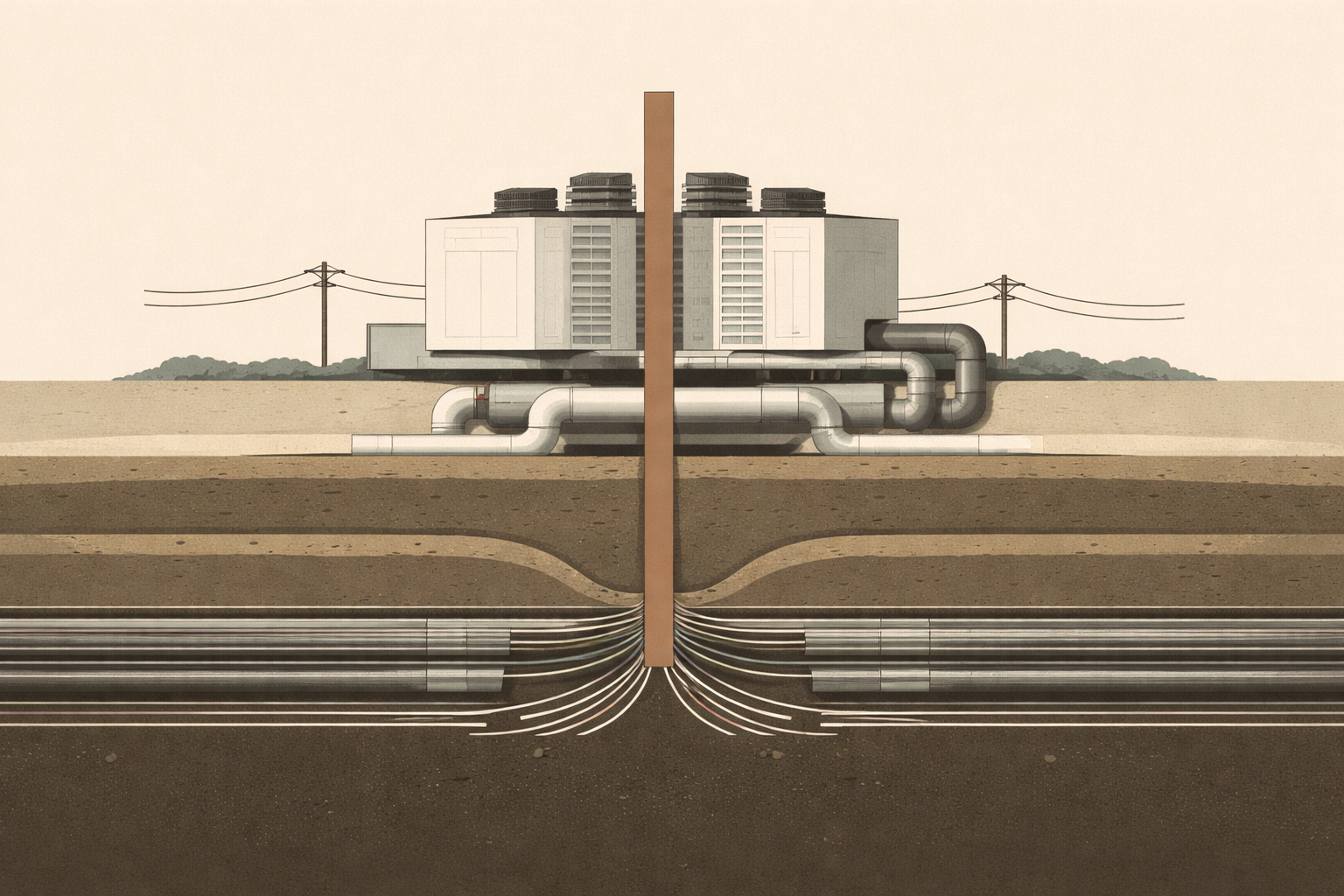
A visual explanation of how the internet physically works, depicting data centers anchored to land and supported by energy, cooling, and fiber-optic infrastructure.
How the internet physically works is often misunderstood. Digital services feel weightless because they arrive instantly and scale invisibly. However, every interaction depends on physical systems that occupy land, consume energy, and draw heavily on water.
Understanding how the internet physically works matters. Without that clarity, conversations about innovation, equity, and digital growth remain incomplete.
How the internet physically works through infrastructure
The internet operates through tangible systems. Data moves through fiber-optic cables laid underground and under oceans. It is processed and stored in large data centers built to run continuously.
As detailed in The Physical Cost of Digital Ambition, digital growth always rests on physical ground.
How data centers power the digital economy
Data centers form the operational backbone of the internet. They store information, process requests, and route traffic across networks. To do this reliably, they require constant electricity, advanced cooling systems, and uninterrupted connectivity.
Although platforms scale globally, infrastructure remains local. Ownership concentrates upward while physical burdens settle into specific communities, accelerating the pattern explored in Tech Wealth Concentration Is Accelerating — And Ownership Is the Reason.
Energy and water reveal how the internet physically works
The internet’s physical footprint becomes visible through its energy and water demands. Large data facilities consume electricity at city-scale levels. Cooling systems rely on vast quantities of water, often in regions already facing scarcity.
Despite diversity narratives within the tech sector, these material burdens remain unevenly distributed. This structural gap mirrors the disconnect examined in Equity vs Diversity in Tech: Why Representation Has Not Produced Shared Wealth.
Why digital infrastructure lands where it does
Digital infrastructure is typically built where land is inexpensive, zoning resistance is low, and political leverage is limited. These decisions reduce friction for developers while shifting long-term costs outward.
Over time, host communities become collateral infrastructure, absorbing environmental pressure and utility strain so platforms can scale efficiently.
We have seen this infrastructure pattern before
| Era | System Built | Primary Beneficiaries | Communities Carrying the Cost |
|---|---|---|---|
| Industrial Age | Factories and railroads | Industrial owners | Factory towns |
| Mid-20th Century | Highways and urban renewal | Suburban developers | Urban neighborhoods |
| Digital Era | Cloud infrastructure | Platform owners | Local host communities |
Why understanding how the internet physically works matters
Digital literacy must include physical literacy. Without understanding how the internet physically works, governance remains reactive and incomplete.
The internet is not virtual. It is physical, localized, and load-bearing. Innovation cannot float above geography forever.
