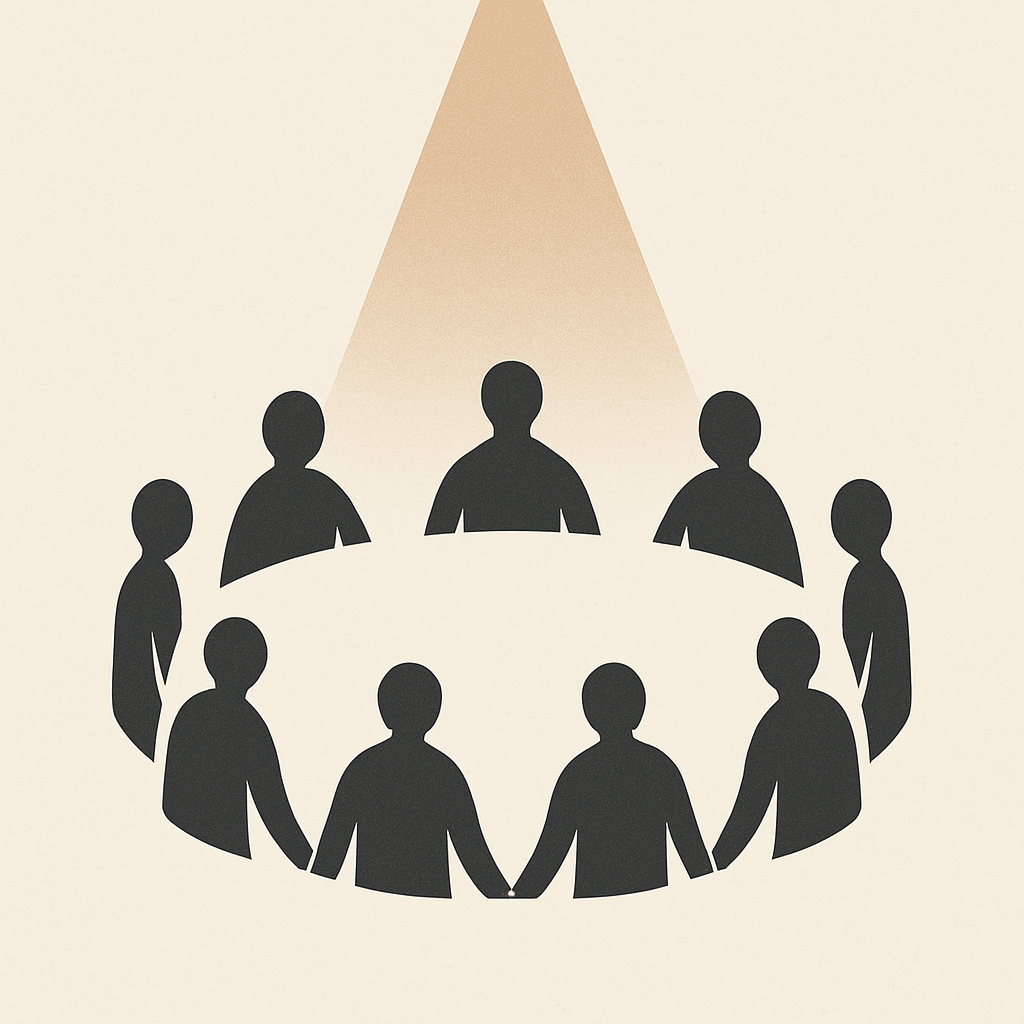
Being held by community is not a sign of weakness. It is the structure that allows strength to keep standing.
Being held by community matters because no life is built by willpower alone. Independence has value. Self-reliance has value. Personal responsibility has value. However, none of those things should become isolation wearing respectable language.
Many people learn early to stand alone. They become capable and dependable. They also become useful in a crisis. Over time, though, capability can become a quiet trap. The stronger a person appears, the easier it becomes for others to assume support is unnecessary.
That assumption creates damage.
Strength without support eventually becomes strain. Also, discipline without rest turns into performance. Independence without community becomes loneliness with better branding. Therefore, community is not emotional decoration. It is infrastructure.
Being Held by Community Requires Structure
To be held by community does not always mean being rescued. Sometimes it means being noticed. At other times, it means someone remembers the hard date, makes the call, sends the food, watches the child, checks the door, or sits nearby without turning pain into a project.
Support rarely arrives only through grand gestures. Instead, it often shows up quietly. A neighbor steps in. A friend follows up. An elder steadies the room. A family member handles the detail no one else saw.
These small acts create structure. They remind the person carrying the weight that the burden can be shared without losing dignity.
Community does not erase responsibility. Instead, it distributes pressure. As a result, people gain room to breathe, recover, think, and return to themselves. That matters because no one makes wise decisions from constant depletion.
How Community Turns Care Into Stability
Every strong community has seen this in practice. A family loses someone. A parent gets sick. A job disappears. A child needs care. One household faces the crisis, yet the whole circle responds.
Someone cooks. Another person drives. A neighbor watches the younger ones. A relative handles paperwork. Meanwhile, someone simply stays close.
That is community functioning as structure.
Nothing about that work is small. In fact, those moments reveal the difference between a crowd and a community. A crowd observes pressure. A community absorbs part of it. A crowd says, “Let me know.” A community says, “Here is what is already handled.”
That distinction matters. Vague concern may sound kind, but practical support carries weight. It turns care into action. It turns sympathy into stability. Consequently, the person under pressure does not have to spend extra energy explaining every need while already standing inside the storm.
Support Is a Discipline
Receiving support also requires discipline. It requires humility, trust, and clarity. First, humility admits capacity has limits. Next, trust allows someone to step close. Finally, clarity stops confusing isolation with strength.
There is no honor in refusing every hand until the body breaks. There is no wisdom in carrying preventable weight just to prove endurance. Sometimes the mature choice is not to push harder. Instead, the mature choice is to let the circle do what circles are built to do.
At the same time, community requires maintenance. Support cannot only appear during crisis. It has to be practiced during ordinary days. Check-ins matter. Shared meals matter. Follow-through matters. Remembering names, dates, needs, and promises matters.
Over time, these habits become the beams that hold people when life gets heavy.
Being Held by Community Starts With Recognition
Consider who has quietly helped carry weight this year. Not only the person who made the biggest gesture, but also the person who kept showing up. Maybe they checked in. Maybe they listened. Maybe they made the hard week easier without needing applause.
Name them.
Then, where possible, thank them directly. Gratitude is not decoration. It is relationship maintenance. It keeps the structure visible. It also tells the people who have been holding the line that their care was seen.
Practice the Structure
This week, choose one act of community maintenance. Send the message. Make the call. Offer specific help. Say what can actually be done instead of offering a vague promise.
Better yet, become the kind of person whose support reduces confusion instead of adding another decision.
Being held by community is not about needing less strength. It is about building a life where strength has somewhere to rest.
Further Groundwork
Explore how identity shapes discipline in Who Am I: A Reflection on Identity and Discipline, and how shared responsibility becomes stability in The Family Stability Framework.
Receipts
The Mayo Clinic notes that strong social support can improve resilience, reduce stress, and support long-term wellbeing.