
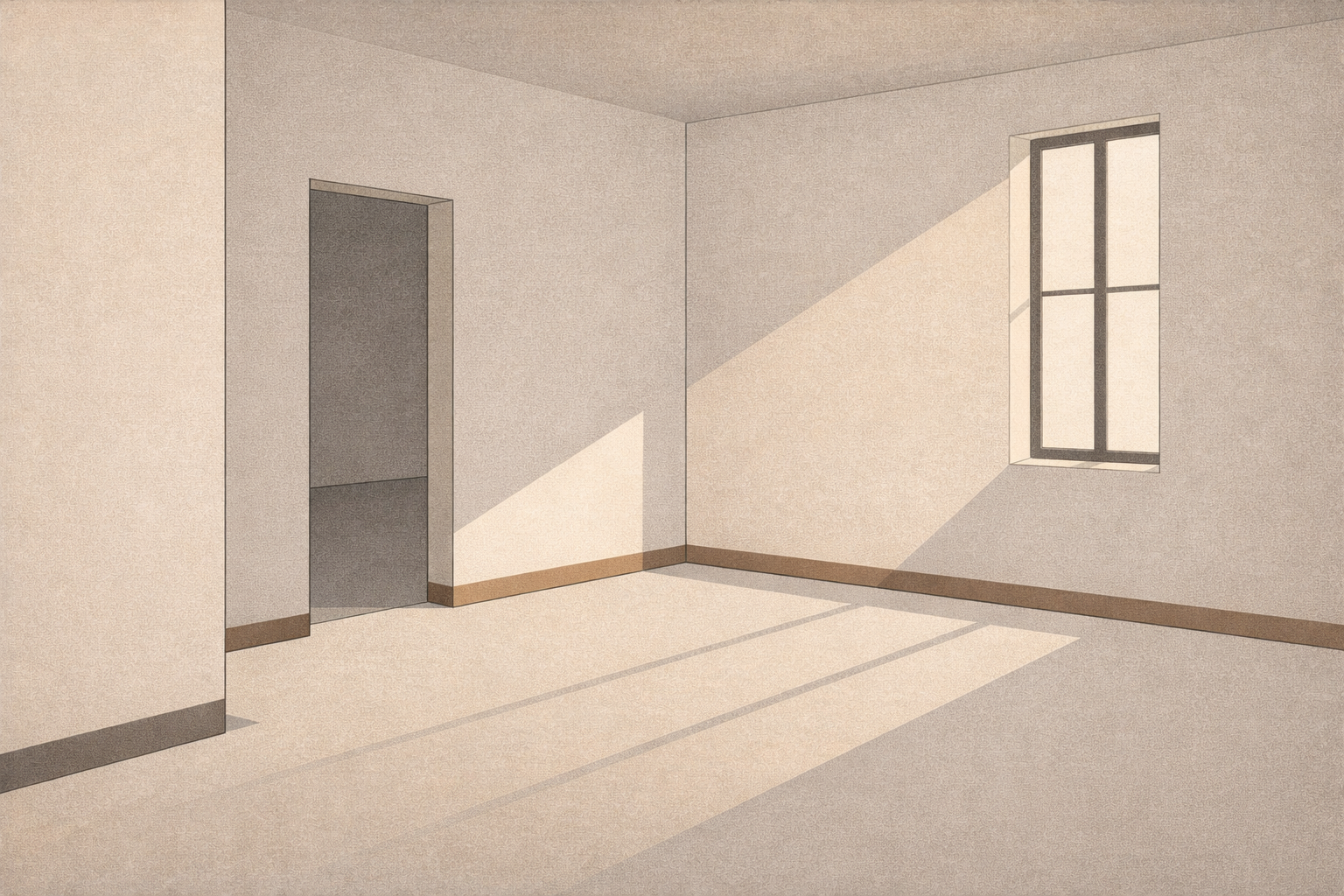
Stillness under observation feels different than stillness alone. When no one is watching, the body settles on its own terms. When attention enters the room, the body starts negotiating. The shoulders adjust. The breath changes. The urge to move appears before a thought forms.
I used to mistake that urge for awareness. I told myself I was being attentive, polite, responsive. What I was actually doing was managing perception. The body knew the difference long before I did.
What observation activates
Being observed introduces a quiet pressure. Not always hostile. Not always explicit. Still, it alters behavior. The mind speeds up. The body prepares to justify itself. Small movements begin to stack, each one an attempt to stay ahead of judgment that has not yet arrived.
This is where stillness under observation becomes a discipline instead of a mood. It asks whether movement is necessary or merely defensive. It asks whether explanation is useful or simply reflexive.
The moment I noticed the body first
The realization did not come through insight. It came through posture. I noticed that whenever attention turned toward me, my chest lifted slightly and my breath shortened. Nothing dramatic. Just enough to signal readiness. Just enough to signal compliance.
Once I saw it, I could not unsee it. The body was answering questions no one had asked.
Choosing stillness without withdrawal
Stillness under observation is not freezing. Freezing is fear pretending to be control. Stillness is control without performance. The difference shows up in breath. In pacing. In whether you feel the need to fill space.
I began practicing one small adjustment. When attention landed, I slowed instead of sharpening. I let silence sit for one extra beat. I kept my hands still long enough to notice what wanted to move.
Nothing collapsed. No one left. The room remained intact.
Why this matters more than confidence
Confidence often relies on reinforcement. It wants feedback. Stillness does not. Stillness holds whether it is rewarded or ignored. That is why it unsettles some systems. A person who does not rush to respond is difficult to steer.
Psychologists describe part of this tension as evaluation apprehension, the stress response that appears when we anticipate judgment. Naming it does not eliminate it, but it creates distance. Distance makes choice possible.
A quieter practice
Stillness under observation is built through repetition, not resolve. A few places to begin:
→ Enter a room and pause before speaking.
→ Let one silence remain unfilled.
→ Notice what the body tries to adjust when attention shifts.
→ Slow your pace without lowering your posture.
The goal is not to disappear. The goal is to remain.
When the body no longer rushes to explain itself, something steadier takes its place. Not dominance. Not defiance. Just presence that does not need to announce itself.
Further Groundwork
→ The Day I Stopped Rushing Rooms
→ Stillness Is Not Passivity
→ Carrying Weight Without Announcement
