Article Map
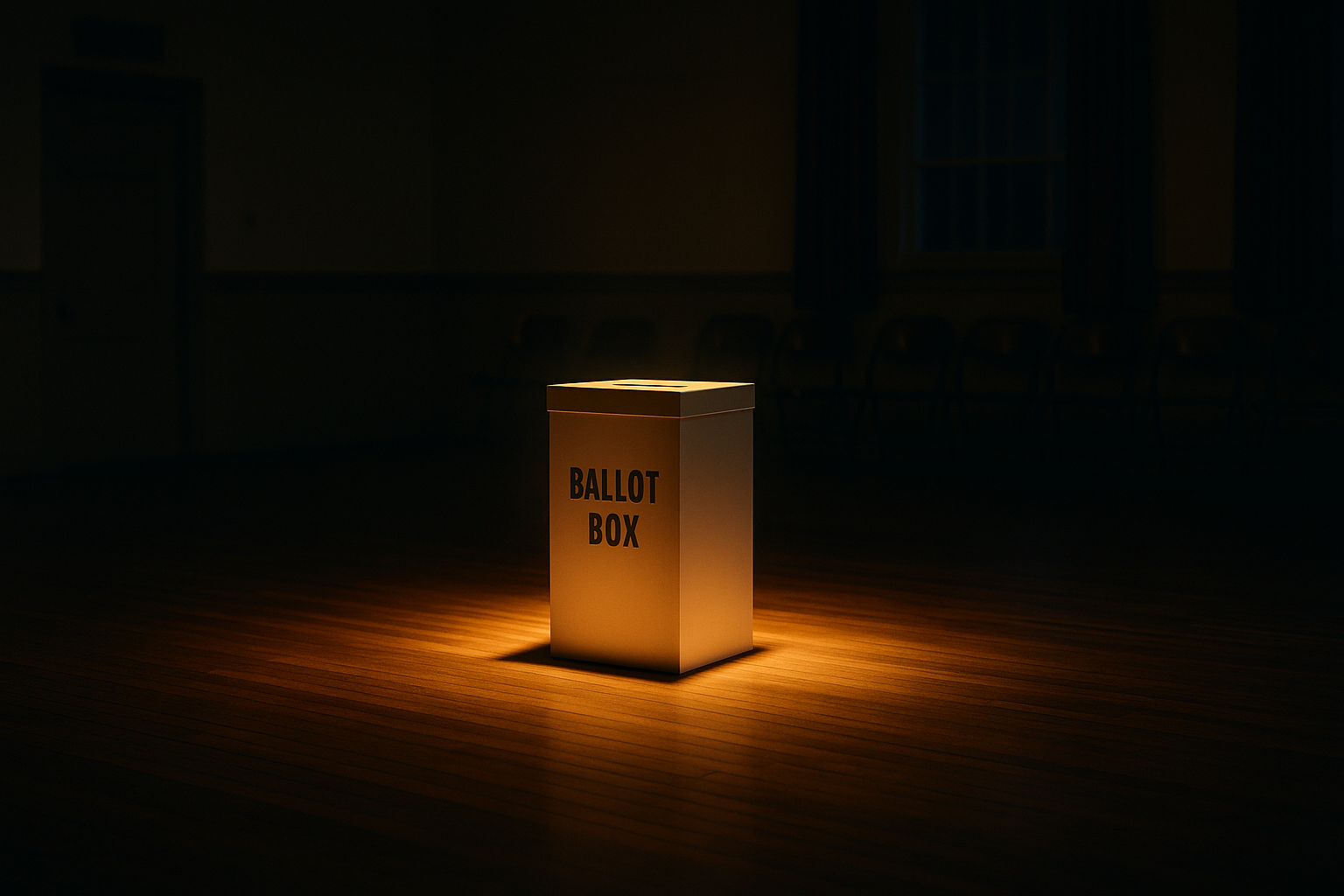
Faith in democracy is not blind optimism. It is a working belief that participation can still influence outcomes.
That distinction matters. A democratic system does not require universal confidence to function. It requires enough people to believe that showing up still matters, that rules can still be defended, and that institutions can still be pressured toward accountability.
Public trust is under pressure. Pew Research Center reported that roughly 22% of U.S. adults trust the federal government to do what is right most of the time. That number is not just a mood. It is a structural signal.
Still, low trust has not eliminated participation. People continue to vote, organize, volunteer, monitor public meetings, challenge misinformation, and pressure institutions during moments that matter.
Because of that, voting is no longer driven only by belief. Increasingly, it is driven by civic calculation.
Participation is shifting from expression to strategy.
System Updates Principle: Democracy does not survive because everyone trusts it equally. It survives when enough people remain engaged long enough to keep pressure inside the system.
The Trust Gap Is a System Signal
Faith in democracy depends on more than hope. It depends on whether people believe the system can still be influenced.
When that belief weakens, democracy does not collapse immediately. Instead, it becomes thinner, more defensive, and more vulnerable to organized pressure from fewer people.
This is where weak analysis breaks. It assumes that low trust always leads to disengagement. Real behavior shows something more complicated. Many voters do not leave the system. They adapt to it.
They vote without confidence. They participate without optimism. They engage because the cost of absence feels higher than the cost of effort.
That is not blind faith. It is civic risk management.
Democracy Operates on Distributed Trust
Public trust in government is often discussed as if government were one institution. That framing is too simple.
Democracy operates through thousands of connected institutions. County clerks, election boards, poll workers, judges, auditors, state agencies, local governments, school boards, city councils, courts, and civic organizations all carry parts of the system.
Therefore, trust does not have to exist everywhere at once for democracy to function. A person may distrust Congress but trust their local poll workers. Someone may question national leadership but still believe their county election office runs a fair process. A voter may doubt political parties while still believing that their ballot is counted.
This distributed structure matters because it creates resilience. If trust weakens at the national level, strong local systems can still provide points of contact where citizens experience democracy working.
Public Trust
↓
Participation
↓
Process Confidence
↓
Institutional Stability
↓
Public Trust
Healthy democratic systems reinforce themselves. However, weak systems create the opposite loop. Low trust reduces participation. Lower participation narrows influence. Narrower influence weakens legitimacy. Weaker legitimacy produces even lower trust.
That is the danger.
Public Trust Is Not the Same as Civic Responsibility
Public trust in government measures confidence in institutions. Civic responsibility measures behavior under uncertainty. Those are not the same system.
A person can distrust Congress, doubt national leadership, question media narratives, and still understand that local decisions shape daily life.
School boards set direction. City councils allocate resources. District attorneys influence enforcement. Judges interpret law. State legislatures determine access and structure. County officials administer elections and public services.
Therefore, the sharper question is not whether people trust government in the abstract.
The sharper question is whether they understand where leverage exists.
Voter Participation Is the Pressure Mechanism
Voter participation is not a cure. It is a pressure system.
A ballot does not solve structural problems by itself. However, it signals where pressure exists and where it does not.
Institutions respond to patterns. Not noise. Not outrage. Patterns.
Local elections reveal this clearly. Turnout often drops compared with national cycles. Yet those elections shape zoning, education, public safety, housing, budgets, taxation, courts, and community development.
In many places, small and organized voting blocs have reshaped school board leadership, curriculum debates, public safety priorities, land-use decisions, and local spending. Those outcomes were not driven by mass belief. They were driven by concentrated participation.
This is the leverage point most people miss. Democracy is not only a national event. It is a layered system where influence scales with consistency and organization.
When people skip local elections, they do not stop the system. They remove themselves from the input layer.
The decision still happens. The budget still passes. The policy still moves. The only difference is who shaped the outcome.
Election Confidence Is Built Through Process
Election confidence does not recover through slogans. It is built through visible, repeatable process.
Ballot tracking matters. Transparent counting matters. Trained poll workers matter. Clear audit procedures matter. Accessible locations matter. Accurate voter information matters. Together, these details become civic infrastructure.
A real-world scenario makes this plain. A voter hears claims of dysfunction at the national level. Then that same voter enters a local polling place, interacts with trained workers, casts a ballot, and sees the process operate clearly.
That moment becomes the reference point.
As a result, the system is judged at the point of contact.
When local systems are strong, they stabilize perception. When they are weak, they amplify distrust.
Institutional Fragility Is the Real Risk
The visible system is the vote. The invisible system is the infrastructure behind it.
Election workers, local administrators, budget allocations, training systems, technology vendors, information pipelines, security procedures, and public communication channels are load-bearing components of democracy.
When experienced election workers leave because of pressure or burnout, institutional memory leaves with them. When offices lack funding, process slows. When process slows, suspicion grows.
That suspicion creates a failure loop.
Underfunded Election Infrastructure
↓
Slower Process
↓
Public Suspicion
↓
Worker Burnout
↓
Institutional Fragility
↓
Lower Trust
This is not theoretical. It is operational degradation.
People do not trust what they cannot see functioning. When the system becomes harder to observe and understand, belief does not fill the gap. Suspicion does.
Faith in Democracy Requires Civic Discipline
Faith in democracy cannot mean pretending the system is fine. That is sentiment, not strategy.
Faith must mean engaging with the system as it exists while pushing for stronger structure.
Better civic education matters. Stronger local journalism matters. Clearer information systems matter. Transparent administration matters. Public meeting access matters. These are not optional improvements. They are maintenance requirements.
Participation without understanding leads to frustration. Meanwhile, understanding without participation leads to withdrawal. The balance is discipline.
Read the ballot before Election Day. Understand which offices control which outcomes. Track what happens after elections. Follow one budget process. Attend one public meeting. Learn how decisions move from vote to policy.
That is how engagement becomes effective. More importantly, that is how faith in democracy becomes practice.
The System: Updated
Democracy does not fail only when outcomes disappoint. It fails when people conclude that effort no longer matters.
Cynicism can sound analytical. In practice, it often becomes withdrawal. It removes pressure from a system that only responds to sustained engagement.
The stronger position is disciplined participation.
Vote. Verify. Monitor. Repeat.
Faith keeps the process alive. Structure determines whether it produces results.
Without structure, faith becomes sentiment. Without participation, structure becomes irrelevant.
The system does not need perfect belief. It needs consistent pressure, visible process, and enough public trust to keep people inside the civic arena.
Recognition Skill
After reading this System Update, you should now be able to recognize that democracy depends less on perfect trust than on reliable participation supported by transparent institutions.
When trust is low, the system does not need empty optimism. It needs citizens who can identify leverage points, verify process, and keep pressure moving through the institutions that shape everyday life.
Receipts
Stay Grounded
Get the weekly Groundwork Daily digest for systems thinking, civic clarity, and practical structure.
Meet the Builder

Langston Reed
Builder, Civic Power & Policy
Langston Reed helps readers understand how institutions, governance, and public policy shape everyday life. His work develops institutional literacy by translating complex civic systems into practical frameworks that remain useful long after the news cycle has moved on.
“Institutions reveal themselves not through what they promise, but through the incentives they create and the outcomes they consistently produce.”
Continue Learning
System Updates is Groundwork Daily’s civic analysis series led by Langston Reed. It studies how policies, institutions, and infrastructure shape everyday life, translating complex systems into practical insight for accountable progress.