Series: System Updates · Civic Power & Policy
Progress is proof of care.
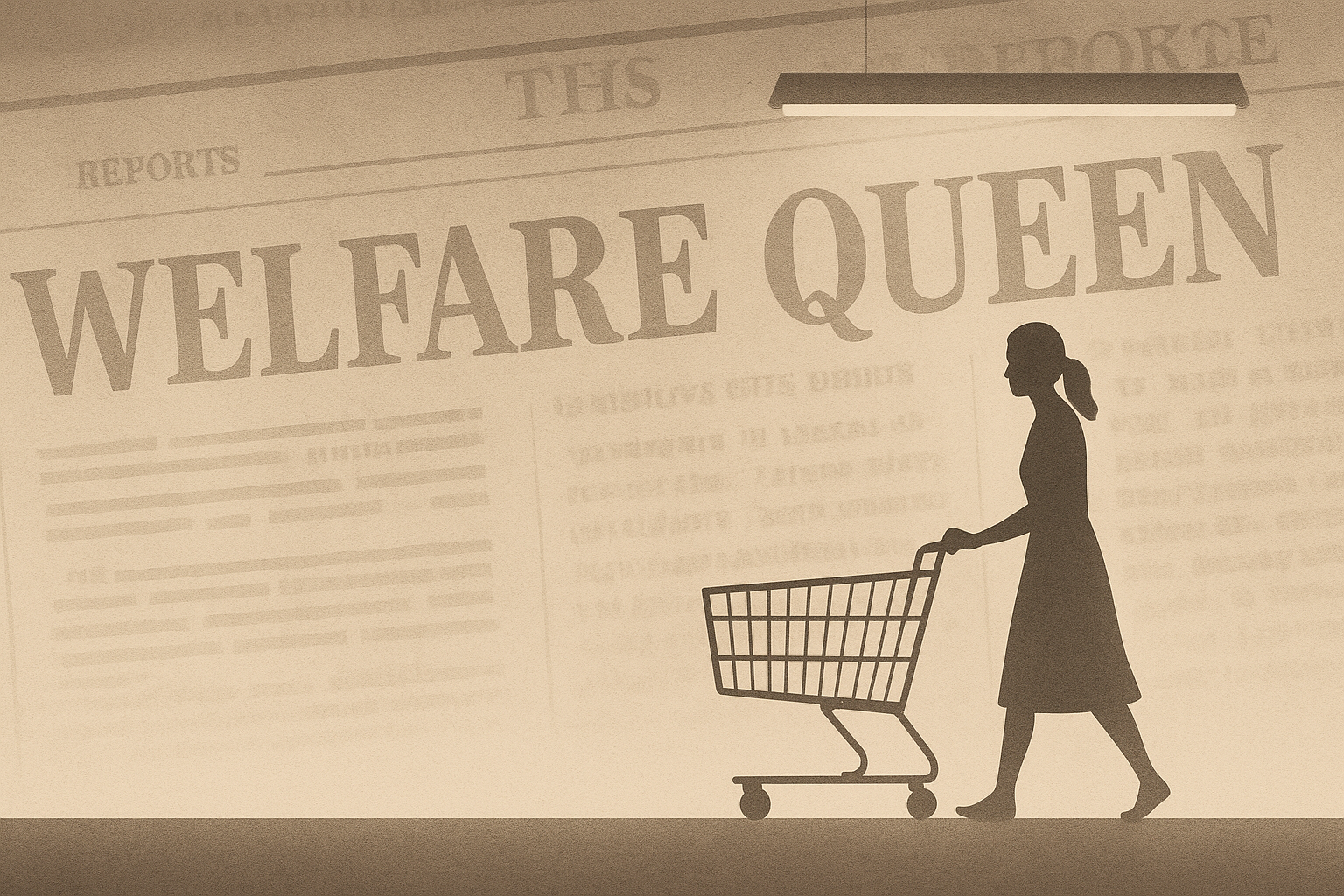
The welfare queen myth is a media story that became a policy lens. It framed poverty as fraud and mothers as suspects. The result was scrutiny first and support second. A stereotype turned into a filter that shaped eligibility, enforcement, and the tone of public debate.
What This System Updates Analysis Covers
- Where the welfare queen myth came from and why anecdotes replaced evidence.
- How narrative-driven welfare reform distorted public understanding of program rules.
- What evidence-based TANF policy design should measure: stability outcomes, not suspicion.
Where the Welfare Queen Myth Came From
The phrase gained traction through high-profile anecdotes that stood in for data. Complex systems were reduced to a character. The public learned to see poverty as a hustle rather than a structure of low wages, high rent, and inconsistent child care. When politics runs on symbols, the symbol becomes the policy.
How the Welfare Queen Myth Distorts Reality
Most recipients cycle on and off assistance while working or seeking work. Program rules are strict. Sanctions and time limits exist. The myth ignores this and suggests a simple choice to avoid effort. That view blocks honest discussion about benefits that are temporary, targeted, and often difficult to access.
Welfare Queen Myth: Policy by Story Instead of Evidence
Stories drive votes. Evidence should drive design. When a stereotype sets the frame, monitoring expands and trust contracts. Agencies ask families to prove worthiness rather than remove barriers. The focus shifts from outcomes to oversight.
Fraud exists in any large program. However, design choices should not optimize for rare abuse at the expense of common need. Precision oversight can coexist with dignity when rules are clear, systems are transparent, and evaluation is tied to stability outcomes.
Resetting the Frame: Evidence-Based Welfare Design
Retire the character and measure what works. Track stability outcomes such as months housed, school attendance, employment continuity, and income durability. Fund child care and pathways to work that match real schedules. Build evaluation that treats families as partners, not problems.
Design Principles for Stability Outcomes
- Measure durability: fewer recurrences, longer stretches of stability.
- Reduce friction: simplify recertification and documentation loops that punish time poverty.
- Support real schedules: child care capacity, transit reality, and shift work constraints.
- Audit messaging: remove language that presumes guilt and rebuild language that presumes partnership.
FAQ: Welfare Queen Myth and Welfare Policy
What is the welfare queen myth?
The welfare queen myth is a stereotype that portrays welfare recipients, especially mothers, as fraudulent or opportunistic. It compresses structural poverty into a moral story and invites punitive policy design.
How did the welfare queen narrative influence welfare reform?
The narrative encouraged stricter monitoring, sanctions, time limits, and eligibility scrutiny. It shifted attention from labor markets and housing costs to suspicion and enforcement.
What should welfare programs measure instead of policing narratives?
Programs should measure stability outcomes: housing continuity, school attendance, employment consistency, and income durability. Oversight should serve outcomes, not replace them.
Further Groundwork
Receipts
The Groundwork
This analysis replaces a media script with measurable outcomes. Stability grows when programs track what families need to stand on their own and align support to that goal. The next step is a narrative audit: identify the local stories driving policy instincts, then redesign public messaging to match facts.