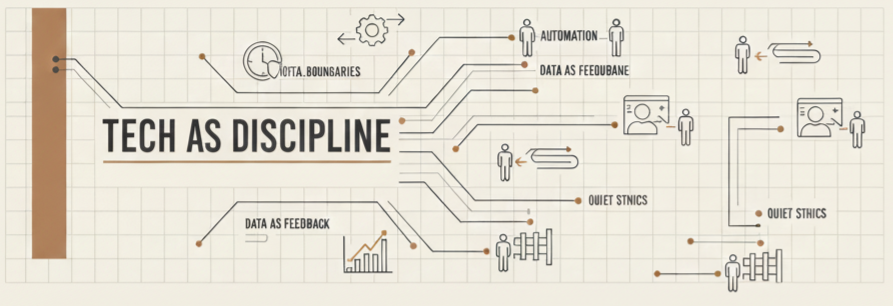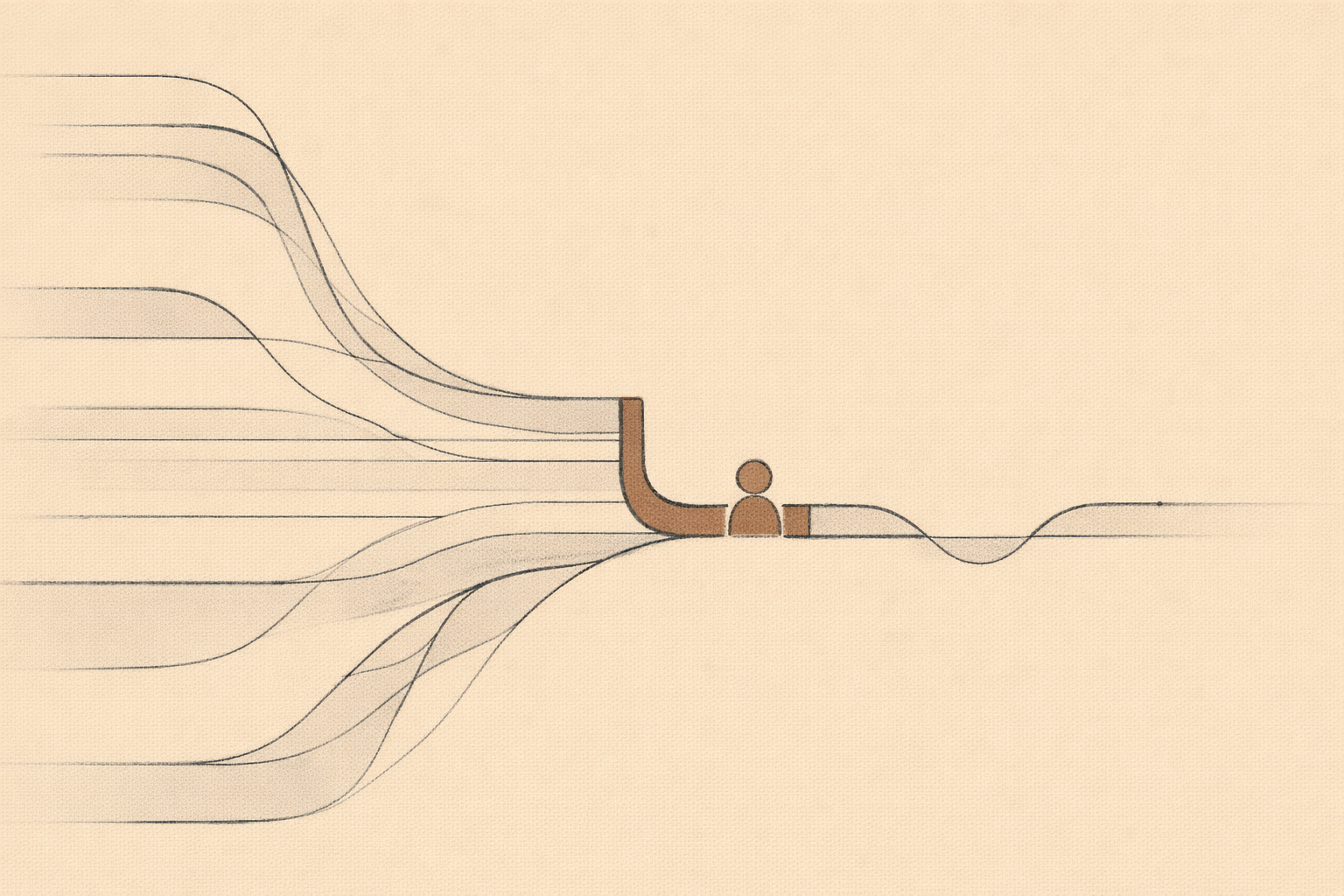
Keeping humans in the loop is the difference between automation that serves people and automation that quietly replaces judgment. Speed is not the goal. Responsible outcomes are.
Technology removes friction. That can be useful. However, when a system chooses first and a person approves after, decision-making turns into consent. Over time, the system becomes the author and the human becomes the passenger.
Tech as Discipline exists to prevent that drift. It is a practical framework for designing technology that preserves accountability, clarity, and human oversight even as efficiency increases.
Keeping Humans in the Loop Requires Discipline
Discipline is not a mindset. It is structure. In technology systems, discipline shows up as guardrails that keep responsibility attached to reality instead of abstraction.
- Visibility: the system makes its logic legible rather than hiding decisions behind defaults.
- Checkpoints: a human must explicitly choose at moments where stakes rise.
- Accountability: outcomes remain owned. Automation can assist, but it cannot absorb blame.
Keeping humans in the loop does not mean slowing everything down. Instead, it means placing intentional pauses where errors become expensive, irreversible, or quietly corrosive. These pauses may take the form of confirmations, reviews, permissions, audits, or escalation paths. The form may vary. The function should not.
What the First Arc Established
The opening sequence in this lane established three truths that now operate together.
- Cost: convenience removes attention before it removes effort.
- Drift: systems normalize preselected paths, and human agency fades without a clear moment of transfer.
- Structure: designed friction slows decisions on purpose to protect judgment and responsibility.
Taken together, the argument is simple. Automation should compress effort, not erase authorship. When a person cannot explain why a system chose what it chose, the system is no longer a tool. At that point, it becomes governance.
Practical Rules for Real Systems
This framework remains practical because the failures are practical. A disciplined system follows rules that can be implemented, audited, and improved.
- Put humans in the loop at the boundary: money movement, access control, privacy, identity, safety, and irreversible actions.
- Make defaults reviewable: defaults are decisions made in advance, not neutral starting points.
- Separate speed from authority: automation may recommend, but humans should approve when stakes exist.
- Design for failure: assume the system will be wrong sometimes and provide recovery paths.
Keeping humans in the loop is not anti-technology. On the contrary, it is pro-responsibility. Speed remains useful. Judgment remains essential.
Follow the full Tech as Discipline arc.
→ The Cost of Convenience: What Automation Removes That You Still Need
→ When Systems Make Decisions for You
→ Designing Friction on Purpose
→ NIST — AI Risk Management Framework
→ Automation Bias: Systematic Review
→ FTC — Dark Patterns in Design
Tech as discipline is not about fear. It is about authorship. The future belongs to systems that move fast and remain accountable.