Systems making decisions for people rarely feels dramatic. It feels helpful. A default setting. A recommendation. A preselected path that “usually works.”
Most people do not notice when they stop deciding. There is no announcement. No clear moment of transfer. Agency simply shifts from human to system, one convenience at a time.
When Systems Make Decisions for You
Modern tools are built to reduce friction. That includes cognitive friction. The more often a system chooses correctly, the less often a user feels the need to intervene. Trust builds. Attention fades. Over time, the system chooses first and the human approves after.
This is not laziness. It is design.
Behavioral research on status quo bias shows that people disproportionately stick with a default option when “doing nothing” is available. When defaults are baked into digital systems, that tendency becomes a daily workflow, not a one-time choice.
Delegation vs Abdication
Delegation is intentional. Abdication is accidental.
When systems making decisions becomes the norm, three outcomes tend to appear quietly:
- Judgment atrophies. Tradeoffs become harder to see because the system smooths them out.
- Accountability blurs. When results disappoint, responsibility feels abstract because the system “handled it.”
- Preference replaces principle. What feels easy starts to feel right, even when it drifts from actual goals.
This does not require bad intent. It only requires convenience without checkpoints.
Research on automation bias reinforces the risk: people can over-trust automated support and miss errors they would have caught with active verification, especially when the system has performed well in the past.
How to Reclaim Agency in a Default-Driven World
The goal is not total control. The goal is authorship.
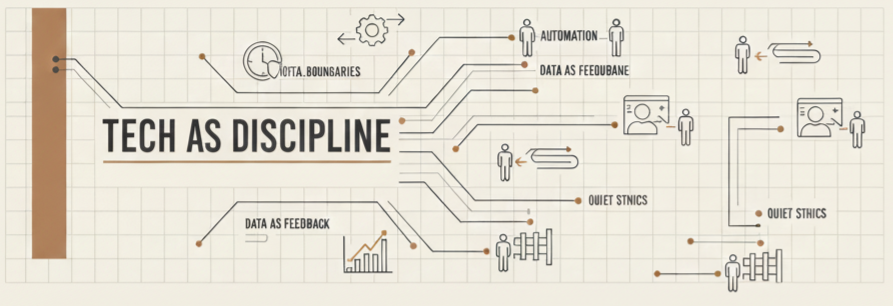
A disciplined relationship with technology reasserts agency at the moments where judgment matters most. Not everywhere. Just where it counts.
- Challenge defaults. Review settings before the system locks in your “normal.”
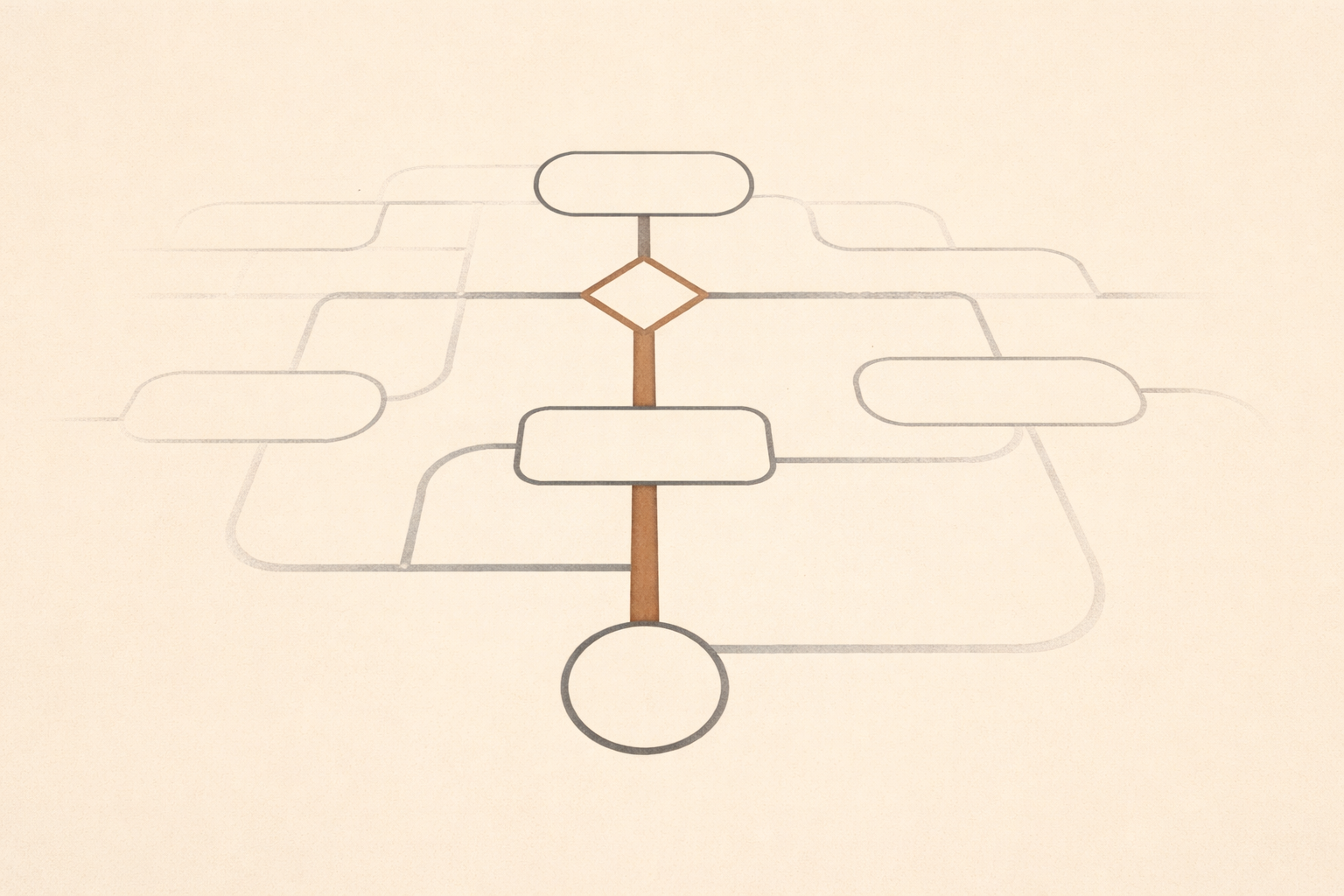
- Keep one manual checkpoint. Preserve a step where human judgment is required, not optional.
- Learn the failure modes. Every system has blind spots. Know where yours live.
- Measure outcomes, not comfort. Easier is not always better. Convenience can hide drift.
If a system is selecting your path and you cannot explain why, you are no longer deciding. You are consenting.
Technology should compress effort, not erase responsibility. Discipline is noticing the moment the decision quietly left the room.
Start at the first stone in this lane.
→ The Cost of Convenience: What Automation Removes That You Still Need
→ Automation Bias: Systematic Review (PMC)
→ NIST: AI Risk Management Framework (AI RMF)
→ Status Quo Bias in Decision Making (Samuelson & Zeckhauser)