
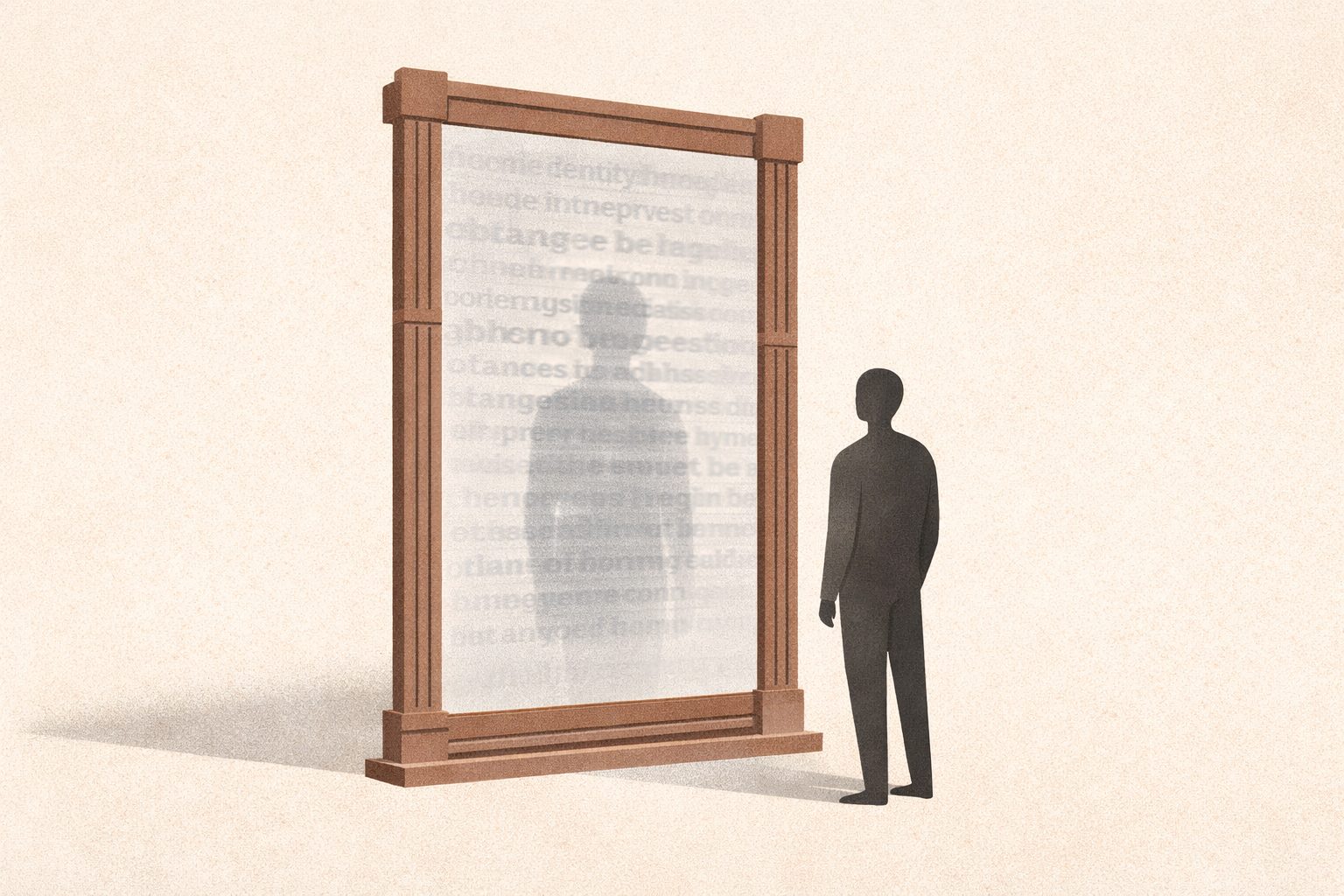
Internalized identity narratives shape how people see themselves long before they consciously evaluate those beliefs. The stories repeated internally about who someone is, what they deserve, and what roles they should play often determine the direction of their lives.
These narratives act like quiet operating systems. They influence confidence, ambition, risk tolerance, and the kinds of opportunities people believe belong to them.
How Internalized Identity Narratives Form
Internalized identity narratives rarely appear suddenly. Instead they develop through family expectations, cultural signals, institutional systems, and personal experiences. Over time those inputs form a mental framework that guides behavior.
Children learn who they are partly through reflection from others. Teachers, parents, peers, and institutions constantly send signals about competence, belonging, intelligence, and leadership. When these signals repeat, they begin to form a narrative about identity.
Because the framework feels familiar, it often feels true. That is why internalized identity narratives can limit possibility even when external circumstances improve.
The Role of Language and Repetition
Language plays a powerful role in shaping identity. The phrases people hear repeatedly about themselves become the raw material of identity narratives.
Statements such as “people like us do not do that,” “you are the responsible one,” or “you are not good with money” may begin as casual observations. Over time they become internal rules.
Repetition strengthens belief. The more often a narrative is reinforced through language, the more natural it begins to feel. Eventually the individual stops questioning it and begins organizing behavior around it.
This dynamic often becomes visible in broader cultural debates about language and identity. For example, discussions about the politics of Black hair show how language, cultural symbols, and public perception combine to shape identity expectations.
When the Script Runs in the Background
Once an internalized identity narrative is accepted, it begins operating quietly in the background. Decisions that appear rational on the surface are often responses to internal scripts.
For example, a person who internalizes the belief that leadership belongs to someone else may avoid opportunities to lead. Likewise, someone who believes stability is unattainable may sabotage progress when life begins improving.
The most powerful limitation is often the one that feels natural.
Psychologists describe identity development as an ongoing negotiation between personal experience and social context. Research summarized by the American Psychological Association explains how identity narratives form through repeated social reinforcement.
The Influence of Environment
Identity narratives do not develop in isolation. Environment reinforces them.
Social circles, workplaces, schools, and neighborhoods all signal what behavior is normal and what success looks like. When individuals remain in environments that reinforce limiting narratives, those narratives become difficult to challenge.
Conversely, exposure to new environments can disrupt identity assumptions. Seeing people with similar backgrounds succeed in unfamiliar roles can weaken limiting beliefs and create space for new narratives to emerge.
Rewriting Internalized Identity Narratives
The key insight is simple. If the story shaping behavior is constructed, it can also be reconstructed.
However, reconstruction requires awareness. When individuals become aware of the internalized identity narratives guiding their decisions, they gain the ability to question them. As a result, new frameworks can replace inherited assumptions.
Discipline can replace doubt. Structure can replace confusion. Possibility can replace resignation.
This process does not happen overnight. Changing identity narratives requires consistent behavioral evidence that contradicts the old story.
The Mirror Principle
This principle sits at the core of many Groundwork Daily frameworks. Personal progress rarely begins with a dramatic external change. More often it begins with a shift in internal architecture.
If the internal narrative changes, behavior begins to change as well. Over time the outcomes follow.
For readers exploring how structure and identity interact, the framework discussed in Discipline Before Dollars provides a deeper look at how personal narratives influence long-term outcomes.
Identity then becomes less about inheritance and more about construction.
The story shifts from limitation to authorship.
And once the story changes, the behavior that follows often changes with it.
- System Updates: When Language Becomes Self-Weaponization
- Real Talk Blueprint: When We Start Talking About Ourselves Like the Enemy
- The Politics of Black Hair: History, Identity, and Power
- Hair Discrimination in the Workplace: The CROWN Act Explained
- The Economics of the Black Hair Industry
- Understanding Natural Hair: Texture, Science, and Maintenance
- Hair Types Explained: The 1A–4C Curl Pattern Guide
