
Contents
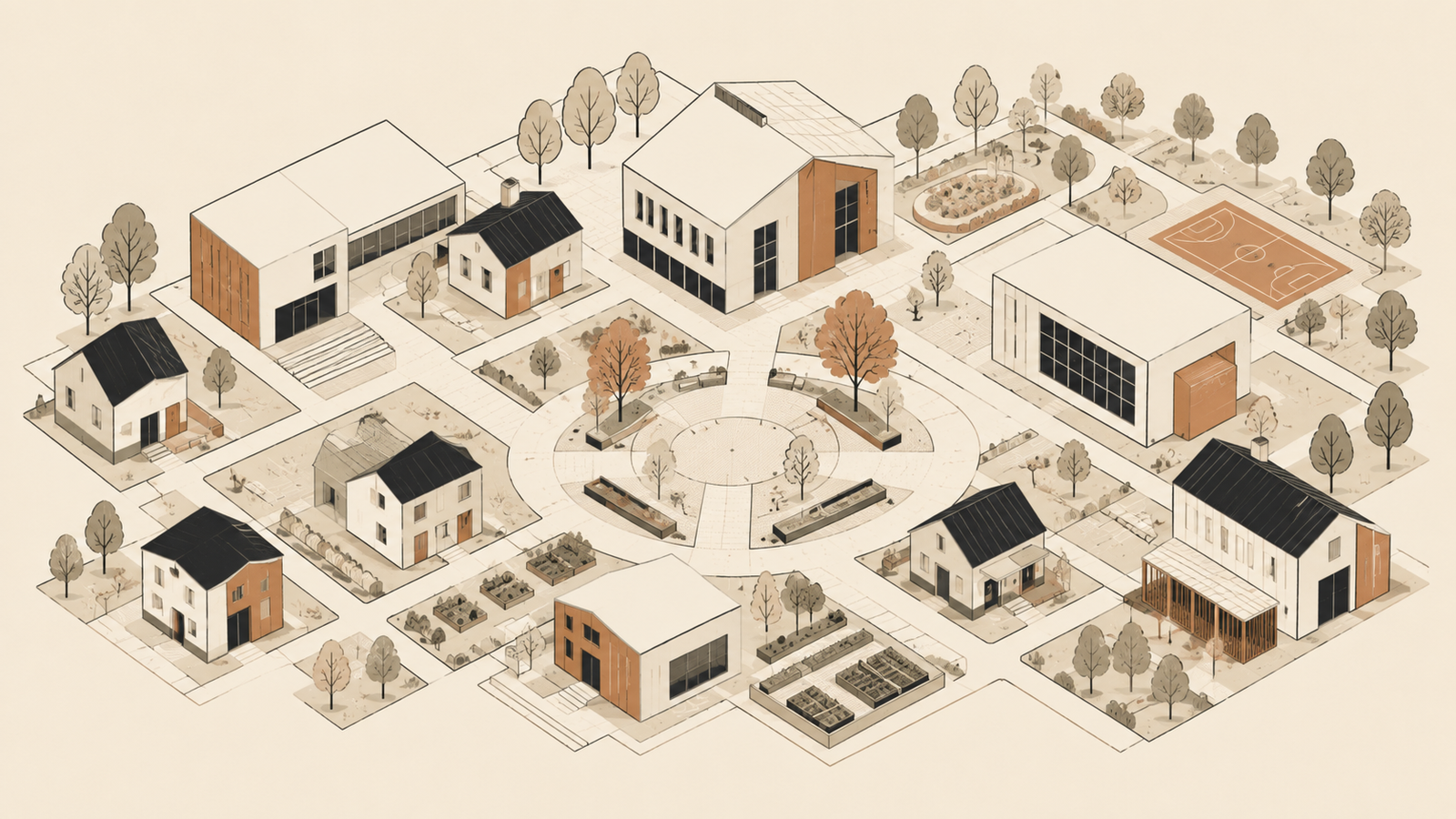
Communities are built before they are governed. That is the first principle. Governments can enforce rules. Institutions can provide services. Infrastructure can support daily life. However, none of them can manufacture the habits that make a community work.
A community becomes durable before a formal system arrives to manage it. It becomes durable through participation, restraint, stewardship, maintenance, trust, and repeated responsibility. The block learns what people will protect. The hallway learns who will notice. The school learns whether families show up. The park learns whether visitors leave it usable for the next person.
Governance matters. Public policy matters. Institutions matter. However, governance is downstream from civic behavior. When the habits underneath a community weaken, formal authority inherits the damage. That is why communities cannot be understood only through budgets, agencies, elections, or services. Those structures matter, but they stand on top of daily conduct.
This is the core idea behind Community Groundwork: communities do not rise or fall all at once. They become what repeated behavior allows.
Communities are built before they are governed
Government is often treated as the beginning of community order. That is backwards. Government can formalize expectations, enforce standards, fund services, and regulate conflict. Yet long before any of that works, people must already share enough expectations to live near one another without constant intervention.
Every neighborhood has an operating system. Some of it is formal: rules, schedules, boards, budgets, meetings, staffing charts, and maintenance plans. Much of it is informal: who reports the problem, who picks up the mess, who watches the corner, who keeps showing up, who stops showing up, and who quietly benefits from work they do not help carry.
That informal system determines whether the formal system has a chance.
If neighbors ignore small deterioration, the maintenance department receives a larger problem. If families withdraw from school life, administrators inherit weak participation. If public space is treated as disposable, city agencies inherit higher costs. If people stop correcting small breakdowns, enforcement arrives late and looks harsher than it should.
Strong communities are not built by speeches. They are built by repeated behavior that teaches people what is normal.
Civic Principle
A community is not first created by authority. It is created by repeated acts of stewardship that make authority necessary less often.
What makes communities strong?
People often ask what makes communities strong. The answer is rarely one thing. It is not only leadership, funding, safety, tradition, or public services. Those matter, but they do not stand alone.
Strong communities usually have five conditions operating beneath the surface:
- Shared responsibility: enough people believe the place belongs to more than themselves.
- Visible contribution: people can see others maintaining what is shared.
- Reliable participation: the same few people are not carrying the whole system alone.
- Informal correction: small problems are named before they become accepted.
- Institutional trust: people believe schools, stores, parks, agencies, and local leaders will respond with consistency.
When these conditions are present, a community can absorb stress. It can handle conflict without collapsing into suspicion. It can manage scarcity without turning every decision into a fight. It can disagree without losing the shared floor beneath the disagreement.
That shared floor is not sentimental. It is structural. Communities need values, but values only become durable when they show up as habits. A neighborhood can claim to value safety while ignoring broken lighting. It can claim to value children while leaving schools unsupported. It can claim to value elders while allowing sidewalks, elevators, and public entrances to become harder to use.
The real test is not what a community says it values. The test is what it repeatedly maintains.
Government cannot manufacture trust
Trust is not delivered like a public service. It is accumulated. It grows when people repeatedly experience reliability from one another and from the institutions around them.
Government can create conditions where trust is easier to build. It can improve lighting, repair streets, fund libraries, maintain parks, and staff agencies properly. However, those actions cannot replace community behavior. A repaired park still needs visitors who respect it. A funded school still needs families who participate. A public meeting still needs residents who show up prepared to listen, not only complain.
Without trust, every public action is interpreted through suspicion. A rule becomes control. A delay becomes disrespect. A change becomes conspiracy. An error becomes evidence that the whole system is hostile.
Some of that suspicion may come from real history. Communities remember neglect. They remember broken promises. They remember unfair treatment. Still, trust cannot be rebuilt through memory alone. It has to be rebuilt through repeated proof.
That proof comes from institutions and residents together. One side cannot carry it alone.
A community with no trust becomes expensive to govern. Every decision requires explanation. Every repair requires defense. Every boundary becomes a fight. Every missed expectation becomes part of a larger story of failure. Trust lowers friction. Without it, even useful action arrives carrying weight.
Institutions inherit community behavior
Institutions do not float above communities. They inherit community behavior every day.
Schools inherit whether families treat education as shared work. Libraries inherit whether people respect quiet and public resources. Transit systems inherit whether riders practice restraint. Parks inherit whether visitors leave common space usable. Local businesses inherit whether customers treat service workers and shared property with respect. Community centers inherit whether residents see participation as normal or optional.
That means institutional failure is not always only institutional. Sometimes the institution is exposing a deeper civic problem. The policy may be weak. The staffing may be thin. The funding may be inadequate. Yet beneath those visible issues, there may also be a participation gap, a trust gap, or a responsibility gap.
A block tells the truth before the meeting does. It shows who maintains standards when nobody is filming. It shows whether people will protect shared systems when no official reward is offered. Small neglect rarely stays small once the community learns to organize around tolerated exceptions. That is the hard lesson inside Block Logic.
A block is never just a block. It is a live audit of civic behavior.
Community stewardship is the foundation
Community stewardship is the practice of caring for what people share but do not personally own. It is one of the most important forces in public life because it reduces the need for constant enforcement.
Stewardship looks ordinary. Someone reports a broken light. Someone returns a shopping cart. Someone resets chairs after an event. Someone cleans up after a gathering. Someone checks on an elder. Someone notices the leak before it spreads. Someone tells a child not to damage the hallway. Someone shows up to the meeting even when the agenda is boring.
None of these acts feel historic. Together, they determine whether a community can hold weight.
A commons survives when enough people protect shared value before it is exhausted. It fails when everyone benefits but too few people maintain. That is the logic behind Cultivating the Commons, and it is also the logic behind every durable neighborhood system.
The same principle applies to sidewalks, schools, stores, public rooms, church basements, apartment lobbies, parks, bus stops, and neighborhood traditions. The commons is not only land. It is any shared system people depend on but can damage through neglect.
This is why community stewardship cannot be treated as decoration. It is not a soft add-on after policy. It is the layer that lets policy work without becoming constant crisis management.
Participation is not decoration
Participation is often treated as a nice addition to community life. That is too soft. Participation is load-bearing.
When residents participate, institutions receive information before crisis. When parents participate, schools gain reinforcement beyond the classroom. When neighbors participate, small problems become visible early. When volunteers participate, community organizations can do more than their budgets suggest. When local customers participate in shared norms, businesses become safer and more sustainable.
However, participation weakens when contribution becomes invisible. People stop showing up when they believe their effort does not matter. They withdraw when the same few people carry the work while everyone else benefits. They become quiet when correction is punished and free riding is tolerated.
Visible contribution changes that. People are more likely to keep participating when they can see other people participating too. A clean lobby, a reset room, a repaired bench, a working notice board, and a swept sidewalk all tell the same story: someone is still caring for the shared system.
That is why Community Participation and visible contribution are not side topics. They explain why communities quietly gain or lose capacity.
A community does not need everyone to do everything. It needs enough people doing enough things consistently enough that the whole system remains credible.
Why neighborhoods decline
Neighborhoods rarely decline because one thing breaks. They decline when small failures become normal.
A trash pattern becomes accepted. A broken door stays broken. A meeting loses attendance. A store becomes harder to use. A park becomes less welcoming. A hallway becomes nobody’s responsibility. A few reliable people burn out. New residents inherit low expectations. Eventually, the neighborhood still exists physically, but its civic metabolism slows.
At that point, outside intervention often arrives late. Agencies respond. Grants appear. Security increases. Rules tighten. New programs launch. Some of that may help. Yet none of it fully repairs the informal system that trained people to withdraw.
Neighborhood decline is often a participation story before it becomes a policy story.
That does not mean residents are always to blame. Blame is usually too crude. Systems shape behavior. Incentives matter. History matters. Resources matter. Leadership matters. Still, the daily pattern remains visible: communities weaken when repeated care disappears faster than formal systems can replace it.
Even local retail reveals this pattern. grocery stores are not only places to buy food. They are routine infrastructure. They coordinate foot traffic, trust, household planning, neighborhood familiarity, and daily contact. When that kind of infrastructure weakens, a community loses more than convenience. It loses one of the ordinary places where civic life repeats itself.
The cost of outsourcing responsibility
When communities outsource too much responsibility to government, institutions, or a few exhausted contributors, the cost rises.
Every unreported problem becomes a larger repair. Every ignored conflict becomes a harder intervention. Every neglected shared space requires more maintenance. Every absent volunteer leaves more weight on the people who remain. Every weak norm creates demand for stronger enforcement.
Someone pays.
The payment may come through taxes, fees, rent, insurance, staff burnout, reduced hours, closed programs, delayed repairs, or public withdrawal. The cost may also show up emotionally. People become tired of caring. They stop expecting better. They lower their standards to survive the disappointment.
That is civic erosion.
The solution is not romantic nostalgia. It is not pretending communities were once perfect. The solution is rebuilding the habits that make shared life more reliable.
What strong communities practice
Strong communities practice maintenance before crisis. They do not wait until something breaks beyond repair before naming the pattern.
They practice shared responsibility. They make contribution visible. They distribute work instead of allowing a few people to carry everything. They correct small disorder early. They protect public spaces from becoming disposable. They teach young people that shared things require shared care. They expect institutions to serve, but they do not expect institutions to replace civic behavior.
Most importantly, strong communities repeat these practices long enough for them to become normal.
Normal is powerful. If neglect becomes normal, decline feels inevitable. If stewardship becomes normal, durability becomes easier to reproduce.
Communities inherit what they repeatedly practice.
How community governance actually works
Community governance is not only elected office, public agencies, or formal boards. Those are important, but governance also happens through informal standards.
A neighbor who organizes a cleanup is governing. A parent who corrects behavior in a shared hallway is governing. A block association that keeps records is governing. A volunteer who opens the room every week is governing. A store owner who maintains the sidewalk is governing. A resident who reports a hazard before someone gets hurt is governing.
This is not government in the formal sense. It is governance as shared order.
Formal authority works best when informal governance is already active. When informal governance disappears, formal systems are forced to become louder, more expensive, and more coercive.
That is the missing middle in many public debates. People argue over government action while ignoring the community behavior that determines whether any action will work.
The civic habit beneath every strong community
The habit beneath every strong community is simple: people protect what they share.
They do not protect it perfectly. They do not always agree. They do not eliminate conflict. Yet they maintain enough shared responsibility to keep the community usable.
That habit is built through repetition. A child sees adults care for common space. A neighbor sees another neighbor show up. A volunteer sees that the work is noticed. A resident sees a problem repaired. A newcomer sees standards already operating.
Over time, the community teaches a basic lesson: this place is not disposable.
That lesson matters more than any slogan.
Why this article becomes the hub
Communities are built before they are governed because governance cannot succeed where stewardship has collapsed. This article is the hub because it names the foundation underneath every Community Groundwork essay.
When future articles examine public space, neighborhood safety, shopping carts, visible contribution, participation decline, maintenance behavior, local trust, or institutional durability, they return to this principle.
The same question will keep appearing:
What behavior has the community repeated long enough to become structure?
That question cuts through sentiment. It does not ask what people claim to value. It asks what the system proves.
Communities are built through repeated care
A government can enforce rules. An institution can provide services. Infrastructure can support daily life. However, the habits that make a community work must be practiced before any of those systems can hold.
Communities are built in small decisions. The repaired light. The returned cart. The reported leak. The attended meeting. The protected park. The watched hallway. The shared standard. The repeated contribution.
None of these acts need applause.
Together, they become civic infrastructure.
That is how a community becomes governable. More importantly, that is how a community becomes worth governing.
Build With Groundwork Daily
Subscribe for essays that connect everyday behavior, institutions, leadership, economics, and community through one belief: structure builds stability.
The Groundwork Effect
Further Groundwork
Receipts
Meet the Builder

Groundwork Daily Perspective
Builder of The Foundation
Groundwork Daily Perspective builds the intellectual foundation of Groundwork Daily. Rather than focusing on one subject area, this builder develops the principles, frameworks, and structural thinking that connect every category across the publication.
These essays explain how community, education, economics, leadership, governance, family, culture, and personal discipline reinforce one another through shared systems. Every framework published under this builder strengthens the larger architecture that supports Groundwork Daily.
Start here to understand the ideas that shape the publication before exploring the individual builders and their specialized territories.