
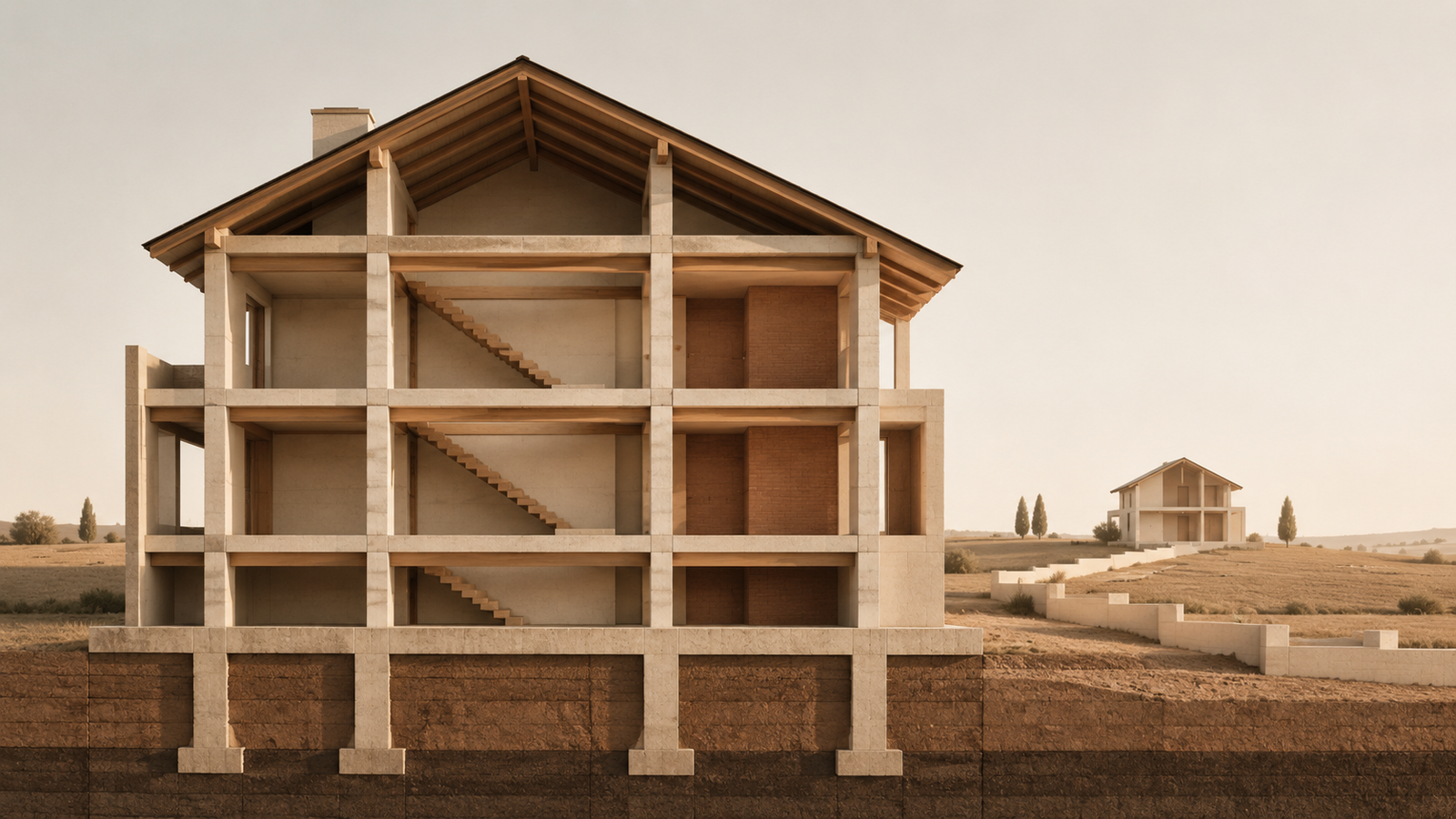
Legacy in Motion · The Architecture of Family Stability · Part 2
Children inherit more than genetics. They absorb routines, relationships, conflict, money habits, and everyday behavior that quietly become their definition of normal.
A parent tells a child to say thank you.
Five minutes later, that same parent snaps at a cashier, ignores a spouse, or complains about someone who is not in the room.
The child sees both moments.
The instruction matters. However, the example travels deeper.
Children do not inherit only what adults explain. They inherit what adults repeat. They inherit tone, rhythm, urgency, silence, affection, avoidance, spending patterns, conflict habits, and the emotional weather of the home. Long before children can describe family culture, they are already absorbing it.
This is why the second essay in this collection must begin here. The Architecture of Family Stability established the central framework: strong families are intentionally built. This article asks the next question.
How does that architecture get transmitted?
The answer is simple and demanding.
Children inherit normal.
Normal Is Inherited
Normal is one of the most powerful forces in a child’s life.
Normal decides what feels safe. It decides what feels strange. It decides what feels possible. It also decides what a child may later tolerate, repeat, resist, or spend years unlearning.
For some children, normal is adults who apologize. For others, normal is adults who pretend nothing happened. For some children, normal is a family that discusses money with clarity. For others, normal is financial secrecy, panic, or shame. For some children, normal is affection expressed openly. For others, love is present but hidden behind duty, stress, or silence.
No home is perfect. That has to be said clearly. The point is not to shame parents, grandparents, guardians, or caregivers for being human. Every family has strain. Every adult has limits. Every household has unfinished work.
Still, what becomes normal becomes powerful.
Normal Becomes the Baseline
Children use home as their first reference point. Before they know what is healthy, mature, fair, loving, or stable, they know what is familiar.
That familiarity can become a gift. It can also become a trap.
If calm correction is normal, children learn that accountability does not require humiliation. If yelling is normal, children may confuse volume with seriousness. If adults repair conflict, children learn that relationships can bend without breaking. If adults never repair, children may come to believe that distance is the cost of disagreement.
Eventually, many adults discover that their strongest instincts were not chosen. They were absorbed.
Inheritance Begins Before Possessions
People often talk about inheritance as money, property, jewelry, land, business equity, or family names. Those things matter. However, children begin inheriting long before anyone opens a bank account or writes a will.
They inherit the way adults enter a room. They inherit how stress moves through the house. They inherit whether promises matter. They inherit whether rest is respected. They inherit whether work is honored. They inherit whether elders are remembered. They inherit whether mistakes are corrected or hidden.
In that sense, legacy begins earlier than most people think.
Every Home Has a Curriculum
Schools have curriculum. Churches have curriculum. Companies have onboarding. Teams have practice plans. Even software has default settings.
Homes have curriculum too.
Most families simply never write it down.
A household curriculum is the set of lessons a child learns through repetition. Some lessons are spoken directly. Adults teach children to brush their teeth, finish homework, say please, respect elders, share, clean up, and tell the truth.
Yet the deeper curriculum is often delivered without announcement.
The Spoken Curriculum
The spoken curriculum includes the lessons adults intentionally teach. These are the lessons that show up in rules, reminders, family sayings, religious instruction, school expectations, and moral correction.
Spoken lessons matter. Children need instruction. They need language for right and wrong. They need guidance before life becomes expensive. They need adults who are willing to say, “This is what we do,” and “That is not how we treat people.”
However, spoken lessons lose authority when they are not supported by household behavior.
The Unspoken Curriculum
The unspoken curriculum includes everything children absorb without a formal lesson.
They learn how adults speak when disappointed. They learn who gets interrupted. They learn whether women are respected. They learn whether men are emotionally present. They learn whether children are heard or merely managed. They learn whether money is a secret. They learn whether family stories are repeated or lost.
This is the curriculum that often lasts longest.
If the spoken curriculum says, “Be honest,” but the unspoken curriculum rewards concealment, the child receives a divided education. If the spoken curriculum says, “Family matters,” but the household never makes time for one another, the child learns that family is an idea, not a practice.
The Curriculum Is Always Running
The home teaches in the morning. It teaches at dinner. It teaches during bills. It teaches in traffic. It teaches when a parent is tired. It teaches when someone makes a mistake. It teaches when relatives gather. It teaches when someone is sick. It teaches when plans change.
Therefore, the question is not whether a family is teaching.
The question is what the family is teaching by default.
What Is Your Family Teaching?
Speech: How do people speak when they are frustrated?
Money: Is money discussed with clarity, fear, secrecy, or discipline?
Conflict: Are disagreements repaired or buried?
Work: Is responsibility shared, avoided, or dumped on one person?
Rest: Is rest respected or treated as laziness?
Failure: Are mistakes corrected, mocked, denied, or used as teaching moments?
Children Study Adults
Children are not passive passengers in the household. They are close observers.
They notice tone. They notice patterns. They notice who gets listened to. They notice who gets blamed. They notice whether affection is public or private. They notice whether adults keep promises. They notice what happens when someone cries.
This observation begins before children have language for what they are seeing.
Children Notice Tone Before Theory
Adults often focus on the words they use. Words matter. Yet tone often arrives first.
A child may not understand the full content of an argument, but the child can feel the temperature of the room. A child may not understand financial pressure, but the child can sense panic. A child may not understand marital resentment, but the child can observe distance.
This does not mean adults must hide every difficult emotion. That is not realistic. It also teaches children something false. Life includes tension, sadness, frustration, and disappointment.
The healthier goal is not emotional concealment. It is emotional stewardship.
Children Learn From Patterns
One bad day does not define a family. A tired parent can apologize. A harsh word can be repaired. A stressful season can be explained. Children can handle imperfection when repair is present.
However, patterns become powerful. When the same behavior repeats without correction, children begin to treat it as normal. They may not like it, but they learn it.
A household pattern does not need to be dramatic to be formative. A parent who always dismisses feelings teaches something. A parent who always returns after cooling down teaches something else. A family that never discusses money teaches something. A family that reviews spending calmly teaches another lesson entirely.
Children Also Study What Adults Avoid
Avoidance teaches.
When adults avoid grief, children learn that sadness is unsafe. When adults avoid apologies, children learn that pride outranks repair. When adults avoid finances, children learn that money is a source of fear or confusion. When adults avoid difficult relatives, children learn that distance is the only tool for complexity.
Sometimes avoidance is necessary for safety. Not every relationship should be restored. Not every conversation is wise. Yet even necessary distance should be named with maturity when children are old enough to understand.
Silence leaves children to write their own explanations.
Why Normal Is Powerful
Normal is powerful because it does not feel like a lesson. It feels like reality.
A child raised around steady affection may not think, “This is healthy emotional modeling.” The child simply experiences affection as part of life. A child raised around instability may not think, “This is a dysregulated environment.” The child may simply learn to stay alert.
Later, those early experiences can shape adult expectations.
Normal Shapes What Feels Safe
People often confuse familiar with safe. That is one of the quiet dangers of childhood normal.
If chaos is familiar, calm may feel suspicious. If criticism is familiar, kindness may feel temporary. If emotional distance is familiar, closeness may feel demanding. If secrecy is familiar, transparency may feel exposing.
This is not destiny. It is a starting point.
Adults can relearn. Families can change. Still, it is foolish to pretend childhood patterns have no force. What children experience repeatedly becomes part of the internal map they carry into relationships, work, parenting, and community life.
Normal Shapes What Feels Possible
Children also inherit a sense of possibility.
Some children grow up seeing adults read, build, save, serve, study, repair, lead, vote, worship, organize, create, and plan. As a result, those behaviors feel available. Other children may grow up seeing survival without strategy. They may have love, but fewer models of long-term construction.
This is where family culture becomes a form of future literacy. The household can expand a child’s imagination or shrink it.
Normal Shapes What Feels Expected
Expectations are inherited quietly.
A child may inherit the expectation that adults work hard. Another may inherit the expectation that people leave when life gets hard. One child may inherit the expectation that debt is normal. Another may inherit the expectation that planning is normal. One may inherit service. Another may inherit suspicion.
Because expectations are often absorbed early, adults must become intentional about what their household is normalizing.
The First Lessons
Children learn many of life’s largest lessons through small repeated moments.
The lessons are not always dramatic. In fact, the ordinary lessons often become the most durable because they happen so often.
How Adults Apologize
A child who sees adults apologize learns that accountability is not humiliation. The child learns that repair belongs inside love.
By contrast, a child who never sees adults apologize may learn that authority does not need correction. That child may later struggle to apologize, or may accept relationships where apologies never come.
A simple apology can become a generational intervention.
How Adults Spend
Children learn from spending patterns before they understand budgets.
They notice whether adults spend to impress, soothe, escape, celebrate, prepare, or provide. They notice whether money creates secrecy or shared planning. They notice whether generosity exists. They notice whether financial stress makes adults harsh.
Money habits become emotional lessons.
How Adults Disagree
Disagreement is one of the strongest classrooms in a home.
Children learn whether conflict means danger or clarity. They learn whether people can disagree and remain connected. They learn whether tone matters. They learn whether silence is punishment. They learn whether winning matters more than understanding.
This is why Love Starts With Structure remains relevant beyond dating and partnership. Structure gives love a way to survive pressure. Children need to see that.
How Adults Recover
Recovery may be one of the most underrated lessons in family life.
Children need to see adults recover from bad days, wrong turns, financial setbacks, grief, conflict, and disappointment. They need to see that struggle is not the end of the story.
A home that models recovery gives children more than comfort. It gives them resilience.
Emotional Inheritance
Families pass down emotional patterns.
Some families pass down hope. Others pass down fear. Some pass down humor, faith, steadiness, courage, suspicion, shame, ambition, anger, or silence. Often, these patterns are passed without anyone naming them.
Emotional inheritance does not mean every generation must repeat the last one. It means every generation must decide what to carry, what to heal, and what to stop normalizing.
Emotional Weather Matters
Every home has emotional weather.
Some homes feel calm even when life is difficult. Other homes feel tense even when nothing obvious is wrong. Children learn that weather. They adjust to it. They build survival strategies around it.
A child in a tense home may become highly observant. That awareness can look like maturity, but sometimes it is vigilance. A child in a steady home may feel more freedom to explore, ask questions, fail, and return.
Again, this is not about perfection. It is about patterns.
Adults Set the Emotional Temperature
Adults do not control every feeling in a home. However, adults carry major responsibility for the emotional temperature. Their tone, pacing, honesty, repair, and self-control shape what children experience as normal.
This is why emotional discipline matters. It is not about pretending to be calm. It is about refusing to make children carry adult chaos without explanation, repair, or protection.
Hope Can Be Inherited Too
Families should not only focus on what can go wrong. Healthy inheritance also includes joy.
Children can inherit laughter. They can inherit songs, prayers, recipes, stories, sayings, celebrations, and the belief that tomorrow can be better than today. They can inherit the habit of trying again.
Emotional inheritance is not only about harm. It is also about strength.
Financial Inheritance Begins Before Wealth
Children inherit financial behavior before they inherit money.
They learn how adults talk about bills. They learn whether saving is normal. They learn whether debt is hidden. They learn whether giving is practiced. They learn whether purchases are planned or impulsive. They learn whether money is a tool, a trophy, a weapon, or a source of panic.
Long before children receive a paycheck, they are absorbing a financial worldview.
Children Learn Money Through Atmosphere
Many adults avoid money conversations with children because they do not want to create anxiety. That instinct can be loving. Children should not carry adult financial burdens.
However, total silence can also create confusion. Children may sense stress without understanding it. They may fill in gaps with fear. They may learn that money is too dangerous to discuss.
The better approach is age-appropriate clarity.
A child does not need to know every adult financial detail. Yet a child can learn that families plan, save, wait, choose, give, and recover from setbacks.
Discipline Before Dollars
This is where Discipline Before Dollars belongs in the conversation. Money without discipline does not create freedom. It creates larger versions of the same instability.
For children, the lesson begins early. They watch whether adults can delay gratification. They watch whether adults confuse price with value. They watch whether adults use money to avoid hard emotions. They watch whether generosity has a place in the budget.
Financial inheritance begins in the pattern, not the portfolio.
Financial Patterns Children Notice
Planning: Do adults prepare before pressure arrives?
Spending: Are purchases tied to values or impulse?
Saving: Is saving treated as protection or punishment?
Giving: Does generosity have a visible place?
Repair: When money mistakes happen, are they corrected or hidden?
Relationship Inheritance
Children inherit ideas about relationships before they enter relationships of their own.
They learn from parents, guardians, grandparents, older siblings, aunts, uncles, neighbors, and the wider culture around them. They notice how adults speak about love. They notice whether commitment looks heavy or honorable. They notice whether affection is steady. They notice whether respect survives disagreement.
Children Learn What Love Sounds Like
Love has a sound.
Sometimes it sounds like patience. Sometimes it sounds like sarcasm. Sometimes it sounds like correction. Sometimes it sounds like contempt. Children learn the difference slowly, through repetition.
If love is always paired with criticism, a child may later confuse intensity with care. If love is paired with consistency, a child may learn that affection does not need to be chaotic to be real.
Children Learn What Respect Allows
Respect is not an abstract value inside a household. It is visible.
It appears in tone. It appears in whether people are interrupted. It appears in whether apologies move both directions. It appears in whether one person’s labor is treated as less valuable than another’s.
The article The Power Struggle is useful here because many relationships do not collapse from one major event. They weaken through repeated contests for control. Children who watch those contests may learn that love is a battlefield rather than a covenant.
Children Learn Whether Repair Is Possible
Relationship inheritance is not damaged by disagreement alone. It is damaged by unresolved disagreement.
When children see adults repair, they learn that conflict can become clarity. When they see adults avoid repair, they learn that tension is permanent or that distance is normal.
This is why family stability depends on repair as much as affection. Love that cannot repair becomes brittle.
Changing Normal
The most hopeful truth is that normal can change.
A person may inherit patterns, but a person is not required to preserve all of them. Families can tell the truth. Adults can apologize. Households can build new rhythms. Children can experience a different kind of stability than their parents received.
That is the work of legacy in motion.
Inherited Does Not Mean Permanent
Some adults feel trapped by what they inherited. They recognize old patterns in their tone, spending, conflict, or parenting. They hear themselves repeating sentences they once hated. They feel the weight of family history.
Recognition can be painful. However, it is also powerful. A pattern that can be named can be interrupted.
The goal is not to despise the past. The goal is to tell the truth about it. Some inheritances should be preserved with gratitude. Others should be repaired with discipline. A few should end with courage.
Correction Is a Legacy Act
When an adult changes a pattern, that adult is not only improving personal behavior. That adult is editing the family blueprint.
A father who learns to apologize changes what authority looks like. A mother who names financial boundaries changes what security feels like. A grandparent who tells family history changes what identity carries. A caregiver who chooses calm correction changes what discipline means.
These choices may look small. Nevertheless, they create new normal.
Children Can Witness Growth
Adults sometimes believe children only need to see strength. Yet children also need to see growth.
They need to see that adults can learn. They need to see correction. They need to see humility. They need to see that maturity is not the absence of mistakes, but the willingness to repair them.
That lesson may become one of the strongest inheritances a child receives.
Designing Better Defaults
If children inherit normal, then adults must become designers of normal.
That does not require a perfect household. It requires better defaults.
Defaults are the automatic behaviors a family returns to without needing a major decision. Every household has them. The question is whether those defaults build stability or drain it.
Better Defaults Are Usually Small
Families often underestimate small practices because they do not look dramatic. Yet small practices repeated over time become culture.
A weekly meal can become belonging. A bedtime apology can become repair. A savings habit can become security. A shared chore can become contribution. A regular call to elders can become continuity.
The work is not glamorous. It is structural.
A Family Can Choose Its Repetitions
Repetition is unavoidable. The only question is whether the family repeats what strengthens it or what weakens it.
Better defaults may include:
- Greeting one another before giving instructions.
- Discussing money without panic or secrecy.
- Ending conflict with repair instead of distance.
- Making children responsible for age-appropriate contribution.
- Keeping promises small enough to honor.
- Explaining hard seasons without making children carry adult burdens.
- Practicing gratitude as a household rhythm.
The Family Meeting as a Reset
Better defaults need a place to be reviewed. Otherwise, good intentions drift.
That is why family meetings matter. A family meeting gives the household a place to ask: What is working? What is too heavy? What needs repair? What are we teaching without meaning to teach?
This connects directly to the broader collection. Family Meetings Change Everything will deepen this practice because communication should not depend on crisis.
The Better Default Test
Ask one question: if a child copied this household pattern for twenty years, would it build a stronger life or create more repair work later?
Legacy Begins Earlier Than You Think
Legacy does not begin with inheritance paperwork.
It begins at breakfast. It begins at bedtime. It begins during arguments. It begins during celebrations. It begins when plans fail. It begins when adults are tired. It begins when someone says, “I was wrong.”
Children inherit those moments.
Eventually, they call them normal.
The First Legacy Is Pattern
Before children inherit assets, they inherit atmosphere. Before they inherit family stories, they inherit family habits. Before they inherit a name, they inherit a way of seeing the world.
That is why family culture is never neutral. It is always forming someone.
The question is not whether the next generation will receive something. The question is what they will receive through repetition.
Building What Children Can Carry
The goal is not to create children who worship the family past. The goal is to create children with enough stability, courage, wisdom, and responsibility to build the future well.
Some traditions should continue. Some patterns should be corrected. Some stories should be preserved. Some silences should finally end.
That is how legacy stays in motion.
Children inherit normal. Therefore, adults must become careful about what they normalize.
Not fearful. Careful.
Not perfect. Intentional.
Not frozen in guilt. Awake to stewardship.
Because what children see every day becomes more than memory.
It becomes a blueprint.
Further Groundwork
The Architecture of Family Stability
The cornerstone framework for understanding how strong families are intentionally built.
Love Starts With Structure
Why affection becomes stronger when supported by clear expectations and shared rhythm.
Discipline Before Dollars
A practical look at why financial habits begin before financial success.
Building What Outlives You
How ordinary family practices become generational legacy.
Receipts
Harvard Center on the Developing Child
Research on early childhood development, resilience, stress, and the environments that shape children.
Child Trends
Data and research on child well-being, family stability, and youth outcomes.
American Psychological Association · Families
Resources on family relationships, stress, parenting, and emotional health.
Pew Research Center · Family and Relationships
Research on family structure, parenting, marriage, and household change.
Search Institute · Developmental Assets Framework
Research-based framework on relationships, support, boundaries, expectations, and youth development.
Subscribe to Groundwork Daily
Groundwork Daily publishes practical frameworks for structure, responsibility, stewardship, and building what outlives you.
