
For more than a century, historians, economists, and political theorists have debated a deceptively simple question.
Are wars really about resources?
Some explanations emphasize nationalism. Others focus on alliances, diplomatic failures, or ideological conflicts between nations.
Yet one argument has persisted across generations of scholarship. Many historians believe that global wars are often connected to competition for resources, trade routes, and economic power.
That debate became widely known in 1915 when sociologist and civil rights scholar W.E.B. Du Bois published an essay titled The African Roots of War. Writing during the early years of World War I, Du Bois argued that European powers were not simply fighting over national pride or diplomatic misunderstandings. Beneath those narratives, he believed, was a deeper struggle for control of valuable colonial territories.
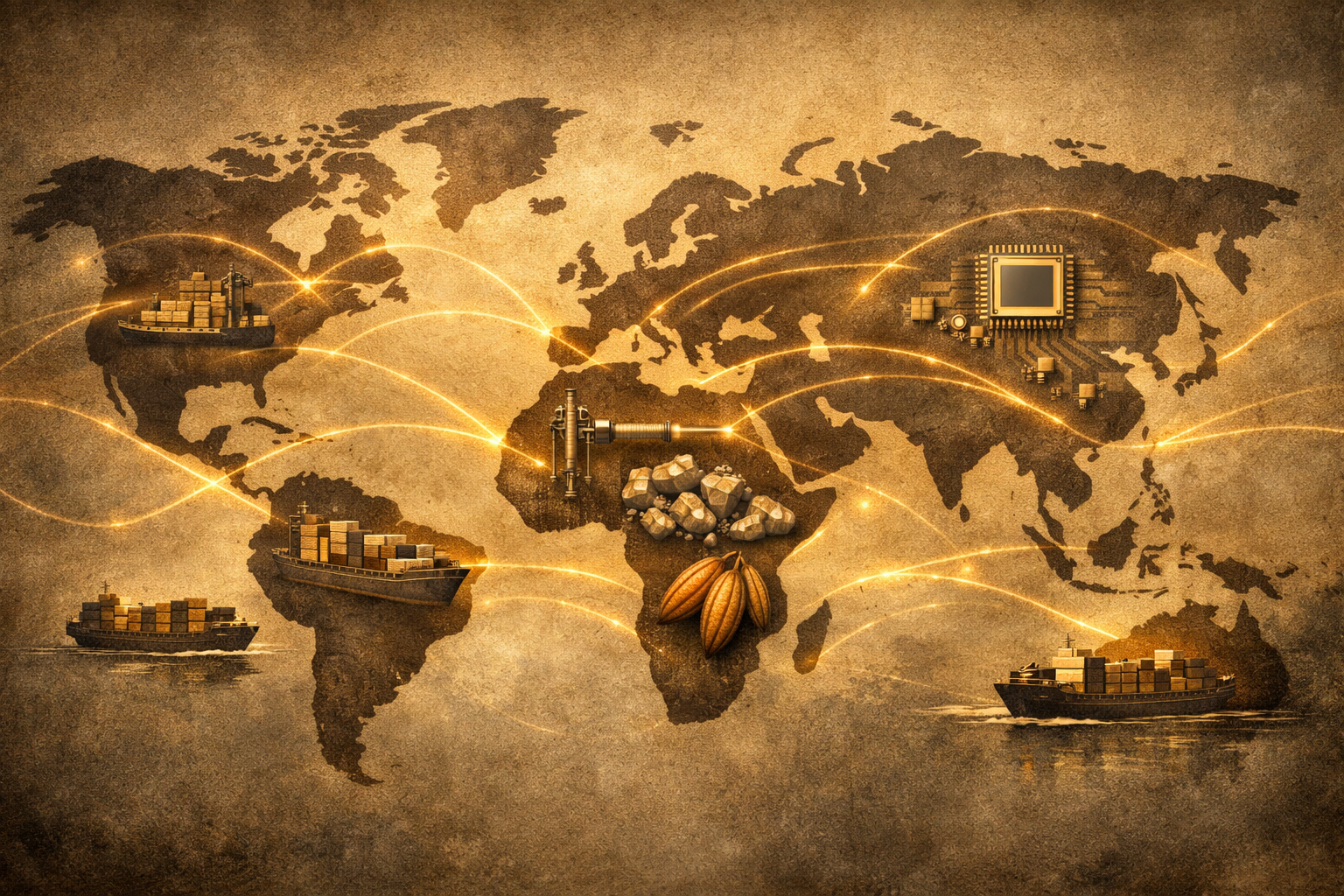
The Economic Roots of War
At the beginning of the twentieth century, industrial economies depended heavily on resources extracted from colonies across Africa and Asia.
Rubber, gold, cocoa, oil, and other raw materials flowed from colonized regions into European industrial systems. These resources fueled factories, transportation networks, and military production.
Control of territory was therefore not only about prestige. It was about economic survival and industrial expansion.
Du Bois argued that the rivalry between European empires for control of African resources created intense geopolitical competition. That competition, he believed, contributed to the tensions that eventually erupted into World War I.
In other words, the economic roots of war may lie deeper than political speeches or national pride.
Why Historians Still Debate This Idea
Despite the power of Du Bois’s argument, most historians caution against reducing complex conflicts to a single cause.
World War I, for example, emerged from a combination of forces.
Europe had developed rigid alliance systems that obligated nations to defend one another during crises. Nationalist movements were spreading rapidly across the continent, especially in the Balkans. Military planning emphasized rapid mobilization, meaning that diplomatic disputes could quickly escalate into armed conflict.
Political scientist Kenneth Waltz later described this environment as the security dilemma. In an international system without a global authority, nations compete for power and security because no institution can guarantee their safety.
From this perspective, wars are rarely about resources alone. They are the result of multiple incentives interacting at the same time.
Resource Competition in the Modern World
Even though wars rarely have a single cause, resource competition still plays an important role in global politics today.
Modern technology depends on highly specialized materials.
Rare earth minerals are essential for electronics, renewable energy systems, and military equipment. Lithium and cobalt power modern battery technologies. Semiconductor manufacturing relies on extremely complex supply chains that are geographically concentrated.
Because these materials are unevenly distributed around the world, governments increasingly view supply chains as matters of national security.
For example, global discussions about semiconductor production in Taiwan and rare earth processing in China illustrate how economic resources remain central to modern geopolitical strategy.
The pattern is familiar.
Industrial societies depend on resources.
Access to those resources creates power.
Why Wars Are Rarely Framed as Economic Conflicts
If economic competition helps explain many global conflicts, an obvious question follows.
Why are wars rarely described to the public as struggles over resources?
Governments generally mobilize populations using moral or security narratives rather than economic language. Wars are presented as battles for freedom, defense, or national survival.
These narratives serve an important political purpose. Public support is easier to mobilize when conflicts are framed as matters of principle rather than resource competition.
In the modern era, however, information flows more freely than ever before. Citizens can access multiple interpretations of global events through digital media and independent journalism.
This does not eliminate propaganda. But it does create a more complex informational environment in which competing explanations for war circulate widely.
The Question That Never Disappears
The debate that W.E.B. Du Bois raised more than a century ago remains unresolved.
Wars rarely begin for a single reason. They emerge from a combination of economic pressures, political rivalries, technological shifts, and human miscalculation.
Yet the role of resources continues to appear again and again in the story of global conflict.
Understanding geopolitics requires paying attention not only to speeches and ideology but also to the economic incentives and material systems that shape national power.
History rarely offers simple answers.
But asking whether wars are about resources forces us to look beneath the surface of global politics and examine the deeper forces that drive nations toward competition and conflict.
Further Groundwork
Why Most Community Organizations Collapse After Year Five
A structural look at institutional decay, incentives, and why systems fail long before the speeches do.
Boards vs. Founders: Who Actually Controls an Institution
A grounded analysis of structural authority and who really governs outcomes inside institutions.
Digital Infrastructure Isn’t Virtual: How the Internet Physically Works
A reminder that power always sits on physical systems, material inputs, and real-world infrastructure.
The Physical Cost of Digital Ambition
A useful companion on how expansion, scale, and technological ambition depend on land, energy, and extraction.
The African Roots of War (1915)
W.E.B. Du Bois argued that European competition for African colonies and resources helped fuel the geopolitical tensions that contributed to World War I.
The Atlantic – Original Essay
The Tragedy of Great Power Politics
Political scientist John Mearsheimer explains how great powers compete for security and influence in an anarchic international system, often leading to conflict.
University of Chicago Press
The Sources of Social Power
Sociologist Michael Mann examines how economic, military, and political power systems interact to shape global history and conflict.
Cambridge University Press
Rare Earth Elements and U.S. National Security
The U.S. Geological Survey outlines how strategic minerals and rare earth resources influence modern geopolitical competition and supply chain security.
U.S. Geological Survey
Why Institutions Follow Incentives
Understanding global conflict requires examining the incentive structures that drive nations, corporations, and political leaders. Institutions rarely behave according to moral narratives alone. They follow economic and strategic incentives.
How Power and Policy Interact
Modern geopolitical competition often emerges where economic systems, national policy, and security concerns overlap. The interaction between political power and resource access shapes global alliances and conflict.
Why Governance Structures Matter
International politics operates in a system without a global governing authority. In this environment, states compete for security and influence, which can intensify competition over trade routes, strategic resources, and supply chains.