

Stress rarely waits for permission to become visible. The body often changes its behavior before the mind changes its story.
The body tells the truth first. Long before someone finally says, “I cannot keep doing this,” the body may already be changing its output. Sleep becomes less reliable. Recovery slows. Appetite changes. Muscles stay tense. Headaches become more frequent. Patience gets shorter. Work that once felt ordinary begins to cost more.
None of those signals proves that stress is the cause. Bodies are more complicated than that. However, patterns of physical and behavioral change can tell you something important: the current load may no longer match the system’s available capacity.
The mind can explain almost anything for another week. The body is harder to negotiate with.
Read the signal while the system can still adjust. Waiting for failure is the most expensive form of feedback.
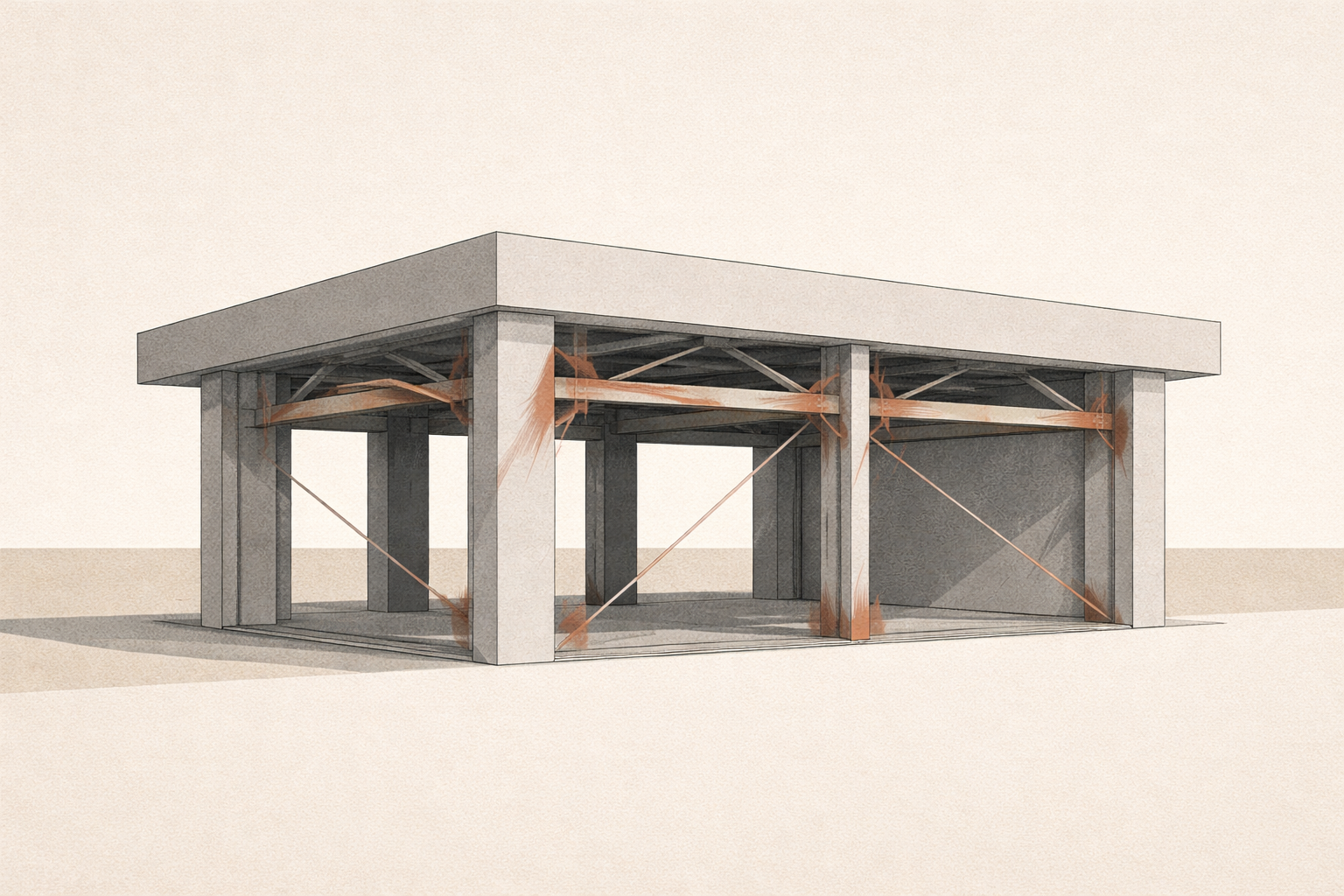
What are common signs your body may be under stress? Stress can be associated with changes in sleep, appetite, digestion, muscle tension, headaches, energy, concentration, mood, and recovery. The useful signal is often not one isolated symptom but a meaningful change from your normal baseline, especially when several changes appear together or persist.
These signs are not specific to stress. New, severe, persistent, or unexplained symptoms deserve appropriate medical evaluation rather than automatic self-diagnosis.
The Body Can Change Before the Story Does
People are remarkably good at explaining continued overload. A demanding month becomes “just the season.” Repeated sleep loss becomes ambition. Irritability becomes urgency. Exhaustion becomes proof that the work matters.
The explanation may sound coherent while the operating system underneath it is becoming less reliable.
Stress is not automatically harmful. The body is built to respond to demands. Heart rate can rise. Attention can sharpen. Hormones and the autonomic nervous system help mobilize resources. Then, when the demand passes, recovery helps the system return toward baseline.
The structural problem begins when demand repeatedly outruns recovery.
In that environment, the question is not whether a person can force another productive day. People can often do that. The better question is what that day is costing and whether the body is restoring what the workload keeps spending.
Capacity is not the ability to survive today’s demand. It is the ability to carry demand without repeatedly borrowing from tomorrow.
Stress Is a Load. Capacity Determines What It Costs.
The word stress is often used as if it describes one thing. It does not. Physical training creates stress. Illness creates stress. Deadlines, caregiving, conflict, sleep loss, financial uncertainty, travel, grief, heat, pain, and major life transitions can all add load through different pathways.
Some stress is useful. A strength workout challenges tissue so that, with adequate recovery, the body can adapt. A difficult project can expand skill. Short-term pressure can focus attention.
But adaptation requires a recovery budget.
That distinction matters. Health as Discipline is not an argument for removing every demand from life. A life with responsibility will contain load. The governing problem is whether your maintenance and recovery systems are sufficient for the load you repeatedly ask the body to carry.
When they are, stress can become adaptation.
When they are not, the same load can become depletion.
Common Body Stress Signals Worth Watching
No single symptom gives you a clean stress diagnosis. Instead, look for changes across several systems and compare them with your own baseline.
Sleep
Falling asleep becomes harder, sleep becomes fragmented, waking happens earlier than intended, or adequate time in bed stops producing the usual sense of recovery.
Muscle Tension
The jaw, neck, shoulders, back, or other areas stay tense more often. Some people also notice more frequent tension-related discomfort or headaches.
Appetite and Digestion
Hunger patterns change, meals become irregular, cravings shift, or digestive symptoms become more noticeable during demanding periods.
Energy and Recovery
Ordinary activity feels more costly, fatigue lasts longer, workouts become harder to recover from, or the usual reset after rest becomes less complete.
Attention
Concentration becomes harder to sustain, small decisions consume more energy, or attention starts jumping toward urgency rather than importance.
Mood and Reactivity
Patience narrows, irritability rises, emotional reactions become faster, or ordinary friction begins to feel disproportionately expensive.
The mistake is treating each signal as an isolated inconvenience. Poor sleep gets caffeine. Tight shoulders get ignored. Irritability gets blamed on somebody else. Fatigue gets another motivational speech.
Sometimes each problem genuinely has a separate cause. But when several systems shift together, it is worth asking whether they share a common load.
Your Baseline Matters More Than an Internet Checklist
Generic symptom lists have a major weakness: they do not know you.
One person naturally sleeps seven hours and wakes restored. Another needs more. One person has a naturally large appetite. Another eats lightly. Some people carry muscle tension during concentrated work even when their overall load is manageable.
Therefore, the most useful question is often not, “Do I have this symptom?”
Ask instead, “What changed from my normal?”
A sudden shift in sleep, energy, mood, appetite, digestion, pain, exercise tolerance, or concentration can matter more than whether your experience matches a generic list perfectly.
Trend beats snapshot.
That is the beginning of disciplined observation.
Discipline Means Reading the Signal Before Failure
Many people use health information like a courtroom. They wait until the evidence becomes overwhelming, then argue about whether the situation is serious enough to justify changing anything.
That is expensive governance.
A well-run system does not wait for a machine to break before examining heat, vibration, pressure, output, and maintenance. It uses leading indicators because early correction usually costs less than emergency repair.
The human body deserves at least that much respect.
Reading a signal early does not mean catastrophizing every headache or treating ordinary fatigue as pathology. It means noticing repeated deviations, asking what changed, and making proportionate adjustments while keeping alternative explanations open.
Do not panic at one signal. Do not ignore a pattern.
The Capacity Ledger
A useful way to think about physical stress is as a ledger. Some conditions spend capacity. Others help restore it. The point is not to calculate an imaginary perfect score. The point is to stop evaluating each demand as if it exists alone.
A hard workout may be entirely reasonable after several good nights of sleep. The same workout can feel very different after travel, illness, a major deadline, and four shortened nights.
The workout did not necessarily change.
The ledger did.
Load
Count more than formal exercise. Work pressure, caregiving, conflict, illness, pain, sleep disruption, travel, heat exposure, major life changes, and sustained cognitive demand can all affect the amount of strain a person is carrying.
Maintenance
Maintenance is the ordinary work that keeps the system functional: adequate food, hydration, movement, medication adherence where applicable, hygiene, medical care, and routines that prevent small problems from becoming larger ones.
Recovery
Recovery is not simply “doing nothing.” Sleep is central, but recovery can also include reducing unnecessary load, allowing time between demanding training sessions, restoring regular meals, creating periods of lower stimulation, and giving the body enough time to return toward baseline.
Adaptation
Adaptation is what you actually want. Training should build capacity. Difficult work should build competence. Responsibility should not require permanent depletion as its entrance fee.
The system gets stronger when challenge and recovery are paired well enough for adaptation to occur.
The Body Signal Audit
You do not need a wearable, spreadsheet, or complicated scoring system to start paying attention. Use a short audit when your body begins behaving differently from normal.
The Body Signal Audit
1. What changed?
Identify the actual shift. Sleep? Appetite? Energy? Mood? Digestion? Pain? Training recovery? Concentration?
2. When did it change?
Look for a timeline rather than a theory. Did the shift begin around a new workload, illness, travel period, conflict, training block, medication change, or other meaningful event?
3. What load increased?
Count physical, cognitive, emotional, environmental, and logistical demands. Do not count only exercise.
4. What recovery decreased?
Has sleep shortened? Have meals become irregular? Did rest days disappear? Has every quiet hour been converted into more work or stimulation?
5. Is this one signal or a pattern?
One rough night means little by itself. Several changing systems over days or weeks deserve more attention.
6. What is the smallest useful correction?
Reduce one avoidable load, restore one maintenance behavior, or protect one recovery window before redesigning your entire life.
7. Is this outside self-management?
Severe, persistent, worsening, or unexplained symptoms may require professional evaluation rather than another lifestyle experiment.
Rebuild Capacity Before You Demand More of It
The old instinct is to respond to reduced capacity by applying more pressure. Fatigue gets more caffeine. Poor concentration gets longer hours. A stalled workout gets more intensity. An overloaded calendar gets tighter optimization.
Sometimes that works for another day.
It does not automatically rebuild the system.
When several stress signals are moving in the wrong direction, the first objective should be to restore basic operating conditions. That does not require turning life into a wellness retreat. It requires protecting the boring infrastructure that makes harder work possible.
Protect Sleep Opportunity
Sleep is not a reward for finishing everything. It is part of the machinery that allows the next day to function. Protect a realistic sleep window, make timing more consistent where possible, and notice when work or entertainment repeatedly consumes the recovery period you claim you need.
Keep Movement in the System
Movement does not have to mean maximal training. Walking, mobility work, ordinary physical activity, and appropriately scaled exercise can remain part of a healthy baseline. The dose should match current capacity rather than serving as punishment for being stressed.
Restore Predictable Fuel
Stressful schedules often turn food into improvisation. Regular meals can reduce one source of unnecessary volatility. The goal is not culinary perfection. It is giving the body reasonably predictable access to the energy and nutrients required for the workload being imposed on it.
Remove One Avoidable Load
Not every demand is negotiable. Some are. An unnecessary late meeting, another hour of scrolling, an optional training session, a self-created deadline, or a commitment that should have been declined can consume capacity without producing enough value to justify the cost.
Recovery sometimes begins with addition.
Often it begins with subtraction.
Health as Discipline Is Capacity Governance
Health is often framed as appearance, virtue, or lifestyle identity. That framing is too small.
The more useful question is whether the body can reliably carry the life being asked of it.
Can you work without repeatedly destroying sleep? Can you train and recover? Can you carry responsibility without treating exhaustion as proof of seriousness? Can the system absorb an unusually hard week and return toward baseline afterward?
That is capacity.
Health as Discipline treats capacity as infrastructure. Load matters. Maintenance matters. Recovery matters. Adaptation matters. The goal is not to engineer a life without stress. The goal is to build enough durability that stress does not automatically become depletion.
Explore the broader operating model at Health as Discipline .
When the Signal Needs More Than a Lifestyle Adjustment
“Stress” can become a dangerously convenient explanation.
Fatigue, sleep changes, appetite changes, pain, headaches, digestive symptoms, mood changes, heart symptoms, and reduced exercise tolerance can have many causes. Stress may contribute, but it should not become a blanket explanation for symptoms that are severe, persistent, worsening, unusual for you, or otherwise concerning.
Seek appropriate medical care when symptoms warrant it. Urgent or emergency symptoms should be treated according to their seriousness rather than folded into a self-diagnosis of stress.
Discernment means knowing the boundary of the model.
The Groundwork
The body does not literally tell the truth in perfect language. Symptoms can be ambiguous. Signals can have several causes. Human physiology is not a dashboard with one warning light for each problem.
But the metaphor survives because the operational lesson is sound.
Pay attention when your baseline changes.
Look for patterns instead of isolated inconveniences.
Count the whole load.
Protect maintenance.
Restore recovery before demanding more adaptation.
Reduce avoidable pressure when the ledger is already overdrawn.
And do not use “stress” to explain away symptoms that deserve proper evaluation.
The body does not need you to win an argument with it.
It needs you to notice what changed while there is still room to respond.
→ Discipline Before Dollars
Why durable structure matters more than intention when pressure rises.
→ The Self-Governance Framework
Build defaults that can keep functioning when motivation becomes unreliable.
The Principle and Condition Beneath This Work
This article treats physical signals as feedback inside a larger capacity system. The objective is neither alarm nor denial. It is earlier, better-governed response.
Signals Before Failure
Systems become easier to govern when small changes are read before they compound into expensive failures.
Notice early. Correct proportionately. Preserve capacity.
Awareness
Awareness notices deviation without immediately turning it into a verdict. It establishes what changed before judgment decides what the change means.
Explore the full Groundwork Daily Core Principles and Conditions architecture.
Continue with Health as Discipline by Malik Rivers

This article provides general educational information about stress, recovery, and physical capacity. Symptoms associated with stress can also have other medical or psychological causes. New, severe, persistent, worsening, or otherwise concerning symptoms should be evaluated by an appropriate qualified healthcare professional.