
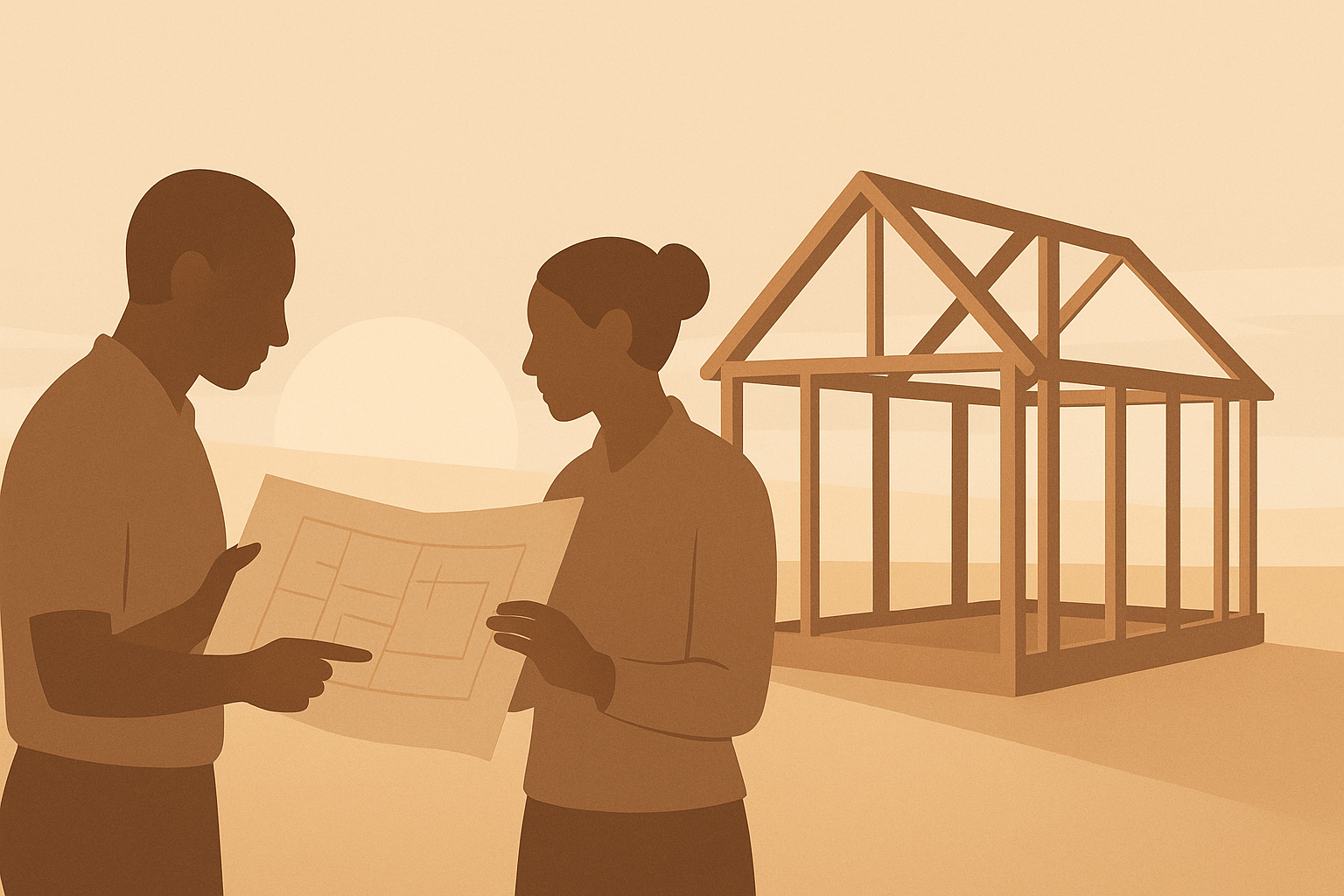
The Family Stability Framework Collection brings together Groundwork Daily’s work on household structure, preparation, family policy, economic readiness, responsibility, and the systems that help families carry pressure without becoming unnecessarily fragile.
Groundwork Collection · Family, Gender & Relationships
Family stability takes more than affection. A household can contain genuine love and still struggle with money, unclear expectations, inconsistent responsibility, childcare pressure, housing instability, or unresolved conflict.
For that reason, this collection looks beneath the surface. It connects public systems with private decisions while examining economic pressure alongside household preparation.
It also considers culture, responsibility, and the everyday structure of home life. Together, those pieces help explain why some households can absorb disruption while others remain close to the edge.
The central question is simple: what actually helps a family become more stable before crisis arrives?
This is not a nostalgia project or a moral panic. Instead, the collection examines what makes households more capable of carrying responsibility over time.
Governing Core Principle: Structure Builds Freedom . Preparation creates options. Clear responsibility reduces confusion. Meanwhile, margin gives households room to respond when conditions change.
Collection Architecture
Preparation → Policy → Economics → Household Structure → Repair → Stability
The Family Stability Framework Collection examines what families can build internally, what larger systems shape externally, and how those forces interact before pressure becomes crisis.
Collection
What the Family Stability Framework Collection Covers
This hub organizes Groundwork Daily’s work on household stability, preparation before parenthood, family policy, financial readiness, partner alignment, and the conditions that affect a family’s ability to hold under pressure.
Families do not all have the same shape, resources, responsibilities, or path. Even so, every household operates inside systems.
Those systems include money, work, housing, childcare, communication, expectations, responsibility, public policy, extended family, emotional maturity, and repair.
Working Definition
Family stability is a household’s ability to carry ordinary responsibility, absorb change, maintain dependable relationships and routines, and recover from disruption without repeatedly falling into preventable crisis.
Why the collection goes beyond family values
Family values can describe what people believe. However, beliefs do not automatically tell us whether a household has enough structure to carry what it values.
For example, a family may value responsibility while never agreeing on who handles childcare, money, elder care, household labor, or emergency decisions.
Likewise, people can value stability while operating with no financial margin and no plan for a sudden change in work or housing.
That is why the Family Stability Framework Collection asks practical questions instead.
What needs to be prepared before responsibility expands? Which public systems add support or friction? How much financial and emotional room does the household have?
Just as important, can responsibilities be discussed clearly? Can conflict be repaired? Does the structure still work when circumstances change?
These questions give families something more useful than intention alone.
Stability
Why Family Stability Matters
Long before most people enter a workplace, political institution, or formal leadership system, they experience a household.
Inside that household, people begin learning rhythm, responsibility, disagreement, cooperation, trust, money habits, care, boundaries, and repair.
Of course, a family does not have to be perfect to provide stability. It does need enough dependable structure for the people inside it to know what they can rely on.
Family life has changed
Marriage, cohabitation, single-parent households, blended families, work arrangements, and caregiving responsibilities now take many forms.
Therefore, serious family analysis has to account for the families people actually live in rather than only the households people imagine.
That also means looking at the conditions surrounding those households.
Pressure rarely comes from one place
Housing costs matter. Childcare matters. Work schedules matter. Income volatility matters. Health matters. Public benefits matter.
At the same time, relationship quality, preparation, discipline, judgment, and the distribution of responsibility inside the home also shape what happens.
Because these pressures overlap, it is rarely useful to blame everything on either individual behavior or structural conditions.
The better question is how households and public systems can reduce avoidable fragility at the same time.
Groundwork Principle: Stability becomes stronger when personal responsibility and structural reality are examined together rather than using one to erase the other.
Framework Map
The Family Stability Framework Collection Uses Four Lenses
Family instability rarely comes from one source. More often, several pressures meet at once.
To make those pressures easier to understand, the collection separates them into four practical lenses.
Lens 01
Preparation
What was built before the load increased? Look at planning, savings, relationship alignment, emotional readiness, support, and realistic expectations.
Lens 02
Policy
How do benefits, taxes, childcare systems, housing rules, labor policy, and eligibility requirements change the choices available to families?
Lens 03
Economics
Does the household have enough income, time, savings, and capacity to absorb ordinary disruption without every setback becoming an emergency?
Lens 04
Culture
Which stories shape expectations around independence, partnership, parenthood, gender, caregiving, poverty, responsibility, and asking for help?
How the four lenses interact
A policy problem can become a money problem. In turn, a money problem can expose weak preparation.
Once that happens, relationship tension may rise. Cultural expectations can then influence whether people ask for help, redistribute responsibility, or keep carrying an arrangement that no longer works.
Separating the pieces does not make them unrelated. Instead, it makes the diagnosis clearer.
| Framework Area | Core Question | What to Examine |
|---|---|---|
| Preparation | What was built before pressure arrived? | Planning, savings, emotional maturity, support networks, housing readiness, partner alignment, and expectations. |
| Policy | What choices and tradeoffs do public systems create? | Benefits, eligibility rules, taxes, childcare, housing, labor conditions, and access to support. |
| Economics | Can the household absorb ordinary stress? | Income, debt, savings, childcare costs, household labor, emergency margin, and time. |
| Culture | What beliefs shape how responsibility is understood? | Parenting, partnership, independence, gender, help, poverty, work, and accountability. |
Start Here
Family Stability Framework Collection Reading Path
The pieces below form the core collection. Read them in order for the clearest progression from public narrative and policy toward household preparation and practical planning.
- The Myth of the Welfare Queen Begin with the narrative layer. This piece examines how the welfare queen stereotype shaped public understanding of poverty, assistance, and responsibility.
- Welfare Reform and Family Policy: When Policy Becomes Parenting Next, move from narrative into policy design and examine how rules, eligibility systems, and institutional choices enter family life.
- The Cost of Independence for Single Mothers Then examine the financial, logistical, and emotional weight that can accumulate when independence carries too much of the household load.
- A New Blueprint for Family Stability From there, bring the pieces together through responsibility, preparation, policy design, and household structure.
- Preparation Is Protection Shift from diagnosis toward prevention and examine why capacity built early can reduce the cost of later pressure.
- The Family Stability Framework: How to Build Before You Birth Finally, apply the framework directly to preparation before parenthood, including money, housing, partnership, responsibility, and support.
Preparation
Preparation Strengthens the Family Stability Framework
Some preparation can begin before pregnancy, parenthood, cohabitation, marriage, or another major expansion of household responsibility.
This matters because large transitions rarely affect only one part of life.
A child can change money, time, sleep, childcare needs, work schedules, intimacy, household labor, housing requirements, and relationships with extended family.
Likewise, a move can reshape several systems at once. So can a job loss, promotion, illness, caregiving obligation, or decision to combine households.
Preparation creates margin
Preparation cannot eliminate uncertainty. However, it can create Margin.
Margin is the room between what a household can carry and what it is currently being asked to carry.
Sometimes that room is financial. In other cases, it is emotional, logistical, relational, or practical.
Either way, a family with some margin has more options when plans change. A household operating at full capacity has fewer.
Questions worth answering before pressure rises
- Are expectations clear before responsibilities expand?
- Is there an emergency fund or another realistic financial fallback?
- Has debt been named and reviewed honestly?
- Are housing and childcare assumptions realistic?
- Do work schedules leave enough capacity for the household people say they want?
- Who carries which responsibilities when both people are tired?
- Which relatives, friends, institutions, or paid services form the actual support system?
- What happens when conflict appears?
- Is there a repair process, or only the hope that disagreement stays manageable?
Preparation is not a guarantee against hardship. Rather, it helps prevent avoidable confusion from joining problems that were already difficult enough.
That distinction is central to The Family Stability Framework .
Public Systems
Policy Inside the Family Stability Framework Collection
Household responsibility is personal. Still, households do not operate outside public systems.
Childcare availability can affect whether a parent can work a particular schedule. Similarly, housing costs can influence how close relatives live to one another.
Benefit rules may also affect how easily a household can move from public assistance toward greater financial independence.
Work arrangements matter as well because parents regularly balance income, career advancement, childcare, household responsibilities, time, and family needs.
Policy changes the environment around a household
Because these systems are complicated, policy analysis needs precision.
It is too simple to claim that government policy alone creates family instability. At the same time, it would be equally weak to pretend public systems have no effect on private decisions.
Policies can alter constraints, access, timing, incentives, and tradeoffs.
For that reason, the collection asks what those systems actually do in practice and whether they increase or reduce a household’s ability to build stability.
Use the Collection
Three Ways to Use the Family Stability Framework Collection
Reading Path
Start with narrative and policy, then move toward preparation and household planning. This gives the collection a clear beginning, middle, and practical destination.
Diagnostic Tool
Use the four-part map to separate preparation, policy, economic, and cultural pressures instead of collapsing every problem into one explanation.
Planning Resource
Return to the preparation questions before parenthood, cohabitation, marriage, relocation, caregiving, or major financial commitments.
The goal is not to make family life frictionless. No framework can do that.
Instead, the goal is to make the household less fragile by identifying avoidable pressure before it compounds.
Groundwork Architecture
The Systems Beneath Family Stability
Primary Core Principle: Structure Builds Freedom
Primary Condition: Structure
These conditions describe the mechanics running beneath the collection.
Structure explains how responsibilities are arranged. Meanwhile, margin determines whether the household has room to absorb disruption.
Capacity describes what a household can realistically carry. Finally, alignment asks whether the people and systems involved are moving toward compatible outcomes.
Continue Building
Move from this collection into the larger Groundwork Daily architecture.
→ Framework: The Family Stability Framework
→ Principle: Structure Builds Freedom
→ Condition: Structure
Questions
Family Stability Framework Collection FAQ
What is the Family Stability Framework Collection?
It is Groundwork Daily’s collection hub for household stability, preparation before parenthood, family policy, economic readiness, relationship alignment, responsibility, and the systems that affect a family’s ability to carry pressure.
What does Groundwork Daily mean by family stability?
Family stability is a household’s ability to carry ordinary responsibility, absorb change, maintain dependable relationships and routines, and recover from disruption without repeatedly falling into preventable crisis.
Does family stability require one family structure?
No. Families exist in different forms and circumstances. Therefore, the framework focuses on the operating systems beneath family life, including responsibility, preparation, economic capacity, relationship quality, communication, support, and repair.
How does public policy affect family stability?
Policy can change the constraints and options families face. Childcare systems, housing rules, tax policy, benefit eligibility, labor conditions, and access to support can influence household budgets, work choices, and caregiving arrangements.
Why does the collection emphasize preparation before parenthood?
Parenthood can increase financial, logistical, relational, and emotional demand at the same time. Preparation cannot prevent every difficulty. However, it can clarify expectations, identify support, improve readiness, and reduce avoidable uncertainty.
Is the Family Stability Framework Collection political?
The collection examines public policy because policy affects households. Its governing lens is structural rather than partisan. The central question is whether a system increases or reduces a family’s ability to carry responsibility, maintain stability, and recover from pressure.

Build better. Every day.
Groundwork Daily builds practical frameworks for relationships, family stability, ownership, discipline, community, and civic life. Get the work without adding more noise to your day.
Receipts
The Family Stability Framework Collection is a Groundwork Daily editorial resource. Outside research helps ground its discussion of family structure, public assistance, work and caregiving, household relationships, and family instability.
→
Urban Institute: Few Families Receive the TANF Cash Assistance They’re Eligible For
Context on TANF participation, program structure, and access to cash assistance among eligible families.
→
Pew Research Center: Household Structure & Family Roles
Research on family structure, parenting, caregiving, household roles, work arrangements, and changing American family life.
→
Pew Research Center: How Family Work Arrangements Have Changed Over Time
Research on working parents, childcare, household responsibilities, workplace flexibility, finances, and work-family balance.
→
Child Trends: Family Instability and Children’s Social Development
Research examining family transitions, household income, relationship status, and children’s social development.
→
Child Trends: Families Research
Research on parenting, family relationships, co-parenting, family formation, and child well-being.
External source links were live and accessible at the time of publication. Third-party pages, URLs, research collections, and source availability may change over time.