
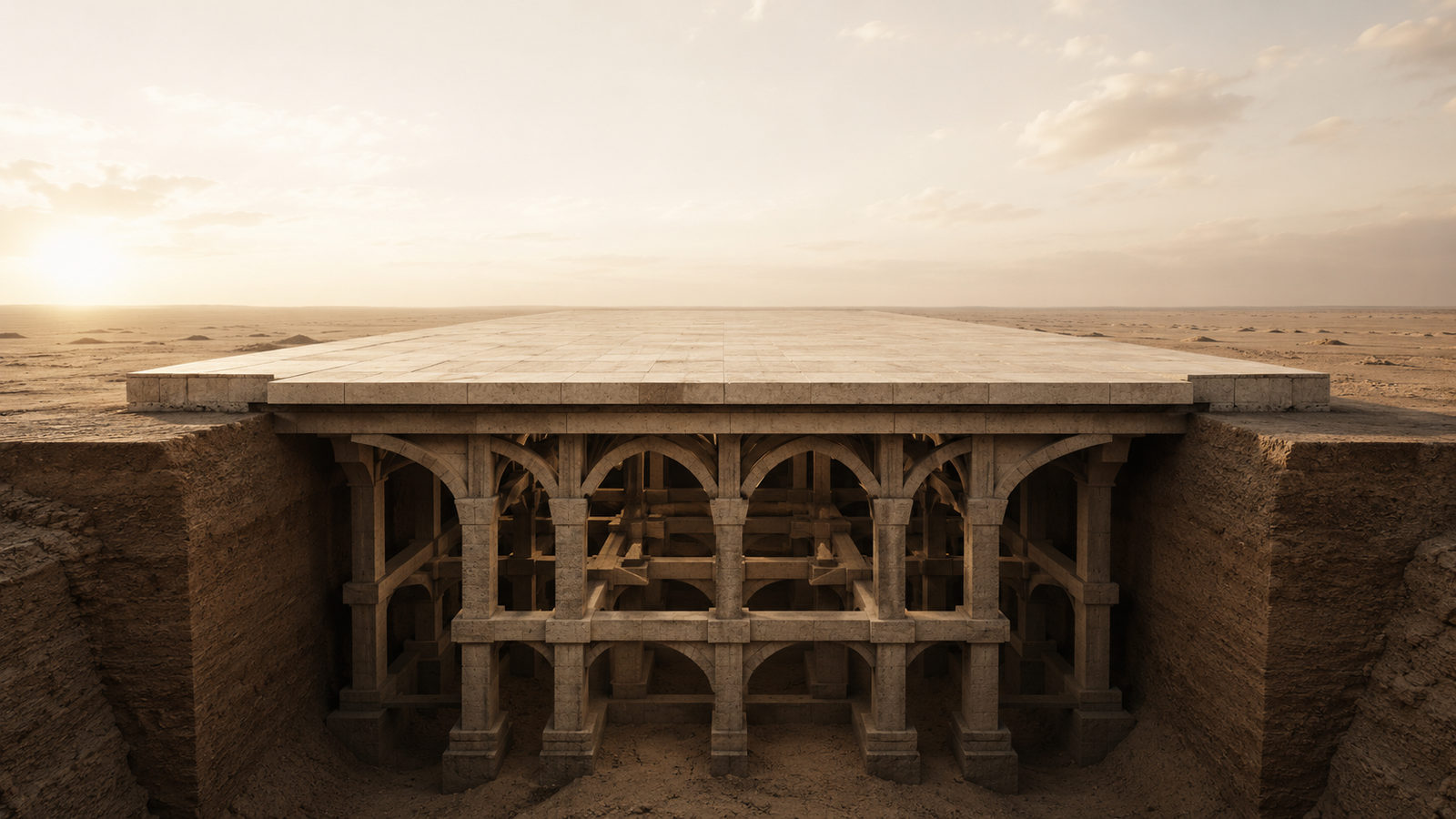
Freedom requires structure because lasting independence does not survive on feeling alone. It survives through discipline, responsibility, maintenance, and foundations strong enough to hold when pressure arrives.
That is the part often missed when freedom is treated only as personal choice or national celebration. Freedom is not just the ability to move. It is the ability to keep moving without collapse.
Independence may begin with a declaration, a decision, or a breakthrough. However, freedom remains only when the structure underneath it is strong enough to carry the weight.
Freedom is not sustained by the absence of structure. It is sustained by structures so dependable that we rarely notice they exist.
Freedom Requires Structure Before It Can Last
Freedom requires structure because every open space depends on something hidden beneath it. A bridge feels free because its supports are sound. A home feels peaceful because its foundation holds. A society feels stable because laws, habits, institutions, and shared responsibilities continue working below the surface.
The visible experience of freedom depends on invisible reinforcement.
This is true for nations. It is true for families. It is true for organizations. It is true for personal life. The less visible the structure, the easier it becomes to forget how much it matters.
That forgetfulness is dangerous. When structure is ignored long enough, freedom becomes fragile. The collapse often feels sudden, but the weakening usually began much earlier.
Independence Is Not the Finish Line
Independence gets remembered because it has drama. It has dates, speeches, conflict, courage, and visible change. It gives people a moment to point toward and say, “That is when things changed.”
Yet independence is only the opening chapter.
The harder work comes afterward. A person can leave a bad situation and still need emotional structure. A family can survive a crisis and still need new habits. A nation can declare independence and still need institutions, laws, accountability, education, and civic trust.
Without those supports, independence becomes symbolic but unstable.
The question is not only whether freedom has been claimed. The better question is whether freedom has been built to last.
Freedom Has Operating Costs
Every meaningful freedom carries costs. They are not always dramatic, but they are always real.
- Financial freedom requires saving, planning, restraint, and emergency reserves.
- Political freedom requires participation, accountability, local knowledge, and institutional trust.
- Physical freedom requires health, rest, movement, and recovery.
- Relational freedom requires honesty, boundaries, repair, and trust.
- Spiritual freedom requires humility, reflection, discipline, and formation.
- Creative freedom requires focus, repetition, skill, and protected attention.
These obligations do not shrink freedom. They protect it.
The weak idea says freedom means having no limits. The stronger idea says freedom means having the right limits, placed in the right way, for the right reason.
Without that difference, people confuse chaos for liberty. They mistake impulse for independence. They call avoidance peace. Then they wonder why life feels unstable.
Structure Expands Choice
The best structures do not trap people. They create room to move.
A budget creates freedom because it gives money a job before pressure grabs it. A calendar creates freedom because it protects attention from being spent by accident. A boundary creates freedom because it keeps resentment from becoming the hidden cost of connection.
Structure turns intention into something repeatable.
That is why discipline matters. Discipline is not punishment. Discipline is the quiet system that protects what matters when emotion changes, energy drops, and circumstances become inconvenient.
Freedom without discipline depends on ideal conditions. Freedom with discipline can survive real life.
Hidden Structure Creates Visible Freedom
Well-built systems often disappear into the background. That is part of their strength.
People rarely think about the foundation of a building while standing inside it. They do not praise the electrical grid every time a light turns on. They do not celebrate traffic signals when an intersection works. They do not notice clean water systems when the faucet runs safely.
Functioning structure is often invisible because it is doing its job.
The same is true in human life. The people who look calm under pressure usually have systems other people cannot see. They have routines. They have decision rules. They have trusted relationships. They have practiced restraint. They have already decided what they will not trade away.
That kind of freedom does not come from luck. It comes from design.
Personal Freedom Needs Systems
Many people want freedom but resist the systems that create it.
They want more peace but keep no boundaries. They want more money but keep no spending structure. They want more focus but keep every distraction within reach. They want better health but treat rest as optional. They want stronger relationships but avoid difficult conversations.
That is not freedom. That is unmanaged exposure.
Personal freedom becomes real when a person builds systems that reduce avoidable chaos.
- Set a spending rule before money arrives.
- Protect one focus block before the day fills up.
- Create a recovery rhythm before burnout becomes the teacher.
- Tell the truth early before silence becomes debt.
- Choose commitments that match capacity, not ego.
The goal is not to make life rigid. The goal is to make life resilient.
Communities Need Structure Too
Communities do not remain healthy by good intentions alone.
They need shared norms. They need responsible leadership. They need stable families. They need practical education. They need safe public space. They need trusted institutions. They need people who understand that freedom is not only personal preference. It is shared responsibility.
When community structure weakens, people still talk about freedom, but their actual choices shrink.
Unsafe streets reduce freedom. Poor schools reduce freedom. Unstable housing reduces freedom. Bad information reduces freedom. Weak institutions reduce freedom. Economic dependency reduces freedom.
Freedom is not only a legal idea. It is also a lived condition.
People are most free when the structures around them make stability possible.
Civilizations Decline Through Neglect
Collapse rarely begins with one dramatic failure.
It usually begins with maintenance being postponed. Standards soften. Accountability becomes optional. Institutions drift. Citizens disengage. Leaders perform concern without repairing systems. People inherit freedom but stop practicing the habits that keep it alive.
By the time the damage becomes visible, the foundation has already been weakening for years.
This is why structure matters. It forces attention before collapse. It makes responsibility operational. It turns care into maintenance.
Strong civilizations do not merely celebrate freedom. They inspect the supports beneath it.
Freedom and Responsibility Cannot Be Separated
Freedom without responsibility becomes consumption.
Responsibility without freedom becomes control.
A healthy life needs both. A healthy society needs both. Responsibility gives freedom weight. Freedom gives responsibility purpose.
That balance is difficult, but it is not optional.
When people reject responsibility, they eventually lose freedom to consequences. When systems reject freedom, they eventually lose legitimacy. The work is to build structures that protect liberty without removing accountability.
That is mature freedom.
Freedom Requires Structure and Maintenance
Freedom requires structure, but structure also requires maintenance.
A foundation can be strong and still need inspection. A habit can be useful and still need adjustment. A relationship can be loving and still need repair. An institution can be necessary and still need reform.
Maintenance is not failure. Maintenance is stewardship.
The strongest people, families, and societies are not the ones that never crack. They are the ones that notice cracks early and repair them before damage spreads.
That is how freedom remains alive after the celebration ends.
Practical Groundwork for Lasting Freedom
Use July 4 as more than a holiday marker. Use it as an audit.
Ask where freedom in your life needs better support.
- Where is choice being weakened by poor structure?
- Where has comfort replaced responsibility?
- Where does peace depend on avoidance instead of repair?
- Where does independence need a stronger system beneath it?
- Where does your household, team, or community need maintenance?
Then choose one repair.
Not a speech. Not a mood. Not a vague goal.
One repair.
Pay the bill. Set the boundary. Fix the calendar. Schedule the appointment. Rebuild the emergency fund. Return the call. Clean the system. Review the plan. Tell the truth.
Freedom grows where structure becomes practice.
The Groundwork
Freedom is not kept alive by symbols alone.
It is kept alive by people who build foundations, keep promises, maintain systems, and accept responsibility for what they inherit.
Visible freedom is the product of invisible faithfulness.
That is the real architecture of liberty.
The strongest foundations are rarely the most visible. Their quiet strength allows freedom to stand above them.
Further Groundwork
External reference: For a civic view of constitutional structure and public responsibility, see the National Constitution Center’s educational resources on the U.S. Constitution: National Constitution Center.
Build Stronger Foundations
Groundwork Daily explores the systems, habits, and principles that quietly shape resilient lives. Subscribe for thoughtful essays delivered each week.

The Pillar Framework explores the enduring principles that support resilient people, healthy communities, and lasting institutions. Lasting strength is rarely accidental. It is built one pillar at a time.