
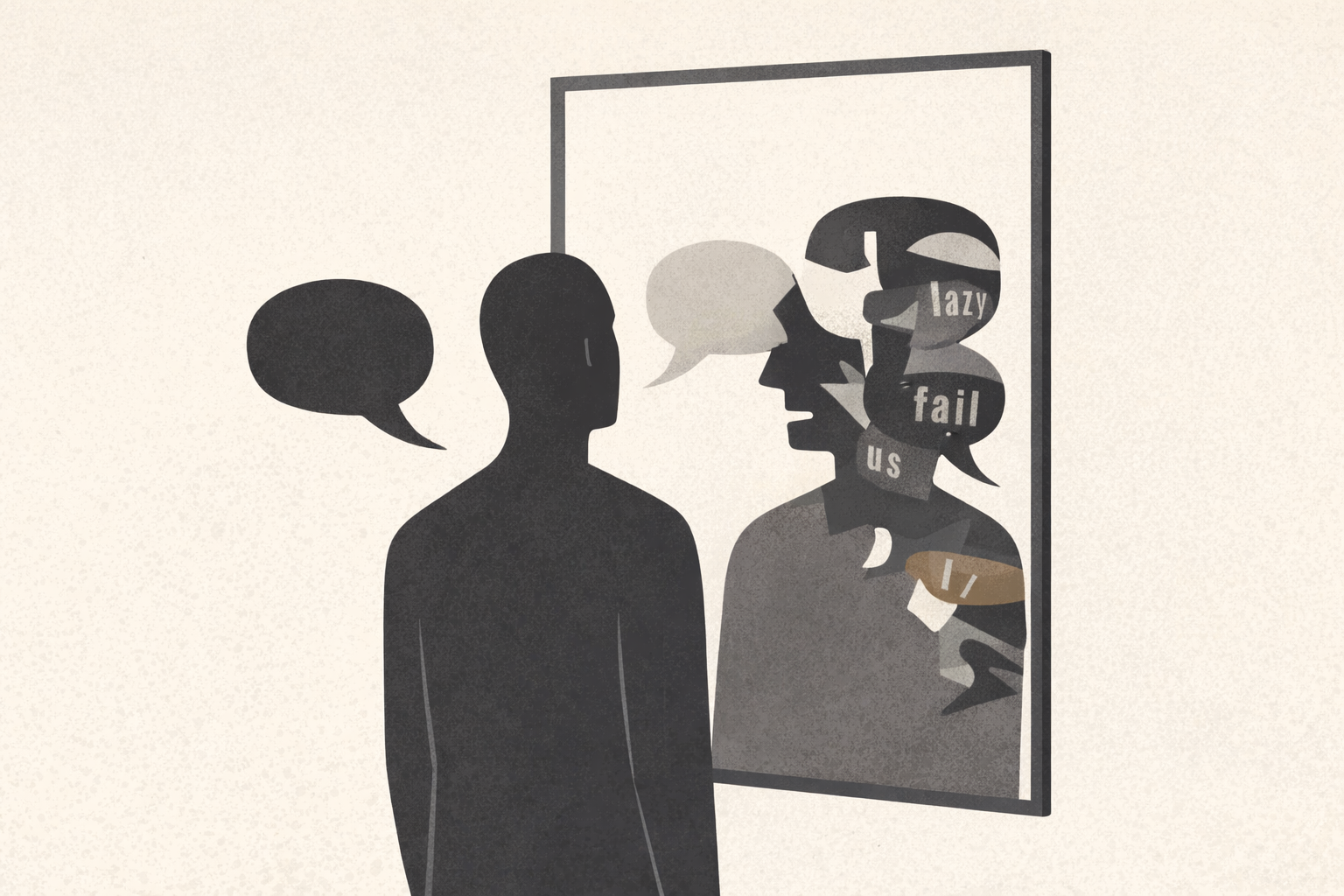
Real Talk Blueprint cuts through the performance so the truth can speak without makeup.
When We Start Talking About Ourselves Like the Enemy
Let’s talk about internalized language and identity. Not the academic version that shows up in conference panels and textbooks. The real version. The one that shows up in jokes, nicknames, slang, and that one friend who thinks roasting the whole community counts as keeping it real.
Every group has humor. Humor is survival. If people could not laugh at hard things, history would be unbearable.
But here is the uncomfortable part. Sometimes the joke stops being a joke. Sometimes the punchline starts sounding like a description.
And when that happens, the mirror starts talking back.
Jokes Have Long Memories
Communities have always used humor to deal with pressure. It softens the blow. It gives people a way to breathe when life is heavy.
But jokes have a long memory. Repeat a line enough times and it stops sounding like comedy. It starts sounding like a story about who people are.
That is how stereotypes survive. They hide inside punchlines until nobody remembers who wrote the joke in the first place.
Then something strange happens. People start repeating language that was originally meant to insult them. After a while the insult feels normal. Sometimes it even feels clever.
That is when the mirror gets weird.
Internalized Language and Identity as Self Sabotage
Internalized language and identity can quietly turn into self sabotage. If the daily language describing a community paints everyone as lazy, reckless, or unserious, eventually somebody believes it.
And belief changes behavior.
Expectations shrink. Standards slide. Opportunities get smaller. Then people point to the results and say, “See? That’s just how we are.”
Funny how the script always seems to prove itself right.
Honest criticism is healthy. Every community needs it. But repeating the same insult over and over does not create accountability. It just keeps reopening the same wound.
The Algorithm Loves the Mess
Now add social media to the situation and things get louder. Platforms reward drama. Conflict spreads faster than nuance. The algorithm does not care if a community looks ridiculous as long as people keep clicking.
Outrage sells. Self reflection does not.
So the loudest clips float to the top. The most embarrassing moments become the most visible examples. After a while the public conversation starts to look like a circus highlight reel.
The internet loves a mess. Especially when the mess performs itself.
The Discipline of Speech
Healthy communities eventually develop discipline around language. Not censorship. Discipline.
Before repeating a phrase, people ask a simple question. Does this language strengthen the people hearing it, or weaken them?
Words build environments. The language a community repeats becomes the atmosphere its children grow up breathing.
Kids do not just inherit traditions. They inherit vocabulary. And vocabulary quietly tells them who they are supposed to be.
That is why conversations about internalized language and identity matter more than internet debates suggest. Language shapes identity. Identity shapes culture. Culture shapes the future.
Language is rehearsal for identity. If the words keep describing the community as the enemy, eventually someone will start acting like it.
And once a community starts believing its own worst jokes, the problem is no longer the punchline. The problem is the script.
So maybe the real question is not whether people are allowed to joke.
The real question is this.
Who wrote the script we keep repeating about ourselves, and why are we still performing it?
System Updates: When Language Becomes Self-Weaponization
Language Builds the Mirror We Live In
The Panderbear Problem
Who Am I: A Reflection on Identity and Discipline
The Politics of Black Hair: History, Identity, and Power
Hair Discrimination in the Workplace: The CROWN Act Explained
The Economics of the Black Hair Industry
Understanding Natural Hair: Texture, Science, and Maintenance
Hair Types Explained: The 1A–4C Curl Pattern Guide
