
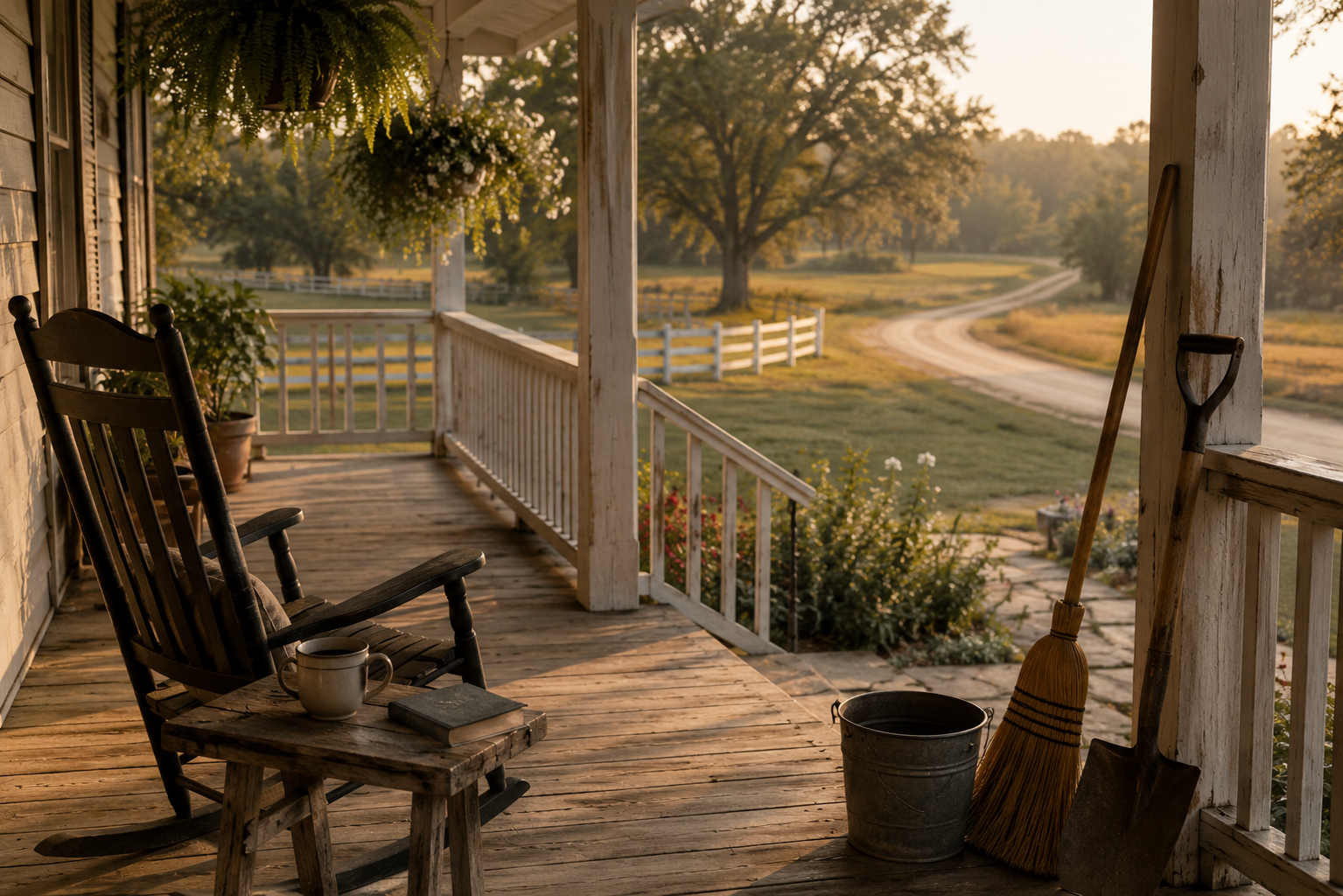
Work ethic is not the noise a person makes while working. Work ethic is what still stands after the noise is gone.
Folks have gotten a little confused about work ethic.
Some people think it means looking tired all the time. Some think it means answering emails at midnight. Some think it means walking fast with a coffee cup like the building might collapse if they slow down.
That may be activity. It may even be effort.
But it is not always work ethic.
Real work ethic is quieter than that. It is the porch swept before company arrives. It is the gate oiled before it starts hollering at everybody in the yard. It is the loose board fixed before somebody’s uncle steps through it and starts blaming the whole family reunion.
Work ethic does not always look like sweat on a forehead.
Sometimes it looks like something working because somebody cared enough to maintain it.
What Work Ethic Really Looks Like
What work ethic really looks like is not always impressive at first glance.
It can look plain.
It can look repetitive.
It can look like somebody doing the same small task again because the first time was not quite right.
That is where people get fooled. They want work ethic to look dramatic. They want sparks flying, alarms ringing, somebody running across the yard with a ladder and a heroic expression.
But most good work happens before things become emergencies.
A person with real work ethic does not wait until the roof leaks into the good room before checking the shingles. They do not wait until the account is empty before looking at the budget. They do not wait until trust is broken before deciding words should mean something.
They tend things early.
That is the old lesson.
The broom leaning by the door is not decoration. The bucket by the steps is not a personality trait. The shovel standing in the corner is not trying to impress anybody.
Tools tell the truth.
They show whether somebody plans to maintain what they have been given.
Work Ethic Is Built Through Maintenance
Maintenance does not get enough respect.
That is probably because maintenance rarely enters the room wearing a parade jacket. It does not make a big speech. It does not ask for a standing ovation. It just keeps things from falling apart.
People praise the new house. They forget the person who keeps the gutters clear.
People admire the clean church floor. They forget who stayed late with the mop.
People enjoy the family gathering. They forget who checked the chairs, bought the ice, wiped the table, and made sure the front light worked before dark.
Maintenance is not glamorous.
It is faithful.
That is why work ethic and maintenance belong in the same sentence. A person who only works hard when watched is not showing work ethic. They are auditioning.
There is a difference.
A rooster makes noise every morning, but that does not mean he fixed the fence.
The strongest work ethic often leaves behind only one visible clue: everything still works.
Consistency Outperforms Intensity
Intensity has its place.
Sometimes a storm comes through and everybody has to move fast. Sometimes the deadline is real. Sometimes the pipe bursts, the child gets sick, the bill comes due, or the whole plan changes before breakfast.
In those moments, strong effort matters.
But intensity cannot be the whole system.
A life built on intensity is like a porch held together with emergency nails. It may survive the weekend, but do not invite heavy company over without checking the boards.
That is why consistency matters more than motivation. Motivation can get you moving. Consistency keeps the lights on, the steps swept, and the weak boards from surprising somebody with Sunday shoes on.
Consistency is what keeps people from needing emergencies every other Thursday.
Consistency reviews the calendar. Consistency saves the receipt. Consistency returns the call. Consistency puts the ladder back where it belongs so the next person does not have to wander around muttering under their breath.
That is not small.
That is structure.
A lot of people want credit for the rescue. Fewer want responsibility for the routine.
That is why consistency tells the truth about character. Anybody can get excited once. Anybody can make a strong start. Anybody can buy a notebook, underline three things, and declare a new season.
But the porch is not impressed by declarations.
The porch watches what happens next Tuesday.
The Quiet Signals of Strong Work Ethic
You can often recognize strong work ethic without asking anybody to explain themselves.
Just look around.
- Small commitments are kept without reminders.
- Tools are returned where others can find them.
- Details receive attention before they become complaints.
- Problems are named early instead of hidden under a rug.
- Preparation begins before pressure arrives.
- People leave things better than they found them.
That last one matters.
A person with real work ethic does not treat every room like a rental and every relationship like somebody else’s problem. They understand stewardship.
If they borrow your truck, it comes back with gas in it.
If they use your kitchen, the counter gets wiped.
If they make a promise, they do not act surprised when you expect them to remember it.
That should not be revolutionary, but here we are.
Some folks want applause for doing what their grandmother would have called basic raising.
Those details are why the small habits reveal character. Character does not usually introduce itself with a speech. It shows up in the way someone handles the little thing before the big thing ever arrives.
Work ethic is not just about employment. It is about how a person carries responsibility.
Why Quiet Work Matters
Quiet work matters because most of life depends on things that only get noticed when they fail.
Nobody celebrates the hinge until the door falls off.
Nobody praises the budget until the lights stay on during a rough month.
Nobody thinks much about the porch rail until somebody leans on it and it holds.
That is the thing about good work.
It gives other people somewhere safe to stand.
In a home, quiet work creates peace.
In a workplace, quiet work creates trust.
In a community, quiet work creates continuity.
That is where leadership starts. Not with a title. Not with a chair at the front of the room. Not with somebody calling you important before you have carried anything heavy. Real leadership begins when responsibility lands in your hands and you do not pass it around like a hot plate.
That is why leadership is weight before it is status. The title may fit on a nameplate, but the responsibility will test your knees.
That is why lazy systems are so expensive. They may look cheaper up front, but neglect always sends an invoice. It may come as confusion. It may come as repair costs. It may come as broken trust. It may come as somebody finally saying, “We should have handled this earlier.”
Earlier is where work ethic lives.
Earlier is where the wise people do their best work.
Work Ethic Is an Investment in Tomorrow
People often measure work ethic by how hard someone appears to be working today.
A better measure is how much unnecessary repair they prevent tomorrow.
The strongest professionals, parents, leaders, neighbors, and craftspeople are not always the loudest ones in the yard. They are often the ones checking the weak spots before the rain comes.
They read the instructions.
They sharpen the blade.
They sweep the porch even when nobody is visiting.
They do not call every ordinary responsibility a burden.
They understand that care repeated over time becomes stability.
That kind of work ethic does not need to advertise itself. Give it enough time and the evidence will sit there in plain sight.
A kept home.
A steady business.
A trusted name.
A family that knows who can be counted on.
A community that still has a few people willing to show up early and stay until the chairs are stacked.
That is not hustle.
That is inheritance.
And if you want to know the real measure of a person, watch what they tend when nobody is giving out credit. Before long, you can tell who someone is by what they take care of.
The Front Porch Test
Here is the test.
Not the kind with a pencil and a clean desk. The kind life gives when nobody is grading you out loud.
What have you maintained lately?
What still works because you paid attention?
What problem did you handle while it was still small?
Who trusts your word without needing a second meeting?
What did you leave better than you found it?
Those answers tell more than a motivational caption ever could.
Anybody can talk about discipline. Anybody can say they are built different. These days, people say that right before doing the same foolishness with better lighting.
The real question is simple.
Can your habits hold weight?
Because work ethic is not what you claim when things are easy. It is what your life reveals under ordinary pressure.
The porch has seen plenty of people talk big with nothing sturdy behind them.
The porch has also seen quiet folks keep whole families, teams, and neighborhoods standing because they knew how to maintain what mattered.
That second group does not always get the loudest applause.
But when the storm comes, everybody knows where to stand.
That’s the truth, from the front porch. Now go build.
Further Groundwork
Keep building the structure beneath the habit:
Build Stronger Foundations Every Morning
Groundwork Daily publishes practical frameworks on discipline, systems, leadership, and rational thinking designed to strengthen everyday decision-making.
This article is part of the Front Porch Audit series, exploring the everyday habits, assumptions, and patterns that quietly shape character long before anyone notices the results.