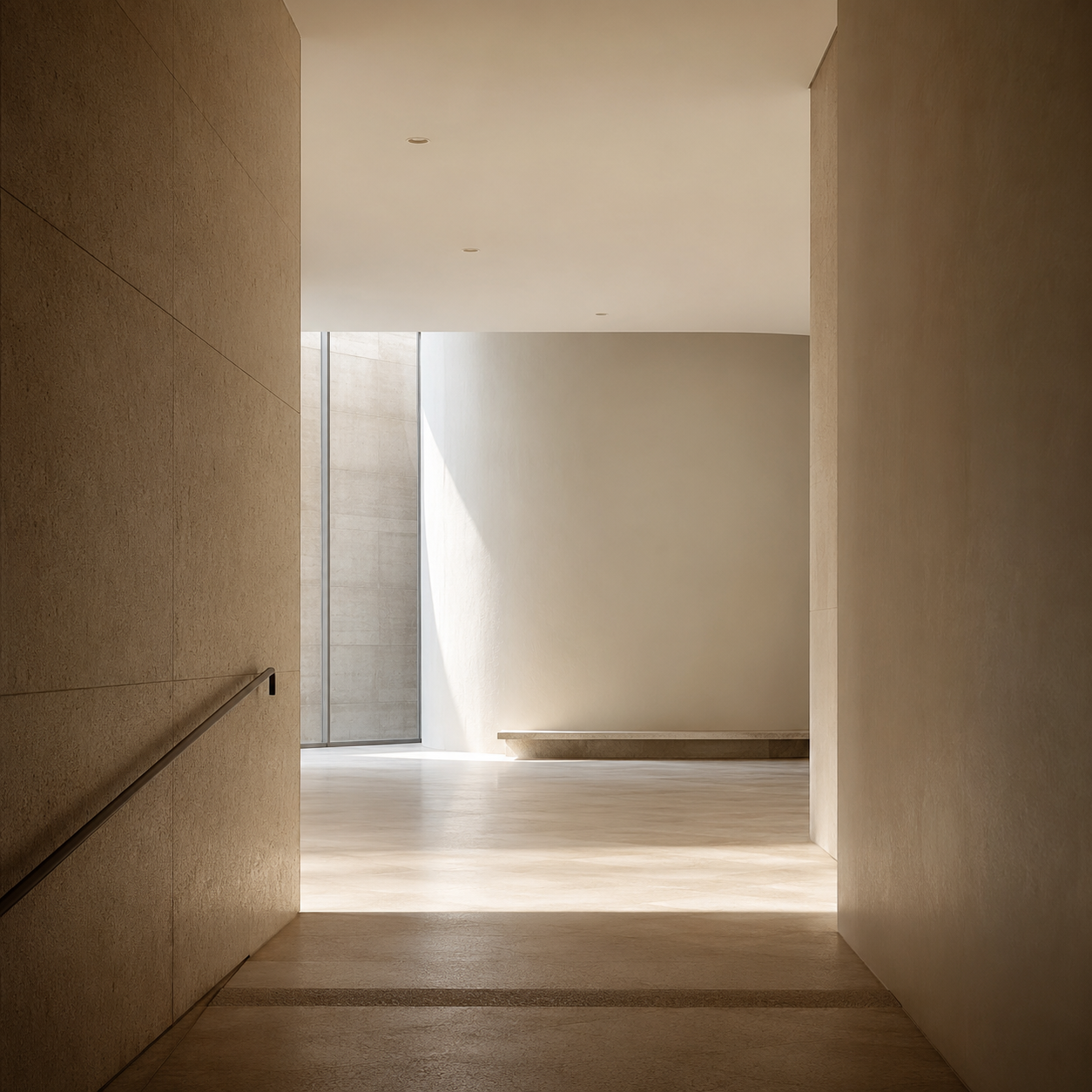
Why slowing down feels so difficult is not always about impatience.
Sometimes it is exposure.
People often imagine rest as relief. But relief assumes the body and mind know how to receive stillness when it arrives.
Many do not.
Because slowing down is not simply the removal of activity. It is the removal of distraction.
And distraction performs more work than most people realize.
Movement creates distance.
Distance from disappointment. Distance from uncertainty. Distance from questions that become harder to avoid once life becomes quiet enough to hear them.
That is why a free afternoon can feel uncomfortable.
That is why some vacations feel strangely exhausting.
That is why people sometimes finish major projects only to immediately search for another obligation.
The nervous system becomes accustomed to momentum. Stillness becomes unfamiliar. Unfamiliar experiences rarely feel peaceful immediately.
Why Slowing Down Feels So Difficult
Speed solves problems.
But speed also hides problems.
When every hour is filled, there is less opportunity to ask whether current effort still belongs to current priorities.
Busyness can become emotional architecture. Not because people are weak, but because movement offers certainty.
There is comfort in visible progress. Crossing things off a list feels safer than asking whether the list itself deserves trust.
This is where slowing down becomes difficult.
Not because discipline is missing.
Because movement has become identity.
Helpful. Reliable. Needed. Productive.
Eventually output stops being something a person does and starts becoming something they use to explain who they are.
Once that happens, slowing down no longer feels like rest.
It feels like disappearance.
This is where disciplined stillness becomes necessary.
Stillness is not inactivity.
Stillness is observation without escape.
It allows evaluation before expansion.
Progress rarely breaks because people stop working. More often, it breaks because no one pauses long enough to ask whether today’s movement still belongs to today’s direction.
When people treat pauses as interruptions instead of part of the process, exhaustion becomes the only feedback mechanism left.
Slowing down earlier costs less.
Inspection always costs less than repair.
When Productivity Starts Protecting You
Productivity is not the enemy.
Avoidance is.
The difficult reality is that productivity can sometimes become socially acceptable avoidance.
People build calendars that leave no room for reflection.
They optimize routines while avoiding decisions.
They stay constantly available while quietly becoming unavailable to themselves.
The result is not burnout first.
The result is disconnection.
Burnout simply arrives later.
This is why slowing down can feel threatening.
Quiet creates visibility.
Visibility creates accountability.
Accountability creates change.
That chain feels expensive even when it is necessary.
Stillness interrupts performance and asks whether current movement deserves multiplication.
Not every efficient life is aligned.
Not every busy life is meaningful.
The calendar can look responsible while the inner life becomes neglected.
The inbox can stay managed while judgment becomes dull.
The routine can stay intact while direction quietly weakens.
That is the danger. Productivity can produce the appearance of order while avoiding the harder work of alignment.
Slowing Down Without Losing Momentum
This is where people overcorrect.
They imagine slowing down means withdrawing.
It does not.
The objective is regulation.
Reduce acceleration before reducing responsibility.
Observe before optimizing.
Create recovery before collapse.
Recovery is often misunderstood as something earned after depletion.
But sustainable systems behave differently.
They create room before failure arrives.
They assume energy fluctuates.
They expect attention to narrow under pressure.
They build recovery into the structure instead of treating it like compensation.
That distinction matters because waiting until collapse teaches people to associate rest with damage instead of maintenance.
Margin is often misunderstood as spare capacity. In reality, it is a design choice that protects future performance before present output begins to deteriorate.
Slowing down becomes easier when recovery no longer feels like retreat.
How to Practice Slowing Down
Start smaller than ambition wants.
Leave one hour unscheduled.
Finish one thing without immediately replacing it.
Sit with one unanswered question.
Allow one quiet moment to remain quiet.
The goal is not becoming slower.
The goal is becoming less dependent on speed.
Because attention that never rests eventually becomes less precise.
That does not happen because people lose discipline.
It happens because attention behaves more like a system than a personality trait.
Concentration is shaped by environment, inputs, pace, and expectations, not simply determination.
When people describe themselves as unfocused, they often try to solve the problem with force.
More discipline. More pressure. More rules.
But attention usually improves when friction decreases and conditions become more intentional.
Attention behaves more like a system than willpower. Environment, friction, expectations, and pace all influence what receives sustained focus.
That shift changes everything.
Because now slowing down stops feeling irresponsible.
It starts becoming diagnostic.
Movement matters.
But movement compounds whatever direction already exists.
If direction weakens, speed multiplies mistakes.
If direction strengthens, movement becomes leverage.
Stillness protects direction before movement multiplies it.
That is why slowing down feels difficult.
It is not because you are falling behind.
It is because, for the first time in a long time, there is enough quiet to hear what has been trying to reach you all along.
The question is not whether the voice was always there.
The question is whether you have finally become still enough to recognize it.
Stillness protects direction before movement begins.