
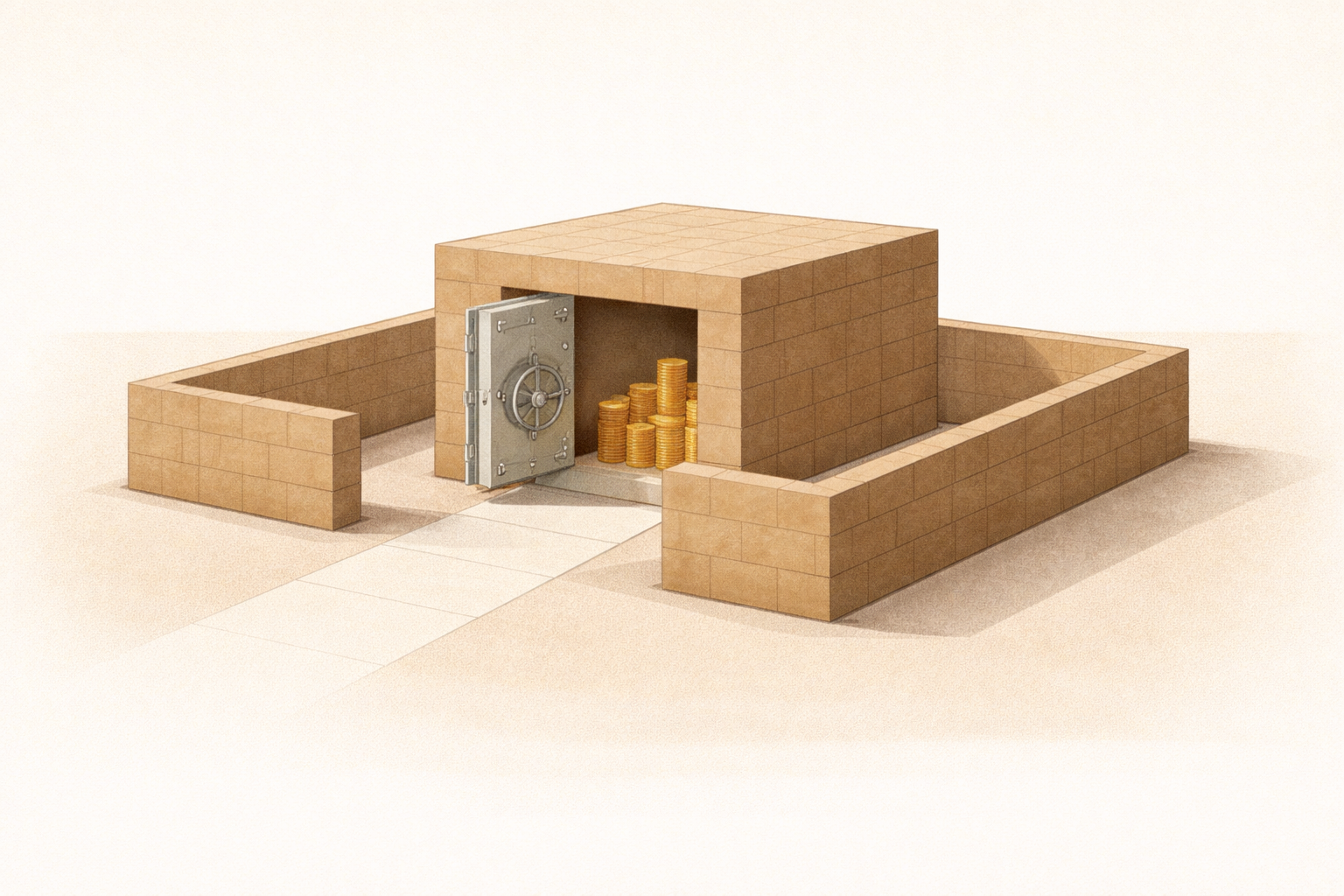
Where to keep emergency fund money matters just as much as building it.
Some people save correctly and store incorrectly. That is the mistake.
If the money is too exposed, it gets touched too easily. If it is too restricted, it fails when life applies pressure. The right setup protects the reserve without turning access into a fight.
This is part of the Emergency Fund System, where protection is built, sized, stored, used, and rebuilt with structure.
That is the goal. Not just having emergency savings, but keeping it in a place where it can actually do its job.
Why where you keep your emergency fund matters
An emergency fund is not investment money. It is not lifestyle money either.
It is protection money.
That means the account has to do three things well. It has to stay safe. It has to stay liquid. And it has to stay separate enough that routine spending does not keep reaching for it.
When one of those three breaks, the system weakens.
Where to keep emergency fund money
For most people, the best place for emergency fund money is a separate high-yield savings account.
Separate matters because distance reduces temptation. Savings matters because the reserve stays liquid. High-yield matters because idle protection should still earn something while it waits.
A separate savings account creates a useful barrier. The money is available, but it is not sitting beside everyday spending.
That is the right balance. Accessible, protected, and not constantly visible.
If your bank makes transfers simple but not automatic to your debit card, even better. The reserve should be reachable in a real emergency, not blended into daily convenience.
What to avoid when storing your emergency fund
Do not keep the full reserve in your main checking account. That makes spending friction too low.
Do not keep it in stocks or volatile investments. Emergency money is not there to chase return while your stability takes market risk.
Do not keep the full amount as cash at home. That creates security risk, earns nothing, and weakens the discipline of structured storage.
And do not bury it in an account that takes too long to access. Protection that cannot respond is weak protection.
How to structure access without losing control
The best place for emergency fund storage is usually outside your main spending flow but still within fast reach.
A practical structure looks like this:
- Main checking account for bills and regular spending
- Separate savings account for the emergency fund
- Clear transfer boundary so every withdrawal feels intentional
This is how Discipline Before Dollars becomes operational. Protection works better when access is controlled before emotion shows up.
If you have already built the reserve, revisit How to Build an Emergency Fund Without Feeling Broke. If you are still defining the right size, revisit How Much Emergency Fund Do You Actually Need.
Once the fund is stored correctly, the next step is knowing when to use it in When to Use Your Emergency Fund.
The storage rule
Your emergency fund should be easy to reach in a real emergency and inconvenient to touch for everything else.
That is the rule.
If the money is too close, spending will rationalize a reason to use it. If the money is too far, the reserve will fail when speed matters.
Good storage protects both access and restraint.
The Bottom Line
Where to keep emergency fund money is not a minor detail. It is part of the system.
Use a separate savings account. Keep the reserve safe. Keep it liquid. Keep it outside your daily spending rhythm.
An emergency fund only works when the money is protected before the emergency arrives.
- How to Build an Emergency Fund Without Feeling Broke — Build the reserve
- How Much Emergency Fund Do You Actually Need — Size the reserve
- Discipline Before Dollars — Protect the principle
