
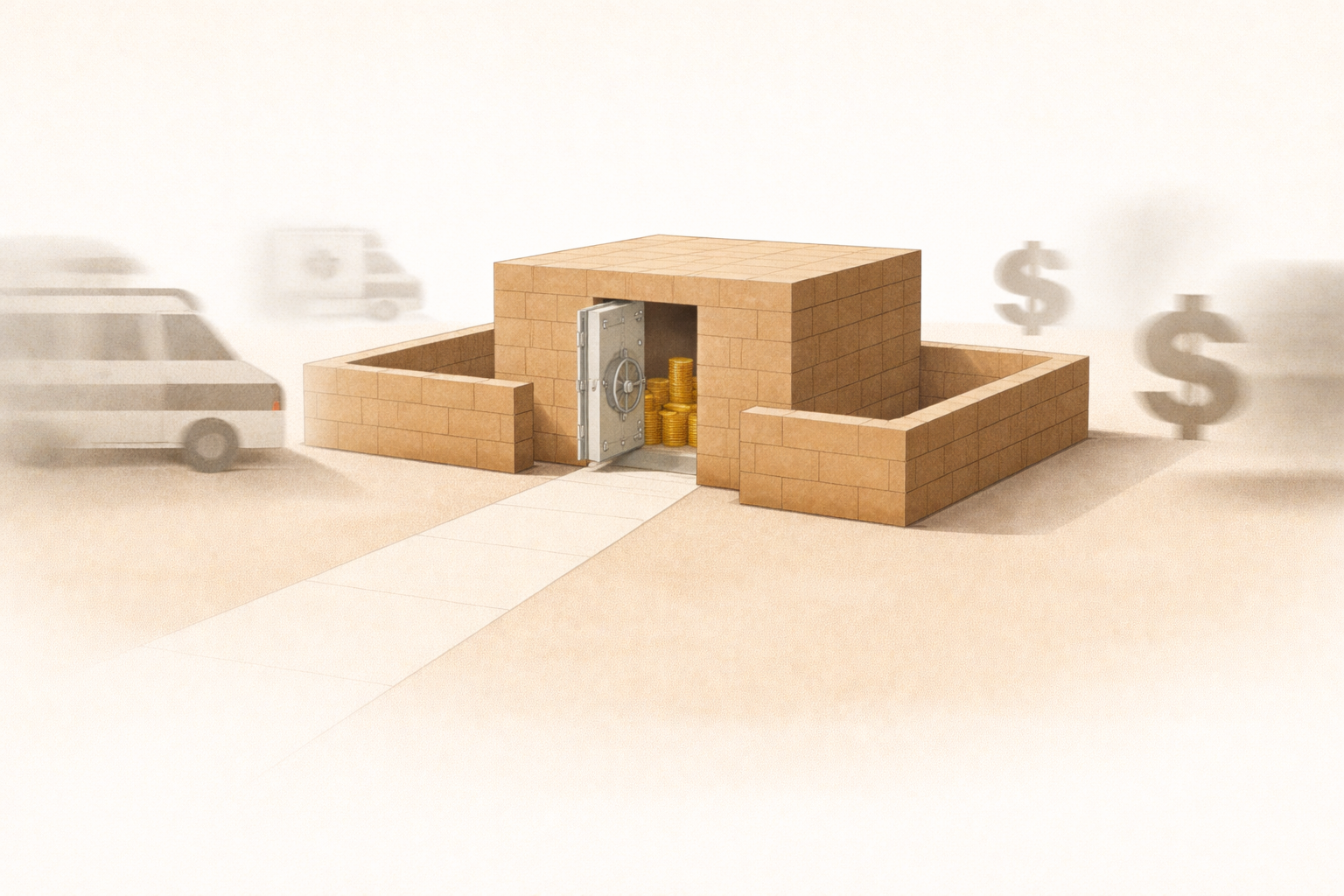
Do not decide when to use emergency funds in the moment. Decide it before the moment arrives.
Most people do not drain a reserve because they are reckless. They drain it because they never define the boundary.
Without a boundary, every surprise feels urgent. Urgency turns emotional. Emotion starts negotiating with discipline. That is how protection turns into depletion.
This is part of the Emergency Fund System, where protection is built, sized, stored, used, and rebuilt with structure.
When should you use your emergency fund?
You should use your emergency fund only when an expense threatens your ability to maintain stability and cannot wait.
That includes job loss, urgent medical needs, critical home or car repairs, or safety-related issues.
If the expense can wait, be planned, or be avoided, it is not an emergency.
When to use emergency funds
Use emergency funds when stability is at risk and the expense cannot wait.
Not inconvenience. Not frustration. Not desire. Risk.
Use the reserve when:
- Income is disrupted — job loss, delayed pay, or sudden loss of work
- Health requires action — medical expenses that cannot wait
- Essential systems break — urgent car repairs, housing issues, or required utilities
- Safety is compromised — situations that demand immediate protection
Each of these expenses protects your ability to function. That is what defines a real emergency.
What does not count as an emergency expense
This is where the system usually breaks.
Money leaves not because it must, but because it feels justified.
Do not use emergency funds for:
- planned expenses that were ignored
- sales or limited-time offers
- lifestyle upgrades or convenience purchases
- emotional spending after stress or fatigue
- nonessential travel, gifts, or celebrations
These are not emergencies. They are unplanned priorities.
If it can wait, it is not an emergency. If it can be scheduled, it is not an emergency.
Why people misuse emergency funds
The problem is not discipline. That is the excuse.
The real problem is undefined rules.
When there is no definition, the mind invents one. Usually it invents one that favors comfort.
Each softened rule weakens the system.
Without boundaries, an emergency fund becomes a second checking account with a better excuse.
The rule that protects the reserve
Before moving any money, ask one question:
Does this expense protect stability, or does it only relieve discomfort?
If it protects stability, proceed.
If it only relieves discomfort, wait.
This is where Discipline Before Dollars becomes real. The rule must exist before pressure shows up.
How to rebuild after a valid withdrawal
Using the reserve correctly is only half the system. Rebuilding it completes the system.
After a valid use:
- reduce non-essential spending if needed
- redirect income toward rebuilding
- return to your target as quickly as possible
That keeps the structure intact.
The Consumer Financial Protection Bureau confirms the same principle: emergency funds exist for unexpected disruption, not routine spending.
If the reserve is not built yet, review How to Build an Emergency Fund Without Feeling Broke. If the target is unclear, review How Much Emergency Fund Do You Need. If storage is weak, review Where to Keep Your Emergency Fund So It Actually Works.
If financial pressure keeps repeating, the issue is not the emergency. It is the system. Start with Financial Stability Is Engineered, Not Earned.
The Bottom Line
An emergency fund is not savings. It is a controlled system.
Use it when stability is threatened. Protect it when it is not.
Emergency funds do not disappear in crisis.
During calmer moments, they disappear when discipline becomes optional.
Define the rule before pressure shows up.
Otherwise, the outcome is already decided.
And once the reserve is used correctly, the next responsibility is rebuilding it in How to Rebuild Your Emergency Fund After Using It.
- How to Build an Emergency Fund Without Feeling Broke — Build the reserve
- How Much Emergency Fund Do You Need — Size the protection
- Where to Keep Your Emergency Fund So It Actually Works — Protect the storage
