
You do not need a ten year plan. You need a two year direction that is honest and usable.
A clear two year direction is one of the most practical tools in future literacy. It sits between short term goals and distant dreams. It is long enough to matter and short enough to touch. When you build a simple two year direction, decisions get lighter, distractions lose power, and your daily system finally has somewhere real to point.
Most people either live in survival mode with no direction or in fantasy mode with a detailed blueprint that collapses on contact with real life. This post is a structure for building a two year direction that holds up under pressure without trapping you.
Why Two Years Is The Right Horizon
Ten years is too far. The world moves, industries shift, and your values mature. Detailed plans at that scale turn into guilt when reality changes. Three months is often too close. You end up firefighting and chasing urgency.
Two years is different:
- It is long enough to build real capability.
- It is short enough to see from here without guessing the entire future.
- It is flexible enough to adjust without starting over.
A two year direction gives you a line to move along, not a script to follow. It respects uncertainty and still expects progress.
What A Two Year Direction Actually Is
A two year direction is a short description of who you are becoming and what you are building toward over the next twenty four months. It connects four domains that already live inside your life:
- Work and capability – your skills, career, or business.
- Money and stability – your financial footing and risk level.
- Health and energy – the body and nervous system that make everything else possible.
- Relationships and community – the people you are responsible to and responsible for.
Instead of detailed goals for each area, you are choosing a general direction that lines them up. The point is coherence, not perfection.
Step One: Tell The Truth About Where You Are
Future literacy starts with honest measurement. Before you aim two years out, you map the current ground. Take one page and divide it into four quadrants: work, money, health, and relationships. In each quadrant write three short sentences:
- What is working.
- What is unstable.
- What is quietly getting worse.
The goal is not performance. The goal is clarity. This is your baseline. It tells you what your two year direction must protect and what it must repair.
Step Two: Name What Must Be True In Two Years
Now you move from measurement into direction. For each of the same four domains answer one question:
- Work: What would make your contribution and capability feel solid two years from now.
- Money: What level of stability would let you breathe easier.
- Health: What basic condition would make your days feel more sustainable.
- Relationships: What kind of presence would you be proud of.
Keep the language simple. Avoid numbers for now. You are describing outcomes you can feel when you wake up in the morning, not performance metrics for a report.
When you finish, read the page out loud. You are listening for three things: honesty, possibility, and alignment. If something feels like a performance for other people, rewrite it.
Step Three: Choose One Anchor Sentence
Most plans fall apart because they ask you to remember twenty ideas at once. A two year direction needs one anchor sentence that holds the whole picture. It will not say everything. It will keep everything pointed the same way.
A useful pattern is:
“Over the next two years I am becoming the kind of person who [identity], by building [capability] and protecting [stability].”
Examples:
- “Over the next two years I am becoming the kind of person who leads calmly under pressure, by strengthening my systems skills and protecting my health and cash flow.”
- “Over the next two years I am becoming the kind of person who does deep work consistently, by tightening my daily system and reducing financial chaos.”
Your anchor sentence should feel slightly challenging and completely believable. If it feels like fiction, scale it back until it feels possible with structure and effort.
Step Four: Mark The Two Milestones
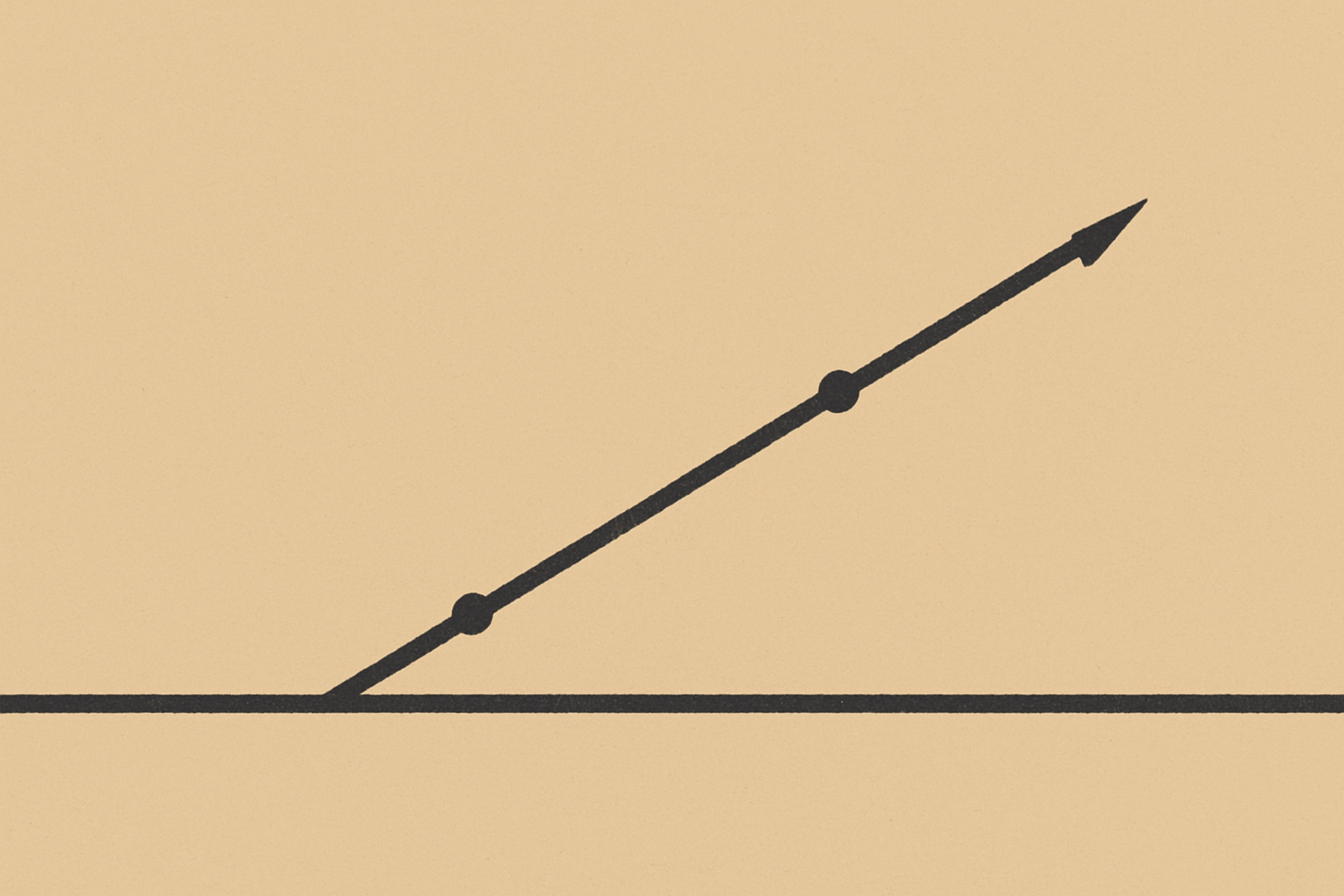
Your image for this post shows a line and two markers. That is the structure. A two year direction needs two clear checkpoints:
- Milestone One – Twelve Months: evidence that you are on the right path.
- Milestone Two – Twenty Four Months: evidence that the direction has stuck.
For each milestone, choose no more than three indicators drawn from your four domains. Keep them simple:
- Number of core skills practiced and applied.
- Debt reduced or savings built.
- Health routines you are keeping most weeks.
- Key relationships you have invested in deliberately.
These are not promises. They are signals. If you hit them, your direction is working. If you miss them, you adjust the system instead of attacking yourself.
Step Five: Translate Direction Into A Light Weekly Plan
A direction is only useful if it shapes your calendar. This is where your daily system and skill stack connect to the two year line. For each week, answer three questions:
- What one skill am I touching that serves this two year direction.
- What one structural task am I doing to protect stability.
- What one small action am I taking for relationships or community.
That is it. Three moves per week. Anything more is a bonus. Future literacy is built on compounding small moves, not heroic bursts.
How To Keep From Overplanning Your Life
Once people see the power of a two year direction, the next temptation is to overbuild. Long spreadsheets, perfect habit trackers, crowded dashboards. The structure becomes heavier than the life it is supposed to support.
To avoid that, set three boundaries:
- Limit the number of goals. If you have more than three main targets across all domains, you do not have a direction. You have a wish list.
- Limit the level of detail. Plan the next ninety days with more specificity. Leave the rest as broad waypoints.
- Limit how often you rewrite the plan. Review monthly, adjust quarterly, and only rebuild the whole direction once a year unless life changes sharply.
Your two year direction should fit on one page. If it does not, the structure will not survive busy seasons.
What To Do When Life Blows Up The Plan
Illness, layoffs, moves, family emergencies. Real life does not respect your strategy documents. When disruption hits, the goal is not to pretend nothing changed. The goal is to keep some version of the direction alive.
When the ground moves, use a simple reset:
- Return to your anchor sentence. Does it still fit. If not, rewrite it honestly.
- Scale your milestones to match the new reality instead of abandoning them.
- Cut your weekly actions down to the smallest sustainable version.
Future literacy is not about never being disrupted. It is about learning how to bend without breaking and how to start again without shame.
How You Know Your Two Year Direction Is Working
- Decisions feel lighter. You can quickly ask whether an opportunity or request serves the direction.
- Your calendar has a pattern. Weekly and daily blocks line up with the person you are becoming.
- Small wins accumulate. You can point to real changes in skill, stability, or relationships over months, not just days.
- Panic softens. The future still moves fast, but you have a structure to meet it.
If those signals are present, your two year direction is doing its job even if every milestone is not perfect.
The Path Forward
A two year direction does not solve everything. It does something more realistic. It gives your days a line to move along, your skills a place to grow toward, and your systems a reason to exist. It keeps you from drifting and it keeps you from chaining yourself to an outdated plan.
Write the baseline. Name what must be true in two years. Choose your anchor sentence and two milestones. Then give the next week to living it at a small but honest scale. That is future literacy in practice.
Further Groundwork
The Skill Stack You Actually Need in 2026
The core capabilities your two year direction should strengthen.
How To Think Clearly When Everything Pulls at You
A structure for protecting clarity while you set direction.
The Bandwidth Trap
Why your brain feels full and how to rebuild space for long range thinking.
How to Build a Daily System That Protects Your Time, Energy, and Clarity
The daily pattern that keeps your two year direction from staying theoretical.
How to Stay Capable When the Future Moves Faster Than You Do
A model for remaining effective while the environment keeps shifting.
Receipts
Pew Research Center
Data on work, financial stress, and changing expectations that shape how people plan.
Harvard Business Review – Strategic Planning
Research on realistic planning horizons and adaptive strategy.
OECD – Skills and Lifelong Learning
Analysis on why continuous, flexible skill building is more durable than rigid long term plans.

Future Literacy · Education and Skills at Groundwork Daily