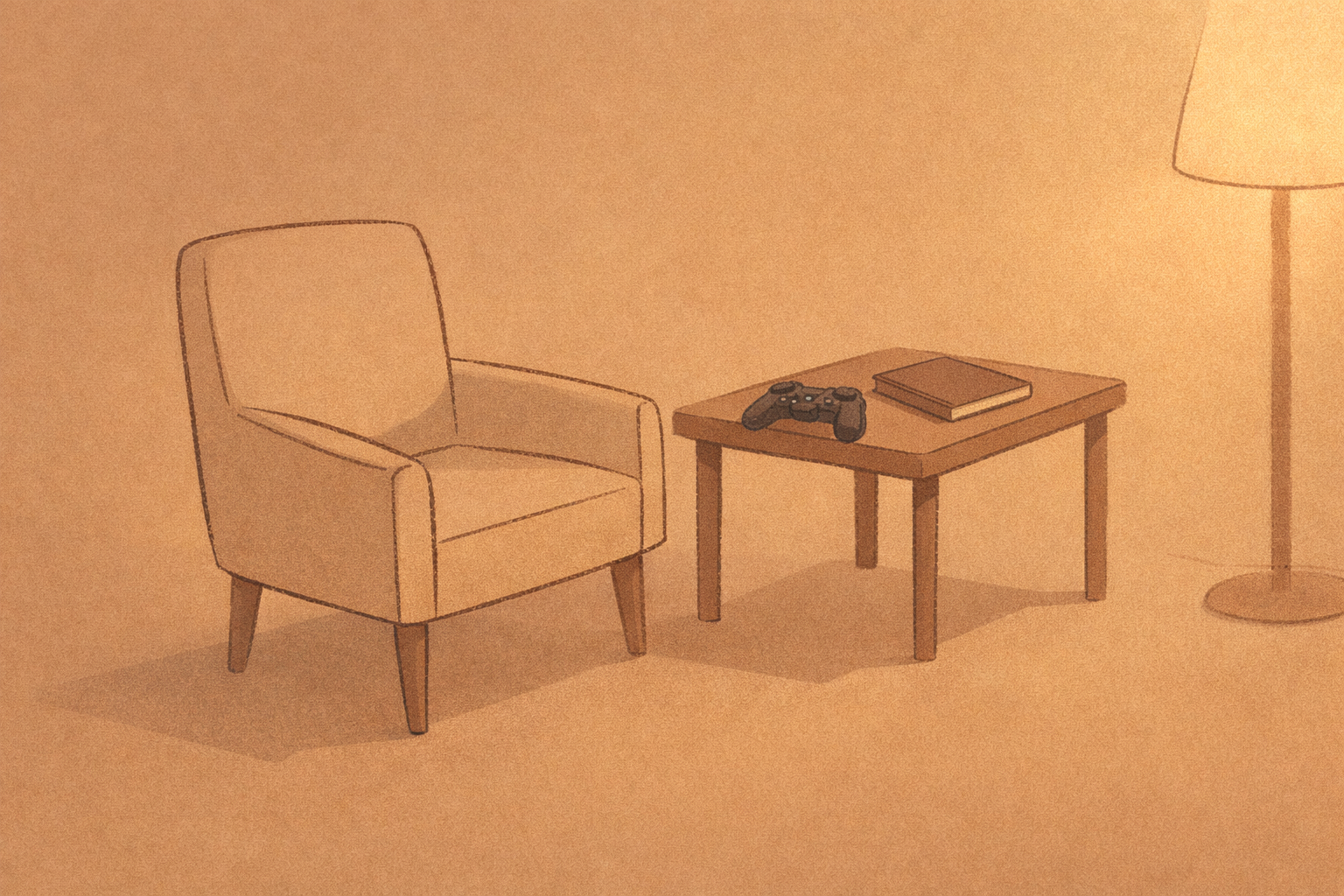
The question of gaming escape vs rest matters because the same activity can either restore capacity or quietly erode it.
Gaming itself is neutral. What determines the outcome is how it relates to responsibility.
Too often, discussions about adult men and gaming collapse nuance into panic. A controller becomes shorthand for avoidance, even though avoidance shows up in many socially approved forms.
In reality, the difference between escape and rest is not the activity. Instead, it is the structure surrounding it.
Gaming Escape vs Rest: Why the Distinction Matters
Rest is not the absence of effort. Rather, it is a deliberate pause that returns clarity.
When gaming functions as rest, it reduces stress, restores focus, and allows emotional regulation without abandoning obligations. After play ends, life resumes with more capacity than before.
This outcome is not accidental. Healthy rest consistently shares three traits.
- It is time-bounded.
- It is chosen rather than compulsive.
- It does not interfere with sleep, work, or relationships.
In this form, gaming supports discipline rather than competing with it.
When Gaming Shifts From Rest Into Escape
Escape looks similar on the surface, yet behaves differently underneath.
Once gaming becomes avoidance, it stops restoring capacity and starts replacing presence. Sessions stretch longer. Obligations feel heavier. Irritation rises when interrupted.
Over time, progress outside the screen slows.
This pattern does not signal a moral failure. Instead, it signals a breakdown in self-regulation.
The Discipline Test That Clarifies Everything
A single question often reveals the truth.
Does life move forward when the game ends?
If the answer is yes, gaming is functioning as rest. If the answer is no, gaming has slipped into escape.
Discipline does not eliminate pleasure. Instead, discipline preserves the ability to return.
Why Men Are Especially Vulnerable Here
Many men are trained to perform but rarely taught how to rest.
As a result, leisure becomes hidden, rushed, or justified. When rest lacks structure, it drifts toward avoidance.
This dynamic shows up repeatedly across this series, including in Why Men Need Play and Why Society Only Sanctions Their Labor, where leisure is framed as suspicious rather than necessary.
Without permission to rest openly, gaming becomes a private container for pressure.
Reclaiming Gaming as Rest, Not Retreat
The solution is not removal. The solution is structure.
Gaming functions as healthy rest when boundaries exist.
- Play begins after responsibilities are handled.
- Clear start and stop times are respected.
- Gaming increases patience rather than draining it.
This same principle applies in relationships, where structure determines whether gaming creates tension or coexistence. That distinction is explored further in Is Gaming a Red Flag in Relationships?.
Why This Distinction Compounds Over Time
Unchecked avoidance compounds quietly.
Missed sleep accumulates. Deferred conversations linger. Motivation thins.
By contrast, disciplined rest compounds positively. Energy stabilizes. Emotional presence improves. Consistency returns.
This is why the conversation eventually moves beyond gaming itself and toward presence, as examined in The Controller Is Not the Problem: Presence, Priority, and Emotional Labor.
The Bottom Line
Gaming is neither the villain nor the savior.
It either operates as rest that strengthens discipline, or as escape that delays responsibility.
The controller is not the measure.
The return is.