Hair types explained is not about ranking textures or assigning value. It is a practical way to describe curl patterns so routines match reality. When people can name what the hair is doing, choices get simpler: moisture strategy, styling approach, and breakage prevention.
What 1A–4C Is Actually Measuring
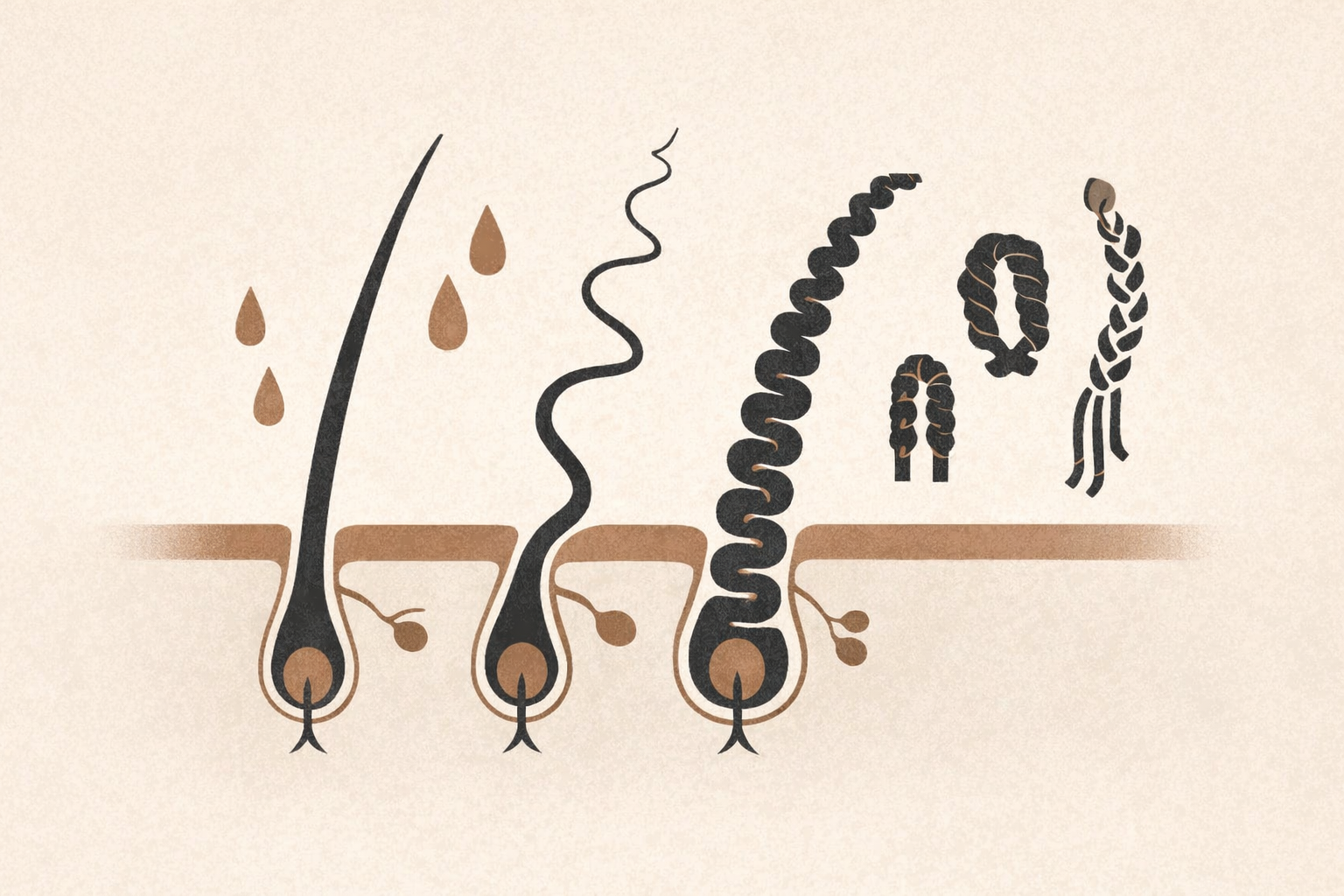
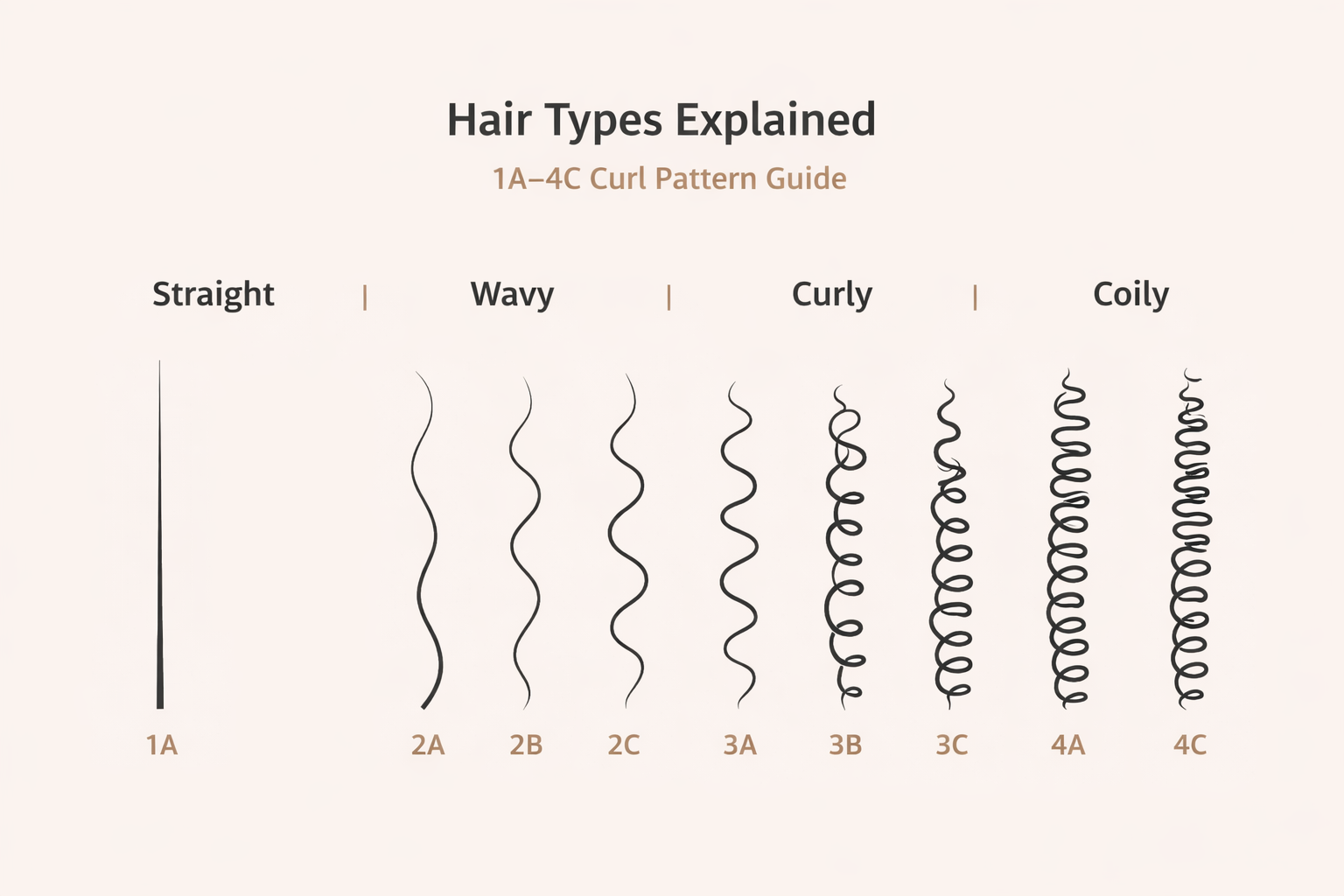
The 1A–4C system is mainly describing curl pattern, meaning how tightly the strand bends as it grows. Straight strands sit closer to 1. Waves live in 2. Curls live in 3. Coils and kinks live in 4. It is not a medical diagnosis. It is a shared shorthand.
Hair Types Explained: A Quick Map
Use this as a working guide. Hair can show more than one pattern on the same head, especially after heat, color, tension, or hormonal change.
- 1A–1C: straight strands. Oils travel easily, but strands can still be fragile with heat and over-washing.
- 2A–2C: wavy patterns. Balance matters. Too much heavy product can flatten waves and create buildup.
- 3A–3C: curls with visible spirals. Curls often need consistent conditioning and gentle detangling.
- 4A–4C: tight coils and kinks. These textures often need more moisture support because oils move slower along curved strands.
Why 4A–4C Is Not “Limiting”
Labeling 4A–4C is not a ceiling. It is a tool. The goal is not to stay inside a box. The goal is to stop using routines built for a different texture, then blaming the hair when it does not cooperate. When the curl pattern is understood, the routine can be built around hydration, reduced friction, and protective technique.
Texture Is Only One Part of Healthy Hair
Curl pattern is one axis. Hair health also depends on porosity, density, strand thickness, scalp health, and daily handling. A routine that works is usually boring on purpose: cleanse appropriately, condition consistently, protect ends, and avoid unnecessary stress.
Start Simple: A Practical Identification Check
- Look at the hair when it is clean and product-light.
- Notice the bend: straight, wave, curl, coil.
- Identify the tightest and loosest areas. Many heads are mixed-pattern.
- Choose routines based on need, not trend: moisture, definition, or strength.
The Politics of Black Hair: History, Identity, and Power
Understanding Natural Hair: Texture, Science, and Maintenance
Hair Discrimination in the Workplace: The CROWN Act Explained
The Economics of the Black Hair Industry
System Updates: When Language Becomes Self-Weaponization
Real Talk Blueprint: When We Start Talking About Ourselves Like the Enemy
Language Builds the Mirror We Live In