

Adaptation · Structure · Generational Stability
A survival mindset can protect a child and limit an adult. What helps someone endure instability may become a poor blueprint for building stability once the emergency has changed.
There is real strength inside survival.
Families get through hard seasons because somebody keeps moving. Bills may be late, but somebody figures out how to keep the lights on. Food gets stretched. Adults improvise. Children adjust. People learn how to make ten dollars do the work of twenty and how to keep a household moving when the margin has disappeared.
That deserves respect.
But survival and stability are not the same thing.
The habits that help a person get through chaos can become limiting once chaos is no longer the only environment available. Constant alertness can make peace feel suspicious. Extreme independence can make cooperation feel dangerous. A person can become excellent at handling emergencies while never learning how to build a life that needs fewer of them.
That is the distinction this piece is about.
The Governing Idea
Survival teaches people how to carry instability. Stability requires learning how to build enough structure that instability no longer has to organize the entire life.
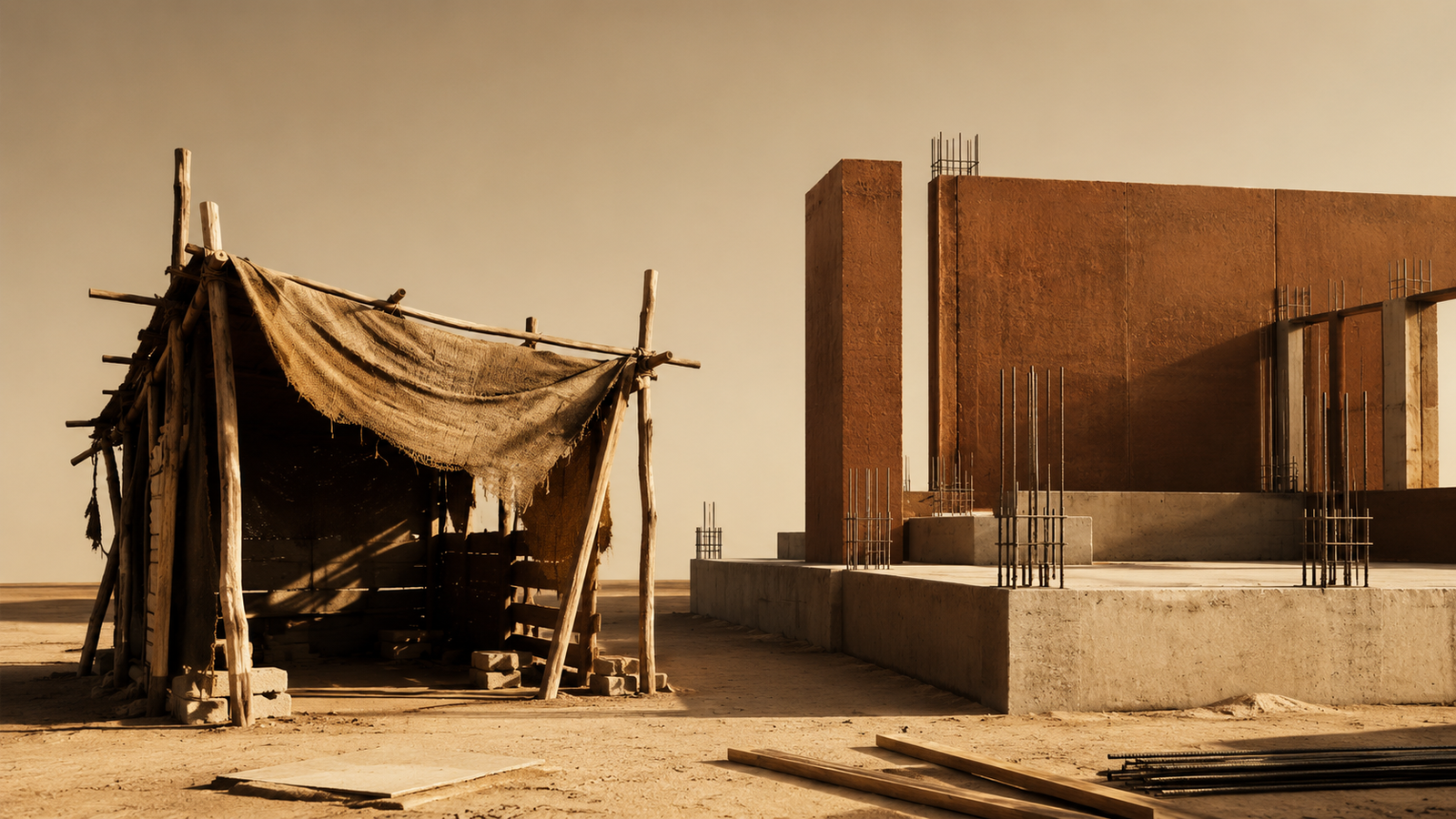
Groundwork Guide
Adaptation
The Survival Mindset Makes Sense Before It Becomes a Problem
A survival mindset usually begins as an intelligent response to the environment someone actually has.
A child growing up around instability does not get to design ideal conditions before learning how to function. They learn the room they are in.
They notice mood changes. They learn when to stay quiet. They figure out how much they can ask for and when asking is likely to create another problem. They may learn to solve things alone because the adults around them are already carrying more than they can comfortably hold.
None of that requires a dramatic household story. Sometimes the instability is financial. Sometimes it is emotional. Sometimes it comes from work schedules, caregiving, housing insecurity, illness, family conflict, or adults who simply did not have enough support themselves.
Children adapt because children have to live inside whatever system adults give them.
The quiet child may learn that being low-maintenance makes the household easier. The responsible child may become useful early. The observant child learns how to read the temperature of the room before speaking.
Those skills can be impressive.
They can also follow someone into adulthood long after the original conditions have changed.
Then usefulness becomes over-functioning. Independence becomes an inability to receive help. Awareness becomes constant suspicion. The ability to read danger becomes the habit of looking for danger even in rooms that have given no evidence of it.
An old adaptation starts making decisions in a new environment.
Inheritance
Survival Passes Down More Than Toughness
Survival teaches speed.
When pressure is constant, people learn to deal with what is immediately in front of them. Fix the leak. Cover the bill. Get through Friday. Find the ride. Make the food stretch. Handle the argument. Keep moving.
That ability matters. People raised inside pressure are often exceptionally capable during a crisis because urgency is familiar territory.
Survival also teaches endurance.
People learn that life does not stop because they are tired. They know how to make something useful out of limited resources. They understand sacrifice in ways that people raised with more margin may never have needed to learn.
Those are real strengths.
But survival can transmit other lessons alongside them.
It can teach a person that help always comes with strings. That money disappears quickly. That relaxing is irresponsible. That depending on anyone gives them too much power. That a disagreement is the beginning of abandonment. That control is safer than cooperation.
Survival is mixed inheritance. Some of it should be honored. Some of it has to be retired.
That is difficult because people often trust a pattern more when pain taught it.
The reaction feels earned.
And sometimes it was.
The harder question is whether the lesson is still accurate now.
Limits
Protection Becomes Limitation When the Emergency Rules Never Change
An old survival habit becomes expensive when it remains in charge after the conditions that created it have changed.
A child who learned to stay silent in a volatile home may become an adult who avoids necessary conversations.
A teenager who learned never to ask for help may become a partner who interprets cooperation as weakness.
Someone who watched money disappear without warning may continue living as though every dollar is one emergency away from vanishing, even after the household has developed savings, insurance, predictable income, and a workable plan.
The history explains the reaction.
It does not automatically make the reaction useful forever.
This is where people can get stuck. A habit gets called wisdom simply because it came from pain. The person protects the strategy because the strategy once protected the person.
Then every new relationship, opportunity, workplace, or financial decision gets processed through old emergency rules.
The cost is easy to miss.
When everything feels like survival, patience starts looking dangerous. Planning feels less important than immediate control. Trust becomes something other people must prove indefinitely. Rest produces guilt. Partnership becomes exposure.
Even progress can create anxiety because progress gives a person more to lose.
Survival may help someone escape instability.
It cannot be the permanent blueprint for a stable life.
The Structural Shift
Protect the Immediate
Respond quickly, preserve control, reduce exposure, solve the urgent problem, depend on what has already proven reliable.
Build the Repeatable
Create margin, establish routines, distribute responsibility, plan before pressure arrives, and build systems that reduce how often emergency behavior is needed.
Resilience
Family Resilience Is Real. It Is Still Not the Same as Stability.
Many families have survived with fewer resources, less institutional support, and more pressure than outsiders will ever see.
They develop humor, faith, routines, discipline, improvisation, shared sacrifice, and toughness. They stretch dollars. They share bedrooms. They rearrange schedules. They help relatives. They absorb setbacks and find another route when the first one closes.
That capacity should not be dismissed.
But resilience measures the ability to recover, continue, and adapt under disruption. Stability asks a different question.
What structure keeps the same disruption from owning the household forever?
A family can be resilient and exhausted.
A household can survive every crisis and still lack enough margin to prevent the next ordinary problem from becoming another crisis.
A parent can love deeply and still be too overwhelmed to model consistency. A child can be cared for and still grow up without seeing healthy repair, predictable routines, financial order, or shared responsibility.
That distinction is not an insult to the family.
It is how the next generation begins building something stronger.
Resilience vs. Stability
Survival asks, “How do we get through this?” Stability asks, “What do we build so this does not keep requiring the same emergency response?”
If a family transmits only survival, the next generation may inherit toughness without architecture.
They may know how to withstand hardship without knowing how to design peace.
They may know how to push through a financial crisis but not how to establish the allocation, savings, documentation, and planning that create more room before the next one.
They may know how to stay in a difficult relationship without knowing how to build the communication, boundaries, reciprocity, and repair that make staying worthwhile.
Resilience matters.
Structure is what allows resilience to become legacy.
Stability
Building Stability Requires Different Skills Than Surviving Instability
Survival is often reactive. Stability has to become deliberate.
The first shift is review.
People have to examine which habits still serve the life they are building and which ones simply feel familiar.
Pain can explain a pattern. It does not require permanent loyalty to it.
The next shift is discernment.
Old fear and current evidence are not always saying the same thing. A stable life requires enough judgment to tell the difference. Safe people should not have to spend forever paying a debt created by unsafe people who came before them.
Then comes planning.
Survival solves what arrived. Stability builds before arrival.
That means a household calendar before schedules collide. A savings habit before the appliance breaks. A conversation about money before resentment starts. Responsibilities that are understood before everybody is tired. Boundaries that exist before a conflict requires them.
It also means maintenance.
Stable systems are not built once and admired. They are reviewed, corrected, and adjusted as the load changes.
Finally, stability requires cooperation.
Many survival habits are organized around self-reliance. Stable families need something more demanding: people who can remain capable without making themselves impossible to support.
Shared life requires shared standards, role clarity, repair after conflict, and enough humility to receive help without turning every act of support into a negotiation over power.
A person cannot build a permanent home while treating every relationship like an emergency shelter.
Partnership
Survival Also Shapes What People Expect Love to Feel Like
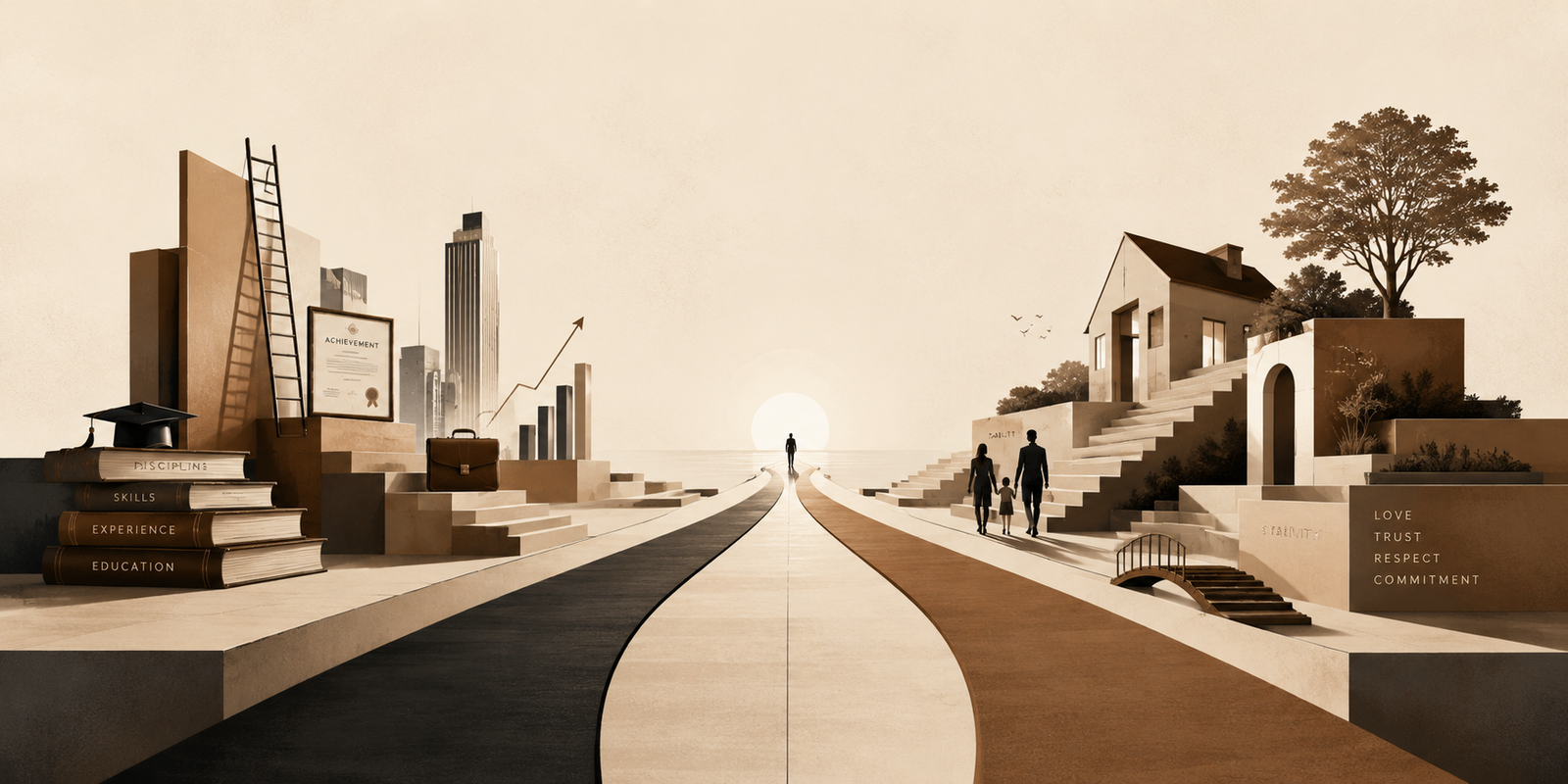
Survival does not only affect money, work, or crisis management. It can shape what people expect from love.
Someone raised around instability may mistake intensity for connection because intensity feels familiar. Calm communication can feel strange. Consistency can be mistaken for boredom. A person may even find themselves drawn toward relationships that recreate familiar tension because familiar does not always register as unhealthy while it is happening.
Relationship expectations are often inherited before they are consciously chosen.
Some people learn that love means sacrifice without limit. Others learn that love means control. Some grow up watching adults remain loyal through behavior that should have required correction. Others learn that money problems automatically become relationship problems because nobody around them ever separated the two.
Many simply watched adults doing the best they could with the tools they had.
That early education follows people.
It appears in dating choices, conflict, money, parenting, loyalty, silence, expectations, and repair.
It also appears when people confuse independence with readiness.
Independence is useful.
Partnership requires something independence does not test: the ability to build with another person without treating their presence as a threat to control.
From Survival to Partnership
The move from survival to partnership is not about becoming passive.
It is about becoming stable enough to use standards instead of fear as the primary form of protection.
Stable people still pay attention. They still maintain boundaries. They do not tolerate chaos simply to prove they can love through it.
But they also do not treat every disagreement like a defense hearing.
They learn to evaluate the person who is actually in front of them.
A survival mindset says, “I have to protect myself from everyone.”
A stability mindset says, “I need standards that help me recognize who is safe, who is aligned, and who is not.”
One creates permanent guarding.
The other creates discernment.
Discernment makes long-term partnership possible because it helps people stop confusing fear with wisdom, chemistry with compatibility, and familiarity with evidence of a healthy future.
That is where stability begins replacing survival.
Continue the Journey
Relationship Expectations: A Groundwork Daily Reading Journey
This article sits inside a larger Groundwork Daily path examining how childhood models, achievement, money, expectations, and adult choices shape the relationships people attempt to build.
Explore the complete Relationship Expectations reading journey →
The Groundwork
Keep the Strength. Retire the Emergency Rules.
A survival mindset should be understood.
It should not be worshiped.
It may explain why someone became cautious, independent, guarded, resourceful, or difficult to support. It may explain why calm feels unfamiliar, why help feels complicated, or why control feels safer than cooperation.
Explanation matters because people cannot examine what they refuse to understand.
But explanation is not a permanent exemption.
The work is to keep what still carries weight and retire what now creates it.
Keep the endurance.
Build the planning.
Keep the resourcefulness.
Build the margin.
Keep the ability to recognize danger.
Build enough discernment to recognize safety too.
Keep the independence that made survival possible.
Build enough trust and structure that independence does not have to become isolation.
The question is not whether the old rules once worked.
The question is whether they are still helping build the life that exists now.
Survival can get a person through the storm. Stability teaches them how to stop rebuilding the same temporary shelter every season.
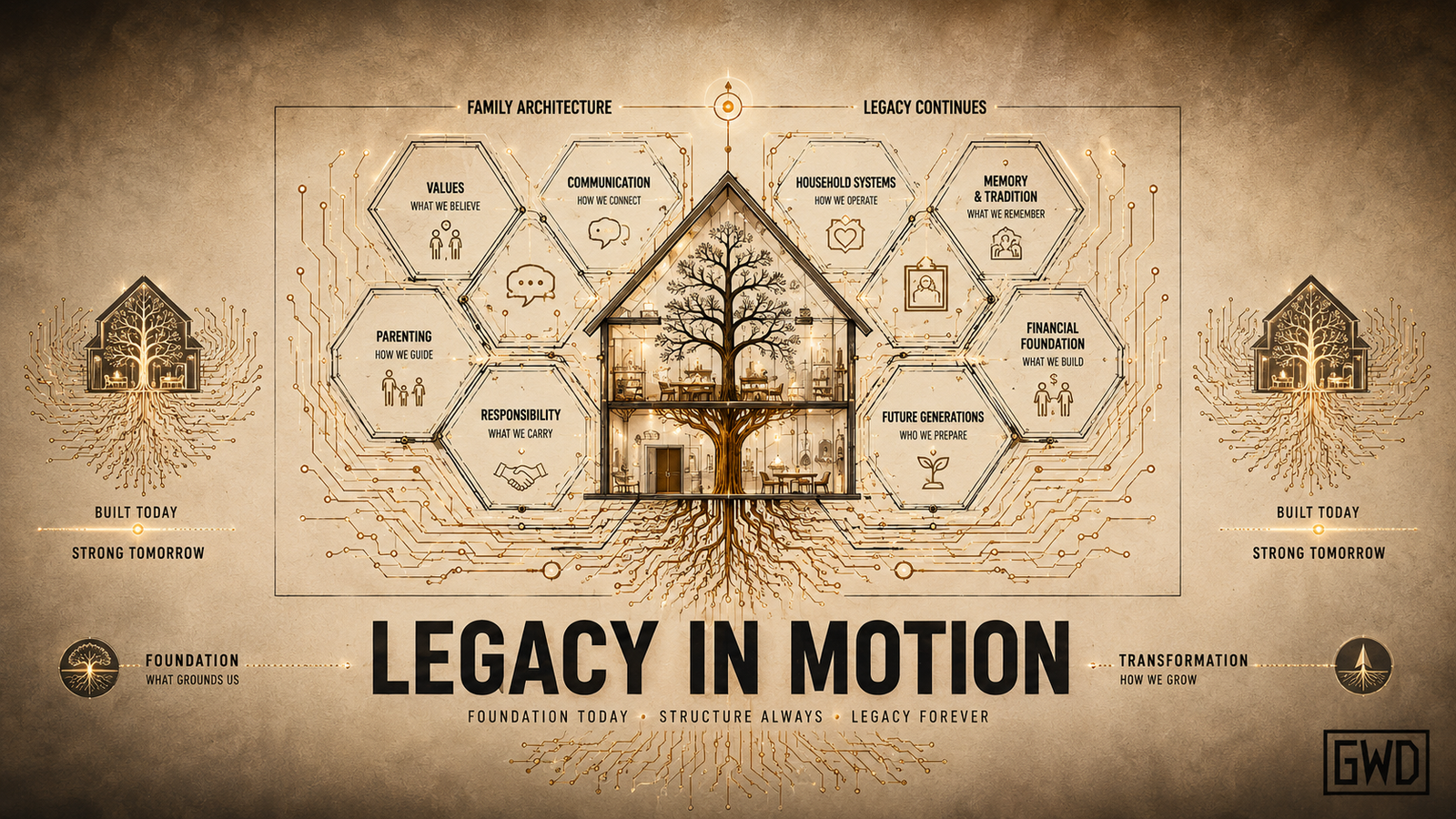
Continue Building
Follow the Structure Forward
Survival patterns become easier to change once family models, partnership expectations, and household stability are examined together.
Groundwork Architecture
The Principle and Condition Beneath This Work
Structure Builds Freedom
Structure reduces unnecessary instability and creates usable room for better decisions, healthier cooperation, and long-term development.
Structure
Structure organizes roles, relationships, pathways, boundaries, and decisions so a system does not have to depend on constant improvisation to keep working.

Groundwork Daily Builder
Marcus Vaughn
Economy, Ownership & Generational Structure
Marcus Vaughn writes about ownership, financial discipline, family structure, and generational continuity. Through Money Monday and Legacy In Motion, he examines the systems that turn income into stability, responsibility into structure, and today’s decisions into tomorrow’s inheritance.