
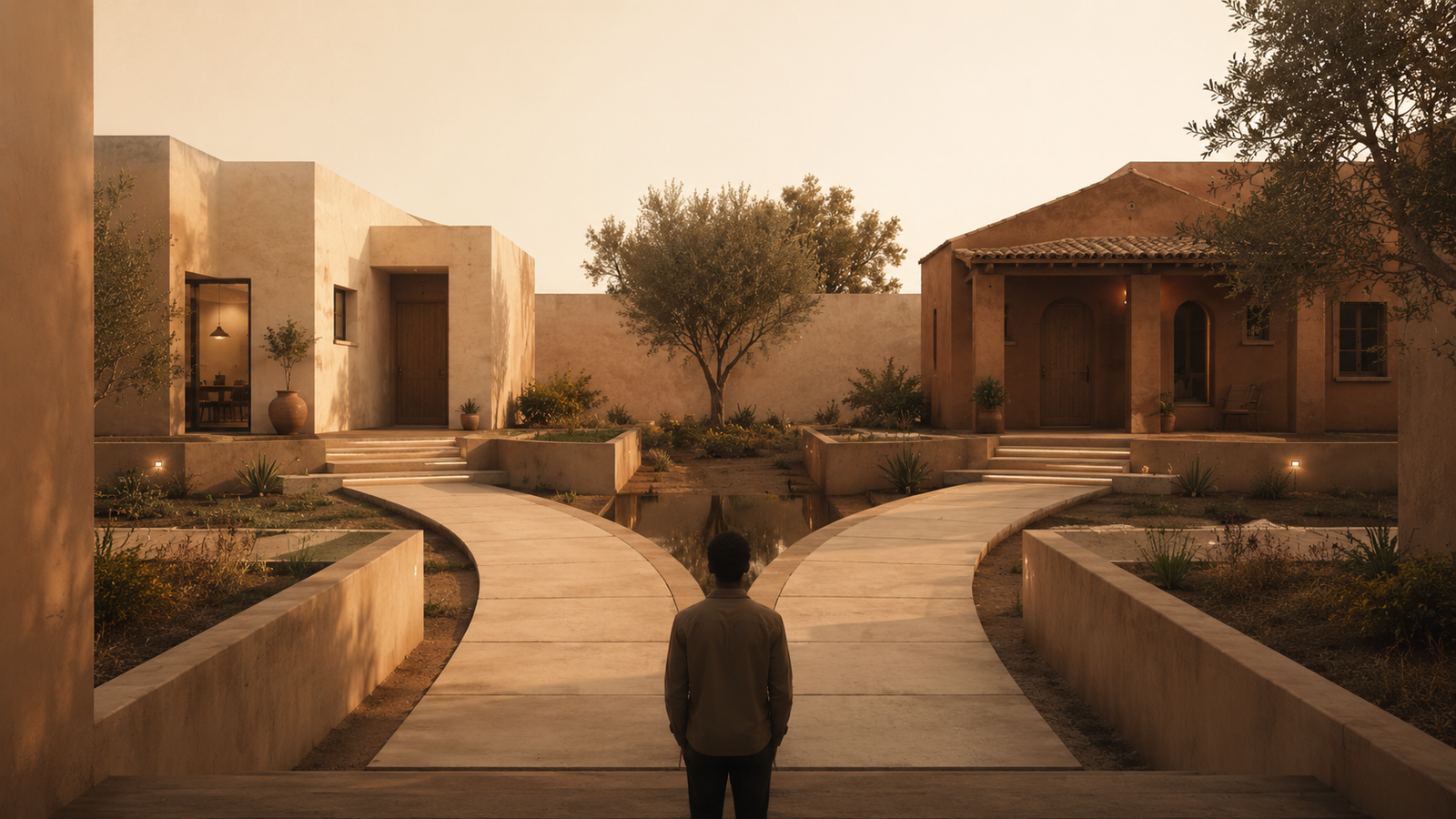
What did love look like growing up? Long before you knew what you wanted from love, somebody was already showing you what it looked like.
For some people, love looked steady.
Perhaps it looked like two people laughing in the kitchen after a long day. Affection survived disagreement. Apologies actually happened. Promises usually meant something.
For others, however, love looked tired.
It looked like sacrifice without rest, silence after conflict, or loyalty without tenderness. Sometimes one person carried most of the emotional weight while everybody else called the arrangement normal.
Children do not need a formal lesson on relationships to start learning one. Instead, they watch.
They notice who speaks and who disappears. They notice who gets forgiven, who keeps apologizing, and who absorbs the anger. Over time, they also learn who comes back after conflict and who simply acts as if nothing happened.
Years later, those observations may still be sitting quietly inside adult choices.
That is why asking what did love look like growing up? is more than an exercise in memory. It is a question about authority.
Which parts of what you learned deserve to come with you, and which parts have only survived because they became familiar?
“Children have never been very good at listening to their elders, but they have never failed to imitate them.”
— James Baldwin
Before Preference
What Did Love Look Like Growing Up Before You Had Standards?
Childhood teaches before adulthood ever gets the chance to edit.
A child watches affection, conflict, money, responsibility, anger, tenderness, distance, loyalty, and repair without necessarily having words for any of it. Nevertheless, the pattern lands.
When love is calm, steadiness can feel ordinary. By contrast, when love is unpredictable, calm may feel unfamiliar.
As a result, someone might mistake emotional intensity for closeness simply because intensity is easier to recognize.
Likewise, if affection regularly followed achievement, being useful can start feeling safer than simply being loved.
If disagreement routinely turned into withdrawal, ordinary conflict may later feel like a warning that connection is about to disappear.
None of this means childhood writes an irreversible script. Rather, childhood can establish a reference point.
Reference points matter because people rarely measure a new relationship against some perfectly objective standard. More often, they measure the present against whatever their memory, family culture, emotional history, and experience already recognize.
The Groundwork Distinction
Inherited is not the same as chosen.
A pattern can explain what feels familiar without earning the right to govern what you build next.
What the House Repeated
Your Childhood View of Love Came With a Curriculum
Every home teaches something about relationships, even when nobody intends to teach it.
Some homes teach repair. People disagree, cool down, come back, tell the truth, and try again.
Other homes teach avoidance. Conflict disappears into silence. Nobody names what happened, so everybody learns how to walk around it.
Meanwhile, some homes teach endurance. Everybody keeps going even when nobody is actually well.
Still others teach performance. The family looks polished from the outside while the people inside learn not to talk about what hurts.
The curriculum is not what the household claims to believe.
The curriculum is what the household repeatedly demonstrates.
Children Learn the Rules Beneath the Rules
Children notice whether anger has limits. They notice whether adults apologize and whether affection stays available after disappointment.
In addition, they notice who gets protected, who absorbs the blame, and whether telling the truth makes a relationship safer or more dangerous.
Those lessons travel.
They can follow people into dating, marriage, friendship, parenting, money conversations, boundaries, expectations, and conflict.
Eventually, the childhood view of love can even influence the ability to say no, hear no, ask for help, or remain present when another person is disappointed.
Familiar Is Not a Verdict
Sometimes What Feels Like Chemistry Is Recognition
This is where reflection actually earns its keep.
Familiarity can be comforting. However, it can also be misleading.
A person may feel immediately comfortable with a dynamic that resembles home, even when home was not especially healthy.
On the other hand, someone may swing in the opposite direction and reject everything associated with the family they came from.
Neither reaction automatically produces wisdom.
Repeating the past without examining it can preserve an old problem. Yet building a life entirely in reaction to the past can leave that same problem in charge from the other direction.
Therefore, the stronger move is neither imitation nor rebellion.
It is examination.
Pause Before Calling It Preference
Ask What the Pattern Is Actually Doing
Consider whether intensity became your earliest evidence that a relationship mattered.
Ask whether being misunderstood once carried consequences that made constant explanation feel necessary.
Independence can be a strength. However, it can also become armor when relying on people once felt unsafe.
Conflict and abandonment are not the same event, even when early experience taught them together.
The point is not to diagnose every preference as a wound. That would simply create another kind of overreach.
Instead, the goal is to become curious enough to ask whether a preference serves the life you want now or merely protects the life you learned to survive back then.

The Lesson Many Homes Missed
What Did Love Look Like Growing Up When Something Went Wrong?
A lot of people grew up around relationships that lasted. Still, that does not necessarily mean they grew up watching relationships actually repair.
There is a difference.
A relationship can continue while resentment quietly piles up. People may stay connected by history, children, money, duty, religion, affection, fear, or plain momentum while important injuries remain untouched.
Sometimes the Conflict Ended, but the Repair Never Happened
In some homes, everybody moved forward because somebody cooked dinner. Someone went to work. Eventually, another person changed the subject.
Before long, everyone started talking again.
The conflict appeared to be over. Yet the repair never happened.
A child watching that pattern may learn that time is an apology, silence is resolution, or staying together means everything is fine.
Eventually, adult relationships expose the weakness in that model.
Repair Requires More Than Returning to Normal
Healthy repair asks more of people.
For example, it asks someone to name what happened without turning accountability into humiliation. At the same time, it asks the other person to listen without treating every correction like an attack.
Repair may require an apology, changed behavior, a boundary, a difficult conversation, forgiveness, or accepting that some damage cannot be fixed by pretending it never happened.
Healthy love is not conflict-free.
Healthy love needs a way back from conflict that does not require everyone to lie about what happened.
In Practice
Use an Inheritance Audit to Examine What Love Looked Like Growing Up
You do not need to put your childhood on trial. However, you do need to know what it taught you.
One useful way to begin is by sorting the inheritance into three categories: what to keep, what to repair, and what to release.
Keep
What did your family model that you genuinely want to hold onto? Perhaps it was loyalty, humor, affection, hospitality, commitment, faithfulness, responsibility, or the ability to keep showing up.
Repair
What was valuable but incomplete? Maybe commitment existed without communication. Perhaps protection existed without emotional openness, or sacrifice existed without boundaries. In that case, keep the value while building a stronger structure around it.
Release
What should stop with you? That may include silence used as punishment, control disguised as care, loyalty that requires self-erasure, conflict without repair, or affection that must constantly be earned.
Self-Awareness Becomes Useful When It Changes the Pattern
This is where reflection becomes practical.
Instead of treating your history as one indivisible package, you begin separating what was nourishing from what was merely familiar.
As a result, you can honor what was good without defending what caused harm.
You can also understand why people behaved as they did without allowing their limitations to become your permanent operating system.
From Inheritance to Intention
You Are Allowed to Choose What Love Looks Like Now
Choosing differently does not require turning the people who raised you into villains.
Some adults loved deeply and modeled love imperfectly. Others survived pressures they never had the language, money, safety, time, or support to resolve cleanly.
In many families, parents gave their children more than they themselves ever received and still left important things unfinished.
Compassion can hold that truth. So can accountability.
Understanding the Past Does Not Require Obeying It
The purpose of asking what did love look like growing up? is not to decide whom to blame for every adult difficulty.
Rather, the purpose is to stop allowing an unexamined inheritance to make decisions in your name.
You can keep the loyalty and release the silence.
Likewise, you can keep the resilience and release the chaos.
You can keep the commitment while releasing the control.
And you can keep the tenderness while adding boundaries.
The Goal Is Not a Life With No Past
Keep the family stories worth carrying. At the same time, write differently where the old story stopped serving the people inside it.
That is the work.
The goal is not to become a person with no past.
Instead, become a person whose past has been examined closely enough that familiarity no longer gets the final vote.
Carry This With You
Your first definition of love does not have to become your final one.
The past can explain what you recognize. Reflection helps you decide what you will repeat. Ultimately, wisdom begins when inheritance becomes conscious enough to become choice.
Receipts
A Note on Childhood, Relationships, and Development
Early family environments can influence later emotional and behavioral development. However, influence should not be confused with destiny.
Development continues across the lifespan. Therefore, adult relationships, reflection, learning, support, and new experiences can all matter as people reconsider what love looked like growing up and what they want it to look like now.
For broader background, see the American Psychological Association’s resources on childhood development .
Further Groundwork
Continue the Relationship Expectations Journey
This reflection sits inside a larger Groundwork conversation about the expectations people inherit, the structures they build, and the difference between a compelling story and a durable life.
Examine what happens when survival habits remain active after the conditions that created them have changed.
Building Your Life Around Exceptions
Consider why rare outcomes and exceptional stories make unstable foundations for ordinary decisions.
Outcomes Do Not Care About Narratives
Follow the journey toward its harder conclusion: eventually, behavior and structure have to carry what the story promises.
Read the full path: Relationship Expectations: A Groundwork Daily Reading Journey .
Groundwork Daily
Build Better. Keep the Groundwork Close.
Join the Groundwork List for thoughtful essays, practical frameworks, and ideas designed to help you examine what you inherited and build what deserves to remain.
Groundwork Architecture
Core Principle
Primary Condition
Self-Awareness
Builder
N. Grace James
N. Grace James builds in the space between what we feel, what we believe, and what we allow to lead. Her work for Stillness & Soul explores discernment, self-awareness, emotional discipline, faith, reflection, restraint, and the quiet choices that shape how people move through ordinary life.
Explore Wisdom Wednesday for practical reflection and clearer judgment, or visit N. Grace James’s Builder page for her complete Groundwork.