
Economy & Ownership · Money Monday
Money without assignment disappears into pressure.
The first paycheck lesson is not about how much you earn. It is about whether your money learns structure before your habits learn drift.
The First Paycheck Lesson
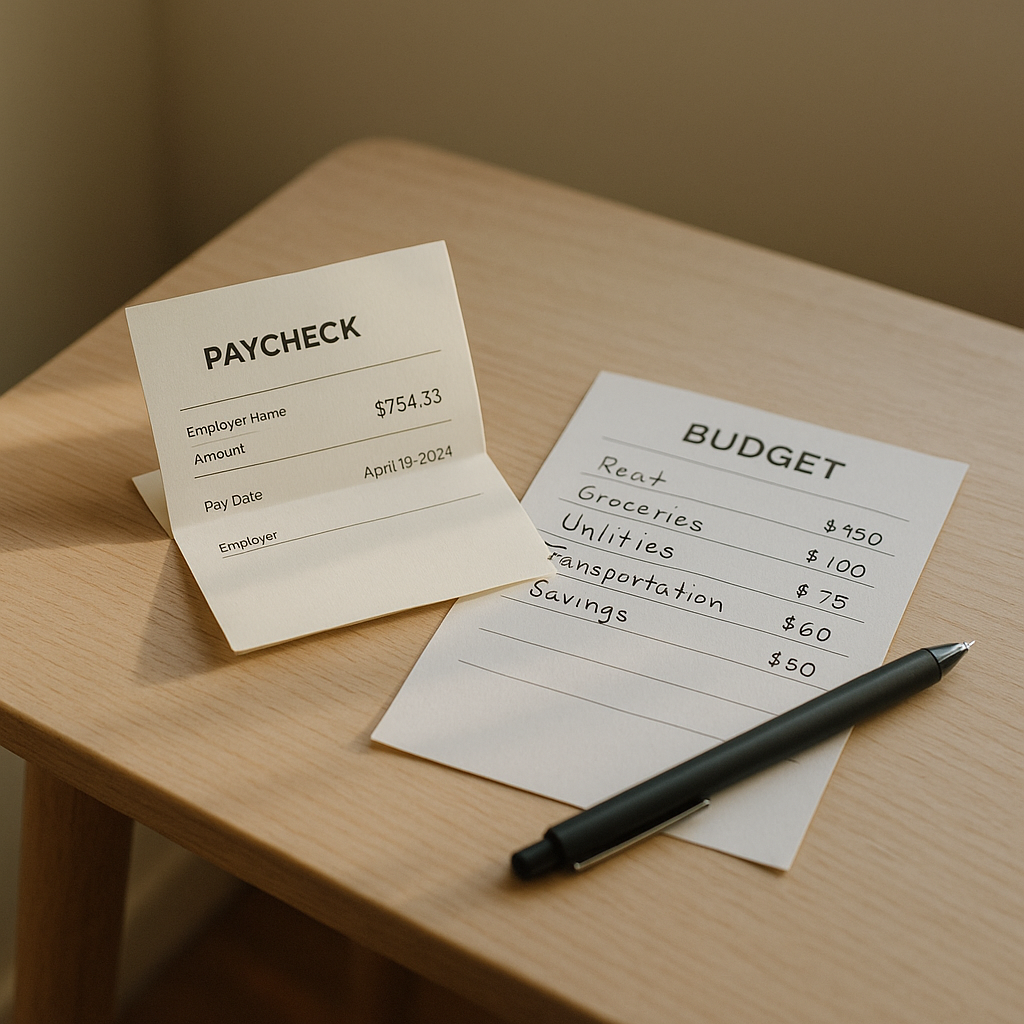
Most people treat a first paycheck like proof that adulthood has started. That reaction makes sense. Work deserves a reward.
Still, the first paycheck is more than a reward. It is a systems test.
The check reveals whether income will become structure or temporary relief. It shows whether money will follow a plan or follow pressure. It also teaches a habit that later paychecks tend to repeat.
That is why the first paycheck lesson matters. The first check may be small compared with future earnings. However, the pattern it teaches can last for decades.
A paycheck is not a plan. It is a resource. Without structure, every expense takes a turn until nothing remains to build with.
Fiscal Footing
The first paycheck should teach allocation before lifestyle. Once lifestyle speaks first, structure has to fight for what remains.
First Paycheck Allocation Starts Before Spending
Budgeting does not start after the money is gone. It starts before the first dollar leaves.
That is the correction.
Many people spend first, then try to organize what remains. This sequence creates confusion. It also trains the mind to treat saving, planning, and investing as leftovers.
The better sequence is simple. Assign the paycheck first. Spend second.
This does not require wealth. It requires order.
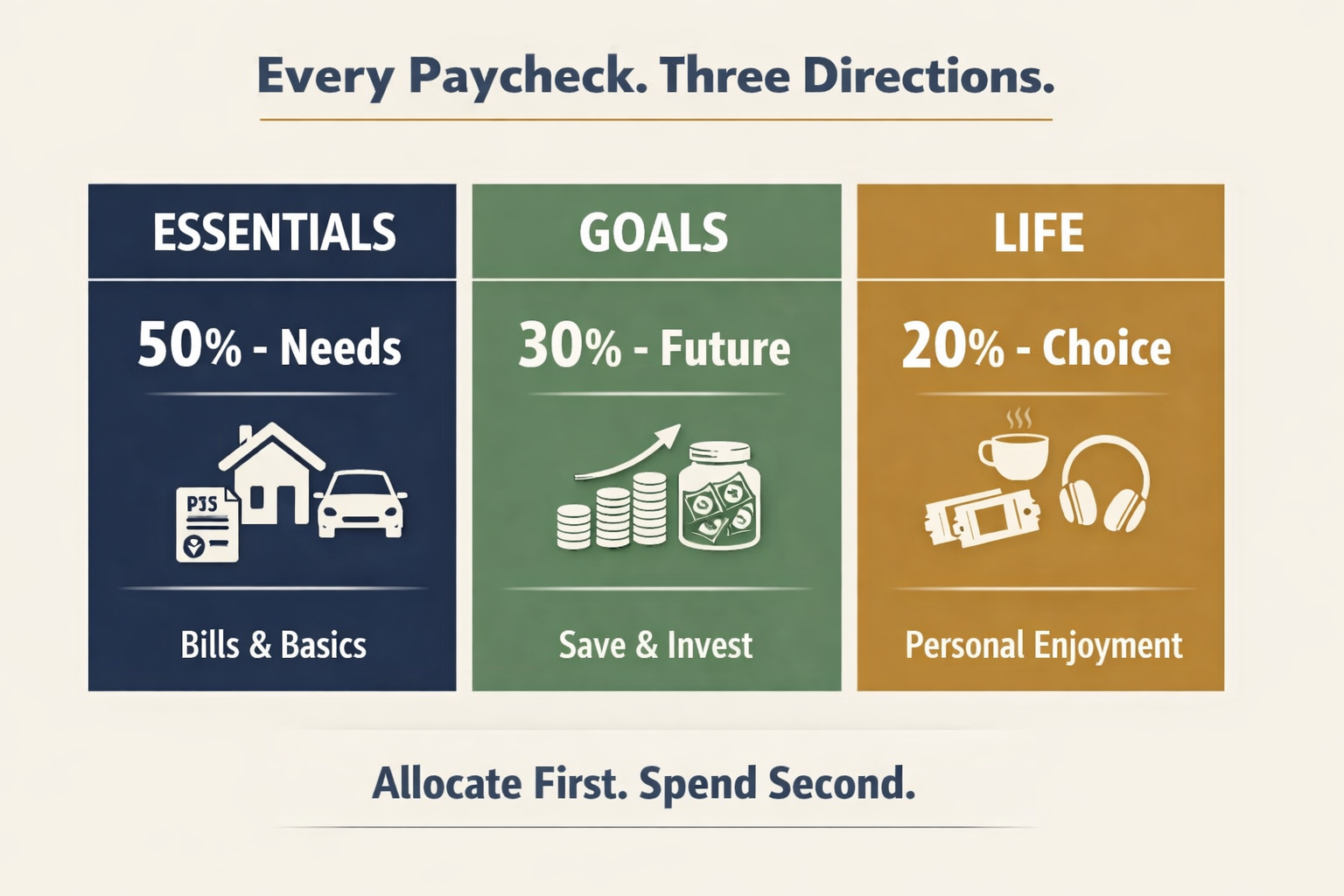
The Three-Part Paycheck System
The simplest system usually survives the longest. Every paycheck should move in three directions as soon as it arrives.
The Allocation Framework
Essentials protect stability. Rent, food, transportation, utilities, and required obligations belong here.
Goals build the future. Savings, debt reduction, investing, skill development, and emergency reserves belong here.
Life keeps discipline sustainable. Personal spending belongs here, but only after essentials and goals receive structure.
Why the Structure Matters
Percentages can change. Structure should not.
A teenager with a part-time job, a young worker with hourly wages, and an adult with a salary may use different percentages. Still, the operating principle stays the same.
Every dollar needs a role before emotion gives it one.
Why Paychecks Disappear
Paychecks disappear because pressure is faster than planning.
Food, transportation, subscriptions, family requests, convenience spending, social pressure, and small upgrades all compete for the same check. None of these expenses may look dangerous alone.
Together, they create drift.
Drift happens when money moves without leadership. The person works. The check arrives. The month applies pressure. Then the money is gone.
This is not always a math failure. Often, it is a sequencing failure.
Bills come after impulse. Goals come after convenience. Savings come after lifestyle. By the time structure enters the conversation, the paycheck has already been divided by habit.
A strong first paycheck lesson interrupts that sequence early.
Real-World Scenario: Two Workers, Same Paycheck
Consider two workers earning the same first paycheck.
The first worker treats the check as spending permission. A few meals out feel harmless. A new subscription feels small. Weekend spending feels deserved. Savings can wait until the next check.
Nothing looks reckless at first.
After a few months, the pattern becomes clear. The money keeps moving, but nothing is being built.
The second worker treats the same paycheck as a system. Essentials get covered first. A small amount moves to savings automatically. Debt or future goals receive a fixed portion. Personal spending remains allowed, but it has a boundary.
The two workers earned the same amount.
However, they did not build the same future.
One built pressure. The other built control.
The First Paycheck Becomes a Life System
The first paycheck is not important because of its size. It is important because of its training effect.
If the first check teaches impulse, later checks often repeat impulse at a larger scale. If the first check teaches allocation, later checks can repeat structure with greater power.
That is how financial habits become financial architecture.
A person who learns allocation early is not only learning budgeting. They are learning governance. They are learning how to direct resources before outside pressure directs them instead.
That skill scales.
It applies to raises, bonuses, tax refunds, business income, inheritance, side income, and investment returns. The numbers may grow, but the discipline remains the same.
Money Monday Perspective
Income becomes infrastructure only when it moves through a system.
How to Apply the First Paycheck Lesson
Start with visibility.
Write down the full paycheck amount. Then name the required expenses before any personal spending begins. After that, assign one amount to future stability, even if the amount is small.
Small numbers still train the system.
Next, create a life category. This matters because discipline that leaves no room for living usually collapses. The goal is not punishment. The goal is direction.
Finally, review the result before the next check arrives. Ask what worked, what leaked, and what needs a rule.
That review turns a paycheck into feedback.
Weekly Paycheck Practice
- Assign essentials first.
- Move something toward savings or debt reduction immediately.
- Give personal spending a limit before the week begins.
- Review the paycheck before the next one arrives.
- Adjust the system without abandoning the structure.
Discipline without structure fails. Structure turns effort into freedom. Start here. Then learn how to understand your expenses and align your life with your money.
Further Groundwork
→ Why You’re Always Broke Even With Income
→ How to Allocate Money Without Guesswork
→ Why Generational Financial Literacy Determines Whether Wealth Survives
A steady financial life begins when income stops acting like temporary relief and starts acting like infrastructure.
The check is not there to rescue the moment. It is there to strengthen the system.
The Bottom Line
Your first paycheck is not only a reward.
It is a systems test.
If you do not assign your money, something else will.
Most people think they need more money. Often, they first need a stronger system protecting the money they already earn.
That is the real first paycheck lesson: income starts the opportunity, but allocation decides whether anything gets built.

Money Monday Series Context
This article is part of the Money Monday: Financial Structure Systems series exploring discipline, allocation, ownership, and long-term economic stability through structured financial behavior.