
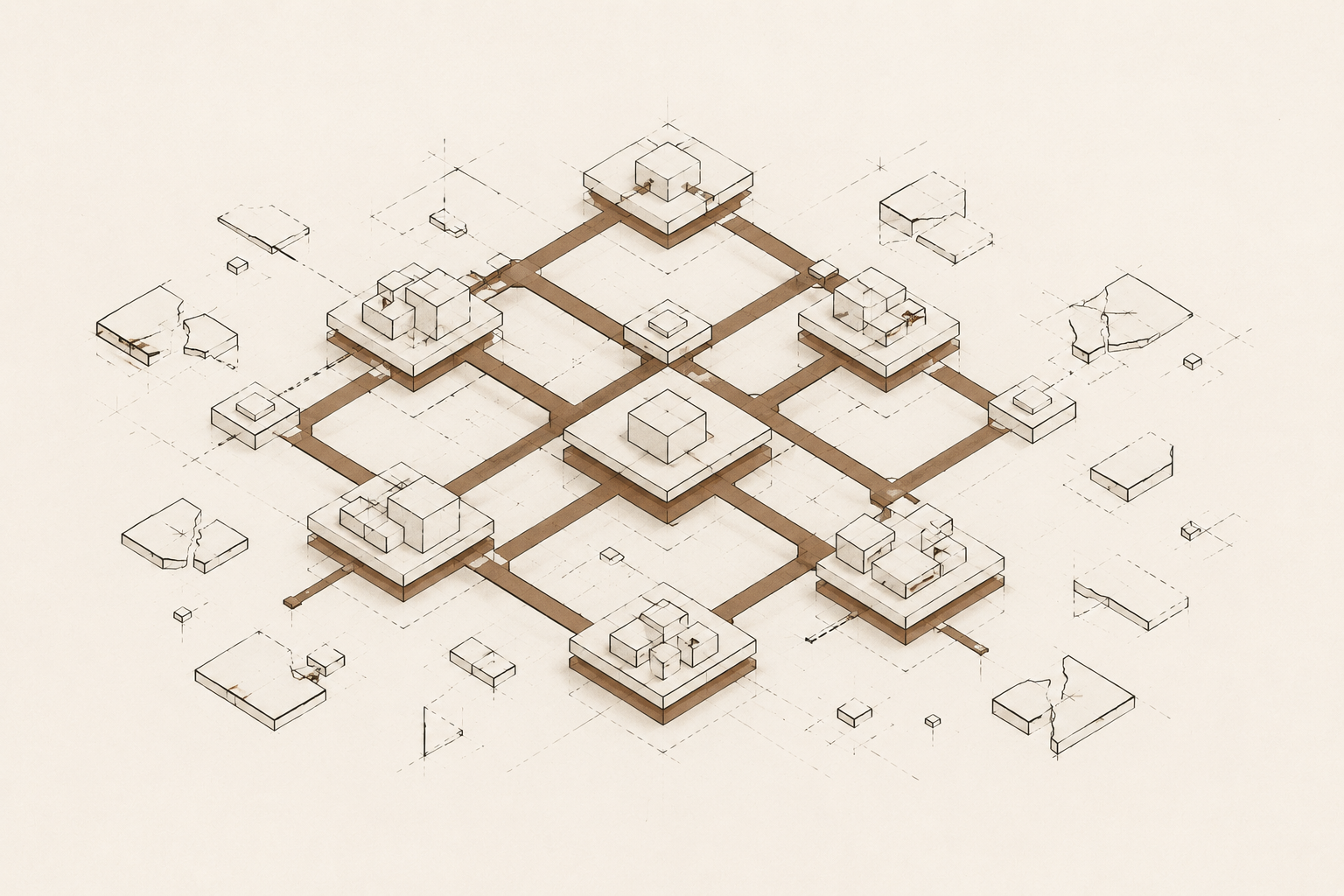
Group economics strategies often fail because communities confuse emotional alignment with operational structure. Shared ownership can create durable wealth. However, coordinated economics only survives when governance, accountability, incentives, legal structure, and discipline become stronger than personality, slogans, or temporary enthusiasm.
Shared ownership without structure eventually becomes instability.
- Group Economics Strategies and the Hard Truth
- Why Shared Identity Is Not Infrastructure
- Trust Alone Is Not Enough
- Governance Before Circulation
- Why Informal Money Systems Break
- Investment Clubs, Co-ops, and Buying Groups
- Community Capital Without Magical Thinking
- Lessons From Heirs’ Property
- Why Business Ownership Still Matters
- Group Economics Is the Coordination Layer
- A Practical Framework for Coordinated Ownership
- Frequently Asked Questions
Group Economics Without Fantasy Thinking
Build better. Every day.
Group Economics Strategies and the Hard Truth
Most conversations about group economics strategies collapse because they begin emotionally instead of structurally.
The internet often presents cooperative economics as a moral performance instead of an operational system. People repeat phrases like “support your own,” “circulate the dollar,” and “build together” without discussing governance, accounting, incentives, leadership, legal structure, procurement, compliance, or enforcement mechanisms.
That is not economic architecture. That is aspiration.
Aspiration matters because it can inspire participation. However, inspiration alone does not sustain institutions. Sustainable economic systems require durable operational design.
Cooperation is not magic. It is administration.
Real coordinated ownership requires:
- documented expectations,
- transparent finances,
- defined leadership,
- conflict resolution systems,
- shared standards,
- legal continuity,
- and operational maturity.
Without those layers, collective economics eventually fractures under pressure.
This article exists to separate serious cooperative economics from fantasy thinking.
Why Shared Identity Is Not Infrastructure
Shared identity can create emotional cohesion.
Yet emotional cohesion alone cannot automatically create economic discipline.
A group of people may share:
- history,
- culture,
- race,
- religion,
- political beliefs,
- or social experience,
while still lacking the operational trust required to sustain long-term economic systems.
Emotional unity is not governance.
Shared frustration is not bookkeeping.
Collective pride is not succession planning.
Too many conversations romanticize cooperation while ignoring the administrative burden required to sustain it.
Real institutions survive because:
- procedures exist,
- standards exist,
- leadership transitions are manageable,
- and accountability systems operate consistently.
Systems survive through predictability, not emotion alone.
Trust Alone Is Not Enough
One of the most destructive assumptions in cooperative economics is the belief that trust alone can substitute for systems.
It cannot.
Strong systems reduce the amount of trust required because verification mechanisms already exist.
Mature institutions do not operate primarily on:
- friendship,
- vibes,
- good intentions,
- or emotional loyalty.
Instead, they operate through:
- contracts,
- financial reporting,
- role clarity,
- audits,
- oversight,
- and enforceable standards.
Communities often interpret these structures as signs of distrust. In reality, structure protects relationships.
Without systems, every disagreement becomes emotional because no neutral operational framework exists to absorb conflict.
That is how cooperative efforts collapse internally.
Governance Before Circulation
Many people discuss “circulating money” without discussing governance.
That order is backward.
Governance must come before circulation because money amplifies existing structure.
If governance is weak:
- conflict increases,
- resentment grows,
- financial suspicion spreads,
- and operational instability accelerates.
Money does not fix weak systems.
Instead, it exposes them faster.
This is why successful institutions prioritize:
- clear authority,
- defined responsibilities,
- financial transparency,
- decision-making processes,
- and operational continuity.
Governance is not bureaucracy for its own sake. Governance is what allows systems to survive pressure.
Why Informal Money Systems Break
Informal financial systems often feel comfortable in the beginning.
People trust one another. Expectations seem obvious. Roles feel unnecessary.
Then money scales.
That is when structural weakness appears.
Informal systems usually fail because:
- ownership is unclear,
- responsibilities are undocumented,
- financial records are inconsistent,
- leadership authority is undefined,
- and accountability mechanisms are weak.
Eventually operational criticism becomes interpreted as personal betrayal.
That transition destroys many collective projects.
This connects directly to Heirs’ Property and Black Land Loss .
In both cases, emotional ownership without operational structure eventually creates instability.
Informality feels flexible in the short term. Long term, it becomes expensive.
Investment Clubs, Co-ops, and Buying Groups
Serious group economics strategies are still possible.
The point is not to reject cooperation. The point is to mature it.
Some cooperative systems genuinely work:
- investment clubs,
- credit unions,
- worker cooperatives,
- buying cooperatives,
- housing cooperatives,
- and community development financial institutions.
The strongest versions of these models succeed because they include:
- clear governance,
- documented expectations,
- professional administration,
- capital discipline,
- and long-term operational thinking.
Investment clubs are especially important because they can reduce entry barriers to ownership.
Smaller pooled contributions allow participants to:
- learn financial literacy together,
- study investing behavior,
- develop discipline,
- and build exposure to appreciating assets.
This directly supports Why Stocks Matter for Black Wealth .
Ownership participation matters because scalable assets compound differently than labor income alone.
Community Capital Without Magical Thinking
Community capital matters.
However, magical thinking does not.
One of the biggest myths online is the idea that money circulates sustainably because people feel emotionally connected.
That is incomplete.
Money circulates when systems make participation rational.
Consumers prioritize:
- value,
- reliability,
- consistency,
- convenience,
- and trust.
Communities cannot guilt people into permanent economic participation while ignoring operational quality.
Sustainable circulation requires:
- competitive services,
- professional standards,
- stable operations,
- and long-term reliability.
Otherwise support becomes emotional charity instead of durable economics.
Lessons From Heirs’ Property
One of the most important lessons from Heirs’ Property and Black Land Loss is that assets become fragile when structure is weaker than relationships.
Families often assume emotional loyalty will preserve shared property indefinitely.
It usually does not.
Over time:
- ownership fragments,
- expectations diverge,
- communication weakens,
- and legal vulnerability increases.
Cooperative economics faces similar risks.
Shared ownership without legal structure eventually creates confusion around:
- authority,
- contribution,
- decision-making,
- profit distribution,
- and succession.
That is why governance matters more than inspiration.
Why Business Ownership Still Matters
Despite these warnings, business ownership still matters enormously.
This is not an anti-ownership article.
It is a pro-structure article.
Businesses remain one of the strongest pathways toward:
- scalable equity,
- employment creation,
- community reinvestment,
- and generational wealth transfer.
This directly supports Business Ownership Is a Wealth Multiplier .
However, scaling ownership requires maturity.
Businesses fail when:
- roles are unclear,
- friends become unstructured partners,
- ownership percentages are undocumented,
- or operational accountability disappears.
Ownership is powerful.
Unstructured ownership is dangerous.
Group Economics Is the Coordination Layer
Cooperative ownership cannot function in isolation.
Wealth is not built through a single asset, a single business, or a single financial decision. Durable wealth emerges when multiple systems reinforce one another over time.
Homeownership can create stability. However, as explored in Homeownership Alone Cannot Close the Gap , housing alone is too fragile to carry the entire burden of generational advancement.
Equity market participation matters because appreciating assets compound differently than labor income. That reality was explored in Why Stocks Matter for Black Wealth .
Business ownership matters because scalable systems create leverage beyond individual labor. That framework appeared in Business Ownership Is a Wealth Multiplier .
Meanwhile, legal continuity matters because ownership without protection eventually fragments across generations. That vulnerability was examined in Heirs’ Property and Black Land Loss and Estate Planning Is Infrastructure .
Group economics becomes important because it acts as the coordination layer connecting these systems together.
The question is no longer whether communities should cooperate economically.
The real question is whether communities can build institutions disciplined enough to survive leadership transition, operational stress, economic downturns, and time itself.
That is the difference between temporary participation and durable infrastructure.
A Practical Framework for Coordinated Ownership
Communities interested in serious cooperative economics should focus on several foundational layers:
1. Governance
Define leadership, voting rights, ownership structures, and decision-making authority.
2. Documentation
Create written agreements, operating procedures, and financial records.
3. Transparency
Members should understand where money goes and how decisions are made.
4. Accountability
Standards must be enforceable.
5. Succession
Systems should survive beyond founders and personalities.
6. Financial Literacy
Participants must understand ownership, investing, taxation, risk, and leverage.
7. Long-Term Thinking
Real infrastructure compounds slowly.
That may not feel emotionally exciting.
However, bridges are not judged by how inspiring they sound.
They are judged by whether they hold weight.
Economic systems work the same way.
Frequently Asked Questions
What are group economics strategies?
Group economics strategies involve coordinated ownership, investment, purchasing, or capital circulation among individuals or communities to create long-term economic stability and wealth.
Why do many cooperative economic systems fail?
Many fail because governance, accountability, financial transparency, and operational structure are weak or missing entirely.
Can community wealth building actually work?
Yes. Community wealth building can succeed when systems include governance, legal structure, financial discipline, and long-term operational continuity.
What is the biggest mistake in group economics?
The biggest mistake is assuming emotional unity alone can sustain economic systems without documented expectations, accountability, and administrative infrastructure.
How do investment clubs support wealth building?
Investment clubs help participants pool capital, learn investing behavior, build discipline, and gain exposure to appreciating assets over time.
How to Build Generational Wealth as a Black Family
Estate Planning Is Infrastructure
Why Stocks Matter for Black Wealth
Business Ownership Is a Wealth Multiplier
Homeownership Alone Cannot Close the Gap
The Hidden Cost of Appraisal Bias
Heirs’ Property and Black Land Loss
National Community Reinvestment Coalition
Brookings Institution
Federal Reserve
National Cooperative Business Association
Sustainable economics is not built through slogans alone. It is built through governance, continuity, accountability, and operational discipline repeated over time.

This article is part of the broader Generational Wealth Architecture framework from Groundwork Daily. The framework examines how ownership, investing, estate planning, governance, protection systems, succession, and long-term family continuity work together to build durable intergenerational stability. Explore the complete architecture to understand how each layer connects into a larger wealth preservation system.