
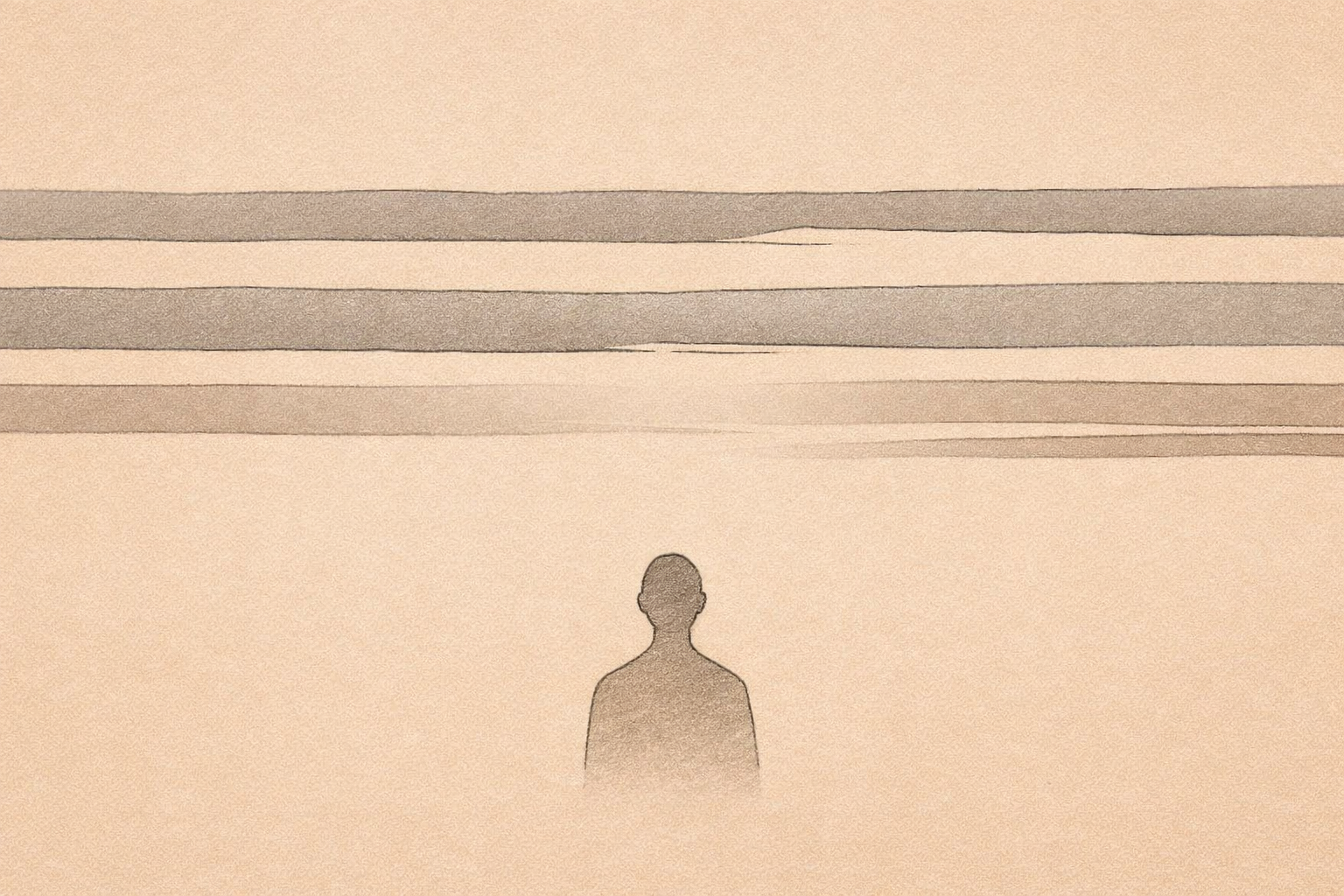
Recovery vs avoidance can look almost identical from across the room, because both may bring quiet, distance, and visible relief.
A person may cancel plans, close the laptop, step away from a difficult conversation, or ask for a slower day. From the outside, each choice can look like rest. Yet the appearance of calm tells us very little about what is happening underneath it.
The difference often appears later. Genuine recovery slowly gives life back, while avoidance can make returning to life feel increasingly expensive. Therefore, the better question is not whether someone stepped away. It is what that distance is building.
Current Reading
Recovery vs. Avoidance
Visible demand has decreased. Now the task is to determine whether reduced exposure is restoring usable capacity or simply postponing contact with unresolved strain.
Recovery vs. Avoidance Is a Differentiation Reading
The Soul Weather Framework treats Recovery as a canonical condition. It describes the gradual return of usable capacity, attention, spacing, and flexibility.
Avoidance is different. It is not another weather condition in the canonical system. Instead, it describes a response pattern that can resemble recovery because it also reduces visible strain.
For that reason, this reading has one specific job: tell the difference between space that restores you and space you increasingly need in order not to feel what remains unresolved.
Auden Field Note
Quiet is not proof of recovery. Ask what becomes possible when the quiet is over.
What Recovery Actually Restores
Recovery does more than reduce discomfort. Over time, it restores range.
At first, that returning range may be modest. A conversation that felt impossible last week becomes manageable for twenty minutes. Work that required enormous effort begins to feel ordinary again. Likewise, a social invitation can be considered rather than rejected on instinct.
Even unexpected demands begin to land differently. A request may still be inconvenient, but it no longer changes the temperature of the entire day.
In this way, recovery widens options. It does not require immediate enthusiasm for everything that once felt difficult. Instead, it means choice is beginning to return.
Recovery Does Not Have to Be Fast
Slow recovery can easily be mistaken for avoidance. However, speed is the wrong measure.
A person may genuinely need weeks or longer before a demanding area of life becomes easier to carry. The more useful question is whether something is gradually changing beneath the surface.
Look for Direction, Not a Deadline
Perhaps patience is returning. Maybe ordinary demands are becoming easier to absorb. A situation that once felt impossible may now feel merely difficult.
Those shifts matter because recovery often arrives by degrees. It does not always announce itself with a dramatic return of energy.
If the world is becoming a little more accessible and choice is widening, recovery may be underway even when progress feels slow.
How Avoidance Imitates Recovery
Avoidance can feel wonderful at first, which is exactly why the distinction is difficult.
When a meeting gets canceled, the body may relax. An unanswered message can make anxiety drop for the afternoon. Likewise, removing a difficult task from view may make the whole day feel lighter.
That relief is real. Still, relief alone does not reveal whether restoration has begun.
The system may have received necessary space. On the other hand, it may simply have removed the thing that activates unresolved pressure.
For several hours, those outcomes can feel almost identical. Over time, however, they leave different tracks.
The Difference Often Appears at Re-Entry
Recovery and avoidance become easier to distinguish when contact returns.
After genuine recovery, re-entry may still feel uncomfortable. Even so, the system can usually tolerate more than it could before. There is a little more room around the demand.
Avoidance can move in the opposite direction. As a situation remains untouched, returning to it may feel increasingly expensive.
Delay Can Create Its Own Weather
Consider an unanswered email. At first, leaving it alone may provide needed relief. Yet after several days, the delay itself may need explaining.
A postponed conversation can behave the same way. What began as useful space may gather another layer of tension if nobody returns to the issue.
Similarly, a neglected task can grow because consequences begin accumulating around it. In those cases, distance solved the immediate discomfort, but it did not resolve the underlying demand.
Recovery and Avoidance Leave Different Footprints
No single sign settles the question. Nevertheless, several patterns can help clarify what kind of quiet is taking shape.
Avoidance Is Not a Moral Failure
People avoid things for reasons, and those reasons deserve more curiosity than shame.
Sometimes a person is simply tired. In other cases, they may not have enough information yet. An earlier experience may also have taught the body that contact with a particular situation carries a real cost.
Most importantly, some things genuinely should not be re-entered.
Not Everything Deserves Another Chance
A harmful relationship does not deserve renewed access merely because distance feels relieving. Likewise, a destructive work environment does not become healthy because a framework values engagement.
Recovery is not a command to return to every environment that depleted you.
Instead, the deeper question is whether your choices are expanding from clarity or narrowing around unresolved fear.
Safety and Avoidance Are Not the Same Thing
Healthy distance can be permanent. Therefore, staying away does not automatically mean someone is avoiding necessary growth.
Sometimes the accurate reading is that a situation is no longer yours to carry. A boundary can remain in place while recovery expands everywhere else.
Simple rules fail here. Going back is not proof of healing, just as staying away is not proof of avoidance.
A stronger measure is whether the decision restores agency, proportion, and usable range.
False Calm Can Hide the Difference
Quiet is persuasive. Once the noise disappears, it is easy to assume the underlying condition has been resolved.
That is the territory explored in The Soul Weather Report: False Calm . False Calm asks whether apparent stillness can survive ordinary movement.
Recovery vs. Avoidance asks a related question: is the quiet rebuilding your ability to live, or is living possible only while the difficult thing remains outside the room?
Residual Pressure Can Complicate the Reading
Another complication appears when the main event has ended but some of its pressure remains.
The Residual Pressure reading explains this transition. During this phase, a person may still protect time, avoid unnecessary commitments, or require more quiet than usual.
None of that automatically means they are refusing life. Instead, capacity may still be rebuilding.
More Rest Can Still Be Recovery
This is why direction matters more than speed. Healthy recovery should slowly make more of ordinary life carryable, but it does not need to do so on somebody else’s timetable.
Pushing too soon can create another cycle of pressure. By contrast, protecting genuine recovery gives the system time to regain margin before larger demands return.
Recovery vs. Avoidance in Relationships
Relationships make this distinction especially difficult because distance can either protect connection or quietly replace it.
After conflict, for example, a pause may allow two people to return with greater proportion. Sleep can change the tone, while time may separate the actual issue from the heat surrounding it.
In that case, distance serves recovery because the pause helps create better contact later.
Avoidance begins to look different. Distance becomes the only strategy, and the unresolved issue keeps gaining weight behind the silence.
Silence Can Heal or Harden
Imagine two people who stop talking after a difficult exchange. In one case, the pause gives both enough room to settle. When they return, they are calmer and more capable of hearing what the other person meant.
In another case, nobody returns to the conversation. Silence becomes easier than vulnerability, so days turn into weeks.
Eventually, the absence of conflict begins to resemble peace even though nothing underneath has moved.
Same silence. Different weather.
Recovery vs. Avoidance at Work
Work creates its own version of this pattern. After a demanding project, someone may genuinely need distance from complex decisions.
A lighter week can restore attention. Fewer meetings may also allow thinking to widen again. When those choices rebuild capacity, they are doing useful recovery work.
Avoidance becomes more likely when specific responsibilities keep moving forward on the calendar without any return of capacity or plan for addressing them.
Watch What the Delay Is Building
Perhaps the difficult email remains unopened, or the performance conversation keeps moving to another week. Meanwhile, an unresolved decision may gather more dependencies.
In those situations, today’s relief can quietly become tomorrow’s pressure.
Again, the issue is not that something was postponed. The useful question is whether the pause made the eventual task more manageable or allowed it to grow heavier.
Applied Reading
Imagine someone who has just come through several difficult weeks. They cancel their weekend plans and spend Saturday mostly alone.
From the outside, nobody can tell whether this is recovery or avoidance. The answer begins emerging afterward.
By Sunday, they feel more spacious. A conversation that felt impossible on Friday now seems manageable, and they can make one plan for the coming week without resentment. Their attention feels wider.
In that case, solitude restored range.
Now imagine that Saturday still brings relief, but Sunday feels different. Every request seems even more intrusive, while Monday’s responsibilities feel more threatening simply because they are approaching.
Soon, another empty day feels necessary to protect the calm created by the first.
The difference is not whether the person stayed home. The difference is what staying home made possible afterward.
Four Better Tests for Recovery vs. Avoidance
The distinction becomes clearer when we stop asking whether we are resting too much and start asking what the rest is changing.
Do Not Measure Recovery by Productivity
These questions are more useful than asking how much someone accomplished. Productivity is a poor weather instrument.
A person can be unproductive while genuinely recovering. At the same time, someone can remain highly productive while avoiding one part of life that keeps accumulating unresolved pressure.
What matters is the movement underneath the visible activity.
Reading Rule
Do not measure recovery by how still you became. Measure it by how much healthy range begins to return.
Do Not Use the Framework to Force Re-Entry
Once people learn the difference between recovery and avoidance, another mistake becomes possible. Re-entry can start to look like a test of character.
That turns a useful framework into another pressure system.
Some conditions need more time. In addition, some boundaries should remain because returning would not be wise.
Certain relationships should not be restored. Some work should be left, and some environments were unhealthy enough that going back is not the goal.
The point is not return at any cost. The point is restored agency.
Recovery should make it increasingly possible to decide from clarity instead of compression.
Today’s Practice
Ask What the Distance Is Doing
Think of one thing you have stepped back from recently. Rather than judging the distance, study what it has changed.
- Relief: What does the distance immediately reduce?
- Capacity: What has become easier since stepping back?
- Range: Is more of life becoming accessible again?
- Re-entry: Is contact becoming clearer, or more threatening?
- Choice: Does the distance feel chosen, or increasingly required?
No single answer settles the question. Instead, look for movement across time.
Recovery should eventually give you more room to choose. Avoidance tends to make continued distance carry more of the burden.
The Recovery vs. Avoidance Forecast
The forecast depends less on how quiet the present feels and more on what the quiet is producing.
If usable range is returning, the system is moving toward Recovery. By contrast, if relief increasingly depends on keeping certain demands, conversations, or uncertainties outside the field, avoidance deserves closer observation.
Neither reading requires panic. Recognition comes first because accurate observation creates better options.
If Recovery Is Underway
Let recovery remain gradual. Protect margin without demanding immediate performance from newly returned capacity.
Then, as stability holds, allow ordinary life to return in proportion. The system should become more flexible over time, not merely more rested.
If Avoidance Is Emerging
Do not answer avoidance with force. Instead, identify the smallest reasonable contact with what has been postponed.
That might mean reading the email without answering it yet, naming the conversation that needs to happen, or gathering information about a decision.
Sometimes the next move is simply asking for support. At other times, it is admitting that the current distance is no longer restoring anything.
Small, deliberate contact can reveal whether the system needs more recovery, a firmer boundary, or a genuine next step.
Rest Should Not Require You to Disappear
There are times when disappearing for a while feels almost holy. The door closes, the phone turns over, and the world is allowed to knock without receiving an immediate answer.
We need places where nothing is being asked of us.
Yet the soul was not built only for retreat. It was also built for return: for conversation, meaningful work, laughter that interrupts the plan, affection, service, surprise, and ordinary responsibility.
Good rest does not punish us for coming back. Instead, it sends something back with us.
What Good Rest Sends Back With Us
Perhaps it returns a little more patience or a wider field of vision. Maybe there is finally enough margin to hear a question without resenting the person who asked it.
Sometimes the gift is quieter: enough self-possession to say yes or no without needing the whole world to disappear first.
Those are small changes, but they matter. They suggest that the quiet is becoming capacity rather than merely absence.
Auden Field Note
Rest is doing more than hiding you from the weather when it slowly teaches you how to stand beneath the sky again.
Where Recovery vs. Avoidance Fits in the Soul Weather Framework
Recovery vs. Avoidance belongs among the foundational differentiation readings of The Soul Weather Report. It is not a separate canonical condition.
Instead, the reading helps determine whether apparent calm represents real movement toward Recovery.
False Calm sharpens the question of whether quiet is stable. Meanwhile, Residual Pressure explains why more rest may still be necessary after the main demand ends.
Recovery vs. Avoidance adds another layer. It asks whether reduced demand is restoring capacity or becoming the only way capacity can be protected.
Together, these readings make the larger framework more precise.
Recovery Expands. Avoidance Depends.
This is the simplest useful distinction.
Recovery gradually expands what the system can carry with proportion. Avoidance, however, can make stability increasingly dependent on keeping a particular demand outside the system.
That does not make avoidance shameful. It makes the pattern useful information.
Once the weather becomes visible, a more deliberate response becomes possible.
Receipts
The Soul Weather Report is an original Groundwork Daily editorial framework. “Recovery vs. Avoidance” is used here as non-clinical language for distinguishing rest and reduced demand that restore usable capacity from patterns of disengagement that may preserve immediate relief without expanding range.
The article does not claim that all withdrawal, solitude, delayed action, or reduced engagement is avoidance. Context matters, as do safety, available capacity, and the nature of the situation.
For general background on stress and its effects on functioning, see the American Psychological Association’s resources on stress .
A Note on Scope
The Soul Weather Report is an editorial framework for reflection, observation, and practical self-awareness. It is not therapy, diagnosis, crisis intervention, personality typing, or a substitute for qualified medical or mental health care.
Persistent distress, substantial changes in daily functioning, safety concerns, or other serious symptoms may require appropriate professional support.
Closing Observation
Sometimes we need the room to go quiet. The invitation needs to disappear from the calendar, the phone needs to stop asking, and the day needs to belong to nobody else for a while.
There is nothing wrong with that.
The more revealing question comes later: What did the quiet give back?
Maybe the answer is nothing yet. If so, perhaps more recovery is needed.
On another day, patience may have returned. The conversation may look possible again, or perhaps you can finally think about the problem without feeling swallowed by it.
That matters.
Yet another possibility exists. The quiet may work only while the world stays far enough away.
That matters too.
Neither observation needs an immediate verdict. What it needs is honesty.
Recovery is not measured by how quickly you return. Instead, it can be seen in whether your capacity to choose is slowly returning with you.
The question is not whether you stepped away. The question is whether the distance is helping you come back to yourself with more room to live.
Further Groundwork
→
The Soul Weather Framework
→
Stillness Is Strategy
→
The Soul Weather Report: False Calm
→
The Soul Weather Report: Residual Pressure

Meet the Builder

Auden Larke
Builder · The Soul Weather Report
Auden Larke builds language for the weather people carry but do not always know how to name.
Through The Soul Weather Report, Auden explores visibility, pressure, capacity, recovery, timing, and the subtle difference between a pause that restores a life and one that slowly makes life smaller.
The work lives between structure and spirit. Rather than asking readers to rush recovery or feel ashamed for needing distance, Auden asks what that distance is producing. Is greater choice returning? Is there more proportion? Is usable range slowly widening?
“Quiet is not proof of recovery. Ask what becomes possible when the quiet is over.”
Meet Auden Larke • Series Hub • Framework Guide • Stillness & Soul