
People do not inherit only money. They inherit operating systems.
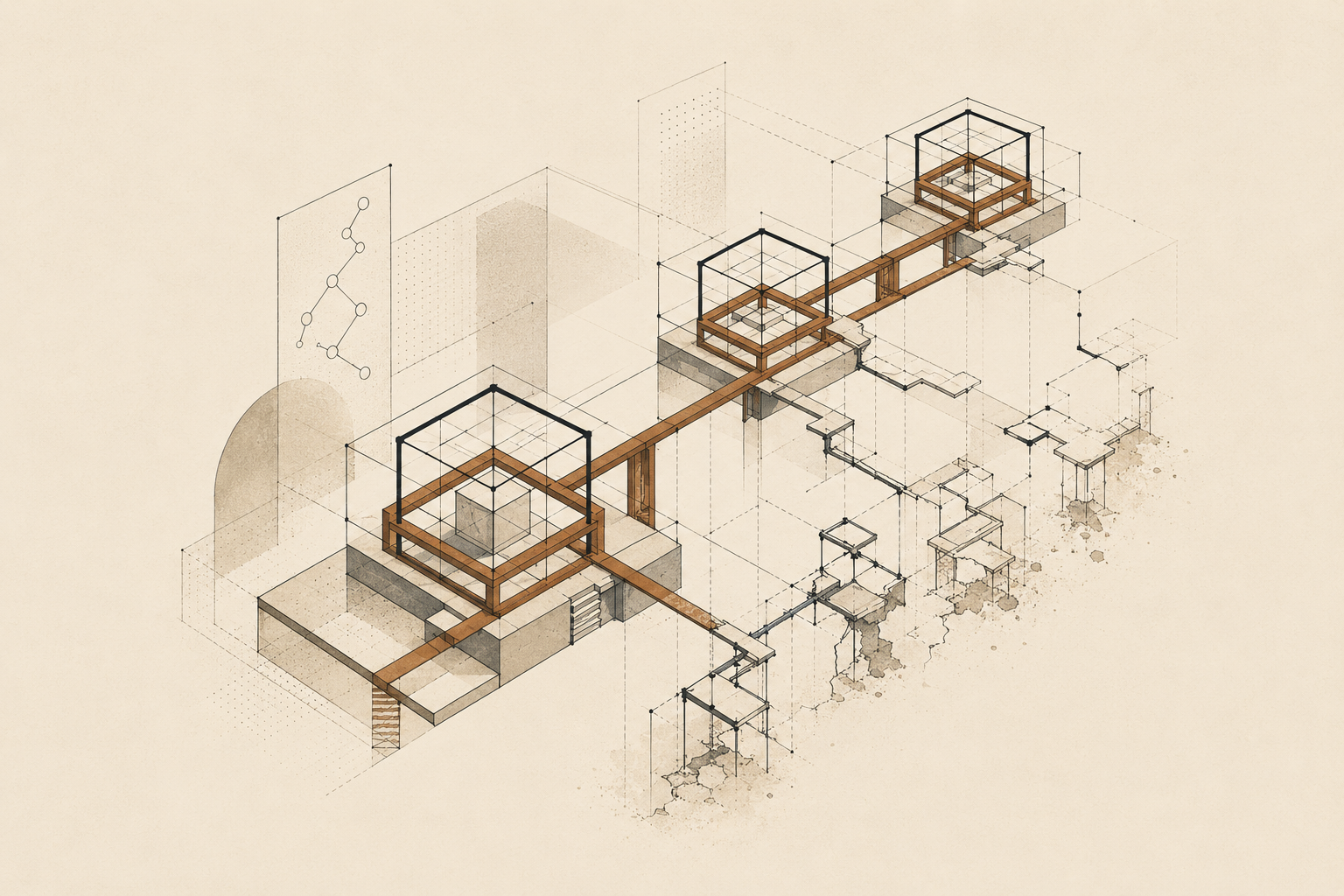
Generational Wealth Psychology and Inherited Operating Systems
Generational wealth psychology is the transmission of financial behavior, emotional patterns, risk assumptions, and survival responses across generations. Families do not only pass down assets. They also pass down expectations, fears, habits, definitions of safety, and beliefs about what the future will allow.
Most conversations about wealth begin too late. They focus on money after behavior has already been shaped. They talk about budgeting after urgency has already been normalized. They talk about investing after risk has already been coded as danger. As a result, the deeper operating system remains untouched.
That is incomplete analysis.
Economic behavior is not random. It is conditioned.
A household shaped by generations of instability may teach caution without naming it. A family that has watched land disappear, jobs vanish, businesses collapse, or institutions betray them may pass down protective behavior as wisdom. Sometimes that protection is useful. However, sometimes it becomes a cage.
By contrast, families with stability often transmit patience as normal. They teach delayed gratification without calling it strategy. They normalize investing, property, estate planning, professional networks, and calculated risk because those systems feel familiar.
That familiarity is capital.
- Inherited Operating Systems
- Scarcity Changes Time Horizons
- Financial Stress and Cognitive Load
- Why Survival Thinking Compounds
- Risk Tolerance Is Emotional Infrastructure
- Wealth and Psychological Safety
- Emotional Regulation and Financial Decisions
- Family Memory and Economic Behavior
- Instability as Normalization
- Delayed Gratification and Trust in the Future
- Consumption as Emotional Signaling
- Why Wealthy Families Think Longer
- Inherited Discipline vs. Inherited Chaos
- Building New Behavioral Systems
- Psychological Stability as Economic Infrastructure
- Frequently Asked Questions
Inherited Operating Systems
An operating system is the set of assumptions that tells a person how to move through life. It shapes how they respond to pressure, opportunity, uncertainty, success, conflict, debt, ownership, and delay.
One family may transmit calm around money. Another may transmit panic. Some families transmit disciplined planning. Others transmit avoidance. In one home, institutions may be seen as tools to navigate. In another, they may be seen only as threats to survive.
These patterns often begin before a child understands economics. A child watches how adults respond when a bill arrives. They notice whether money conversations create planning or conflict. They observe whether success is celebrated, envied, feared, or hidden.
Over time, that exposure becomes a behavioral script.
Later, when the person receives financial advice, they do not hear it neutrally. They hear it through inherited emotional infrastructure.
- Save money.
- Invest early.
- Buy property.
- Start a business.
- Create a will.
- Hold assets long term.
Those instructions may sound simple. However, each one lands differently depending on what a person has been trained to expect from money, risk, family, and institutions.
This is why Why Starting Capital Changes Everything belongs directly beside this article. Starting capital changes the external conditions. Generational wealth psychology explains the internal patterns formed by those conditions.
Together, they show that wealth is never only arithmetic. It is also behavior under pressure.
Scarcity Changes Time Horizons
Scarcity compresses decision-making into the immediate present.
That sentence is the center of this article.
When people are under constant financial pressure, the future becomes harder to trust. Long-term planning may feel abstract because the present is already demanding payment.
This does not mean people under pressure are irrational. Instead, it means pressure changes the decision environment.
A person with savings can ask, “What is the best long-term move?”
A person without margin may have to ask, “What keeps everything from falling apart this week?”
Those are not the same question.
Scarcity turns time into a threat. Bills arrive before plans mature. Emergencies interrupt discipline. Short-term relief becomes more valuable because there may be no cushion to absorb delay.
As a result, people experiencing scarcity often make decisions that outsiders later criticize. The outsider evaluates the decision from stability. The person inside scarcity made the decision from urgency.
Urgency narrows the field. It also trains the nervous system.
After enough exposure to instability, immediacy can begin to feel normal. Planning far ahead may feel unrealistic, even when conditions improve. The body may still expect disruption.
That is how scarcity becomes psychological.
Scarcity does not only reduce money. It also reduces the emotional ability to believe that time will cooperate.
Financial Stress and Cognitive Load
Financial stress consumes bandwidth.
People often underestimate this because they treat money problems as isolated events. They are not isolated. They travel through sleep, relationships, concentration, health, patience, and judgment.
When financial pressure becomes constant, the mind has to track too many open loops: rent, utilities, food, transportation, debt, medical needs, family obligations, and emergencies.
That ongoing load weakens decision quality. It can make a person more reactive, more exhausted, and more vulnerable to short-term choices that carry long-term costs.
This matters because wealth-building advice often assumes mental space.
- Review your budget.
- Compare investment options.
- Negotiate salary.
- Research mortgage terms.
- Start a side business.
- Create an estate plan.
All of that requires cognitive room. It requires time to think, emotional steadiness, and enough stability to evaluate tradeoffs.
Financial stress attacks that room.
Therefore, psychological stability is not separate from economic strategy. It is part of the strategy.
A person who cannot think clearly under pressure cannot build consistently under pressure. The goal is not to shame that person. The goal is to reduce pressure, build systems, and restore decision capacity.
Why Survival Thinking Compounds
Survival thinking is useful in danger. It becomes expensive when it becomes permanent.
Families that have lived through instability often develop protective habits. They may avoid risk. They may distrust institutions. They may hold cash tightly. They may discourage entrepreneurship. They may treat debt as danger, investing as gambling, or ambition as exposure.
Some of that caution has historical logic.
Black families have faced discrimination in housing, lending, employment, land ownership, valuation, and legal systems. Those experiences created legitimate memory. Ignoring that memory would be foolish.
However, survival patterns can become limiting when conditions change but the inherited response does not.
A family may teach children to avoid financial systems because financial systems once harmed them. Yet avoiding every system can block access to mortgages, retirement accounts, business credit, and investment growth.
Another family may teach children to never trust outsiders. That caution may protect against exploitation. Still, wealth often requires legal counsel, financial advisors, business partners, mentors, and institutional navigation.
Meanwhile, visible consumption may become proof of survival. A family may teach children to keep money visible because visible success feels like proof of arrival. Yet long-term wealth often grows quietly in assets nobody applauds.
Survival thinking protects against one category of harm while sometimes creating another.
That is the tension.
The task is not to mock survival behavior. The task is to audit whether it still serves the future.
Risk Tolerance Is Emotional Infrastructure
Risk tolerance is not only a financial category. It is emotional infrastructure.
People with stable foundations can often tolerate uncertainty because their lives do not collapse immediately when a decision takes time to mature. They can invest through market swings. They can build a business before it becomes profitable. They can take a strategic career risk. They can wait.
Waiting is easier when waiting does not feel dangerous.
By contrast, people raised around instability may experience uncertainty as threat. A delayed return may feel like loss. A temporary decline may feel like collapse. A business setback may feel like proof that the attempt was foolish.
This is why Why Stocks Matter for Black Wealth cannot be separated from psychology. Investing requires more than money. It requires the emotional capacity to tolerate volatility without panic.
That capacity is not evenly distributed.
Families with investment experience often normalize market movement. Families without that exposure may interpret volatility through fear. That fear is understandable. Still, it can keep households away from assets that compound over time.
The same applies to business ownership.
Business Ownership Is a Wealth Multiplier explains the power of scalable ownership. Yet business ownership requires patience, risk management, legal structure, and emotional discipline.
A person who has only seen businesses fail may inherit fear around enterprise. By contrast, a person who has watched businesses survive slow seasons may inherit confidence.
Risk tolerance is taught by environment. Then it gets mistaken for personality.
Wealth and Psychological Safety
Wealth creates psychological safety when it reduces the fear of immediate collapse.
That safety changes behavior.
A person with reserves can pause before reacting. They can negotiate from strength. They can leave harmful conditions sooner. They can say no. They can recover after mistakes.
That is structural power.
Psychological safety extends the distance between pressure and reaction. Better decisions happen inside that distance.
Without that space, people often operate from survival reflex. They may accept bad terms, remain in unstable situations, sell assets too soon, avoid necessary risks, or make emotional purchases to feel momentarily secure.
Again, this is not a character indictment. It is a systems diagnosis.
Wealth that creates margin changes the nervous system. It gives the mind room to plan. It gives the household room to absorb. It gives the family room to teach without panic.
This is why estate planning matters. Estate Planning Is Infrastructure explains that wealth must survive transition. If families do not build legal continuity, psychological safety can disappear when the person holding the structure dies.
Safety must be designed. Otherwise, it leaves with the individual who carried it.
Emotional Regulation and Financial Decisions
Emotional regulation is a financial skill.
Many poor financial decisions begin as emotional attempts to manage discomfort.
- Stress spending.
- Status purchases.
- Fear-based selling.
- Avoiding bills.
- Overgiving to prove loyalty.
- Undercharging out of insecurity.
- Ignoring paperwork because it creates anxiety.
Financial behavior is often emotional behavior wearing economic clothing.
That is why generational wealth psychology matters. If a family transmits poor emotional regulation, it may also transmit unstable financial behavior.
A household where anger drives spending may teach children that money is a weapon. A household where shame prevents financial conversations may teach silence. A household where fear blocks planning may teach avoidance. Meanwhile, a household where discipline is modeled calmly may teach structure.
Financial literacy without emotional regulation is incomplete.
A person can know the right move and still fail to execute it because their nervous system is trained for avoidance, urgency, or approval-seeking.
This is where discipline becomes deeper than routine.
Discipline is the ability to maintain standards when emotion is loud.
Family Memory and Economic Behavior
Family memory shapes economic behavior long before formal education does.
Stories matter.
A child may hear about a relative who lost land, a business that failed, a bank that denied credit, an inheritance that created conflict, or a family member who was betrayed by a partner. These stories can become warnings that shape future decisions.
Some warnings are useful. Others become overgeneralized.
A family that lost property through unclear title may become suspicious of shared ownership. A family that saw a business fail may discourage entrepreneurship entirely. A family that watched siblings fight over inheritance may avoid estate conversations because the topic feels dangerous.
That avoidance creates new risk.
This connects directly to Heirs’ Property and Black Land Loss. Families can lose assets when emotional memory replaces legal structure. Everyone may know what the family intended, but the system responds to documents, title, signatures, and enforceable authority.
Memory matters. However, memory is not governance.
Families need to turn memory into structure if they want assets to survive.
Instability as Normalization
One of the most damaging effects of repeated instability is normalization.
When chaos is constant, people stop seeing it as a problem. They begin treating it as the natural weather of life.
- Late bills become normal.
- Emergency borrowing becomes normal.
- Family conflict over money becomes normal.
- Unclear ownership becomes normal.
- No estate plan becomes normal.
- No savings becomes normal.
- No long-term plan becomes normal.
Once instability becomes normal, stability can feel unfamiliar.
That creates a strange problem.
Some people sabotage structure because structure feels foreign. They are more accustomed to urgency than order. They know how to survive a crisis, but they do not yet know how to maintain calm.
This is not destiny. It is conditioning.
Conditioning can be changed through repeated systems.
Budgets. Calendars. Estate plans. Automatic transfers. Family meetings. Written agreements. Clear roles. Emergency reserves. Quiet discipline.
These tools may look boring. That is the point.
Boring systems often heal chaotic patterns.
Delayed Gratification and Trust in the Future
Delayed gratification requires trust in the future.
That trust is not evenly distributed.
People who have watched plans collapse may struggle to delay reward because the future has not felt reliable. If tomorrow is uncertain, taking comfort today can feel rational.
This is why lectures about delayed gratification often fail. They treat delay as purely moral when it is also psychological.
A person must believe that sacrifice will matter later.
That belief grows more easily in stable environments.
Families with assets often teach delay through lived example. A child sees saving produce a down payment. They see investing create options. They see insurance protect the household. They see planning reduce panic. Delay becomes credible.
In unstable environments, delay may look like deprivation without payoff.
That changes behavior.
The goal is to rebuild trust in the future through small proof.
- Save a little and watch it hold.
- Plan one month and watch the pressure drop.
- Invest consistently and watch ownership accumulate.
- Create one legal document and watch confusion reduce.
Future trust is built through repeated evidence.
Consumption as Emotional Signaling
Consumption is not always about materialism. Sometimes consumption is emotional signaling.
People buy to communicate arrival, competence, belonging, relief, or dignity. When a family has experienced exclusion, visible success can feel like proof that the exclusion did not win.
That impulse is human.
However, it can become expensive when the signal replaces the structure.
- A car can signal success while weakening savings.
- A lifestyle can signal stability while hiding debt.
- A celebration can signal progress while delaying investment.
- A brand can signal ownership while no actual asset exists beneath it.
The critique is not that people should never enjoy life. That is joyless and unrealistic.
The critique is that consumption should not become a substitute for infrastructure.
Real wealth does not always announce itself.
Often it looks like unglamorous systems: retirement contributions, insurance, emergency reserves, estate documents, business records, and boring consistency.
The visible signal may satisfy the moment. The hidden structure protects the future.
Why Wealthy Families Think Longer
Wealth often extends psychological time horizons.
Families with assets are more likely to think in decades because they have something to preserve, transfer, and compound. They discuss college funds, trusts, property, business succession, tax strategy, and inheritance because the future is treated as a real planning environment.
That long horizon changes the household culture.
Children raised inside it learn that decisions echo. They learn that money can have assignments. They learn that property needs management. They learn that legal documents matter. They learn that ownership is not an event. It is a system.
By contrast, families under constant pressure may think in shorter cycles because the present is unresolved.
Again, this is structural.
Long-term thinking is easier when short-term survival is stable.
This is why Homeownership Alone Cannot Close the Gap matters. A home can create stability, but it cannot carry the entire burden of wealth psychology alone.
If the household has no liquidity, no legal plan, no diversified assets, and no emotional discipline, the home may become both asset and pressure point.
Wealthy families think longer because their systems allow longer thinking.
The goal is to build those systems deliberately.
Inherited Discipline vs. Inherited Chaos
Some families inherit discipline. Others inherit chaos.
That statement sounds harsh, but pretending otherwise helps no one.
Inherited discipline looks like predictable routines, honest money conversations, clear household roles, calm correction, documented plans, and respect for time.
Inherited chaos looks like secrecy, emotional volatility, last-minute decisions, unclear obligations, unpaid bills, conflict avoidance, and constant repair.
Children learn both.
They learn what adults normalize. They learn how problems are handled. They learn whether planning is respected or mocked. They learn whether money is discussed with maturity or hidden until crisis.
The good news is that inheritance is not destiny.
A person can interrupt inherited chaos by installing new systems.
However, interruption requires honesty.
You cannot repair what you keep romanticizing.
If a pattern is unstable, name it. If a habit is expensive, audit it. If a family norm keeps producing the same damage, stop calling it tradition.
Some traditions are just dysfunction with repetition.
The future deserves better than inherited disorder.
Building New Behavioral Systems
Generational wealth psychology can be changed, but not through inspiration alone.
It changes through systems repeated over time.
The first system is language.
Families need clearer words for money, risk, ownership, debt, investment, insurance, wills, trusts, and responsibility. What cannot be named usually cannot be managed.
The second system is rhythm.
Money conversations should not happen only during crisis. Families need scheduled check-ins, financial reviews, estate updates, and planning conversations before emergencies force them.
The third system is documentation.
Verbal agreements are weak infrastructure. Written agreements protect relationships because expectations become visible.
The fourth system is exposure.
Children and younger relatives need to see responsible financial behavior before adulthood. They should understand saving, investing, taxes, business, property, and legal continuity in age-appropriate ways.
The fifth system is emotional regulation.
Families must learn to discuss money without panic, shame, performance, or blame. Calm conversation is infrastructure.
The sixth system is coordinated ownership.
Group Economics Without Fantasy Thinking makes the point clearly: shared economics only work when governance is stronger than emotion.
Behavioral systems must be designed. They do not appear because a family wants better outcomes.
Psychological Stability as Economic Infrastructure
Psychological stability is economic infrastructure.
A stable mind makes better long-term decisions. A regulated household manages conflict more effectively. A disciplined family can plan beyond the current emotional weather.
This does not mean emotions disappear.
It means emotions stop driving the operating system.
Families that build psychological stability create better conditions for wealth preservation. They can discuss inheritance without collapse. They can evaluate business risk without panic. They can hold investments without impulsive reaction. They can navigate property decisions with clarity. They can teach younger generations without transferring fear as the main inheritance.
That is the standard.
Not perfection. Stability.
Generational wealth psychology is not about pretending history did not harm people. It is about refusing to let inherited pressure govern every future decision.
The work is to turn survival memory into structural wisdom.
That requires discipline, legal continuity, ownership literacy, emotional regulation, and family systems strong enough to hold weight.
The family that learns this becomes more than a household. It becomes infrastructure.
Frequently Asked Questions
What is generational wealth psychology?
Generational wealth psychology is the way financial behavior, emotional patterns, risk tolerance, scarcity responses, and beliefs about money are transmitted across families and generations.
Why does scarcity affect wealth building?
Scarcity compresses decision-making into the present. It makes long-term planning harder because immediate pressure consumes attention, energy, and emotional bandwidth.
Is generational wealth psychology the same as mindset?
No. Mindset language is often too shallow. Generational wealth psychology looks at behavior, family memory, emotional conditioning, economic pressure, and inherited operating systems.
How do families change financial behavior patterns?
Families change patterns by creating systems: scheduled money conversations, written plans, emergency reserves, estate documents, investment habits, and calmer communication around financial decisions.
Why does emotional regulation matter for money?
Emotional regulation matters because many financial decisions are made under stress, fear, shame, urgency, or status pressure. Calm systems improve decision quality.
What do families transfer besides money?
Families transfer habits, beliefs, fears, routines, expectations, networks, trust levels, emotional responses, and assumptions about what the future can hold.
How to Build Generational Wealth as a Black Family
Why Starting Capital Changes Everything
Why Stocks Matter for Black Wealth
Group Economics Without Fantasy Thinking
Business Ownership Is a Wealth Multiplier
Estate Planning Is Infrastructure
Homeownership Alone Cannot Close the Gap
Federal Reserve: Survey of Consumer Finances
Pew Research Center
Brookings Institution
Urban Institute
American Psychological Association
The strongest inheritance is not money alone. It is a stable operating system that teaches the next generation how to think, decide, recover, and build.

This article is part of the broader Generational Wealth Architecture framework from Groundwork Daily. The framework examines how ownership, investing, estate planning, governance, protection systems, succession, and long-term family continuity work together to build durable intergenerational stability. Explore the complete architecture to understand how each layer connects into a larger wealth preservation system.