
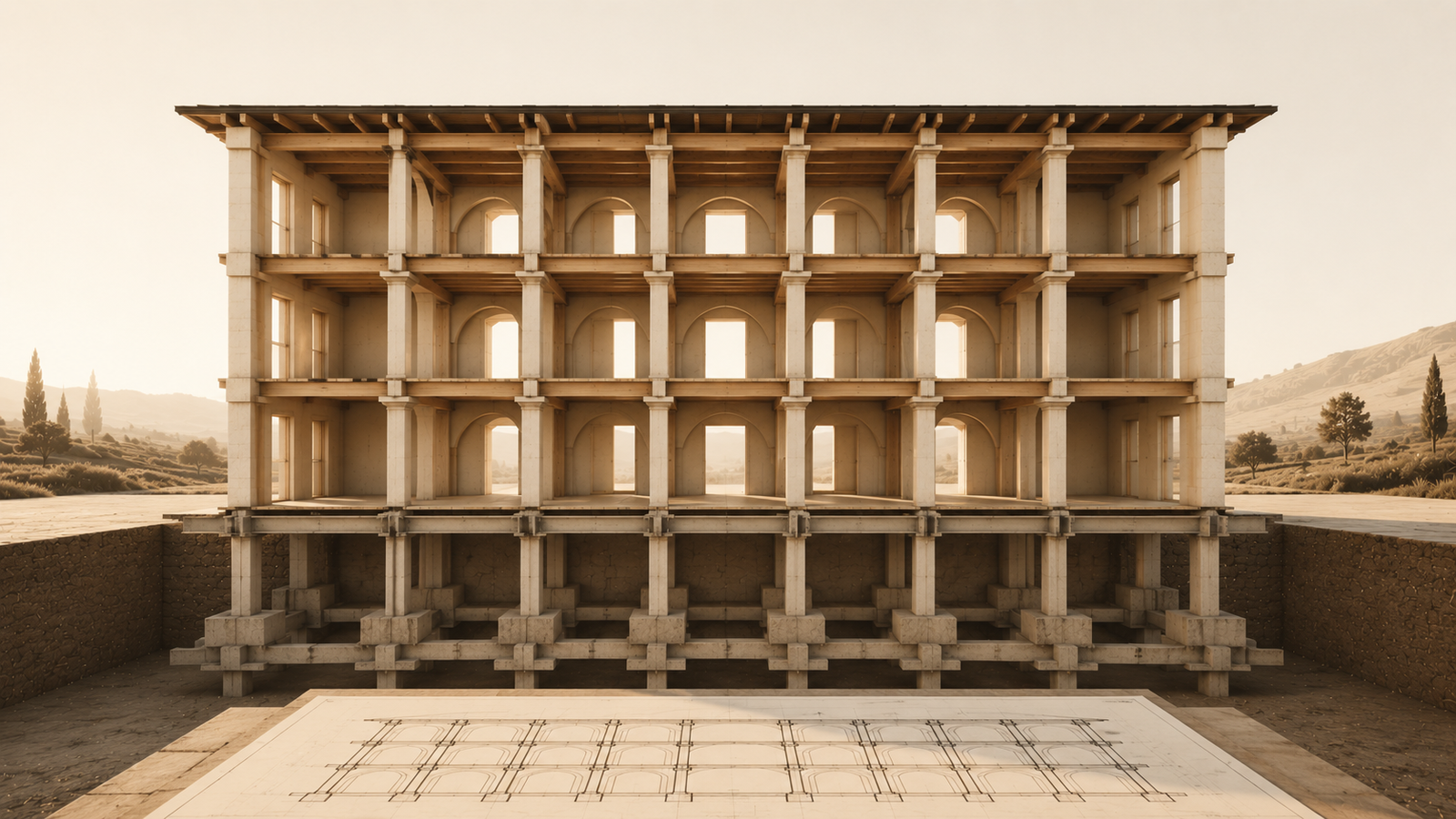
Legacy in Motion · The Architecture of Family Stability · Part 6
Children rarely remember long lectures. They remember routines, emotional consistency, and the repeated behaviors that quietly teach them what becomes normal.
Children rarely remember every speech.
They remember the routine.
They remember whether adults showed up. They remember the tone of correction. They remember what happened after mistakes. They remember whether promises held. They remember whether the house became calm again after conflict.
That is the discipline children remember.
It is not only punishment. It is not only rules. It is not only consequences after someone gets something wrong. Real discipline is the repeated structure that teaches children how to live before crisis requires correction.
This article continues the architecture built across the earlier Legacy in Motion essays. The Architecture of Family Stability established the family as a designed system. Children Inherit Normal showed how repetition becomes inheritance. Love Needs Structure explained why feeling needs durable support. Every Household Has a Constitution named household governance. Then Family Meetings Change Everything showed how governance becomes practice.
Now the focus turns to formation.
What do children actually remember?
More often than not, they remember what adults repeated.
The Discipline Children Remember
Discipline is one of the most misunderstood words in family life.
Some people hear discipline and think punishment. Others hear discipline and think control. Some imagine strict rules, harsh consequences, raised voices, and children who obey out of fear.
That is too narrow.
Discipline, at its best, is formation. It is the structure that helps a child become capable, responsible, emotionally steady, and prepared for life outside the home.
Discipline Is Formation
A child is not formed by one correction. A child is formed by repeated patterns.
They are formed by bedtime rhythms, morning routines, chores, apologies, meal practices, money habits, emotional tone, and the way adults handle disappointment.
Therefore, discipline must be bigger than what happens after a child misbehaves. It must include what happens before misbehavior becomes a pattern.
Discipline Gives Shape to Love
Love without discipline may feel warm, but it can become unstable. Discipline without love may produce compliance, but it rarely produces wisdom.
Children need both. They need affection and structure. They need tenderness and correction. They need freedom and boundaries. They need adults who can say yes with joy and no with steadiness.
In other words, discipline gives love a shape children can trust.
Lectures Do Not Last
Adults often overestimate lectures.
That is not because words do not matter. Words matter deeply. Children need explanation, encouragement, instruction, correction, and wisdom. However, words become weak when they are not supported by example.
A child who hears a lecture about respect but watches adults speak with contempt receives a mixed lesson. A child who hears a lecture about responsibility but watches adults avoid commitments receives another mixed lesson. Eventually, the repeated example outruns the spoken lesson.
Children Remember Patterns
Children may forget the exact language of a lecture. Still, they remember the pattern around it.
Did the adult stay calm? Did the adult explain? Did the adult listen? Did the adult correct the behavior without attacking the child? Did the adult follow through later?
The speech may fade. The pattern remains.
Words Need Witness
The strongest instruction is witnessed instruction.
If adults teach patience, children need to see patience practiced. If adults teach honesty, children need to see adults tell the truth when the truth costs something. If adults teach self-control, children need to see adults regulate themselves under stress.
Without witness, instruction becomes performance.
The Groundwork
A child does not only ask, “What did the adult say?” A child also learns to ask, “What did the adult do when the lesson became inconvenient?”
Consistency Teaches Security
Parenting consistency does not mean every day looks the same.
It does not mean adults never get tired. It does not mean the household becomes rigid. Instead, consistency means children can trust the basic shape of the home.
They know what matters. They know what is expected. They know adults will return after conflict. They know promises mean something. They know correction does not depend entirely on mood.
Predictability Lowers Anxiety
Children need predictability.
Predictability does not remove every problem. However, it helps children feel oriented. When expectations are clear, children spend less energy trying to read the room.
In unpredictable homes, children often become skilled observers. That skill may look like maturity, but it can also be vigilance. They learn to monitor tone, timing, facial expression, and adult stress.
Consistency gives children permission to be children.
Consistency Is Not Perfection
Some adults avoid the word consistency because they know they cannot be perfect.
Good. Perfection is not the goal.
Consistency means returning to the standard after disruption. It means apologizing when the adult gets it wrong. It means repairing the rhythm after a hard week. It means not abandoning the family structure just because one day went poorly.
Children do not need flawless adults. They need reliable adults who can correct themselves.
Routines Become Memory
Routines are one of the quiet engines of child development.
They are not glamorous. They rarely become family legends. Yet routines shape what children expect from the world.
A morning routine teaches preparation. A bedtime routine teaches closure. A meal routine teaches belonging. A chore routine teaches contribution. A reading routine teaches attention. A prayer, reflection, or gratitude routine teaches orientation.
Small Repetitions Build Trust
A child may not appreciate a routine in the moment.
They may resist bedtime. They may complain about chores. They may not understand why the family gathers, plans, cleans, saves, reads, or checks in.
Still, repetition is doing quiet work.
Over time, small routines tell children that life can have order. They teach that the family does not have to invent itself every day. They create a dependable rhythm the child can carry forward.
Routines Should Serve People
Routines are tools, not idols.
A routine that serves the family should be protected. A routine that no longer fits the family should be reviewed. That is why Family Meetings Change Everything matters. Regular communication gives the household a place to ask whether its routines are still working.
Stable families do not worship routines. They use routines to support people.
Routines Children Remember
Morning: How the home begins the day.
Meals: Whether connection has a regular place.
Bedtime: How the family closes the day.
Chores: Whether contribution is expected.
Repair: Whether conflict is addressed or ignored.
Emotional Regulation
Children remember emotional tone.
They remember whether adults could stay steady. They remember whether correction came with rage. They remember whether disappointment became humiliation. They remember whether adults could pause before responding.
Emotional regulation is one of the most powerful forms of discipline a child can witness.
Adults Set the Weather
Adults do not control every feeling in a home. However, adults strongly influence the emotional weather.
A dysregulated adult can turn a small issue into a household storm. A regulated adult can turn a difficult moment into a teaching opportunity.
This does not mean adults must become emotionless. Children need to see real feeling. They also need to see adults handle real feeling with maturity.
Children Learn How to Handle Pressure
A child learns discipline by watching how adults handle pressure.
What happens when plans change? What happens when money is tight? What happens when someone is late? What happens when a child makes a mistake? What happens when an adult is embarrassed?
These moments teach more than speeches about self-control ever could.
If adults want children to learn self-regulation, adults must practice visible regulation themselves.
Repeated Examples
Children are shaped by repeated examples.
This is the core logic of Children Inherit Normal. A child’s definition of normal comes from repeated exposure.
That exposure can form discipline or disorder. It can teach patience or panic. It can teach service or entitlement. It can teach accountability or blame.
Example Outranks Intention
Adults may intend to teach one thing while modeling another.
A parent may intend to teach kindness but repeatedly model sarcasm. A caregiver may intend to teach responsibility but repeatedly rescue a child from every consequence. A family may intend to teach faith, service, or education but never build those values into daily rhythm.
Intention matters. However, example is what children can study.
Children Notice Adult Defaults
Defaults are the behaviors adults return to under pressure.
Do adults blame? Do they pause? Do they pray? Do they plan? Do they shut down? Do they ask for help? Do they repair?
Children notice these defaults. Later, they may repeat them without knowing where they learned them.
Correction Without Humiliation
Correction is necessary.
Children need guidance. They need boundaries. They need adults who will tell them the truth about behavior. A home with no correction does not create freedom. It creates confusion.
However, correction should not require humiliation.
Humiliation Distorts the Lesson
When a child is humiliated, the lesson often changes.
Instead of learning responsibility, the child learns shame. Instead of learning repair, the child learns fear. Instead of learning judgment, the child learns concealment.
The adult may believe the correction worked because the child became quiet. Yet quiet is not always growth. Sometimes it is protection.
Correction Should Preserve Dignity
Strong correction can still preserve dignity.
An adult can be firm without being cruel. An adult can name the behavior without attacking the child’s identity. An adult can create consequences without making the child feel disposable.
The point is not to weaken correction. The point is to make correction wise enough to build capacity.
A Better Correction Pattern
Name the behavior: What happened?
Name the impact: What did it affect?
Name the standard: What do we practice in this family?
Name the repair: What needs to be corrected?
Name the next step: What should happen differently?
Discipline vs. Punishment
Punishment and discipline are not the same.
Punishment often asks, “How do we make the child pay for what happened?” Discipline asks, “How do we help the child grow from what happened?”
Consequences may still be necessary. However, consequences should serve formation.
Punishment Looks Backward
Punishment usually focuses on the offense.
It may stop behavior in the moment. Yet stopping behavior is not the same as forming wisdom. A child can become afraid of being caught without becoming responsible.
That is a weak outcome.
Discipline Looks Forward
Discipline looks forward.
It asks what kind of person this child is becoming. It asks what skill is missing. It asks what structure would help. It asks what repair is needed. It asks whether the child understands the standard.
That is harder than punishment. It requires patience, consistency, and adult self-control.
Still, it creates stronger outcomes because it aims at maturity, not mere compliance.
Family Rhythm
Discipline becomes easier when the household has rhythm.
Without rhythm, every expectation feels like a new demand. With rhythm, expectations become part of the family’s normal operating system.
This is why household rhythm is not soft. It is structural.
Rhythm Reduces Repeated Conflict
Many families argue about the same things every week because the system is unclear.
Homework becomes a fight because the routine is unclear. Chores become a fight because ownership is unclear. Bedtime becomes a fight because the sequence is inconsistent. Money becomes a fight because planning happens too late.
Rhythm does not solve every issue. However, it reduces the number of issues that must be renegotiated every day.
Rhythm Turns Standards Into Practice
Every Household Has a Constitution explained why families need shared standards. Yet standards alone are not enough.
Standards need practice.
Rhythm is how the family practices what it claims to value. If learning matters, the rhythm should protect study. If health matters, the rhythm should protect rest and movement. If service matters, the rhythm should create opportunities to serve.
The Discipline Framework
The discipline children remember can be designed.
That does not mean adults can control every outcome. They cannot. Children are people, not projects. Still, families can design the environment where maturity has a better chance to grow.
Use a Simple Framework
A useful discipline framework should be simple enough to remember and repeat.
The Discipline Children Remember Framework
1. Model: What behavior are adults practicing?
2. Rhythm: What routine supports the behavior?
3. Standard: What does the family expect?
4. Correction: How is the behavior addressed?
5. Repair: How does the child return after failure?
6. Repetition: How is the lesson practiced again?
Start With One Pattern
Families should not try to redesign everything at once.
That creates pressure and usually fails. Instead, start with one pattern. Choose bedtime, morning rhythm, chores, homework, tone, money conversations, or repair.
Then ask what the child is currently learning from the pattern.
If that lesson is not the one the family wants to pass forward, redesign the pattern.
What Children Carry Forward
Children eventually leave the house with more than memories.
They leave with patterns.
They carry ideas about conflict, money, rest, responsibility, faith, service, learning, affection, authority, and repair. Some of those ideas were spoken. Many were absorbed through repetition.
The Goal Is Capability
The goal of discipline is not to create children who simply obey inside the house.
The goal is to help form adults who can govern themselves outside the house.
That is the bridge to the next article, Raising Adults, Not Just Children. Parenting is not only about managing childhood. It is about preparing people for adulthood.
Discipline Becomes Legacy
Discipline becomes legacy when children carry healthy patterns forward.
A child who learned repair may become an adult who can apologize. A child who learned routine may become an adult who can organize life. A child who learned emotional regulation may become an adult who does not make everyone else carry their chaos.
That is not guaranteed. Nothing in family life is guaranteed. However, repeated structure gives children something strong to remember.
Children rarely remember every lecture.
They remember what the home practiced.
They remember the rhythm.
They remember the tone.
They remember whether correction came with dignity.
They remember whether adults repaired what they broke.
That is the discipline children remember.
Further Groundwork
The Architecture of Family Stability
The cornerstone framework for understanding how strong families are intentionally built.
Children Inherit Normal
How repeated adult behavior becomes the first inheritance children receive.
Family Meetings Change Everything
How regular household communication turns values into practice.
Raising Adults, Not Just Children
Why the real goal of parenting is capability, judgment, and responsibility.
Receipts
Harvard Center on the Developing Child
Research on childhood development, resilience, stress, and the environments that shape children.
Child Trends
Research on child well-being, family stability, parenting practices, and youth outcomes.
American Psychological Association · Parenting
Resources on parenting, child development, emotional health, and family relationships.
CDC · Positive Parenting Tips
Developmental guidance for parents and caregivers across childhood stages.
Search Institute · Developmental Assets Framework
Research-based framework on support, boundaries, expectations, constructive use of time, and youth development.
Subscribe to Groundwork Daily
Groundwork Daily publishes practical frameworks for structure, responsibility, stewardship, and building what outlives you.
