

Economy & Ownership · Power & Price
Consumer power matters because spending can move demand. However, institution building determines whether that demand becomes ownership, infrastructure, resilience, and lasting economic capacity.
Consumer Action Is Immediate. Economic Structure Is Not.
The cash register gives people a place to act. A customer can spend here, refuse to spend there, support one business, avoid another, move money, and make a statement.
Those actions can matter because they create pressure, reward better treatment, and redirect attention toward stronger options.
Still, markets are not built by consumers alone.
Before the customer arrives, institutions, ownership structures, financing systems, property systems, supply chains, schools, banks, laws, contracts, and long-term infrastructure have already shaped the field.
Demand and Capacity Are Different
Buying differently can change demand.
By contrast, institution building changes capacity.
That difference is the point.
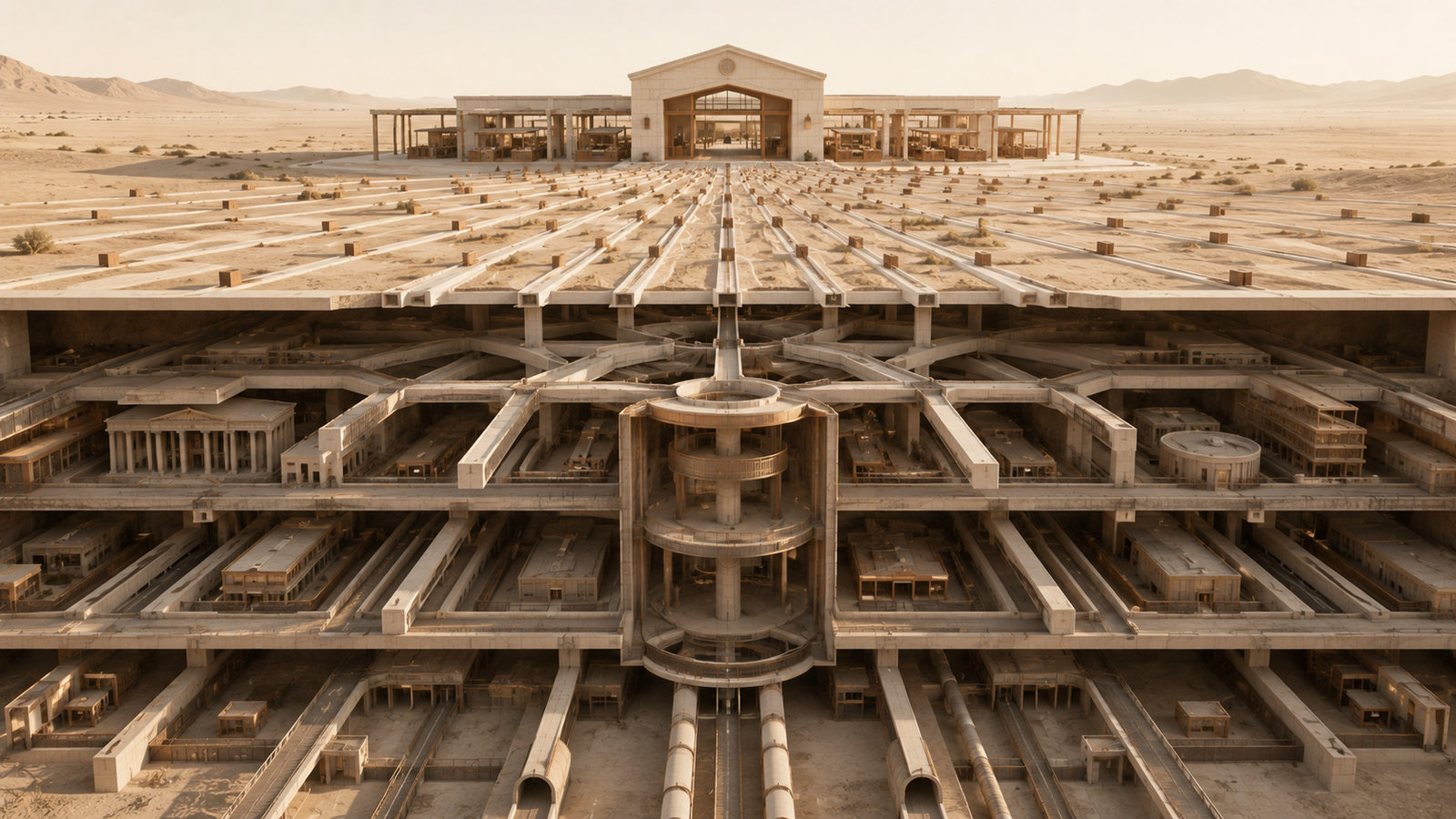
Consumer Power Has Limits
Consumer power is the ability of buyers to influence markets through spending, withholding, preference, and demand.
It is real because customers can help a business survive, reward better service, punish disrespect, create pressure, and make poor conduct expensive.
Yet consumer power is not ownership power, institutional power, or supply power.
That is where the public conversation gets sloppy.
Money Moving Is Not the Same as Power Moving
People often see money moving and assume power has moved too.
As Spending Is Not Ownership argued, spending creates a transaction, while ownership creates a position.
For example, a customer can stop shopping at a store, and that decision may hurt the store.
Even so, the customer may still lack a replacement business, supply chain, lender, property strategy, or institution capable of holding the opportunity created by that pressure.
Consequently, pressure without infrastructure fades.
That is operational reality.
Why Consumer Power Feels Immediate
Buying differently feels powerful because it gives people immediate action.
A person can choose a different store today, support another owner today, share a recommendation today, or refuse to spend with a business that mistreats them.
Immediate action matters because people need agency.
However, agency at the register should not be confused with deep power.
Markets Have Layers
The public usually sees the surface because that is where buying happens.
Beneath that surface, deeper layers often determine which choices are available before the consumer arrives.
Those layers include property ownership, financing, wholesale terms, brand control, distribution, leases, workforce training, and institutional support.
Therefore, consumers can influence demand while institutions shape the field.
When the field does not change, buying differently can become a loop instead of a strategy.
Consumer Behavior Can Create Momentum
Consumer behavior still matters. The opposite claim would be foolish.
A disciplined customer base can help new businesses gain traction, raise standards, make mistreatment costly, shift attention toward better options, and create early revenue for emerging owners.
Momentum helps.
However, momentum is not maturity.
A Business Needs More Than Attention
A new business still needs working capital, inventory, insurance, bookkeeping, payroll discipline, supplier relationships, legal structure, marketing, staffing, customer service, and a realistic path to margin.
Without those systems, attention can become pressure rather than strength.
For example, a crowd can celebrate a business into visibility before that business has the infrastructure to handle demand.
Growth Can Expose Weak Capacity
As orders rise, inventory may break and service can slip.
Meanwhile, cash flow may tighten just as reviews begin to turn.
Eventually, the same public that praised the business starts asking whether it was ready.
Therefore, consumer power must be paired with institution building.
Institution Building Changes the Game
Institution building is the disciplined work of creating durable systems that can hold responsibility over time.
It rarely goes viral, and it does not always feel urgent.
Nevertheless, it changes economic outcomes.
Institutions Create Containers for Responsibility
Institutions include banks, credit unions, schools, training pipelines, business associations, land trusts, merchant networks, cooperatives, nonprofit developers, local investment funds, churches with property discipline, community development organizations, and accountable civic structures.
Some institutions are formal. Others begin as disciplined networks.
In practice, the form matters less than the function.
Ask What the Structure Can Hold
A useful test is whether the structure can hold assets, train people, preserve memory, finance growth, enforce standards, and survive leadership change.
Moreover, a durable institution should be able to coordinate effort beyond one emotional moment.
If the answer is yes, the community is building power beyond the cash register.
Institutions Outlast Consumer Energy
Consumer energy rises and falls because people get tired, news cycles move, trends shift, emergencies interrupt, anger cools, budgets tighten, and convenience returns.
Institutions should outlast that cycle.
A strong institution does not depend on everyone feeling inspired every morning.
Instead, it depends on structure.
Structure Makes Repetition Possible
Roles are defined, records are kept, money is tracked, and standards are enforced.
At the same time, successors are trained, assets are protected, and decisions are documented.
That is why Discipline Before Dollars belongs in this conversation.
Money without discipline leaks. Likewise, energy without structure fades.
Consumer passion without institutional containers becomes a season rather than a system.
Institution building turns scattered effort into durable capacity.
Consumer Power Cannot Replace Ownership
A community can spend heavily and still own very little.
That is the hard truth at the center of this series.
The Power & Price Sequence
Spending Is Not Ownership established why spending does not automatically create wealth.
Next, Who Owns the Neighborhood? moved beneath the storefront to examine property control.
Then The Hidden Economy Behind Every Store followed the supply, financing, and distribution systems behind the transaction.
This article connects that pattern.
Consumer, Ownership, and Institutional Power Do Different Jobs
Moves Demand
Consumers can reward, punish, redirect spending, create attention, and generate market pressure.
Holds Position
Ownership determines who controls assets, receives appreciation, retains equity, and can transfer value.
Builds Capacity
Institutions coordinate capital, knowledge, standards, training, governance, and continuity.
Changes the Field
Durable systems influence which options exist before the customer ever reaches the register.
Power Accumulates at Different Layers
Consumer power can move dollars.
Ownership power, however, determines where those dollars settle.
Institutional power then determines whether ownership can be built, defended, financed, transferred, and expanded.
Without ownership, consumers remain dependent on someone else’s system.
Without institutions, future owners remain isolated.
That isolation is expensive.
Networks Increase Leverage
One business owner fighting alone has limited leverage.
By contrast, a network of owners with shared purchasing power, legal support, property strategy, training pipelines, and financing relationships has a stronger position.
Institution building therefore does not compete with consumer power.
It completes what consumer power cannot finish.
The Cash Register Is Downstream
By the time a customer pays, many consequential decisions have already been made.
The product was sourced, the price was shaped, the lease was signed, supplier terms were set, inventory was financed, and the property was either owned or rented.
Meanwhile, workers may have been trained well or left unprepared, while capital may have been available or absent.
Consumers enter near the end of that chain.
Downstream Influence Still Matters
That position does not make consumers irrelevant.
Instead, it means consumers are not the whole system.
Organize Upstream
A community seeking different economic outcomes cannot organize only around the final transaction.
Therefore, it must organize upstream.
Upstream is where supply, ownership, financing, education, policy, property, and infrastructure live.
That is where institution building belongs.
Community Investment Requires Containers
Community investment sounds simple until the money has to be managed.
Shared Capital Creates Shared Questions
Who holds the funds, decides priorities, evaluates risk, and tracks performance?
In addition, who protects against favoritism, reports results, and handles failure?
These are not side questions.
They are the work.
Governance Makes Shared Capital Possible
A community can say it wants to invest in itself.
Without trustworthy containers, however, that investment remains fragile.
People hesitate to contribute, leaders burn out, records get messy, and expectations become emotional.
Eventually, disputes become personal.
When that happens, the structure cracks because governance was never built.
Institution building creates the container that allows community investment to become more than goodwill.
Economic Resilience Needs Consumers and Institutions
Economic resilience is the ability to absorb pressure without collapsing.
Because resilience cannot be improvised during crisis, it must be built before pressure arrives.
Consumer Response and Institutional Preparation Are Different
This is where consumer power hits a wall.
Consumers can respond to a crisis, while institutions can prepare for one.
Preparation is less dramatic, but it is more valuable.
Durable Institutions Increase Options
A community with durable institutions has more options when conditions change.
For example, it may have lenders that understand local operators, property holders committed to long-term use, or training programs connected directly to jobs.
Similarly, business networks may be able to share information before failure spreads.
That is resilience.
Not noise. Not a campaign. Organized capacity.
Boycotts Create Pressure. They Do Not Build Replacement Systems.
A boycott can be a useful tool because it can expose dependence, create consequences, force public attention, and make businesses confront the cost of disrespect, neglect, or extraction.
However, a boycott is not a business plan.
That is where weak thinking creeps in.
Withdrawal Does Not Automatically Create an Alternative
Withholding money may create an opening.
Yet if replacement infrastructure does not exist, the movement can stall.
People still need food, products, services, transportation, care, banking, housing, and daily convenience.
Consequently, old options regain power through necessity when new options are not built.
Strategy Must Outgrow Reaction
None of this means people should accept poor treatment.
Instead, the strategy must mature beyond withdrawal alone.
Withdraw support where necessary.
Then build supply, ownership, finance, training, property control, and institutional accountability.
Otherwise, the system simply waits for exhaustion.
Institution Building Requires Boring Skills
Institution building requires skills that rarely trend.
Bookkeeping, governance, meeting discipline, procurement, lease review, insurance literacy, conflict resolution, succession planning, compliance, fund management, vendor evaluation, data tracking, and maintenance all belong to the work.
Ordinary Discipline Creates Extraordinary Durability
These skills do not sound revolutionary.
That is precisely why they work.
Strong systems are often built from ordinary disciplines repeated without applause.
They are not exciting in the beginning.
Over time, however, they create the conditions that make freedom practical.
This is why Structure Builds Freedom governs this article.
Institution building is structure applied to collective economic life.
The Problem With Lifestyle Economics
Consumer power can slide into lifestyle economics.
Lifestyle economics treats personal buying choices as the main measure of political, cultural, or community commitment.
That is too thin.
Structural Work Is Often Less Visible
A person may buy from the right places and still do nothing to build long-term capacity.
Another person may spend quietly while serving on a board, mentoring business owners, organizing a credit-union relationship, building a training program, or helping a local institution clean up its finances.
In structural terms, the second person may be doing more consequential work.
Rank the Tool Properly
The point is not to dismiss conscious spending.
Rather, the point is to rank it properly.
Buying is one tool.
Building is the larger assignment.
When the conversation stops at shopping habits, people can perform values without constructing anything durable.
Institutions Need Trust and Standards
Institutions do not deserve trust simply because they claim community purpose.
That is another weak assumption.
Instead, trust must be earned through standards.
Transparency Creates Credibility
A community institution should show how decisions are made, how money is handled, how leadership changes, how conflicts are resolved, and how outcomes are measured.
Without standards, an institution becomes a personality project.
Personality Is Not Continuity
Personality projects collapse when the personality leaves, fails, burns out, or loses public confidence.
Strong institutions reduce dependence on one person.
They distribute responsibility, make accountability normal, and allow people to disagree without destroying the structure.
Consequently, a movement and an institution perform different functions.
A movement can awaken people.
An institution can carry the work after the awakening ends.
What Institution Building Looks Like in Practice
Institution building does not have to begin with a massive organization.
In fact, it can begin smaller and become stronger through repetition.
Merchant Infrastructure
A merchant association can negotiate shared services, coordinate information, and strengthen purchasing leverage.
Capital Infrastructure
An investment circle or property fund can use legal structure, clear governance, and documented accountability.
Training Infrastructure
A school, church, nonprofit, or trade program can connect people to employers, entrepreneurship, finance, technology, and skilled work.
Ownership Infrastructure
Cooperatives, land trusts, property strategies, mentorship networks, and business support systems can make ownership less isolated.
Infrastructure Is the Product
These are not symbolic moves.
Instead, they build infrastructure.
The work is slower than a viral post.
Nevertheless, it lasts longer than outrage.
Consumer Power Needs a Next Step
Consumer power is most useful when it points toward a next step.
That next step should not be vague.
Convert Support Into Capacity
Support better businesses, then help those businesses survive.
Next, build shared infrastructure, create financing pathways, secure property, train operators, develop standards, protect trust, and measure outcomes.
After that, repeat what works and correct what does not.
This is harder than telling people where to shop.
That is exactly why it matters.
Easy actions can start a conversation.
Difficult systems change the future.
Follow the Argument Upstream
Consumer power makes more sense when it is placed inside the broader Power & Price ownership architecture.
Spending Is Not Ownership
Spending Is Not Ownership separates economic participation from durable economic position.
Who Owns the Neighborhood?
Who Owns the Neighborhood? examines the property structure beneath the visible community.
The Hidden Economy Behind Every Store
The Hidden Economy Behind Every Store follows the transaction upstream into supply, logistics, financing, and distribution.
The Business of Trust
The governed reading sequence continues with The Business of Trust: Why Some Communities Build Wealth Faster , which examines why reliable networks, standards, and trust reduce economic friction and increase institutional capacity.
The Cash Register Cannot Carry the Whole Structure
Consumer power has limits.
That does not make it meaningless.
Instead, consumer power must be placed inside a larger strategy.
Demand and Capacity Are Different Forms of Power
Consumers can create demand, while institutions create capacity.
Consumers can apply pressure, whereas institutions hold responsibility.
Consumers can reward better options.
Institutions, however, help make better options possible.
Consumers can move money.
Institutions can help turn that money into property, training, financing, ownership, resilience, and future control.
The Signal Has to Become Structure
The cash register can start the signal.
It cannot carry the whole structure.
Buying differently may be the first act.
Ultimately, building differently is the work that lasts.

Move From Consumer Signal to Institutional Capacity
Spending can signal what people value, while withholding spending can create pressure.
Neither action, however, creates the structure required to hold opportunity after the pressure works.
Build Upstream
Build financing pathways before businesses need emergency capital.
Likewise, build training before skill shortages become crises and governance before shared money creates conflict.
Property strategy should exist before displacement becomes inevitable, while succession planning should begin before exhaustion removes the person carrying the system.
Structure Converts Agency Into Capacity
Consumer action can begin the work.
Institution building, however, determines whether the work can continue when attention moves somewhere else.
Consumer power can move the signal. Institutions build what can hold the result.
Where This Article Sits
This article examines the boundary between individual market action and collective economic capacity.
Its governing principle is Structure Builds Freedom, while its governing condition is Capacity.
Structure Builds Freedom
Consumer choice creates agency. Structure then converts that agency into systems capable of holding capital, property, knowledge, responsibility, and opportunity beyond a single transaction.
Capacity
Capacity determines whether demand can actually be converted into supply, ownership, financing, training, governance, resilience, and continuity.
Explore the Full Groundwork Architecture
Core Principles: Structure Builds Freedom · Stillness Is Strategy · Discipline Is Emotional Governance · Structure Is Mercy · Discipline Before Dollars · Accountability Is a Form of Strength · Build What Holds
Conditions: Capacity · Discernment · Alignment · Pressure · Overload · Recovery · Clear
Browse the complete Core Principles architecture and Conditions architecture .

Meet the Builder
Samual Drayton
Samual Drayton examines the structure beneath economic activity: who owns the asset, who controls access, who sets the terms, who absorbs the cost, and where value remains after money moves.
Through Power & Price, he follows pricing, leverage, markets, institutions, supply systems, ownership, and capital retention to reveal the difference between economic activity and durable economic position.
Signature philosophy: Follow the money past the transaction. The structure tells you who controls the terms, who carries the cost, and where the value settles.
Sources & Further Reading
-
U.S. Small Business Administration · Business Capacity
U.S. Small Business Administration. Manage Your Business. Federal guidance covering operations, finances, employees, compliance, taxes, and business management. Review SBA business-management resources . -
U.S. Treasury · Community Finance
U.S. Department of the Treasury, Community Development Financial Institutions Fund. Federal programs supporting community-development finance, lending capacity, investment, and access to capital. Review the CDFI Fund . -
U.S. Economic Development Administration · Institutional Capacity
U.S. Economic Development Administration. Federal economic-development programs supporting regional capacity, business ecosystems, infrastructure, planning, and resilience. Review the Economic Development Administration . -
U.S. Census Bureau · Business Ownership
U.S. Census Bureau. Annual Business Survey. Federal data on employer businesses, ownership characteristics, receipts, payroll, employment, and business activity. Review the Annual Business Survey . -
Groundwork Daily · Consumer Position
Groundwork Daily. Spending Is Not Ownership. Companion Power & Price analysis separating consumer transactions from durable ownership position. Read the article . -
Groundwork Daily · Property
Groundwork Daily. Who Owns the Neighborhood? Companion analysis examining property ownership, control, leases, and where neighborhood value settles. Read the article . -
Groundwork Daily · Supply Systems
Groundwork Daily. The Hidden Economy Behind Every Store. Companion analysis examining suppliers, distribution, financing, logistics, and the upstream systems behind retail activity. Read the article . -
Groundwork Daily · Core Principle
Groundwork Daily. Structure Builds Freedom. Governing Core Principle for converting intention and agency into repeatable systems that expand practical freedom. Explore the Core Principle . -
Groundwork Daily · Capital Discipline
Groundwork Daily. Discipline Before Dollars. Core Principle examining why capital strengthens the system receiving it rather than replacing the need for sound structure. Explore the Core Principle . -
Groundwork Daily · Trust Infrastructure
Groundwork Daily. The Business of Trust: Why Some Communities Build Wealth Faster. Published Power & Price analysis examining how trust, standards, and reliable networks reduce friction and strengthen economic capacity. Read the article .