

Economy & Ownership · Ownership Economy
An ownership economy is not built by collecting assets and hoping they survive. Instead, it emerges when ownership, institutions, capital, production, trust, knowledge, and continuity reinforce one another strongly enough to hold value over time.
Ownership Is Not the Finish Line
A business opens, a family buys a house, or an entrepreneur finally gets the break people hoped would come.
Those wins matter. However, a handful of visible successes can make an economic system look stronger than the structure beneath it really is.
Visible Success Can Hide Structural Weakness
A thriving store may still operate in a building owned by someone else.
Meanwhile, a busy neighborhood may generate substantial commercial activity while most of its land and property remain externally controlled.
Families can also earn more money while holding little protection against the next emergency.
At the business level, a founder may build a valuable company without creating any plan for what happens when retirement, illness, exhaustion, or a leadership transition arrives.
The Harder Question Is Whether the Asset Can Hold
Ownership is not simply having your name on a deed, incorporation document, account, or contract.
More importantly, the asset has to survive the responsibility attached to it.
Can it be maintained and withstand pressure? Will it create value without consuming the owner? Can another capable person carry it later, and will the underlying structure survive a bad year?
That is the difference between acquiring an asset and building architecture around it.
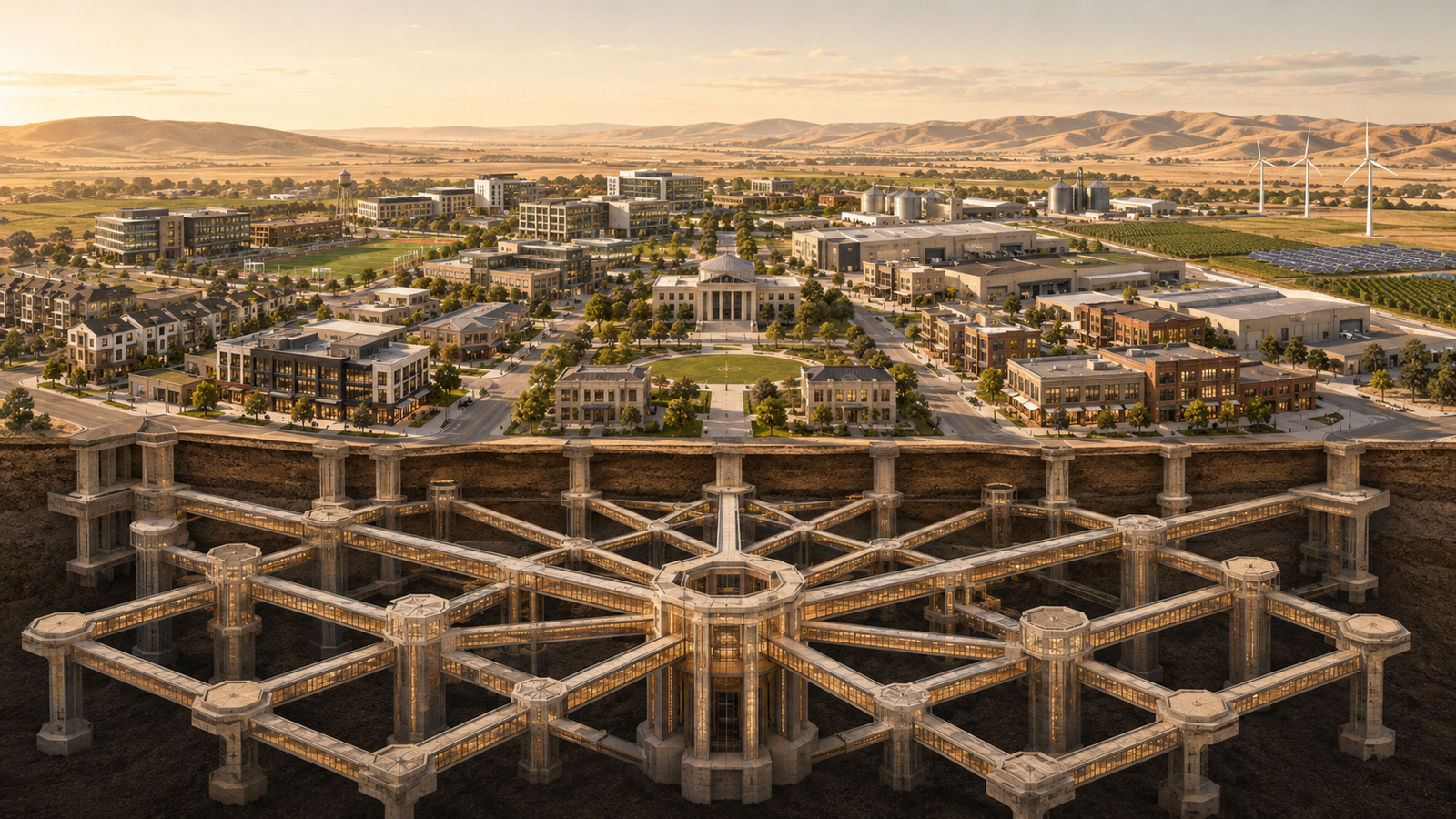
What an Ownership Economy Actually Means
An ownership economy is a system in which people and institutions hold meaningful stakes in the assets that shape their future.
Those stakes may include homes, land, commercial property, businesses, equipment, intellectual property, infrastructure, financial assets, software, contractual rights, and productive tools.
Ownership Changes Economic Position
Fundamentally, ownership matters because it changes what remains after the first exchange ends.
A worker receives wages for labor, while a customer receives a product or service.
By contrast, an owner may still hold an asset after both transactions are complete.
Over time, that asset may produce income, appreciate, support another business, become collateral, transfer to another generation, or provide enough control to make consequential decisions without waiting for someone else’s permission.
Ownership Also Creates Responsibility
Once an asset is acquired, stewardship begins.
From that point forward, someone must maintain it, finance it, protect it, document it, govern it, and decide what should happen next.
Therefore, the more useful question is not simply, “Do you own something?”
The stronger question is, “Can what you own hold?”
That question connects directly to Build What Holds .
Acquisition may produce the keys. Structure determines whether the asset remains worth having years later.
Consumption Cannot Build an Ownership Economy Alone
Spending is necessary because people need food, shelter, clothing, transportation, education, health care, repairs, entertainment, and ordinary participation in economic life.
The problem begins when that spending is mistaken for ownership.
Where Consumer Power Helps
Consumer choices can reward businesses that serve people well.
In addition, demand can help a young company survive, reveal a market that larger institutions ignored, and signal what customers value.
That is real power. Nevertheless, it has limits.
A loyal customer base cannot repair a bad lease, create a line of credit, replace weak bookkeeping, negotiate wholesale terms for every merchant, or build a succession plan.
Demand Needs Capacity Behind It
Consider a restaurant with a line out the door every weekend.
From the customer’s perspective, the reputation is strong and the room looks successful.
Beneath that success, however, the owner may be paying high rent, buying inventory on poor terms, carrying expensive debt, losing margin to delivery platforms, and working seventy hours a week because the operation still depends on one person.
Consequently, the business can look strong from the sidewalk while remaining structurally fragile.
That is why Consumer Power Has Limits .
Neighborhoods Are Ownership Systems
People usually understand neighborhoods through memory.
They know the barber, restaurant, school, church, park, store, block, and building where something important happened.
Economically, however, another neighborhood exists beneath the visible one.
The Storefront Does Not Reveal the Ownership Structure
Behind the visible block, someone owns the land, holds the mortgage, wrote the commercial lease, financed the development, or receives the upside when property values increase.
Consequently, two neighborhoods can look similar while having very different economic futures.
One may have meaningful local ownership of homes, commercial property, businesses, and institutional assets.
The other may generate just as much activity while the most important assets remain controlled elsewhere.
Control Matters When Conditions Change
A beloved business can lose its location, while a nonprofit that served a neighborhood for decades can still be displaced.
Likewise, a successful merchant can help make a corridor more desirable without gaining any claim on the property appreciation created around that success.
The issue is not that every business must own its building.
Rather, the issue is how much exposure exists when control over essential assets sits elsewhere.
Groundwork Daily examines that exposure in Who Owns the Neighborhood?
Supply Chains Decide What Local Businesses Can Become
A customer walks into a store and sees a shelf.
An owner sees everything required to put something on that shelf.
Infrastructure Comes Before the Customer
Before the sale, inventory has to be purchased, suppliers found, freight paid, storage secured, insurance maintained, software purchased, workers scheduled, and rent covered.
In other words, the visible transaction sits at the end of a much larger system.
That upstream structure is the subject of The Hidden Economy Behind Every Store .
Find the Real Constraint
When a business struggles, the easiest advice is often to work harder or market better.
Sometimes that advice is correct. In other cases, however, the real constraint is inventory, working capital, distribution, property, insurance, technology, staffing, or supplier terms.
Until the actual bottleneck is identified, generic business advice is mostly noise.
Therefore, stronger ownership systems help capable businesses solve shared problems through purchasing networks, warehousing, procurement support, technical assistance, professional services, and back-office infrastructure.
Institutions Hold What Individuals Cannot Carry Forever
Every community has people carrying more institutional knowledge than most people realize.
Those people know the history, relationships, shortcuts, risks, and people to call when something goes wrong.
That concentration of knowledge can work for a while. Eventually, however, it becomes a continuity risk.
Personality Has to Become Continuity
A founder may create something important and become inseparable from the public identity of the organization.
Over time, life changes. The founder gets older, a key employee leaves, a donor disappears, or the person who understood everything is suddenly unavailable.
If the entire organization collapses at that point, leadership loss has exposed a deeper structural weakness.
The work never fully became an institution.
Strong Institutions Hold Memory Outside One Person
Institutions preserve records, define roles, establish authority, train successors, review performance, and clarify how decisions get made.
As a result, they can provide continuity when leadership changes.
Institutions do not need to be large to matter.
For example, a credit union, merchant association, church, cooperative, trade school, land trust, development corporation, or technical assistance network can all perform institutional work.
Trust Accelerates an Ownership Economy
Trust can sound sentimental until it disappears.
Low Trust Makes Everything More Expensive
In a low-trust environment, people hesitate before sharing information, making referrals, lending, partnering, or asking for help.
As a result, ordinary cooperation requires more time, documentation, reassurance, and protection.
Those costs are real even when they never appear as a separate budget line.
Trust Requires Performance
Trust does not mean overlooking poor work.
Instead, trust becomes stronger when people know weak performance will be addressed fairly.
For example, a trusted business acknowledges a mistake, while a trusted institution explains how money was used.
Similarly, a trusted leader says no when capacity is insufficient and communicates early when circumstances change.
Over time, repeated reliability becomes infrastructure.
Groundwork Daily develops that argument further in The Business of Trust .
The Seven Pillars of an Ownership Economy
A durable ownership economy rests on seven connected pillars.
No single pillar can carry the full system alone.
Together, however, they allow economic activity to become something stronger than a temporary spike in income, spending, or attention.
Ownership
Ownership creates position because value can move through a place for years without ever settling there.
Homes, businesses, land, equipment, equity, intellectual property, infrastructure, financial assets, and productive tools all create different forms of durable claim.
The objective is not for everyone to own the same thing.
Instead, a stronger system creates credible paths into assets that can survive the original transaction.
Institutions
Assets need places where responsibility can live.
Property requires maintenance, funds require governance, businesses need professional support, and institutional knowledge must survive personnel changes.
Therefore, strong institutions make ordinary disciplines repeatable rather than dependent on exceptional individuals.
Production
Consumption moves value, while production creates value that did not previously exist.
Production includes manufacturing, food, housing, technology, health care, design, logistics, repair, education, media, cultural work, software, trades, and professional services.
Consequently, a stronger economy can do more than purchase.
It can build, operate, repair, design, teach, distribute, and create.
Capital
Capital provides time and options.
Savings can absorb a setback, working capital can bridge delayed payments, and reserves can prevent an asset from falling into distress after one major repair.
Even so, capital cannot substitute for structure.
As Discipline Before Dollars makes clear, money amplifies the system receiving it.
Trust
Trust allows ownership, institutions, production, and capital to coordinate with less friction.
However, trust must be supported by standards.
Reliable people keep agreements, communicate capacity honestly, admit mistakes, and avoid promising what they cannot deliver.
Knowledge
People cannot protect what they do not understand.
Therefore, an ownership economy needs practical knowledge of contracts, taxes, bookkeeping, credit, insurance, management, technology, property, maintenance, governance, and succession.
More importantly, that knowledge must move from one person to the next.
Continuity
Continuity asks what happens when the current owner, leader, manager, or steward is no longer available.
Businesses need succession, families need clear ownership records, and institutions need leadership pipelines with documented responsibilities.
Legacy is the aspiration.
Continuity is the operating system that makes that aspiration possible.
Weak Ownership Systems Are Rarely Weak Everywhere
A community may have excellent businesses but poor financing.
Elsewhere, strong educational institutions may coexist with very few ownership opportunities.
One neighborhood may have deep trust and limited productive infrastructure, while another may have substantial spending power with most major assets owned elsewhere.
Missing Structure Changes the Result
This is why simple solutions routinely disappoint.
A grant cannot replace governance. Likewise, a campaign cannot replace capital, a popular business cannot replace a supply chain, and a charismatic founder cannot replace an institution.
Therefore, when effort repeatedly produces less than expected, the sharper question is not automatically, “What is wrong with the people?”
Ask what the system is missing.
The Ownership Durability System
Ownership becomes a durable asset only when acquisition can move through a series of harder stages.
The Ownership Durability System identifies that progression.
Acquisition Creates the Responsibility
Buying property, a business, equipment, equity, or another productive asset establishes ownership.
However, acquisition only begins the operating responsibility.
Stewardship Protects the Asset
Maintenance, records, insurance, financial management, and ordinary operating discipline keep the asset from quietly deteriorating.
Capacity Carries the Work
Next, the owner needs enough people, money, systems, knowledge, and management depth to meet the demands attached to the asset.
Retention Builds Position
Over time, a durable asset should preserve or produce enough value to strengthen the owner rather than permanently consume capacity.
Governance Clarifies Authority
Decision rights, records, accountability, and financial controls reduce confusion before pressure arrives.
Transfer Tests the Structure
Eventually, the asset faces a harder test: can it survive a change in owner, manager, founder, or generation?
Compounding Extends the Benefit
When the previous stages hold, well-governed assets can create returns, equity, collateral, knowledge, opportunity, and future ownership capacity.
The Ownership Economy Flywheel
When the pillars work together, they create a reinforcing cycle.
Ownership can create equity, and equity can create capital.
In turn, capital can strengthen institutions that preserve knowledge and train people.
Skilled people then build businesses and operating systems, while production creates new income and assets.
Those assets can eventually create another round of ownership.
Compounding Still Requires Maintenance
No flywheel spins by itself.
Someone still has to keep the books, repair the property, review the contract, maintain insurance, train the successor, check the cash flow, and resolve conflict before resentment becomes failure.
Although that work rarely photographs well, it makes the next success less dependent on luck.
The Ownership Economy Checklist
Use this checklist to identify where the system is thin.
The objective is not twenty perfect answers. Instead, the objective is clarity about what needs to be built next.
- Who owns the land beneath key community institutions?
- Who owns the buildings where important local businesses operate?
- Can local businesses access competitive suppliers?
- Can emerging owners access appropriate capital?
- Are there lenders that understand the local market?
- Do business owners have reliable financial records?
- Are commercial leases reviewed before businesses sign them?
- Can institutions solve shared operating problems?
- Are young people connected to credible ownership pathways?
- Are technical skills connected to actual economic demand?
- Are institutions governed transparently?
- Is shared investment activity documented and reviewed?
- Are successful owners developing future builders?
- Do businesses and institutions have succession plans?
- Are property strategies aligned with long-term stability?
- Have supply-chain barriers been identified and addressed?
- Are profits being reinvested into productive assets?
- Do trust networks have real standards behind them?
- Can institutions survive leadership change?
- Does the community know what it hopes to own one generation from now?
Building an Ownership Economy Requires Governance
Shared ownership without governance can become shared confusion quickly.
Clarify Authority Before Conflict
Who makes decisions, and who can spend money? Which person reviews performance and audits the records? Who resolves conflict, and who can remove a leader?
Those questions are easiest to answer before anything goes wrong.
Once money, property, reputation, and relationships come under pressure, ambiguity becomes expensive.
Governance Protects Trust
Clear roles protect relationships, while financial controls protect money.
Written agreements protect memory, review processes protect standards, and succession planning protects continuity.
Therefore, governance is not administrative decoration.
It is protection around the asset.
Building an Ownership Economy Requires Culture
Economic systems are shaped by what people learn to respect.
If the culture only celebrates launch day, maintenance disappears from view.
Likewise, when status matters more than stewardship, ownership can become performance.
When accountability is treated as betrayal, weak institutions remain weak because nobody can correct them.
Respect the Quiet Builder
Strong ownership systems depend on the bookkeeper, property manager, trainer, board member, technician, operations leader, lawyer, accountant, and founder who documents the work.
Those people may never become the face of the story.
Often, however, they are the reason the story gets another chapter.
Building an Ownership Economy Requires Patience
An ownership economy cannot be built at the speed of outrage.
Anger can identify a problem quickly, but building the replacement takes longer.
Land has to be acquired, businesses need time to stabilize, trust has to be earned, institutions need experience, and young people need years to develop useful skill and judgment.
Long-Term Work Can Still Be Urgent
Patience does not mean passivity.
Instead, urgency has to be disciplined enough to build what people will need five years from now while there is still time to build it correctly.
What an Ownership Economy Is Not
Buying is not the same as building, and one successful business is not an ownership economy.
Local ownership is not automatically good ownership.
Likewise, a grant is not a strategy, a meeting is not governance, and a nonprofit is not automatically an institution.
Property appreciation is not automatically community wealth, while social-media attention is not market access.
These mistakes survive because they sit close enough to the truth to sound convincing.
Structure is what separates them.
What Should Be Built First?
There is no universal answer.
Some places need capital, while others need business training, property strategy, trust repair, supply access, stronger governance, or better institutions.
Begin With a System Map
Start by asking what is already owned, who owns it, where money leaves, which businesses are strongest, and which institutions are trusted.
Then identify where young people are learning useful skills, who has capital, who needs it, and which problems keep breaking the system.
Then Build Around the Constraint
The next move might be a commercial lease clinic.
Alternatively, the actual need may be a shared purchasing group, loan fund, succession program, bookkeeping clinic, apprenticeship network, property-acquisition strategy, or stronger board governance.
The objective is not to do everything at once.
Instead, the objective is to stop doing random things loudly.
Families Transfer More Than Money
Families transfer habits, knowledge, expectations, assets, obligations, and unfinished problems.
For example, a family that never discusses property can still inherit property.
Similarly, a child who never learned how a business works may eventually inherit one.
Continuity Begins Before the Transfer
Talk about money, explain the property, document the accounts, teach maintenance, discuss debt without shame, and tell the next generation what exists.
More importantly, explain what responsibility comes with it.
Schools Are Part of Ownership Infrastructure
Schools shape capability before most young people enter the market.
Therefore, students need more than the language of jobs.
They should understand contracts, taxes, credit, budgeting, technology, skilled trades, entrepreneurship, civic systems, and the basic logic of ownership.
Ownership Literacy Is Broader Than Entrepreneurship
Not every student should start a company.
However, every student benefits from understanding how value is created, managed, protected, and transferred.
They should also know the difference between income and capital, buying and owning, and a good idea and an operation that can actually hold together.
Local Government Shapes Ownership Conditions
Zoning affects what can be built, while permitting affects how quickly businesses can open.
Procurement influences who can compete for public contracts, and land disposition affects access to property.
Transportation and infrastructure also shape which commercial districts can succeed.
Policy Creates Openings, Not Outcomes
Government can create useful pathways.
Still, a program cannot carry the entire strategy.
Public funding may support an asset, but governance still has to protect it.
In other words, policy can open a door. Capable institutions still have to walk through it.
Business Owners Become Part of Institutional Memory
Strong business owners do more than sell products and services.
They train workers, build supplier relationships, create jobs, teach younger people what the market actually demands, and learn which ideas survive outside a presentation deck.
Trust Raises the Standard
Clean books, fair pay, honest pricing, reliable quality, clear communication, and adequate reserves all strengthen the enterprise.
In addition, owners should document the operation and train someone else to understand what they understand.
Community support should never mean immunity from standards.
Capital Holders Shape Which Assets Get Time to Mature
Capital creates leverage because money can widen or narrow available options.
Different Jobs Need Different Capital
Not every worthwhile investment produces an immediate return.
Property, workforce development, new businesses, and institutional turnarounds may require time.
Accordingly, some projects need loans, while others may require equity, guarantees, grants, patient capital, or technical assistance.
Finance Capacity, Not Disorder
Throwing money into a weak operation does not automatically build capacity.
Instead, it may simply delay failure.
Better capital asks whether the business model is sound, records are reliable, leadership understands the problem, and the money has a specific productive job.
Media Should Cover Maintenance, Not Only Launches
Economic storytelling loves beginnings.
Grand openings get photographs, founders get profiles, and ribbons get cut.
Three years later, however, the lease renewal receives less attention.
The same is true of the succession plan, bookkeeping system, supplier relationship, reserve fund, governance process, and operating discipline that determine whether the business survives.
Durability Needs Better Stories
People need examples of maintenance, thoughtful succession, patient capital, reliable partnerships, strong governance, and institutions that survived because someone handled the unglamorous work correctly.
Those stories may travel more slowly.
Still, they teach people how to build something that lasts.
The Opening Power & Price Architecture Converges Here
This article synthesizes the first Power & Price ownership sequence.
Spending Is Not Ownership
Spending Is Not Ownership separates consumer activity from durable economic position.
Who Owns the Neighborhood?
Next, Who Owns the Neighborhood? follows the ownership structure beneath the visible block.
The Hidden Economy Behind Every Store
From there, The Hidden Economy Behind Every Store moves upstream into supply, distribution, financing, and market access.
Consumer Power Has Limits
Then, Consumer Power Has Limits establishes the boundary between purchasing pressure and institution building.
The Business of Trust
Finally, The Business of Trust explains why repeated reliability becomes economic infrastructure.
Together, those arguments lead here.
An Ownership Economy Has to Outlast the Moment of Acquisition
Ownership creates position.
Institutions hold responsibility, while production creates value and capital creates options.
Trust lowers friction, knowledge improves execution, and continuity carries the work forward.
None of those elements is sufficient alone.
The Hard Part Begins After the Purchase
A business can succeed without becoming transferable, and a family can own property without knowing how to preserve it.
Likewise, a community can spend heavily while retaining little wealth, while an institution can have a powerful mission alongside weak governance.
Therefore, the work is not simply to own more.
The work is to become better at holding what is owned.
Durable Ownership Requires Ordinary Discipline
Bookkeeping and maintenance matter because assets deteriorate when ordinary responsibilities are ignored.
Training, planning, patience, repair, governance, accountability, and succession matter for the same reason.
This work is slower than a slogan.
Ultimately, it is also considerably stronger.

Build the System Around the Asset
Acquisition creates responsibility.
Therefore, ownership becomes durable only when the system around the asset can carry that responsibility.
What Holds Is More Important Than What Launches
Property needs maintenance, while businesses need operating capacity.
Institutions need governance, capital needs discipline, and knowledge needs transfer.
At the same time, trust needs accountability and ownership needs continuity.
Durable Wealth Is a Structural Achievement
Wealth is not ultimately measured by how much money moved through the system.
Instead, it is measured by what the system was able to build, protect, improve, transfer, and compound.
Ownership creates the asset. Structure determines whether the asset gets another generation.
Where This Article Sits
This article examines what ownership requires after acquisition.
More specifically, durable economic position depends on enough capacity to maintain, govern, operate, protect, transfer, and compound the assets already acquired.
Build What Holds
Ownership becomes economically meaningful when the structure around the asset can carry load, receive maintenance, survive pressure, and remain useful beyond the original moment of acquisition.
Capacity
Capacity determines whether owners, businesses, families, and institutions have enough people, knowledge, money, systems, time, and operating strength to carry what ownership requires.
Explore the Full Groundwork Architecture
Core Principles: Structure Builds Freedom · Stillness Is Strategy · Discipline Is Emotional Governance · Structure Is Mercy · Discipline Before Dollars · Accountability Is a Form of Strength · Build What Holds
Conditions: Capacity · Discernment · Alignment · Pressure · Overload · Recovery · Clear
Browse the complete Core Principles architecture and Conditions architecture .
Meet the Builder
Samual Drayton
Samual Drayton examines the structure beneath economic activity: who owns the asset, who controls access, who sets the terms, who absorbs the cost, and where value remains after money moves.
Through Power & Price, he follows pricing, leverage, markets, institutions, supply systems, ownership, and capital retention to reveal the difference between economic activity and durable economic position.
Signature philosophy: Follow the money past the transaction. The structure tells you who controls the terms, who carries the cost, and where the value settles.
Accordingly, readers can expect practical Groundwork on economic power, ownership, pricing, leverage, market structure, cost transfer, institutions, supply systems, trust, community wealth, and capital retention.
Sources & Further Reading
-
U.S. Census Bureau · Business Ownership
U.S. Census Bureau. Annual Business Survey. Federal data on employer businesses, owner characteristics, receipts, payroll, employment, and business ownership. Review the Annual Business Survey . -
Federal Reserve · Household Assets
Board of Governors of the Federal Reserve System. Survey of Consumer Finances. Research covering household income, assets, liabilities, financial participation, business ownership, and wealth. Review the Survey of Consumer Finances . -
U.S. Treasury · Community Capital
U.S. Department of the Treasury, Community Development Financial Institutions Fund. Federal programs supporting community-development finance, lending, investment capacity, and access to capital in underserved markets. Review the CDFI Fund . -
U.S. Economic Development Administration · Economic Capacity
U.S. Economic Development Administration. Federal economic-development programs supporting regional capacity, business ecosystems, infrastructure, planning, and resilience. Review the Economic Development Administration . -
U.S. Small Business Administration · Operating Systems
U.S. Small Business Administration. Manage Your Business. Guidance covering operations, financial management, staffing, compliance, taxes, and business growth. Review SBA business-management resources . -
Groundwork Daily · Consumer and Ownership Position
Groundwork Daily. Spending Is Not Ownership. Foundational Power & Price analysis separating consumer activity from durable ownership. Read the article . -
Groundwork Daily · Property
Groundwork Daily. Who Owns the Neighborhood? Companion analysis examining land, buildings, leases, property control, and where neighborhood value settles. Read the article . -
Groundwork Daily · Supply Systems
Groundwork Daily. The Hidden Economy Behind Every Store. Companion analysis examining suppliers, distribution, financing, logistics, and the economic systems behind retail activity. Read the article . -
Groundwork Daily · Consumer Power
Groundwork Daily. Consumer Power Has Limits. Companion analysis examining where purchasing pressure ends and institution building begins. Read the article . -
Groundwork Daily · Trust
Groundwork Daily. The Business of Trust. Companion analysis examining trust as economic infrastructure that lowers friction and supports repeated cooperation. Read the article . -
Groundwork Daily · Core Principle
Groundwork Daily. Build What Holds. Governing Core Principle for systems designed to survive load, maintenance, pressure, transfer, and time. Explore the Core Principle .