
Money Monday · Marcus Vaughn · Economy & Ownership
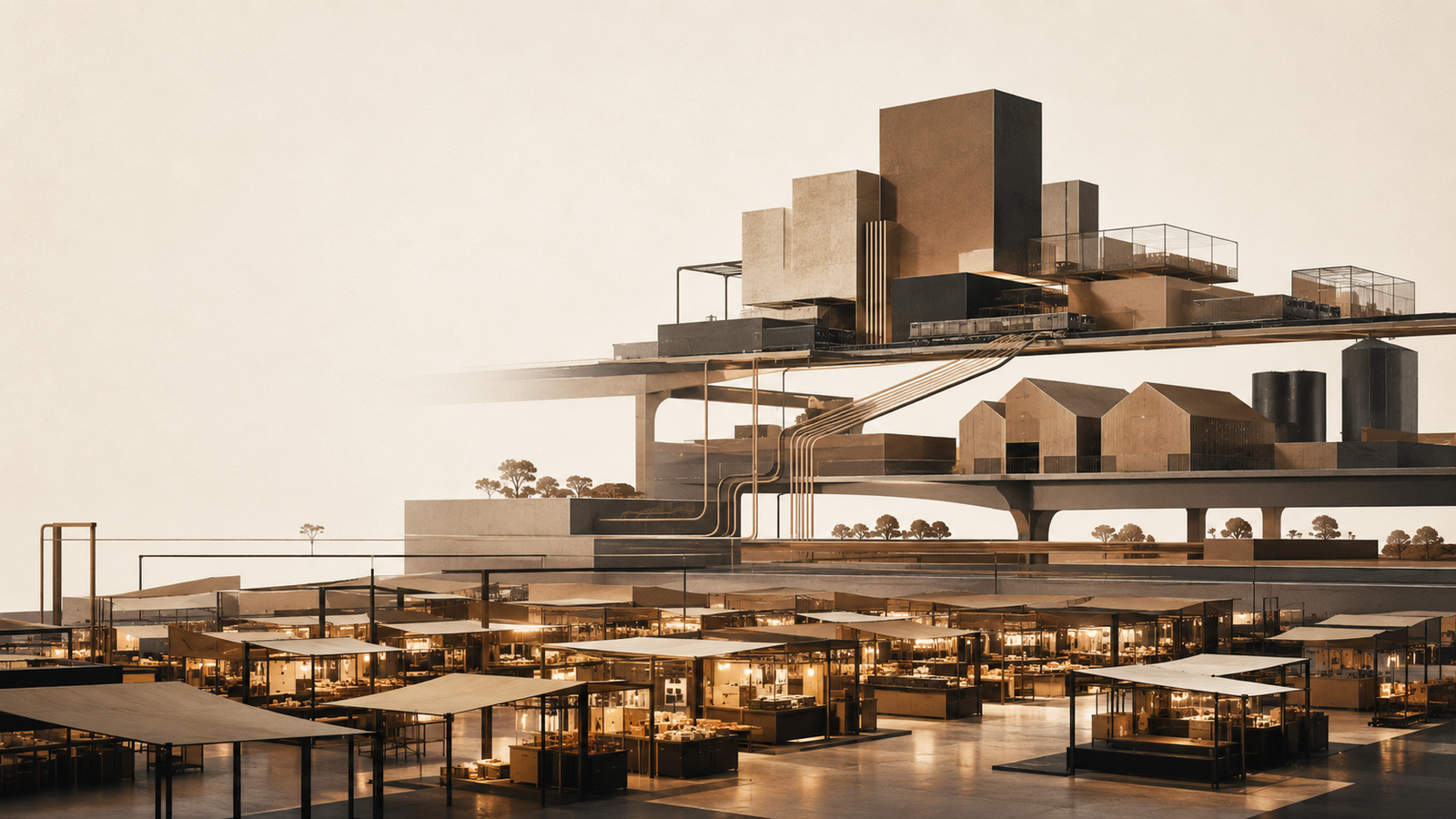
Buying vs ownership is one of the first economic distinctions every serious builder has to understand. A person can spend money for years and still own nothing that grows, transfers, or creates leverage.
A tenant can spend hundreds of thousands of dollars in rent and still own none of the building. A customer can support the same company for years and never receive a dollar of its growth. A neighborhood can keep a business alive through daily spending and still have no say in how that business hires, prices, expands, sells, or leaves.
That is why buying vs ownership matters.
Buying is participation. Ownership is position.
Participation matters. However, position decides what compounds.
Buying vs Ownership Is the First Economic Distinction
Most people are taught how to buy before they are taught how to own.
They learn how to compare prices, chase discounts, stretch checks, manage bills, and make purchases fit inside pressure. Those skills matter because they keep households moving.
Still, movement is not the same as leverage.
Leverage begins when money does more than leave your hand. It begins when money buys position, control, equity, productive capacity, or future claim.
That is why consumer activity can feel powerful while leaving very little behind.
You can spend every week and still build nothing. You can support a market and still own none of the market. You can help generate revenue and still remain outside the system that receives the upside.
The Consumer Illusion
Consumer power feels visible because buying creates motion.
Stores open. Lines form. Products move. Receipts print. Apps send confirmations. Packages arrive. The activity feels like influence because it is immediate.
However, the deeper economy does not only reward activity.
It rewards control.
- Who owns the asset
- Who controls the supply chain
- Who sets the price
- Who captures the margin
- Who receives the profit
- Who survives the downturn
- Who decides what happens next
That is where economic power lives.
Not at the register. Behind the register.
Buying vs Ownership Changes How Power Moves
Spending tells a market that demand exists.
Ownership tells a market who gets to organize around that demand.
Those are not the same thing.
A customer can influence what sells. An owner can influence what gets built. A customer can reward a business, but an owner can decide where the reward goes.
This is why buying alone rarely changes the architecture of a market.
It may shift behavior for a moment. It may pressure a company. It may signal preference. Yet unless that activity becomes ownership, production, distribution, or organized capital, the structure remains largely unchanged.
Revenue Is Not Control
Revenue is money moving through a system. Control is the authority to decide how that system works.
This is where weak thinking usually enters the conversation. People see a community spend heavily in a market and assume that spending should automatically create power inside that market.
That assumption is wrong.
Markets do not automatically convert demand into ownership for the people creating the demand. There has to be a bridge.
That bridge can be capital. It can be training. It can be lending. It can be cooperative ownership. It can be distribution. It can be supplier relationships. It can be institutional support.
Without a bridge, spending remains spending.
Money goes out. The system stays where it was.
For practical business ownership basics, see the U.S. Small Business Administration guide on business structure and ownership:
→ Choose a business structure
Ownership Compounds Because It Remains
A purchase ends when the transaction closes. Ownership continues after the transaction closes.
That is the power.
Ownership can appreciate. It can generate income. It can be transferred. It can borrow against value. It can hire. It can set terms. It can survive beyond one decision.
For that reason, assets matter more than appearances.
The person who looks successful may be carrying expenses. The person who owns quietly may be building leverage.
The household that buys status may look ahead for a season. The household that builds equity may move ahead for a generation.
The Four Layers of Economic Power
A practical economy has layers.
- Consumption: buying goods and services
- Ownership: holding assets that capture value
- Production: creating what others need
- Distribution: controlling how value reaches the market
Most people live in the first layer. Stronger households and communities learn how to climb.
They move from buying to owning. Then they move from owning to producing. Eventually, they move from producing to distributing.
Each layer adds more leverage because each layer controls more of the path that value travels.
This does not happen by motivation. It happens by structure.
Buying vs Ownership at Household Scale
Buying vs ownership is not only about big companies, neighborhoods, or national economics. It starts at home.
A household that spends without a system remains exposed. A household that tracks money begins to see patterns. A household that saves begins to create room.
From there, a household that invests begins to build claim. A household that owns assets begins to change its future options.
The first move is not dramatic. It is arithmetic.
- What comes in?
- What goes out?
- What stays?
- What grows?
- What can be transferred?
Those five questions cut through fantasy. They tell the truth without caring how anyone feels about the answer.
Consumer Discipline Still Matters
None of this means spending is meaningless.
That would be another sloppy conclusion.
Spending is a signal. It can support values. It can reward quality. It can punish neglect. It can keep needed businesses alive.
However, spending has to be placed in the right category.
It is not ownership. It is not governance. It is not infrastructure.
Spending is one tool. It is useful and visible, but it cannot carry the full weight of economic self-determination.
The Better Question
The better question is not only, “Where do we spend?”
That question matters, but it is incomplete.
The better question is:
What are we building that will still belong to us after the money is spent?
That question changes the conversation.
It pushes past reaction. It asks for systems. It demands patience. Most importantly, it forces people to stop confusing motion with progress.
Groundwork
Buying is participation. Ownership is power. Production is capacity. Distribution is leverage.
A serious financial life does not stop at consumption. It builds toward position.
That is the work.
Not louder spending. Stronger ownership.
Not more motion. More structure.
The market will always welcome customers. The future belongs to builders who learn how to own.
The Money Move
Move one decision this week from participation into ownership.
Not bigger spending. Stronger positioning.
- Review one recurring expense
- Increase an investment contribution
- Open an ownership account
- Research who owns what you buy most
- Redirect one purchase into something that compounds
The goal is not perfection. The goal is to begin building claim.
The Bottom Line
Buying creates movement. Ownership creates leverage.
Spending alone rarely changes where value settles. Ownership changes what remains.
Spend intentionally. Own deliberately. Build patiently.

Continue reading Money Monday → ownership, leverage, financial systems, and long-term economic durability.
About the Builder
Marcus Vaughn
Marcus Vaughn writes Money Monday and Legacy in Motion for Groundwork Daily.
His work explores ownership, economic behavior, household systems, financial durability, and the long arc between everyday decisions and generational outcomes.
Marcus writes for readers trying to build lives that remain standing.
Groundwork Daily
Build Better Systems
Groundwork Daily explores ownership, structure, discipline, institutions, and the systems shaping everyday life.
One thoughtful framework at a time.
Join readers building stronger households, stronger decisions, and longer horizons.
No noise. No urgency. Just better thinking delivered consistently.