Article Map
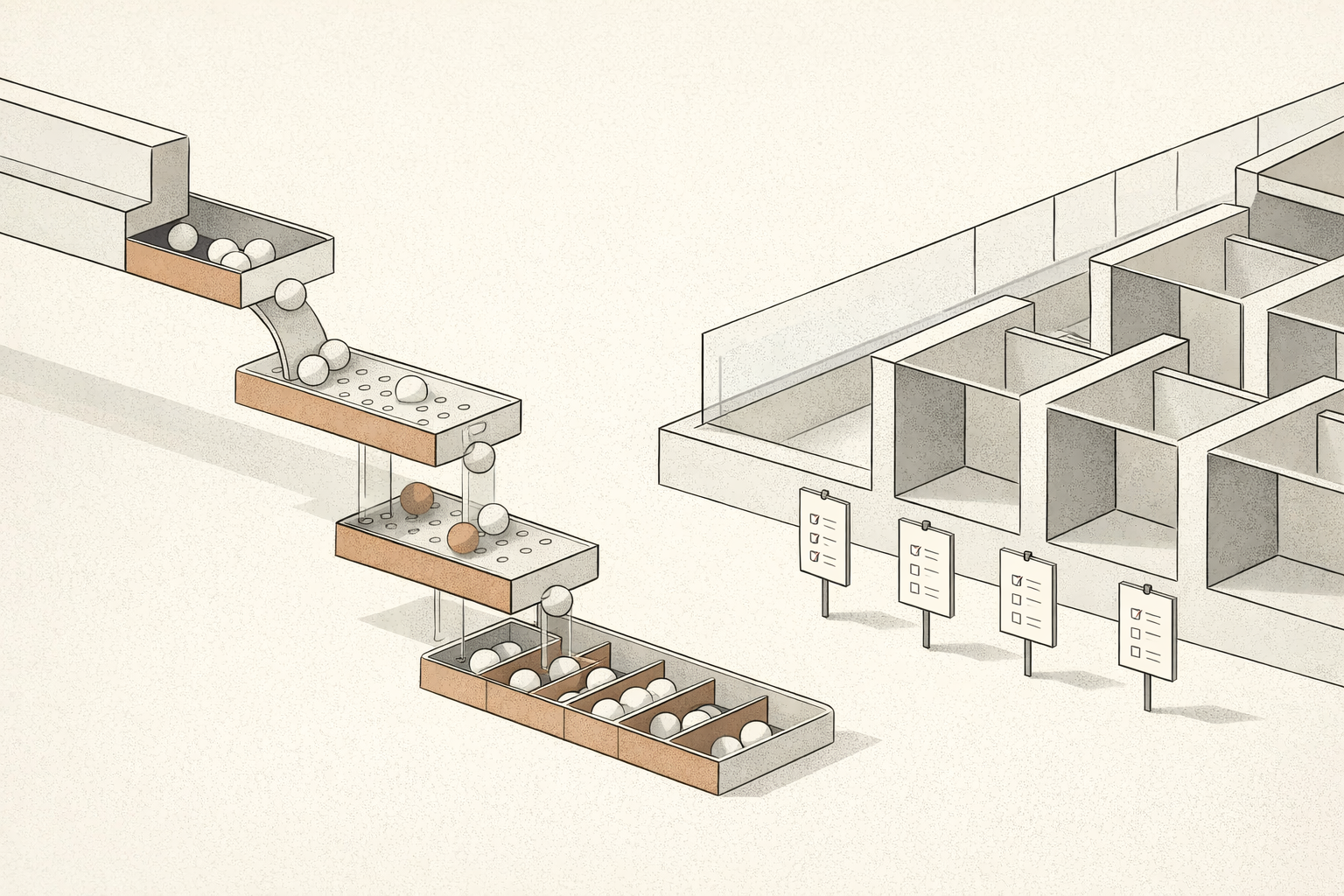
A filter can tell you who qualifies. It cannot teach people how to build.
Filters Don’t Create Better Partners
Filters don’t create better partners. They create better sorting. That distinction matters because modern relationship culture often treats filters like improvement tools. People screen harder, raise standards, narrow the dating pool, and assume better outcomes will follow. In some cases, filtering helps because it removes obvious misalignment, protects time, and prevents repeated mistakes.
However, filtering has a hard limit. It only selects from what already exists. A filter does not build communication skill, teach repair, create accountability, develop emotional discipline, or show people how to sustain what they claim to want. Therefore, a culture that relies only on filtering eventually runs into the same problem again: the pool may become smaller, yet the missing skills remain.
Critical Note
This article is educational. It is not therapy, dating advice, or relationship counseling. It uses relationship culture as a systems example. Serious relational harm, coercion, abuse, stalking, intimidation, or safety concerns require qualified professional support.
Filtering Is Not Development
Filters exclude. They identify what someone lacks, what someone fails to meet, or what someone does not appear to represent. Development does something different. It builds what people need. This difference matters because relationships are not static products pulled from a shelf. They are living systems shaped by habits, agreements, repair, and repeated choices.
When people rely on filters to produce better partners, they outsource growth to selection. Instead of asking, “How do we build capability?” the system asks, “Who already qualifies?” As a result, inspection replaces investment. In civic terms, this mirrors the difference between building a training pipeline and rejecting everyone who lacks experience. One expands capacity. The other narrows access.
Higher Standards
↓
Stronger Filters
↓
Smaller Pool
↓
Same Missing Skills
↓
Repeated Frustration
The Training Gap in Relationships
The deeper issue is the training gap. People often enter complex relational systems without shared instruction. They hear that they should communicate, yet many never learn how to listen while feeling accused. They hear that they should commit, yet many never learn how to repair after disappointment. They hear that they should choose better, yet few receive practical instruction on how to become better.
Consequently, the problem is not simply a dating crisis. It is a development failure. Men often learn how to give without learning how to require. Women often learn what to expect without learning how to sustain. Both patterns create distortion. One side may carry responsibility without standards. The other may carry expectations without maintenance. Eventually, the system produces resentment because neither side received full training in mutual responsibility.
The Training Gap Framework
Filters address access. Training addresses ability. If the system only screens participants without teaching responsibility, communication, contribution, emotional regulation, and repair, then the same failures will repeat inside a smaller and more frustrated dating pool.
Why Modern Dating Feels Like a Screening System
Modern dating often operates like an application portal. People list requirements, review profiles, evaluate signals, search for red flags, compare status markers, and decide who deserves access. Some of that work is necessary. Standards matter. Boundaries matter. Discernment matters. However, when the whole system becomes screening, people begin to confuse rejection with wisdom and selection with growth.
This is why many people feel exhausted even after improving their filters. They may avoid more obvious mismatches, but they still encounter the same deeper issues: poor communication, emotional avoidance, entitlement, unclear roles, weak repair skills, and low tolerance for discomfort. Better filters may reduce bad entrances. Even so, they do not automatically create better exits, better conflict, better maintenance, or better long-term cooperation.
Why Qualified People Still Fail
A person can pass every filter and still lack the skills required for partnership. They may have income, attraction, education, status, shared values, spiritual language, political alignment, family goals, and a polished public presentation. Still, pressure reveals capacity. The real test is not only whether someone qualifies at the entrance. The real test is whether they can carry responsibility once the relationship becomes inconvenient.
Can they apologize without collapsing? Can they tell the truth when it costs them? Can they contribute without keeping a private scoreboard? Can they repair after conflict without turning every disagreement into a trial? Can they receive correction without treating accountability as disrespect? Can they sustain loyalty when novelty fades? Filters rarely answer those questions. Practice, pressure, and time answer them more honestly.
The Civic Parallel: Screening Without Infrastructure
This pattern appears across public systems. Schools test students while underfunding tutoring, counseling, and stable learning environments. Employers demand experience while refusing to build training pipelines. Housing systems enforce standards without repair support. Reentry systems demand stability from people who lack housing, transportation, mental health care, and employment access.
Relationships follow the same logic. People raise standards without building shared operating systems. Then they mistake repeated failure for a shortage of “good people.” Sometimes the pool is not the only problem. The preparation system is broken. That is why this article belongs inside System Updates. The relationship issue is only the surface. The deeper issue is a civic pattern: systems often screen for outcomes they never helped produce.
System Updates Principle: A system that screens for capacity without building capacity will eventually blame individuals for a development failure.
What Creates Better Partners Instead
Better partners are built through practice, not checklists alone. This does not mean people should lower standards or accept harmful behavior. That would be sloppy. Standards still matter. The sharper point is that standards must be paired with development. A serious relationship culture needs shared language for conflict, clear norms for contribution, mutual accountability, and repair skills that can survive discomfort.
These are not romantic extras. They are household infrastructure. Communication is infrastructure. Conflict rules are infrastructure. Financial clarity is infrastructure. Shared expectations are infrastructure. Repair after harm is infrastructure. Contribution frameworks are infrastructure. Without those structures, people keep entering relationships with preferences but no operating system.
Development Requires Mutual Responsibility
Development cannot mean one person becomes the trainer while the other becomes the project. That is another broken system. Partnership requires mutual responsibility. Both people must be willing to learn, adjust, repair, and contribute. A relationship cannot survive if one person treats growth as optional while expecting the other person to carry the entire burden of maturity.
Meanwhile, filters still have value. They should not disappear. They should move into their proper role. A filter protects the entrance. Development governs what happens after entry. If a person refuses growth, accountability, or repair, filtering them out may be necessary. However, if everyone only filters and no one develops, the culture becomes sharper at rejection while remaining weak at construction.
Why This Matters Beyond Dating
Relationship culture affects more than romance. It shapes families, children, communities, household stability, economic decisions, and long-term civic health. When adults cannot build cooperative structures, the costs spread outward. Children inherit instability. Communities absorb distrust. Public systems respond after private systems fail. Employers manage distracted workers. Schools manage children shaped by unstable home environments.
This does not mean every relationship must lead to marriage or children. Rather, it means relationships are not isolated emotional events. They are small institutions. When small institutions are poorly built at scale, larger institutions eventually carry the consequences. Therefore, filters are not enough. A society that wants stronger families and healthier households has to care about development, not just selection.
Recognition Skill
After reading this System Update, you should recognize when a system relies on filtering instead of development.
Ask four questions:
- What skill is missing?
- Does the filter build that skill or only screen for it?
- What training would improve the outcome?
- Who benefits when failure gets blamed on the pool instead of the preparation system?
If the filter does not build capability, it cannot solve the deeper problem.
The System: Updated
Filters don’t create better partners. They create better sorting. Sorting has value, but sorting is not development. A serious relationship culture needs more than sharper preferences. It needs instruction, shared language, accountability, contribution, patience, and repair. Otherwise, the same failures repeat inside smaller and smaller pools.
The answer is not lower standards. That is lazy. Instead, the answer is stronger infrastructure. People need to learn how to build, not merely face judgment for whether they arrived already built. Filters protect the gate. Development builds the house. Confusing the two is why so many people keep passing the entrance exam and failing the institution.
Further Groundwork
Receipts
Stay Grounded
Build institutional literacy. Get weekly systems analysis across relationships, culture, governance, and everyday life.