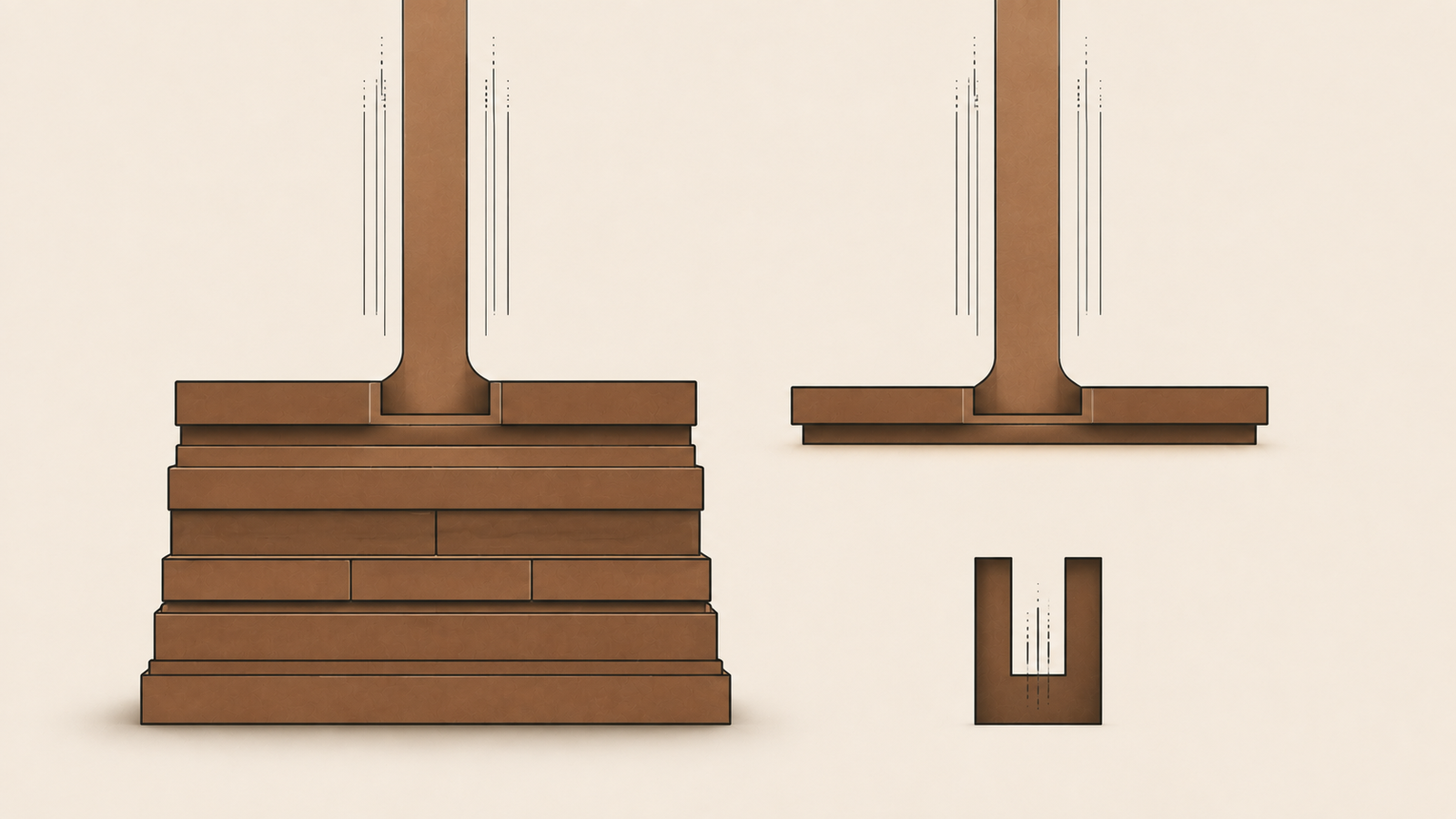
Income does not equal wealth, even when two households earn roughly the same amount. One household may own a home with substantial equity, retirement assets, stocks, or a business interest. Another may earn a similar salary while carrying larger debts and owning very little that appreciates over time.
The paycheck can look similar. The economic position underneath it can be completely different, because income measures what flows into a household while wealth reflects what has accumulated after assets and liabilities are counted.
Once ownership enters the picture, two households living on similar incomes can experience the same economy in very different ways.
Contents
- Why Income Does Not Equal Wealth
- The Same Income Can Support Different Financial Positions
- Assets Change What Economic Growth Does
- Debt Changes the Other Side of the Balance Sheet
- Housing Shows Why Ownership Matters
- Asset Prices Reward Existing Ownership First
- Aggregate Wealth Can Rise Without Being Broadly Held
- Time Magnifies the Starting Structure
- Income Still Matters, Just Not by Itself
- Ownership Changes the Meaning of Inflation
- What Reveals Household Economic Position
- What the Numbers Reveal
Why Income Does Not Equal Wealth
Income is money received over a period of time. Wages are income. Business earnings can be income. Interest, dividends, pensions, transfers, and other receipts can also contribute to household income.
Wealth measures something else.
Net worth reflects the value of what a household owns after subtracting what it owes. Real estate, retirement accounts, stocks, deposits, vehicles, business equity, and other property sit on one side of the balance sheet. Mortgages, student loans, auto loans, credit balances, and other liabilities sit on the other.
The Federal Reserve’s Survey of Consumer Finances makes the distinction directly: income is a flow measure, while net worth is a stock measure shaped by economic activity accumulated over time.
That is why income does not equal wealth.
A salary describes current earning power. It does not tell you how much property exists underneath that income, how much debt is attached to it, or how long assets have had to appreciate.
Those differences become especially visible when two households receive similar paychecks.
The Same Income Can Support Different Financial Positions
Imagine two households earning similar annual incomes.
One owns a home with substantial equity, maintains retirement accounts, holds financial assets, and carries relatively little high-cost debt.
The other rents, owns few financial assets, carries larger consumer or education debt, and has little accumulated capital beyond cash reserves.
Their annual income may look similar on paper.
Their ability to absorb a financial shock, borrow against assets, benefit from rising asset prices, finance retirement, or transfer wealth forward can be radically different.
This is why salary alone is a weak proxy for financial position.
Income tells us something important about current capacity. Wealth tells us more about the economic structure that already exists underneath it.
Put differently, income does not equal wealth because the same flow can enter two very different balance sheets.
Assets Change What Economic Growth Does
Economic growth does not reach every household through the same channel.
A worker may experience growth through higher wages, stronger employment, or more hours worked.
An asset owner can experience the same economy through labor income plus appreciation in stocks, housing, business equity, or other property.
That second household has another mechanism working alongside wages.
Its assets can change value without the household performing additional hours of labor.
That does not make asset appreciation guaranteed. Stocks fall. Housing markets weaken. Businesses lose value. Concentrated ownership can create substantial risk.
However, the economic mechanism remains different.
Labor creates a flow of income. Ownership creates exposure to changes in the value of an asset.
When asset prices rise faster than wages, households that already own those assets can improve their financial position faster than households relying primarily on earned income.
That is another reason income does not equal wealth. Income captures what was earned during the period. It does not capture every gain attached to assets already owned.
Debt Changes the Other Side of the Balance Sheet
Assets are only half of the wealth equation.
Debt matters just as much.
Two households with identical gross assets can have very different net worth if one financed those assets with substantially more debt.
The same applies to households with similar incomes.
A $100,000 income supporting modest fixed obligations creates a different economic position from a $100,000 income supporting large mortgage payments, consumer debt, student loans, auto loans, or other liabilities.
That difference should not be reduced to morality.
Debt can finance education, housing, transportation, business formation, or other assets that may improve long-term economic position. The structural question is what sits on the other side of the obligation and whether that asset produces lasting value.
Borrowing against an appreciating or productive asset is economically different from borrowing primarily to preserve current consumption.
The monthly payments may look similar.
The balance-sheet results may not.
Housing Shows Why Ownership Matters
Housing provides one of the clearest illustrations of the difference between income and wealth.
In the Federal Reserve’s 2022 Survey of Consumer Finances, median net worth among homeowners was $396,200. Among renters and other non-homeowners, median net worth was $10,400.
That is a substantial difference, but it needs careful interpretation.
The figures do not prove that purchasing a home automatically creates hundreds of thousands of dollars in wealth. Homeowners and renters differ by age, income, geography, family structure, prior wealth, and many other characteristics.
The comparison is descriptive, not causal.
Still, the balance-sheet role of housing is difficult to ignore.
Among homeowners in the survey, median net housing value, meaning the value of the home minus home-secured debt, reached $201,000.
For many middle-wealth households, housing is one of the largest assets they own.
When property values rise, existing owners can experience balance-sheet gains without receiving a larger paycheck.
A renter does not receive that same equity effect from the property being occupied.
This is why income does not equal wealth even when monthly cash flow looks similar. One household may be paying toward an owned asset while another is purchasing housing services without accumulating equity in the property.
Asset Prices Reward Existing Ownership First
The difference becomes more structural when asset prices rise.
Between 2019 and 2022, the Federal Reserve reported that real median family net worth increased substantially, reaching $192,900. Gains in housing and financial assets contributed to the broader increase in household wealth.
The important mechanism is not merely that asset prices moved higher.
The asset had to be owned before the appreciation could become household wealth.
A person can watch the stock market rise while owning little or no equity.
A renter can watch nearby property values increase without receiving home equity.
A worker can help a company become more valuable while owning no meaningful share of the company itself.
I went back through the Fed’s income and net-worth discussion because this distinction can sound rhetorical when the measures are not put beside each other. The Fed’s own data makes the relationship clear: income and wealth are connected, but they do not move in lockstep.
Participation in growth and ownership of what grows are different economic positions.
Aggregate Wealth Can Rise Without Being Broadly Held
Household wealth is often reported as one enormous national number.
That number is useful, but it can hide the distribution underneath it.
In the first quarter of 2026, household and nonprofit net worth stood near $183 trillion. At the same time, the Federal Reserve’s Distributional Financial Accounts estimated that the top 1% held 31.6% of aggregate net worth, while the bottom half held 2.5%.
Those statements can both be true.
Aggregate household wealth can rise sharply while the gains remain concentrated among households that already own substantial assets.
This is another reason income does not equal wealth. A national income measure and a national wealth measure can each improve while different households capture very different shares of the underlying gains.
The aggregate describes the size of the pool.
Distribution tells us who is standing in it.
Time Magnifies the Starting Structure
Wealth also contains a time dimension that income does not capture cleanly.
Assets can appreciate, compound, generate income, or serve as collateral for additional opportunities.
Debt can compound too.
A household that begins a decade with financial assets may spend those years receiving returns on capital while continuing to earn labor income.
Another household may spend the same decade using current income to service obligations accumulated earlier.
Annual salaries can converge while balance sheets continue moving apart.
This is why starting position matters.
Not because economic outcomes are predetermined, but because existing assets and liabilities determine what each new dollar of income is required to do.
One dollar may be available to purchase another asset.
Another may already belong to a creditor because of a decision made years earlier.
Same dollar. Different assignment.
Over long periods, those assignments accumulate.
Income Still Matters, Just Not by Itself
None of this means income is unimportant.
That would be the wrong conclusion.
Higher and more reliable income can make it easier to save, reduce debt, qualify for financing, purchase assets, withstand emergencies, and take economic risks.
The Survey of Consumer Finances shows a strong relationship between income and net worth.
The mistake is assuming that relationship makes the two measures interchangeable.
It does not.
Income measures current earning capacity. Wealth reflects accumulated claims on assets after liabilities are deducted.
A household can have high income and relatively little wealth because the income is recent, expenses are high, debts are substantial, or assets have not had time to accumulate.
Another household can have moderate income and significant wealth because it owns property, securities, business interests, or other assets accumulated over decades.
This is the basic reason income does not equal wealth: one measures today’s economic flow while the other carries yesterday’s ownership into today.
Ownership Changes the Meaning of Inflation
The distinction becomes even more visible when both consumer prices and asset prices are moving.
As Why Prices Stay High When Inflation Falls explains, households continue living with the accumulated price level even after the inflation rate slows.
However, asset inflation reaches households differently depending on what they own.
Higher home prices can make housing less affordable for a prospective buyer while increasing equity for an existing homeowner.
Higher equity prices can strengthen retirement balances for investors while providing little direct balance-sheet benefit to someone with limited market exposure.
The same price movement can therefore function as a barrier for one household and a wealth gain for another.
Ownership determines which side of that movement reaches the balance sheet.
What Reveals Household Economic Position
If income does not equal wealth, a fuller picture has to look at the balance sheet.
What assets exist? What are they worth? How much debt sits against them? Which assets can appreciate or produce income? Which liabilities consume future cash flow?
Liquidity matters too.
A household can have substantial net worth concentrated in a home and still have limited cash available for an emergency. Another may have a smaller balance sheet but greater liquid reserves.
Concentration also matters. A household whose wealth is almost entirely tied to one business, one property, or one market carries a different form of risk from one whose assets are spread across several categories.
These questions reveal economic position in a way salary alone cannot.
They also explain why households with similar current income can respond very differently to the same economic shock.
One has accumulated assets capable of absorbing part of the pressure.
The other may require current income to absorb nearly all of it.
The paycheck is only the visible flow.
The balance sheet determines what sits underneath it.
What the Numbers Reveal
Income and wealth diverge because the economy rewards more than current production. It also rewards prior ownership.
Once assets exist, changes in housing values, equity prices, business valuations, interest income, and other forms of appreciation can alter a household’s position without changing its salary at all. Liabilities work in the opposite direction by assigning future income to obligations created earlier.
That is why two households standing on the same income line can still operate from very different economic positions. One paycheck may arrive on top of accumulated assets. Another may arrive on top of accumulated claims.
The durable distinction is not simply how much money enters a household. It is what remains attached to that household after the income has passed through.
- The Ownership Equation — Why controlling assets changes who captures durable value after the original work is complete.
- Wages Lag, Assets Lead — How wage growth and asset appreciation can produce different forms of economic progress.
- Why Prices Stay High When Inflation Falls — Why slower inflation does not reverse the higher price level households continue to absorb.
Economy Commentary follows the systems that shape ownership, labor, prices, consumer behavior, and economic pressure. Subscribe to Groundwork Daily for continued structural economic analysis.