
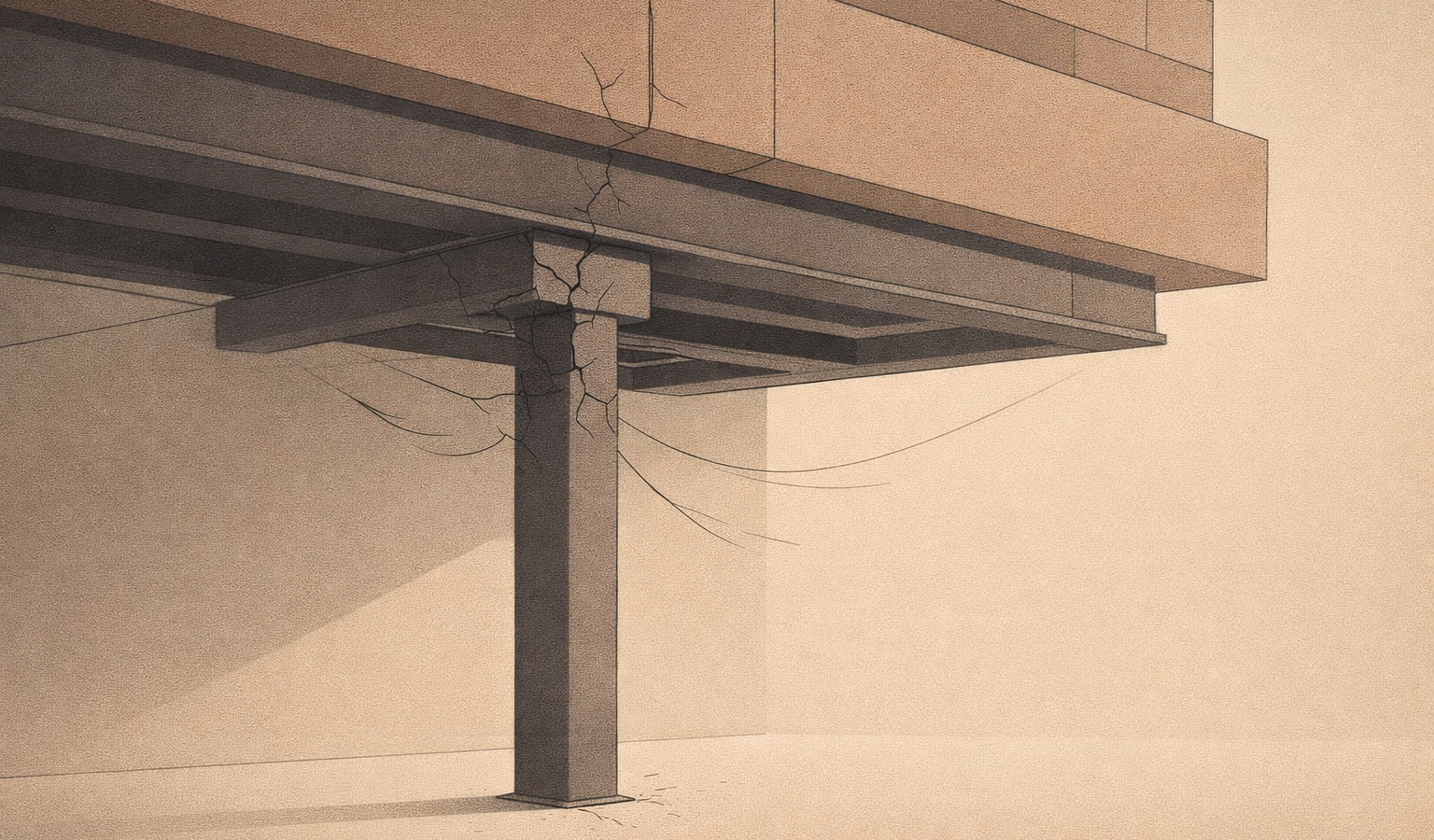
Performed resilience burnout begins when strength stops being something that supports you and becomes something you have to prove.
You keep showing up, answering the call, handling the problem, and becoming the person everyone describes as strong. Because you rarely let people see what carrying all of it costs, they assume you still have room.
From the outside, that can look like resilience. On the inside, however, it can feel like disappearing behind your own competence.
The distinction matters because real resilience includes recovery. It allows a person to absorb difficulty, regain capacity, adapt, and continue. Performed resilience does something different: it preserves the appearance of capacity even while the actual capacity underneath it is shrinking.
The Groundwork Distinction
Performed resilience is not resilience. It is load concealment.
The system still looks functional because the person carrying the load keeps hiding how close they are to capacity.
Performed Resilience Burnout Starts With an Invisible Load
There is a kind of exhaustion that sleep alone does not explain. It often comes from being the dependable one for too long.
You remember what everyone else forgets. You absorb tension, solve emergencies, and anticipate what could go wrong. Then, when someone asks how you are doing, you say you are fine because explaining the whole load feels like one more task.
Sometimes this pattern begins with necessity. A difficult season requires more from you. Perhaps a family needs you, work becomes unstable, grief arrives, money gets tight, or someone you love needs care.
Temporary endurance can be necessary. The problem begins when emergency behavior becomes identity.
There is a meaningful difference between saying, “I am carrying a lot right now” and believing, “I am the one who can carry a lot.” The first describes a season. The second can become a contract.
Stillness Note
Be careful when a survival skill becomes part of your identity. Once people admire you for carrying too much, putting something down can begin to feel like disappointing them.
How Performed Resilience Burnout Hides Behind Competence
Performed resilience is difficult to recognize because much of it looks admirable. Reliability matters. Persistence matters. Responsibility matters. There are also seasons when adulthood requires us to do hard things while tired.
However, responsibility and self-erasure are not the same thing.
A person can become so practiced at functioning under pressure that other people stop noticing the pressure. Eventually, the person carrying it may stop noticing it too.
That is where the performance becomes dangerous. You are no longer simply enduring difficulty. Instead, you are maintaining an image of unaffectedness.
The Labor of Pretending
The exhausting part is not always the load itself.
Sometimes the second load is pretending the first one is not heavy.
The Second Load
First, there is the actual responsibility. Then there is the emotional labor required to make that responsibility look effortless.
You smile so nobody worries. You keep producing so nobody questions your capacity. You minimize what hurts because you do not want to sound ungrateful. Likewise, you may avoid asking for help because competence has become part of how you understand your worth.
That second load is easy to miss, but it still weighs something.
Why Performed Resilience Burnout Can Show Up in the Body
The body does not care how convincing the performance is. You can call yourself productive while feeling exhausted, or describe a season as manageable while sleeping poorly.
You can also insist that you are fine while noticing headaches, tension, irritability, trouble concentrating, or a growing inability to settle.
Of course, none of those experiences proves that stress is the only cause. Bodies are complicated. Therefore, persistent, severe, or concerning symptoms deserve appropriate medical attention rather than self-diagnosis.
At the same time, prolonged stress can affect multiple systems in the body. The American Psychological Association describes connections between chronic stress and changes involving sleep, muscle tension, digestion, cardiovascular function, immune response, and other aspects of health.
For that reason, the body is worth listening to. Not every symptom carries a hidden psychological message, but capacity still has limits. When a system receives load without enough recovery, less reserve may remain for the next demand.
A Better Question
Instead of asking:
“Can I keep going?”
Ask:
“What is continuing at this pace costing me?”
Those questions measure different things. The first asks whether failure has happened yet. The second asks whether the current structure is sustainable.
Performed Resilience Burnout Is Also a Capacity Problem
This is where many capable people get trapped: they measure capacity by what they can survive.
Yet surviving a load does not mean the load fits.
You may be able to work through exhaustion, keep answering everyone, postpone grief, swallow anger, ignore loneliness, and continue meeting deadlines. Nevertheless, ability is not the only measure that matters.
Sustainability matters too.
In Groundwork terms, capacity is what a system can reliably carry without unacceptable degradation. Therefore, a strong life cannot be designed around your absolute maximum. It needs margin.
Margin Is the Space That Keeps Capacity Usable
Margin is the room between what you are carrying and what you could carry if something unexpected happened tomorrow.
Without that room, ordinary disruption can begin to feel catastrophic because there is nowhere for additional weight to go.
This is also why constant functioning can be misleading. A structure may still be standing while its reserve is disappearing.
Capacity Check
A life can be functioning and still be overloaded.
Function tells you that the structure is still standing. It does not tell you how much reserve remains.
Stillness Interrupts Performed Resilience Burnout
This is where stillness becomes practical.
Stillness is not another demand to meditate perfectly, become calm on command, or turn exhaustion into a wellness project. Instead, it creates a pause long enough to stop performing and receive more accurate information.
What Becomes Visible When You Stop Performing?
You may notice what hurts and what feels heavier than you have admitted. You may also begin to distinguish between responsibilities that are actually yours and responsibilities you inherited because you were competent enough to handle them.
More importantly, quiet can expose the fear underneath the performance. What do you believe would happen if you stopped being the strong one for a minute? Who might be disappointed? What would you have to admit?
Those questions require space because performance is noisy. It keeps producing evidence that everything is fine, even when your inner life is telling a different story.
Groundwork Core Principle
Stillness Is Strategy
Stillness creates decision space. It gives you enough room to distinguish what is required from what has merely become habitual.
In the context of performed resilience burnout, that space matters because the first repair is not always doing less immediately. Often, it is seeing the load accurately enough to decide what should change.
How to Recover From Performed Resilience Burnout
Recovery does not require you to dismantle your whole life in one afternoon. In fact, dramatic change is not always possible or wise.
A more useful starting point is to make the load visible. Once you can see what you are carrying, you can begin deciding what needs support, what needs to change, and what no longer belongs to you.
01 · Name
Name what is heavy
Replace “I’m just tired” with something more precise. Is the load emotional, financial, relational, physical, logistical, spiritual, or some combination of them?
02 · Separate
Separate duty from identity
Something can be your responsibility without becoming your entire identity. You are allowed to carry a duty without becoming “the one who carries everything.”
03 · Reduce
Remove one unnecessary load
Look for something that continues mainly because you have always done it. Then delegate it, postpone it, simplify it, renegotiate it, or let it end.
04 · Recover
Treat recovery as maintenance
Recovery is not the prize you receive after everything is finished. Some things will never be completely finished. Therefore, rest has to exist inside the structure.
Use the Pause Before the Yes
Performed resilience often survives through automatic agreement. Someone needs something, and “I’ve got it” arrives before you have checked what the request will require.
So create a pause before the yes. Even a few moments can interrupt the reflex to prove capacity that you may not actually have available.
The Stillness Practice
Before agreeing to the next request, adding another obligation, or automatically saying “I’ve got it,” ask:
Do I have capacity for this, or do I only have the ability to force myself through it?
Redefining Strength After Performed Resilience Burnout
Strength is not proved by how long you can ignore your own limits. There is no meaningful victory in becoming so useful to everyone else that you become unavailable to yourself.
Sustainable resilience should leave something behind after the hard season passes: some energy, some judgment, some tenderness, some ability to laugh, and some capacity to imagine a future that contains more than recovery from the present.
Strength Is Not Always Endurance
Sometimes strength does mean enduring. At other times, however, it means asking for help, changing the arrangement, or acknowledging that something has become too expensive to keep carrying in the same way.
That can sound surprisingly ordinary. You may simply need to say, “This is too much,” “I need more room,” or “I cannot keep carrying it like this.”
Those statements are not necessarily evidence that resilience has failed. Instead, they may mark the moment resilience becomes honest.
Recovery Is Part of Resilience
A definition of resilience that contains no recovery is incomplete. If the only acceptable direction is forward, eventually forward becomes another form of pressure.
Real resilience has rhythm. It absorbs strain, protects what matters, restores capacity, learns, and continues. Therefore, recovery is not the opposite of resilience. It is part of how resilience remains available.
The Stillness Line
Endurance can carry you through a season. It should not become the architecture of your entire life.
You do not have to wait for collapse to prove the load was heavy.
Further Groundwork
Continue into the larger architecture behind this essay.

Keep Building
Build a steadier inner life.
Groundwork Daily brings practical frameworks, reflection, and original thinking to the structures that shape everyday life.
Groundwork Architecture
This essay sits inside the Groundwork Daily architecture through one governing principle and one primary structural condition.
Primary Core Principle
Stillness Is Strategy
Decision space protects authorship when pressure arrives. Here, stillness makes hidden load visible before automatic endurance makes the next decision for you.
Primary Condition · Carries
Capacity
Capacity defines what a system can reliably carry without unacceptable degradation. Performed resilience hides the difference between what a person can survive and what they can sustainably carry.
See the full Groundwork Daily Core Principles and Conditions architecture .

About the Builder · Stillness & Soul
N. Grace James is a Stillness & Soul Builder at Groundwork Daily. Her work explores emotional discipline, discernment, self-awareness, faith, identity, and the quiet judgment required to remain grounded when pressure, belonging, or strong emotion complicate what comes next.
Across her work, Grace returns to a practical question: what deserves authority before we act? Her builds make room for complexity without surrendering standards, pairing reflection with the discipline required to build a steadier inner life.
Receipts
The health discussion in this essay is contextual, not diagnostic. For additional information about the ways prolonged stress can affect the body, see:
American Psychological Association — Stress Effects on the Body ↗